Parliament

A defeat that delights the Tories

From our UK edition

Rarely can a government have been so pleased to have been defeated. The Tories are, privately, delighted that the Lords have voted to water down the benefit cap, removing child benefit from it. The longer this attempt to cap benefit for non-working households at £26,000 stays in the news, the better it is for the government. It demonstrates to the electorate that they are trying to do something about the injustices of the something for nothing culture. The matter will now returns to the Commons where the coalition is confident it can be reversed. I understand that Nick Clegg remains solid on the issue, despite the fact that Ashdown and Shirley Williams led the Lib Dem rebellion in the Lords on this amendment.
Ed Miliband lives to flop another day

From our UK edition

Miliband survives! That news should steady Labour nerves. For today at least. Their leader has the knack of turning near-certain defeat into absolutely-certain catastrophe, but he bumbled through PMQs this afternoon without suffering a serious setback. He has so little ground from which to attack the government that he had to lead on a niche issue. Rail fares. He asked the prime minister why the operating companies have managed to hike prices by 11 per cent on the busiest routes. Cameron: ‘Because of a power given to them by the last Labour government.’   With that lethally terse response the PM sat down. To his credit, Miliband wasn’t rattled.

Will Miliband use his lifeline in PMQs?

From our UK edition

At the weekend, Tories were anticipating giving Ed Miliband an almighty kicking at PMQs. Lord Glasman’s description of Labour’s economic record as ‘all crap’ had given them a killer line. As one member of the Cameron circle joked to me, ‘we’ve never had more material to work with.’    But Ed Miliband now has a get out of jail free card. If he asks six questions about the Union and the referendum, it will be impossible for Cameron to have a pop at him without looking distinctly unstatesmanlike. On Scotland, the two leaders need each other. The Unionist side cannot win without the Labour party and the Labour party will find it very hard to win general elections without Scotland.

The scale of Clegg’s Lords challenge

From our UK edition

Tucked away on page 15 of today's Times, there's an insightful story about Lords reform (£) by Roland Watson. And it's insightful not just for the new information it contains, but also for the familiar truth it confirms: reforming the House of Lords is going to be one helluva difficult task. You see, while both halves of the coalition committed to a fully- or ‘mainly-elected’ upper chamber in their respective manifestos, only one half of the coalition is particularly eager to force it through now.

How democracy fared in 2011

From our UK edition

Even before we were a month in, 2011 was an historic year. Principally because in a region of the world where governments shift through military coup or foreign intervention, dictators fell — and others tottered — thanks to local popular uprisings. Whatever the outcome of those events (and I have expressed my fears elsewhere, here) they remain a landmark worth observing. Whether or not the coming years are any good at all for them, 2011 was a great year for democrats in the Middle East. In the older democracies of the West, however, 2011 was more disconcerting.   If anyone doubts this, consider the following experiment. It is the beginning of any year other than this one over the last two decades.

Another fine mess at HMRC

From our UK edition

Today's report by the Public Accounts Committee hasn't so much been released as detonated onto the Westminster scene. The Exchequer is owed around £25 billion, it suggests, from major companies that have been handled too leniently, or just plain wrongly, by HM Revenue & Customs. And much of the blame is attached to Dave Hartnett, the outgoing civil servant in charge of revenue collection. Interviewed on the Today Programme earlier, the chair of the committee, Margaret Hodge, implied that Hartnett had too ‘cosy’ a relationship with big business.

Miliband crumples to a new low in PMQs

From our UK edition

Inept, useless, incompetent, maladroit, hopeless, clumsy, crap. With thesaurus-rifling regularity Ed Miliband comes to PMQs and delivers a performance which is inept, useless, incompetent, maladroit, hopeless, clumsy and crap. The only virtue the Labour leader has is consistency. He’s consistently worse than last week. In theory he should have scored some damage today. Unemployment is soaring. Growth seems grounded. Cabinet ‘partners’ scuffle in public whenever they get the chance, and Nick Clegg changes his mind as often as he changes his socks. And Miliband’s tactics had some merit too. By disinterring the PM’s New Year Statement from January 2011 he was able to open up the Coalition’s wounds and have some seasonal fun at their expense.

Cameron pummels Miliband in PMQs

From our UK edition

Today, was yet another reminder that David Cameron knows just where to hit Ed Miliband to make it hurt. After a few questions on the economy, Miliband moved to Europe — the coalition’s greatest vulnerability. Miliband joked that it was ‘good to see the deputy Prime Minister back in his place’, before mocking the coalition’s divisions over Europe. Cameron began his reply by saying it was no surprise Tories and Lib Dems don’t agree on Europe before saying that the split on the issue could be exaggerated: ‘it’s not like we’re brothers or anything,’ Cameron said in his most mocking tone. At this line you could see the Labour benches deflate and one of his aides visibly winced.

Where we are now

From our UK edition

Reading through the paper's this morning, it's even clearer that we didn't learn much from that marathon Europe debate yesterday. But here are my thoughts, anyway, on where it leaves us: 1) Ed Miliband lacked credibility from the outset. As Malcolm Rifkind put it, he’s had three days to work out whether he’d have signed that Treaty or not — and he still can’t make his mind up. God knows Cameron is vulnerable on this, but he won’t be hurt being attacked for indecision by a man who still cant make any decisions. 2) Clegg’s misjudgment, cont? First, Clegg backed Cameron after the veto. Now, he says he disagrees with Cameron.

Forget the Brussels Summit — here’s how Cameron could challenge EU power at home

From our UK edition

Much has already been written this week about the negotiating hand that David Cameron should be playing in Brussels over the next couple of days.   I am fervently of the view that there is indeed a whole raft of policy areas over which he should be seeking to reclaim powers from Brussels, and they are detailed in a new paper by Dr Lee Rotherham, Terms of Endearment, which was published earlier this week by the TaxPayers’ Alliance.   But forget the European Council for a moment. For it is worth highlighting the things that the British Government could do immediately and unilaterally, here at home, to challenge EU power — and without recourse to Brussels whatsoever. And Lee’s paper gives the following six examples:   1.

Dave and Ed strike each other

From our UK edition

It was a real blood and thunder PMQs today. This was the politics of the viscera; whose side are you on stuff.   Ed Miliband chose to start on the strikes. David Cameron ripped into him from the off, calling him ‘irresponsible, left-wing and weak.’ Miliband came back with an attack about how he wasn’t going to demonise dinner ladies who earn less in a year than George Osborne’s annual skiing holiday costs, though he flubbed the line slightly.   The Tory benches were in full cry, and throughout the session Cameron kept coming back for another swing at Miliband and the union link.

Picketing Parliament

From our UK edition

By way of Spectating, I thought I'd take a quick stroll along Westminster's picket lines. And, to be honest, there isn't a huge amount to see, as yet. The groups of around five or six industrial actioneers outside some departments trump the small pile of placards outside the Treasury. There are about thirty to forty people picketing Parliament itself. The photo I shot hastily on my iPhone, above, should give you the sense of it. The striking workers I spoke with, however, were bullish about people turning up later in the day, especially with the march that's happening this afternoon — as well as for the strike's general progress in the rest of London and beyond. An organiser for Met staff reckoned on about 70 per cent turnout from his cohort.

Halfon seeks to cool the inflationary fires

From our UK edition

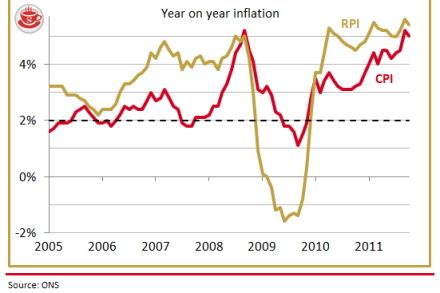
Don't whip out the cava just yet, CoffeeHousers. Inflation, in both its CPI and RPI incarnations, may be down on last month's figures, but the latest numbers are hardly cause for jubilation. At 5.0 per cent in October, CPI is still over double the Bank of England's target figure, and it's far outpacing the average growth in people's wages. The truth is that living costs remain constrictive, and at a time when the economy could teeter back into cataclysm at any moment.      Hence Robert Halfon's motion on fuel prices, which will be debated in the Commons today. It's another one of those motions triggered by an e-petition (112,189 signatures and rising), and it makes a simple plea: people are struggling, so how about doing more to cut the cost of fuel?

Cameron versus Balls

From our UK edition

The real clash at PMQs today was between Ed Balls’ heckling and David Cameron’s temper. Balls was in a particularly chirpy mood. He started off his impression of an Australian slip fielder as soon as the Prime Minister arrived at the despatch box. The flat lining gesture made an early appearance, along with his signals telling Cameron to calm down.   But the moment when Balls seemed to really get under Cameron’s skin was when he pointed at the overwhelmingly male Treasury bench as Cameron talked about the importance of getting more women on boards. Two questions later, Cameron responded to a Balls’ heckle by saying that ‘the shadow Chancellor is wrong, even when he’s sitting down.