Parliament

Europe Minister’s PPS quits over referendum vote

From our UK edition

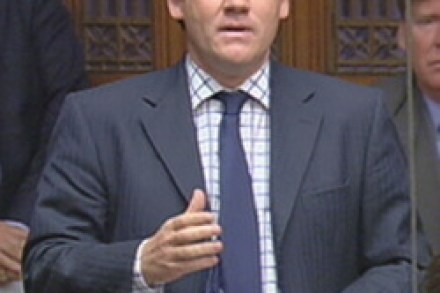
Adam Holloway, PPS to the Europe Minister David Lidington, has just effectively quit his job by giving a speech setting out his intention to vote for the motion. That the Europe Minister’s PPS is walking over this issue is an embarrassment for the government and a sign of how strongly opinion on this issue is running. The most striking thing about William Hague’s speech was the near silence in which it was listened to on the Tory benches. When Hague mocked the motion, he didn’t draw laughs from even the most sycophantic backbenchers. Whatever happens tonight, this debate has widened divisions on the Tory side. There is a real danger that without urgent action, up to a third of the backbenches will become actively hostile to the Prime Minister.
Another voice: Why Cameron had no choice but to fight

From our UK edition

Fraser performed a valuable service to the MPs currently debating a motion proposing a referendum on membership of the European Union by imagining what he thought David Cameron ought to have said: "Sure, guys, have your vote. It's a backbench motion, so the government won't take part and as you know I've booked a trip abroad next Thursday anyway so I won't be here. But I was serious when I said those petitions are a way to 'rebuild trust in politics'. If this reached the threshold I set — 100,000 votes — then I'm happy for this to be debated, with a free vote. If you ask me, it's an odd time to discuss a referendum. But hey, I run the government — not parliament. You guys work for your constituents, not for me. So go for it.

Your scorecard for today’s EU referendum vote

From our UK edition

I hope you adjusted your calendars accordingly, CoffeeHousers. The parliamentary debate and vote on an EU referendum starts at 1600 today — and what morbid fun it promises to be too. Fresh from being bawled out by Nicolas Sarkozy at the weekend, David Cameron is returning to London to be bawled out by a significant proportion of his own party. And while the Tory leadership is certain to defeat David Nuttall's Eurosceptic motion, it will not avoid being wounded in the process. Most of the wounds have already been self-inflicted.

Liddington: EU vote should follow a new treaty

From our UK edition

David Liddington, the Europe Minister, has just told the Murnaghan Show that the moment for a referendum on the European Union is once a treaty change has been agreed. Liddington argued that then everyone would know what they were voting on. This is quite a significant shift in the government’s position. Up to now, the position has been that there would only be a referendum if yet more powers were transferred from Westminster to Brussels. Liddington appeared to be saying that a vote would follow any new treaty, even one that brought powers back. This moves the government far closer to a position of renegotiation followed by a referendum.

More fuel for the EU rebellion

From our UK edition

Today’s Daily Express poll will add to the sense of momentum that the Tory rebels are feeling ahead of Monday’s vote. The fact that 81 per cent of Tory voters want their MP to vote for the motion will make it harder for the whips to dissuade those who are inclined to vote for the motion. The poll results also demonstrate that only a small percentage of the public would vote for the country’s current set-up with the European Union if they had the chance. Only 15 per cent would vote to stay in, compared to 28 per cent who would vote to leave, while 47 per cent would plump for renegotiation. If forced to chose between In or Out, the public splits 31 to 52.

Cameron starts playing catch-up over the EU referendum vote

From our UK edition

Adjust your calendars, CoffeeHousers. The parliamentary vote on an EU referendum is no longer set for next Thursday. As the Mail's James Chapman revealed this evening, Downing Street has moved it forward to Monday so that David Cameron and William Hague can both attend. They would have been away on government business otherwise. What to make of this hasty measure? I suppose it could feasibly be seen as a scare tactic on the part of No.10: strengthening the current three line whip by making it very clear that Dave Is Watching You. But it's far more likely that Cameron is appearing in order to set out the sorts of concessions that James mentioned earlier. There are, after all, almost 50 Tory backbenchers signed up to the original motion — 50 potential rebels.

What Cameron needs to do to avoid a rebellion over Europe

From our UK edition

The backbench motion on an EU referendum has been cleverly crafted. Rather than just proposing a straight In/Out vote it includes a question on whether Britain ‘should renegotiate the terms of its membership in order to create a new relationship based on trade and cooperation.’ This has given the motion real reach into the Tory benches.   Number 10 needs to play catch-up on this issue, and fast. The whips yesterday were talking about limiting the rebellion to ‘30 to 40 MPs tops’. But 46 Tory MPs — including the chairman of the 1922 committee, Graham Brady — have already signed the motion.   It strikes me that there are two ways out of this predicament for Cameron.

How Lansley won over the Lords

From our UK edition

As Ben Brogan wrote this week, the House of Lords is threatening to become one of the biggest obstacles to the coalition’s reform agenda. But the way in which the Health and Social Care Bill was steered through its second reading in the upper house does provide a model for how even the trickiest votes can be won. Andrew Lansley’s much derided operation got this one right. It realised months ago that the crucial thing was to stop the crossbenchers voting against the bill en masse. So, the health minister in the Lords, Earl Howe, and Lansley’s long-serving aide Jenny Jackson have been on a cup of tea offensive for the last few months, seeking to explain the bill to any crossbencher who would listen.

Getting over the expenses scandal

From our UK edition

Parliament's reputation seems to have recovered from its nadir during the expenses scandal. According to the government's "citizenship survey", the proportion of people trusting parliament fell from 34 per cent in 2008-09 to 29 per cent in 2009-10, while the European Commission's "Eurobarometer" showed an even bigger drop: from 30 per cent in November 2008 to 17 per cent in July 2009. According to the most recent surveys, however, trust in parliament is back up to pre-scandal levels: Of course, two-thirds of people still do not trust Parliament - far from a ringing endorsement.

Downing Street’s boundary review problem

From our UK edition

I understand that Number 10 will lean on Cabinet ministers not to object to what the boundary review does to their seats. This is an intriguing development because at least three Tory Secretaries of State are deeply unhappy with the proposed changes to their constituencies. It’ll be fascinating to see whether Downing Street can persuade them to hold their peace on the matter. Their disquiet reflects broader grumbling throughout the Tory parliamentary party. All sorts of conspiracy theories are doing the rounds. Number 10 needs to move quickly to offer some reassurance to nervous MPs. If the boundary review’s plan is to be made agreeable to the Tory parliamentary party, Cameron is going to have to persuade an awful lot of MPs to retire.

James Murdoch recalled by parliament

From our UK edition

The Culture, Media and Sport committee has recalled James Murdoch to give further evidence into phone hacking and James Murdoch's people are briefing journalists that he is happy to appear. Sophy Ridge reports that the committee had a long discussion about who to recall, but were largely in agreement and there was no vote. In truth, their decision was virtually inevitable after Tom Crone said he was certain that he and Colin Myler had spoken to Murdoch about the ‘For Neville’ email, which suggested that hacking was widespread. Myler has corroborated Crone's claims.  Committee chairman John Whittingdale has said that Murdoch will be asked to clarify this and other questions.

Osborne lays out his support for Vickers

From our UK edition

George Osborne made a firm statement on the Vickers report this afternoon; if he felt uneasy about the proposed abolition of his seat or Natalie Rowe’s latest sally against him it didn’t show. As expected, he accepted Vickers’ proposals "in principle", giving himself and his coalition partners enough room to manoeuvre within an agreed timetable that is equitable to both parties. Osborne also said that the annual £7 billion burden of Vickers’ capital requirements “should fall on shareholders and the wholesale debt holders, not small depositors or taxpayers.” Politically, it’s imperative that he achieves that objective. There is yet uncertainty on the subject and Barclays sought a clarification earlier this afternoon.

Managing the boundary changes

From our UK edition

MPs are queuing down the corridor on the first floor of Portcullis House as they try to get hold of a copy of the proposed boundary changes which have just been released under embargo. Boundary changes can make a huge difference to an MP, converting a marginal into a safe seat and vice-versa. Boundary reviews are a whip’s nightmare as they will set MPs of the same party against each other. The danger for the two coalition partners is that MPs’ take to rebelling on emotive issues for their parties in an attempt to win any selection head to head. This is why Cameron went out of his way to promise all Tory MPs that no one would be left without a seat at the Tory parliamentary dinner last Wednesday night.

Gaddafi in Tripoli as the <em>entente cordiale </em>flourishes

From our UK edition

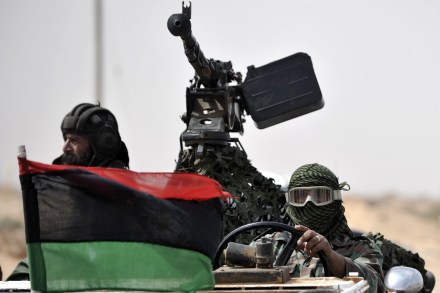
The imminent success of the Libya intervention was, to a remarkable degree, down to Anglo-French cooperation. Though the media has been keen to play up, and even conjure up, rifts and disagreements between Paris and London — and the hyper-active Nicolas Sarkozy can't help but act first and coordinate later — the fact is that the two states worked closer and better together than they have done for years. Probably not since the Suez operation have the British and French militaries cooperated so closely. But the intervention, even if it is coming to a (deadly and protracted) end did show up a number of deficiencies in materiel and command and control arrangements, as well as problems of political coordination.

Cameron has the opportunity to lead the nation

From our UK edition

The recall of parliament today offers David Cameron the chance to take command of the current situation. The police might have horribly mishandled the situation on the first few nights of the riots and Cameron’s government might have been caught flat-footed by them. But he now has the opportunity to build on the successful policing of the last two nights and his strong statement yesterday and lead the national response to this crisis. The mechanics of a parliamentary statement allow Cameron to set the terms of debate. He also has the huge advantage of simply being the Prime Minister. The nature of his office affords him the opportunity to speak for the country.

Capital punishment to be debated in parliament?

From our UK edition

Sir George Young has graced the pages of the Daily Mail this morning, arguing that MPs cannot ignore the clamour for a debate on the death penalty, as examined in depth by Pete last weekend. The Leader of the House’s intervention is the greatest indication yet that parliament will discuss the issue for the first time since the passage of the Human Rights Act in 1998. This has not come as a bolt from the blue. A string of e-petitions will mature soon and capital punishment is expected to be near the top of the list, as it always is when the public is asked for its opinion.

Petrol woes set to continue

From our UK edition

Despite small falls in petrol prices last month, the consequence of a supermarket price war according to the AA, motoring becomes ever more expensive. Political campaigns have opened as pressure builds at the pumps; and these campaigns have been co-opted by influential organs such as the Sun. The government has reacted: taking part in the International Energy Agency’s decision to release reserves onto the market to counter those members of OPEC that connive to sustain high oil prices. The government has also relaxed some of its windfall taxes on companies operating in the North Sea.