Parliament

Aide to Europe minister calls for Parliament to beef up its engagement with EU

From our UK edition

Another day, another paper by a Tory MP about Britain's relationship with Europe. Except the latest paper, by Tobias Ellwood for think tank Open Europe, is actually not so much about what's wrong with Europe, but about what's wrong with how our Parliament in Westminster deals with the whole issue. Ellwood, who is PPS to Europe Minister David Lidington, doesn't believe Westminster politicians are actually very good at engaging with European Union policymaking, preferring instead a 'complain-but-don't-change' approach. He paints a discomfiting picture of the way MPs relate to Brussels, describing an alienation which leads to 'little appetite amongst MPs to understand fully how the EU actually works - and how to use Parliamentary power to change it or its policies'.

In defence of the CofE’s House of Laity

From our UK edition

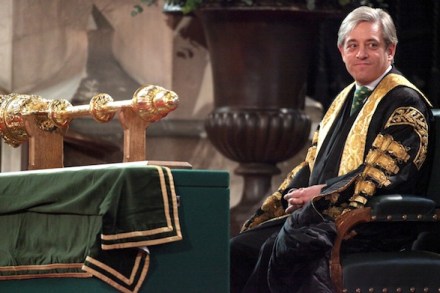
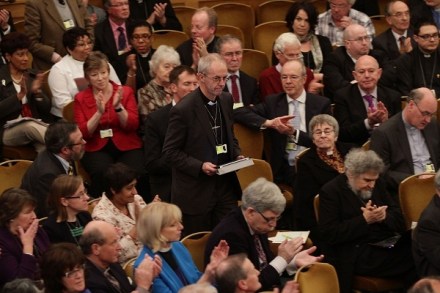
Even friends of an Established church like myself – though I’m a Catholic – should think twice about the wisdom of the idea after the naked political interference in the affairs of the CofE in the Commons. The Speaker, who is non-religious/agnostic, was among the most overt in encouraging MPs to overturn the church’s decision not to approve women bishops. Perhaps, he suggested, they might like to refer the matter to the Equalities Minister (Maria Miller)? It was more or less to say that the equalities legislation should be brought to bear on the CofE when it comes to its way of appointing bishops. Ben Bradshaw too was all in favour of parliament getting involved. So was Chris Bryant, who is not only an ex-Anglican vicar, but by his own account an ex-Christian.

How easy would it be to withdraw from the European Court of Human Rights?

From our UK edition

As James says, the prisoner votes row will return to parliament before lunch today. The government is expected to offer the Commons three choices: The retention of the blanket ban, in defiance of the European Court of Human Rights (ECtHR) Enfranchising prisoners serving up to six months. Enfranchising those serving up to four years. Parliament is expected to vote for retention, as it has done so previously. Such an outcome would, obviously, set the UK government on a collision course with the ECtHR and leave it open to very costly compensation suits. Damages of around £1,000 per case have been awarded in other jurisdictions, and leaked documents published last year showed that the government’s lawyers estimate the cost of compensation suits could exceed £140 million.

Where does power lie? Or where should power lie?

From our UK edition

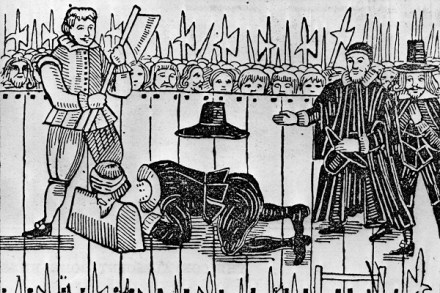
Iain Martin has written a cracking piece for the Telegraph entitled: ‘The coming battle with the EU is about sovereignty.’ Iain recommends a new play, 55 Days, which tells the story of the aftermath of the English Civil Wars and the execution of Charles I. He was gripped by this tale of power and politics, and asked Tristram Hunt and Douglas Carswell why the civil wars continue to resonate. Carswell, in his new book, The End of Politics: And the birth of i-democracy, argues that the 2010 intake, on both sides of the House, has revived parliament. MPs are defying the whips to assert their constituents’ views. The MPs are doing this, Carswell says, because the internet has brought them closer to their constituents.

David Cameron must rule out votes for prisoners at PMQs

From our UK edition

The issue of prisoner votes has turned into a question of trust between David Cameron and his backbenchers. Most Tory MPs well remember that the Prime Minister’s initial intention was to comply with the Strasbourg court’s ruling; he only changed his mind after seeing how strong feelings were on the issue on the Tory benches and in the country. For this reason, Cameron needs to scotch all this talk of a draft bill on votes for at least some prisoners at PMQs today. If he doesn’t, he’ll have just as large a rebellion on his hands as he did last time. The issue will also drive a further wedge between Cameron and his backbenchers.

The government kicks the Sharia debate into the long grass

From our UK edition

Because our Parliament discusses little of significance anymore, most of the public tend to ignore it. The perception that the weekly silliness of Prime Minister’s Questions constitutes Parliamentary business is enough to put any normal person off.  And apart from that weekly bun-fight, even the media barely bothers to report on the work of either House any longer. Occasionally something still happens in the Commons or the Lords that is worthy of serious attention but because of its form elsewhere, such occasions fail to get the attention they deserve. Such is the Bill proposed by Baroness Cox, which had its second reading in the Lords on Friday.

Keep our MPs in the Commons bear pit

From our UK edition

The idea of closing the House of Commons for five years will, I suspect, be popular with those who see in this a chance to move the MPs to a lifeless, European style semi-circular chamber that supposedly encourages them to co-operate. The current Commons chamber is divided by the length of two swords, a deliberately adversarial system. It is a bear pit, rough and merciless. Personally, that’s how I like it, and that’s how it ought to stay. The idea is that moving MPs to another arena would save money as the Palace of Westminster is refurbished. But you can bet a new chamber would be kitted out in ways that suit your average MP: they’d have a chair each, no doubt, and a desk like most other parliaments in the world.

Delingpole moots run

From our UK edition

The campaign to draft James Delingpole into Parliament, revealed here yesterday, is gathering pace. Delingpole himself has broken cover to declare that he was already moving to Northamptonshire - the scene of the upcoming by-election. ‘I'm torn, I must say... though I can't claim to have taken quite as many drugs as Louise Mensch apparently has, I did make a pretty heroic go of it in my younger, longer-haired days.’ But it’s not all fun and games. ‘On the other hand, I'm skint,’ says the right-wing scribe. In a long rant against the Tories, he confirms that if he were to run it would be on a UKIP ticket - also revealed by me yesterday. So, does he want to be an MP? ‘Probably not.

Be careful what you wish for, Bercow plotters

From our UK edition

Tory MPs are plotting to oust Speaker Bercow, the Sun on Sunday reports today. They are apparently furious that Bercow allowed Chris Bryant to brand Culture Secretary Jeremy Hunt a 'liar' in his party's opposition day debate calling for a full investigation into Hunt's conduct. The Speaker refused to censure Bryant because he argued the unparliamentary language mirrored the wording of Labour's motion for the debate. This attempted coup is another sign of the fierce loyalty that backbenchers feel for the Culture Secretary. You insult Hunt, and you insult the party: the Lib Dems learned that after they allowed their MPs to abstain on that motion and lost any goodwill from the Tory backbench on Lords reform.

Danger in the Lords

From our UK edition

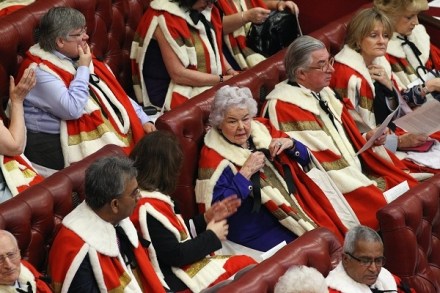
Opponents of an elected House of Lords have been flexing their muscles in the last few days. Yesterday, Archie Hamilton, a Tory peer and former chairman of the 1922 Committee, and a sceptic of the coalition’s plans for an elected Lords, put down a manuscript amendment on the Financial Services Bill, on which the government was defeated. This means that the bill will have to go through a full committee stage. This is just a little indication of how much more difficult the coalition could find getting its legislation through the upper house once the Lords reform debate has started in earnest. So much of the proceedings in the Lords is governed by convention, that it is far easier to delay the government there than in the Commons.

Winsor — the outsider

From our UK edition

In nominating the lawyer and former rail regulator Tom Winsor as her choice to be the next chief inspector of constabulary, the home secretary has stoked more discontent among the ranks of the Police Federation. Not only is he the first non-police officer ever to be nominated to the role, but he is also the author of a bold review of pay and conditions that made long-overdue recommendations to modernise the police workforce. For this reason alone, the Police Federation is dismayed by the nomination, and MPs on the Home Affairs Select Committee (meeting today) may yet try to block him.

Theresa May and the right to family life

From our UK edition

Theresa May has been in the news recently, as she introduces plans to stop spouses coming to Britain unless they have savings of £18,000 and an additional £2,400 for each foreign born child they bring with them. The Home Secretary told Andrew Marr earlier this morning:  ‘It is important that we say you should be able to support yourselves and not be reliant on the state.’     She also reiterated her intention to stop foreign prisoners, whose family live in Britain, from using article 8 of the European Convention on Human Rights, which includes the right to ‘private and family life’, to resist deportation. She is going call a vote in the Commons next week to determine the balance between the interests of prisoners and the wider public.

Clarke goes OTT

From our UK edition

Today’s award for hyperbole goes to Ken Clarke. He has just told the Leveson inquiry that, ‘The power of the press is far greater than the power of parliament.’ Given that parliament can still make the law of the land, this is a rather absurd statement. (Though, I do regret that parliament has given away so many powers to Brussels and the courts. But I doubt that was what Clarke meant.)   Clarke’s statement seems to stem from a belief that MPs buckle under pressure from the press, that they’d all be a lot more liberal if it wasn’t for those pesky tabloids. I just don’t think this is true.

The expenses spotlight falls on Baroness Warsi

From our UK edition

If David Cameron had a list of headlines he doesn’t want to see, I’m sure ‘Top Tory in expenses scandal’ would be near the top of it. Yet that’s what he, and we, will read this morning on the cover of the Sunday Times (£). The ‘Top Tory’ in question is Baroness Warsi, co-chairman of the party. And her offence, apparently, is to have claimed expenses for overnight accommodation while staying for free in a friend’s house. Warsi has more or less denied the accusation, saying that she did stay at the property on ‘occasional nights’ as the guest of a party official — but made an ‘appropriate payment equivalent to what I was paying at the time in hotel costs’.

Cameron loses his rag

From our UK edition

Ed Balls succeeded in getting David Cameron to lose his rag at PMQs today. The shadow Chancellor sledged the PM throughout the session, apparently asking him how many glasses of wine he had had today and the like. Towards the end of the session, Cameron snapped and called Balls ‘the muttering idiot sitting opposite me’. The House erupted. Ed Balls looked even more pleased with himself than usual while the Tory benches cheered the line. The exchange will put Cameron’s temper up for discussion which is Downing Street’s second least-favourite topic after the PM’s work-rate. But I suspect that there’ll be limited cut through to the public: politicians insulting each other in the House isn’t exactly new.

A matter of conscience

From our UK edition

Personally, I’m in favour of gay marriage. But it is precisely the kind of issue that should be subject to a free vote and all the indications are that the government intends that when the legislation comes to Parliament it will be. So, it shouldn’t be a big deal that the Northern Ireland Secretary Owen Paterson feels that he can’t support it, a view he expressed in a letter to a gay constituent that Politics Home has obtained a copy of. There are several other ministers who feel the same way. Indeed, I understand that the Chief Whip himself has grave reservations about the matter. It would be deeply intolerant to attempt to whip these ministers to vote against their consciences.

PMQs live blog | 16 May 2012

From our UK edition

<a href= "http://www.coveritlive.com/mobile.php/option=com_mobile/task=viewaltcast/altcast_code=b4764a0fc6" _fcksavedurl= "http://www.coveritlive.com/mobile.

The Queen’s Speech: full text | 9 May 2012

From our UK edition

My Government’s legislative programme will focus on economic growth, justice and constitutional reform.   My Ministers’ first priority will be to reduce the deficit and restore economic stability. Legislation will be introduced to reduce burdens on business by repealing unnecessary legislation and to limit state inspection of businesses. My Government will introduce legislation to reform competition law to promote enterprise and fair markets. My Government will introduce legislation to establish a Green Investment Bank. Measures will be brought forward to further strengthen regulation of the financial services sector and implement the recommendations of the Independent Commission on Banking.

Their drinks are still on us

From our UK edition

It has been a busy day for Commons committees, and I don’t just mean the education and media select committees either. The John Bercow-chaired House of Commons Commission has released a briefing note outlining some of its recent decisions relating to the running of the House. It covers three areas: ‘Mobile devices for members’ (aka, iPads for MPs); ‘Trees in Portcullis House’ (let’s keep ‘em, so long as we can make ‘em cheaper); and ‘Alcohol policy’ (more on which below). It’s the last of these that will probably get the most attention, not least because of Eric Joyce’s recent misadventures. So what does Team Bercow recommend?