Paris

Donald Trump is right to ditch the Paris Agreement

From our UK edition

Yesterday’s announcement by Donald Trump that the United States is withdrawing from the Paris Agreement is truly historic. The Paris accord was the closest the Europeans had come to getting the US to accepting timetabled emissions cuts in the now quarter century saga of UN climate change talks. The first was in the 1992 UN climate change convention itself, rebuffed by George H.W. Bush; the second was in the 1997 Kyoto Protocol, signed by the Clinton Administration, effectively vetoed by the Senate and repudiated by George W. Bush. Now, Donald Trump has dashed their hopes for a third and possibly final time. It’s understandable that the European reaction is one of fury and outrage.

Continental drift | 2 June 2016

From our UK edition

It is a long time since the term ‘sick man of Europe’ could be applied to Britain. France is now a worthier candidate for the accolade — it -increasingly resembles a tribute act to 1970s Britain. A package of modest labour-market reforms presented by a socialist president has provoked national strikes on the railways and Air France. This week, the streets of Paris resembled one big Grunwick or Saltley Gate — the trials of strength between employer and union in which so many of Britain’s most bolshy trade unionists cut their teeth. This week is not a one-off: in recent years France has had a strike rate more than twice that of Denmark, its nearest European competitor. Britain now looks a paradigm of -industrial virtue by comparison.

Signs and spellsnich

From our UK edition

On 25 February 1980, Roland Barthes, the great French intellectual, was run over by a laundry van in Paris. He died from his injuries a month later. This book — Laurent Binet’s second novel — proposes that it was not an accident; that Barthes had just come from lunch with the Socialist candidate for the forthcoming French presidential elections, François Mitterrand, and that he was in possession of an extremely important document, one which gave detailed instructions on the seventh function of language.

Masonic bodge

From our UK edition

Left-wing groupie Paul Mason has written a costume drama about the suppression of the Paris commune in 1871. We meet Louise Michel and her all-female gang of arsonists as they’re carted off to jail for setting fire to the Tuileries. After a harsh stint in the cells, they’re shipped out to the French colony of New Caledonia, in the eastern Pacific, where they live in an open prison. Things aren’t too bad. They mingle with the natives, enjoy the local hooch, and sing comradely songs about ‘spilling the blood impure’. Escape is on the agenda. A committee of anarchists is said to be making swift progress across the ocean in a rescue ship.

The fall of Paris

From our UK edition

Paris used to be the most self-confident city in the world. Brash, assertive, boastful: Manhattan claimed to be the best. Cool, elegant, sophisticated, supercilious: Paris knew that it was the best. This is no longer true. Paris has lost its élan, and that has created a love-hate relationship with the UK. Everyone seems to know someone who is working in London. The ones left in Paris cannot decide whether to punish us or join us: to hope that Brexit fails — or to fear that Brexit might fail, and keep able young Frenchmen from job opportunities in London. Flics everywhere, tattiness, tension: one is reluctant to acknowledge the successes of evil, but terrorism is at the core of Paris’s problems.

A surreal caprice

From our UK edition

At the start of this novella the protagonist, Thibaut, is ambushed by Wehrmacht soldiers between the ninth and tenth arrondissements. That the year in 1950 is not the strangest aspect, as he is rescued by the appearance of the Vélo, a bicycle-like contraption with a queasily organic prow. It is, in fact, a living version of Leonora Carrington’s 1941 sketch ‘I Am an Amateur of Velocipedes’. In this initially joyous, fundamentally chilling book, the art of the surrealists has been weaponised in the fight against Nazism. Surrealism billed itself as a liberation; now is it part of the Liberation.

Paris wants to fight terror with culture. Will it work?

From our UK edition

The news about the machete man in the Louvre broke just as my Eurostar was approaching Paris. Was this just a one-off, or were there more terrorist attacks to come? In the Gare du Nord that lunchtime, the atmosphere was humdrum. Armed policemen passed by like ghosts, unseen and unnoticed. For Parisians, these incidents have become a normal part of daily life. I figured the Louvre would still be cordoned off, so I headed for the Musée d'Orsay. If the Louvre attack was part of a co-ordinated assault on the cultural institutions of the French capital, the Musée d'Orsay would be another prime target. Would the museum be closed, as a precaution? Would the visitors stay away? Neither. People were queueing to get in, tourists and locals. The mood in the queue was laid back.

Terror returns to Paris in Louvre attack

From our UK edition

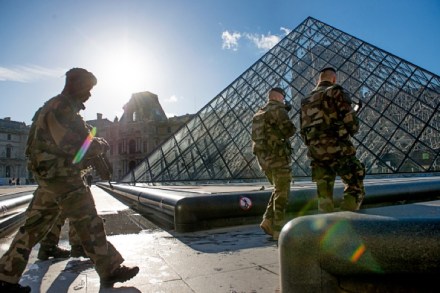
A man armed with a machete has been shot by a soldier outside the Louvre in Paris this morning. French police said the attacker - who is fighting for his life in hospital - yelled 'Allahu Akbar' as he tried to gain access to the world-famous museum. Prime Minister Bernard Cazeneuve has described the attack as 'terrorist in nature' and the French foreign minister has said the man involved was armed with several knives. One of the things to say about the incident this morning was that it was over before it started.

The sad state of Gare du Nord offers a miserable welcome to Paris

From our UK edition

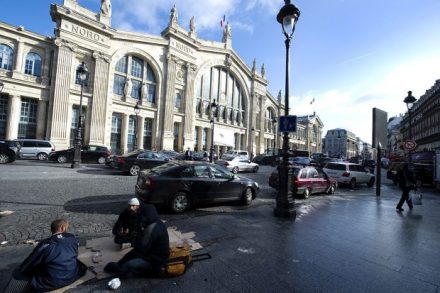
Last week I took the Eurostar to the Gare du Nord in Paris. We had lunch next to the station at the Terminus Nord brasserie, unchanged since 1925. The art deco clock on the wall has literally stopped, and everything else is frozen in the world of Fred Astaire, from the mosaic floor to the mirrored walls, to murals of dancers in tails and flapper dresses. But my God the Gare du Nord is a dump. It has a fine 1863 iron-and-glass train shed, with a classical facade lined with statues of handsome women, representing destinations from Calais to the heart-stirring battlefields of Arras and Dunkirk. The station is now a wreck, haunted by lost souls, homeless, drunk and begging. In the station loos, a graffito reads, ‘Il y’a meilleurs toilettes en prison qu’ici.

From Balzac to the Beatles

From our UK edition

All biography is both an act of homage and a labour of dissection, and all biographers are jealous of their subjects. Most keep it cool, but some like it hot and have created a distinct category in which jealousy becomes murder followed by necromancy: the one they hug is asphyxiated — but lo! — they breathe their own air back into it. Sartre’s book on Jean Genet is such a work, as are Brigid Brophy’s on Ronald Firbank and Roger Lewis’s on Anthony Burgess. Claude Arnaud’s on Jean Cocteau is yet another. Its approach is intensely romantic. Everyone is heaving in lurid colours.

Despite what Big Bang destroyed, there’s still nowhere quite like the City

From our UK edition

As the 30th anniversary of Big Bang loomed, I found myself back at the scene of my City demise. Ebbgate House — headquarters of BZW, the investment banking arm of Barclays where I worked until one fateful morning in 1992 — fell deservedly to the wrecking ball a decade ago. It was replaced by Riverbank House, and there I was last week, hovering above where my desk used to be, talking about ‘why no one listens to the City any more’ and reliving the P45 moment that released me into the happier world of journalism. Personal echoes apart, this was also a moment to revisit Big Bang, the Thatcherite reforms launched on 27 October 1986 that allowed banks such as Barclays to buy stock-exchange firms, create BZW and its ilk, and compete against Wall Street’s giants.

We should be flattered not threatened by France’s bid to take on the City

From our UK edition

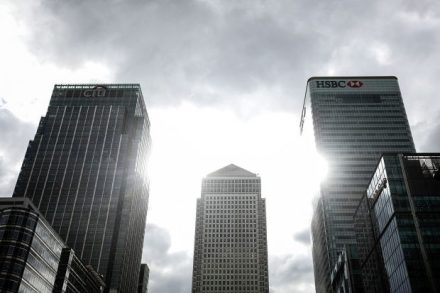
The French are trying to seduce the British to come and work in Paris. A video hymns the delights of La Defense, the Gallic Canary Wharf. It is a healthy Brexit effect that the French now feel that they can no longer fight the City of London solely by trying to regulate it, and must try persuasion instead. The prospect of British departure reawakens the spirit of competition in a continent which had largely replaced it with bureaucracy. By leaving, Britain ought to win first-mover advantage in this contest, but even if we don’t, we will have done a service to our neighbours which we could never have managed if we had voted to stay.

The Spectator’s notes | 20 October 2016

From our UK edition

Vote Leave was the most successful electoral campaign in British history. Against the opposition of all three political parties, it won, achieving the largest vote for anything in this country, ever. But voting to leave is only the essential start, not the fulfilment, and now there is no Vote Leave. After victory, the campaign’s leaders went their various ways. Some were lulled into a false sense of security by Mrs May’s clear declaration of Brexit intent, and by the fact that one of their top colleagues, Stephen Parkinson, is now installed in 10 Downing Street. Nick Timothy, now all-powerful in Mrs May’s counsels, was running the New Schools Network during the campaign.

Belly of an architect

From our UK edition

Depending on your point de vue, Haussmann’s imperial scheme for Paris created townscape of thrilling regularity or boring uniformity. Whatever; against a backdrop of serene haute-bourgeois perfection, intrusions have always been controversial. Eiffel’s tower of 1889 was attacked by the intellos of the day. Maupassant, Gounod and Dumas fils thought it a hideous construction of riveted tin. Le Corbusier’s unrealised 1925 Plan Voisin, replacing monuments with motorways, was designed as a shock to the system. And the 1973 Tour Montparnasse, central Paris’s only tall building, is, by general agreement, brainless. The Centre Pompidou of 1977 was a test for taste while the 1989 Bastille Opera is grossly ham-fisted, the last and worst of les grands projets.

In the shadow of Picasso

From our UK edition

‘My painting is an act of decolonisation,’ declared Wifredo Lam. These are the first words you read on entering the retrospective of his work at Tate Modern. But I must say that both Lam and Tate got this statement 100 per cent back to front. On the contrary, Lam’s work strikes me as entirely a product of colonialism. It’s none the worse for that, but it’s not any better either. Lam (1902–1982) was originally from Cuba. His father, Enrique Lam-Yam, had emigrated from China and his mother, Ana Serafina, was of mixed African and Spanish descent. He was, in other words, a rather typical inhabitant of the new world. And the rich fusions of that milieu have produced such cultural wonders as Afro-Cuban music and, across the Gulf of Mexico in Louisiana, jazz.

Portrait of the week | 15 September 2016

From our UK edition

Home Schools in England would have the right to select pupils by ability, under plans outlined by Theresa May, the Prime Minister. New grammar schools would take quotas of poor pupils or help run other schools, a Green Paper proposed. ‘We already have selection in our school system — and it’s selection by house price, selection by wealth. That is simply unfair,’ Mrs May said in a speech. Sir Michael Wilshaw, the chief inspector of schools, said the idea that poor children would benefit from a return of grammar schools was ‘tosh’. Oversubscribed Catholic schools which wished to expand would be able to choose all their additional pupils on grounds of faith.

Diary – 4 August 2016

From our UK edition

I was born in 1958 and turned 58 in June, so for the next five months my age coincides with the year of my birth. Does any significance attach to this pleasing symmetry? If you were born in 1904 then the numerological rhyme would be achieved at four years old, before you were in any position to appreciate it. If you were born in 1990 then the chances are you will never manage this brief docking of age and year; of course the odds are better than they would have been if you were born in 1890 but it’s unlikely you’ll feel some pivotal moment has been reached. Which is how it seems to me.

High life | 21 July 2016

From our UK edition

From my bedroom window I can see a little girl with blonde pigtails riding her bicycle round and round for hours on end. She’s German, looks ten years old and lives nearby. Next month I am finally moving to my new home, a beauty built from scratch amid farmland. Cows, deer, the odd donkey graze nearby, a far better bunch than the one Gstaad attracts nowadays. I am, however, king of the mountain. My place is the highest chalet on the Wispille, one of the three mountains that dominate the Mecca of the nouveaux-riche and the wannabee. Life is swell, as long as the old ticker keeps ticking. An approaching birthday tells me that it’s time to take stock, do something of consequence, begin taking life seriously at last.

What did you do in the last war, Maman?

From our UK edition

‘La France,’ as everyone knows, is female. Perhaps this is due to gendered assumptions about the beauty, cuisine and couture of the French capital, the symbolic revolutionary Marianne, or the patriarchal nature of language. Between 1940 and 1945, however, Paris was more literally female. Most of the capital’s men were serving with the Allied effort overseas, were POWs or forced workers in Germany. The women of Paris had stayed behind to keep the city running, put food on the table and care for their children, parents and in-laws. For some when France fell, Paris felt emasculated in another sense. Suddenly Parisian women found themselves having to decide how they were going to live alongside their almost entirely male Nazi conquerors and occupiers.

Western liberals who banned Eagles of Death Metal are doing Isis’s dirty work

From our UK edition

If you want to know how lost Europe is, how thoroughly it has abandoned freedom of speech, get this: two French music festivals have banned Eagles of Death Metal, the American rock band whose gig at the Bataclan was turned into a bloodbath by Isis last November, after the lead singer said some dodgy things about Muslims. Yes, six months after they watched and heard 89 of their fans being slaughtered by Isis for the crime of engaging in ‘perversity’, Eagles of Death Metal are now being shut down by festival organisers for saying allegedly perverted things about Islam.