Paris

An American in Paris: a zingy new Wheeldon dance-musical that you won’t want to miss

From our UK edition

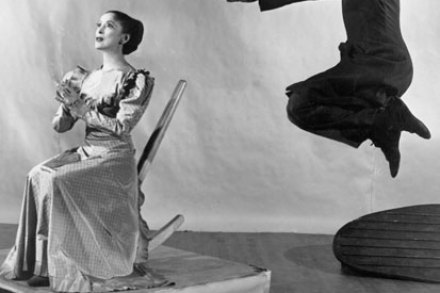
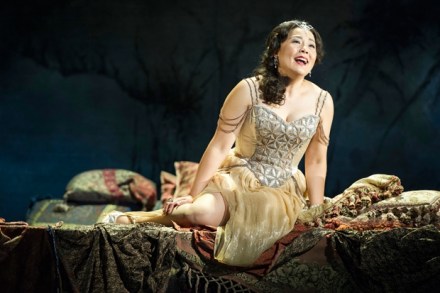
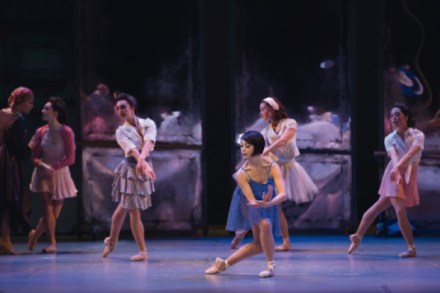
A new year must start with hope and resolution, and if you’re very rich, with influence in the highest places, I’d urge you to resolve to dust off the private jet and get to Paris quick this weekend hoping to find a ticket somehow for the last Châtelet performances of An American in Paris, Christopher Wheeldon’s s’wonderful, s’marvellous new staging of the Gershwin/Minnelli musical film. Or book for New York in March when the show moves to its second home on Broadway. But surely there must be a UK run soon. It’s the first big dance-musical of the Royal Ballet’s favourite son, which is why we should pay attention. The secret of Christopher Wheeldon’s current status at 41 as blue-eyed boy of the Western ballet world is his geniality.
A stunner of an exhibition at Paris’s flashiest new gallery

From our UK edition

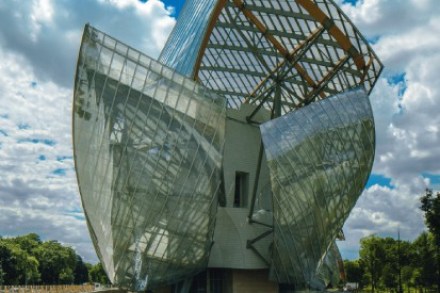
You can tell a lot about an art gallery from its attached eatery. The Tate has the grand but gratuitously naff Rex Whistler restaurant. The Serpentine its globular Zaha Hadid nouvelle cuisine joint. Then there’s the Mess Restaurant at the Saatchi Gallery’s newish space in the old Chelsea Barracks. To be charitable, the name is a bad but unfortunately appropriate pun. Anyway, I report from a children’s park in BCBG west Paris, where Louis Vuitton have just opened a new art gallery. Obviously, a luxury (and erstwhile collaborationist) megabrand were never going to settle for an ordinary white cube. Oh no. Instead they hired virtuoso architect Frank Gehry to build something that would piss off the local nimbys. And piss them off it did, but it still got built.

Le French bashing has spread to France. Are things really that bad?

From our UK edition

The French for French-bashing is le French bashing. This verbally costive nation is at it once again, torpidly borrowing an approximately English expression rather than coining its own. Such bashing is not an exclusively Anglo-Saxon practice. There is indigenous bashing. At least there is Éric Zemmour, whose salutary Le Suicide français was published a couple of months ago. Its very first sentence declares that France is the sick man of Europe — which prompted Manuel Valls, little Hollande’s prime minister this week and a man who is not growing into that poisoned office, to take the bait, exhibit a preposterously thin skin and denounce the book twice in a few days. This is not to suggest that M.

Haunted by the Holocaust: Three novellas by Patrick Modiano

From our UK edition

Earlier this year Patrick Modiano won the Nobel Prize in Literature ‘for the art of memory with which he has evoked the most ungraspable human destinies and uncovered the life-world of the Occupation’. A prolific and celebrated novelist in France, Modiano is not well known in Britain or America, where only a third of his works have been translated and many are out of print. Yale University Press has a coup in these circumstances with Mark Polizzotti’s translation of three of Modiano’s novellas, commissioned before the Nobel announcement. The novellas originally appeared over five years: Remise de peine (Suspended Sentences) 1988; Fleurs de ruine (Flowers of Ruin) 1991; and Chien de printemps (Afterimage) 1993.

Are the British too polite to be any good at surrealism?

From our UK edition

The Paris World’s Fair of 1937 was more than a testing ground for artistic innovation; it was a battleground for political ideologies. The Imperial eagle spread its wings over the German Pavilion; the Soviet hammer swung above the Russian Pavilion; and the Spanish Pavilion unveiled Picasso’s shocking monument to the civilian dead of the bombed city of Guernica, raising the clenched fist of the Spanish Republic in the capital of non-interventionist France. Not everyone was convinced by ‘Guernica’ as art. Anthony Blunt in The Spectator commended Picasso’s political gesture but dismissed the painting as ‘the expression of a private brainstorm’.

To call this offering a book is an abuse of language

From our UK edition

I picked up this book with real enthusiasm. Who cannot be entranced by those 20 years after the second world war when New York supplanted Paris as the cultural capital of the world? One thinks of the Beats, of Dylan and Greenwich Village, of Sontag and Trilling. Well think again, for none of the above feature in this book at all. Indeed the first thing to be said is that to call this offering from Thames & Hudson a book is a real abuse of language. It has covers and inside those covers one finds text and image but the three essays that cover visual art, architecture and design and the performing arts appear to have simply been placed together without either editorial brief or plan. Worse, the book lacks not only a credited editor but also a credited designer.

Andrew Roberts’s diary: Just who’s the despot here – Napoleon or Paxman?

From our UK edition

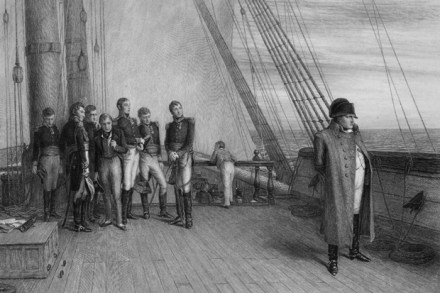
To the British embassy in Paris for a colloquium on ‘Napoleon and Wellington in War and Peace’ organised by our ambassador, Sir Peter Ricketts, to mark the bicentenary of the purchase of the embassy from Pauline Borghese, Napoleon’s sister. (According to the historian of the house, Tim Knox, Pauline would warm her feet on the naked backs of her ladies-in-waiting, and be carried to her bath by a huge Egyptian slave.) William Hague opened our proceedings, boldly pointing out the other anniversarial elephant in the room: it was Trafalgar Day.

My first Arc de Triomph was a triumph

From our UK edition

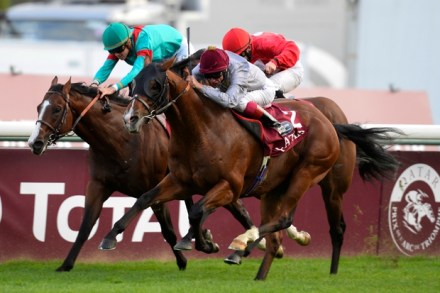
Aboard our coach from Rouen to Paris for the Prix de l’Arc de Triomphe our lady guide put it succinctly: ‘The only polite Parisians are the ones who are asleep.’ Try out your rusty French anywhere else and the locals award you bonus marks for effort: Parisians sneer and affect the sort of aural incomprehension Lester Piggott displayed when stable lads sought a fiver for leading up his winner. It was a joy nonetheless to be at my first Arc: while I was a full-time political commentator the coincidence with the party conference season made attendance impossible. It was all the more fun sharing duties with ex-jockey John Reid, who won the 1988 Arc on Tony Bin, escorting cruise ship passengers to the big race won for the second year in a row by the remarkable filly Treve.

Opera North’s Coronation of Poppea: a premium-rate sex-line of an opera

From our UK edition

Virtue, hide thyself! The Coronation of Poppea opens with a warning and closes with a love duet for a concubine and a psychopath, their union celebrated in sinuous melismas over a blameless passacaglia. First performed in 1643, Monteverdi’s final opera is all about talking dirty and talking tough. Seductions, threats, boasts and betrayals are snapped, spat, stuttered and smooched over harmonies that pinch and squeeze like a premium-rate sex-line. Does it work in English? Yes and no. There are casualties in Tim Albery’s slick, vicious Opera North production, some historical, some poetic, some musical. In Laurence Cummings’s hybrid edition, drawn from the Venice and Naples scores, transpositions and cuts proliferate.

The Spectator at war: Aerial warfare | 14 October 2014

From our UK edition

From The Spectator, 17 October 1914: Last Sunday another aeroplane attack was made upon Paris. It appears that no fewer than five aeroplanes were concerned in the raid, and that twenty bombs were dropped, killing four persons and injuring twenty-two. One of the bombs fell upon the roof of the church of Notre Dame, and was at first supposed not to have exploded. Later reperts, however, showed that it burst and set a beam on fire, though fortunately no serious damage resulted. On the following day a further attack was made by a single aeroplane, which dropped six bombs, without, however, doing any appreciable mischief. It is extremely difficult to understand what advantages the German military authorities hope to gain from such exploits as these.

Anthony Horowitz’s diary: Keeping James Bond’s secrets for the Smersh of publishing

From our UK edition

It was quite fun being named as the new writer of 007 — although actually I’d make a lousy spy. As my family knows, I’m hopeless at keeping secrets and I’ve found it almost impossible hanging on to this one for the past few months. Even now I’m forbidden to reveal the title, the story, the date it takes place or any of the characters… and I’ll probably get into trouble even for writing this. Believe me, Orion Books and their legal department are more sinister than Smersh. In fact I did quite well and only dropped one clue to someone who follows me on Twitter. He asked me what my big secret was and I told him the answer was oobvious. As I hoped, he thought it was a typing error.

Picasso’s dealer

From our UK edition

When she was four, Anne Sinclair had her portrait painted by Marie Laurencin. It is a charming picture, a little dark-brown-haired girl with a white bow, very blue eyes and a white and pink striped blouse, and it was commissioned by Sinclair’s grandfather, Paul Rosenberg, one of the handful of most influential Parisian art dealers of the 1920s and 1930s. More interested in politics than family history, Sinclair — for 13 years the host of the prestigious French weekly television news show 7 sur 7 — waited until she turned 60 to explore the trunks of papers in her mother’s attic.

The camera always lies

From our UK edition

Everyone knows about architecture being frozen music. The source of that conceit may be debated, but its validity is timeless and certain. For all its weightiness, architecture plays with ethereal proportion, harmony, resonance and delight: the stuff of music. But architecture is more fundamentally about the management of light and space. Or, at least, that’s how architects see it. So photography makes better sense of architecture than any other medium does: there is something congruent between the fixed optical geometry of a camera and the way we perceive buildings. And because images are more readily accessible than travel to remote sites, everyone’s experience of world architecture is, at least initially, based on the photographic record, not the real thing.

The man who brought Cubism to New York

From our UK edition

The American Jewish artist Max Weber (1881–1961) was born in Belostok in Russia (now Bialystok in Poland), and although he visited this country twice (he came to London in 1906 and 1908), it was the experience of continental Europe — and particularly Paris — that was crucial for his development. The title of this exhibition is thus rather misleading: Weber never lived in England, and his ‘presence’ here is based upon a collection of his work made by his friend Alvin Langdon Coburn. Coburn (1882–1966), a boldly experimental photographer attached to the Vorticist group, was another American, but one who opted to settle in England in 1912.

The Spectator at war: Push on to Paris?

From our UK edition

The Spectator, 5 September 1914: SEDAN Day has passed, but there has been no second Sedan, as the Germans so fondly hoped. Indeed, as far as one can yet learn, the day passed without any memorable action, for it would be absurd to count as memorable the pleasant little capture of ten German guns by the British cavalry near Compiegne. Granted reliance on Fabian tactics for the present—and we fully recognize that these are the right tactics to adopt in existing circumstances— we are well satisfied with the situation.

The Russian literary celebrity who begged Tolstoy to spare Prince Andrei

From our UK edition

Nadezhda Alexandrovna Lokhvitskaya was a literary celebrity in pre-revolutionary St Petersburg. She chose the pen-name ‘Teffi’ because it was androgynous, and because it was the kind of name a ‘lucky’ fool would have; in Russia, fools were held to tell truths, albeit obliquely. ‘Teffi’ wrote for newspapers, most notably the Russian Word. By 1911 she was writing more fiction than journalism; her short story collections achieved instant popularity. In 1919 the Russian Word was closed down. Teffi was evacuated, ending up, like so many ‘lesrusses’, in Paris. She never returned to Russia, except in her stories. Teffi’s fame evaporated almost immediately after her death in 1952.

The West has drifted away from Israel — and itself

From our UK edition

Is Israel drifting away from the West? That was Hugo Rifkind’s claim in his column in the magazine last week. Hugo wrote: ‘Israel drifting away. Never mind whose fault it is; that’s a whole other point. But it’s happening. It’s off. No longer does it exist in the popular imagination as our sort of place. Once, I suppose, foes and friends alike regarded it as a North Atlantic nation, but elsewhere. Then a western European one, then, briefly, a southern European one. When was it, do you think, that Israel stopped being regarded as fundamentally a bit like Spain? Early 1990s?

The breasts that launched Les Fleurs du Mal

From our UK edition

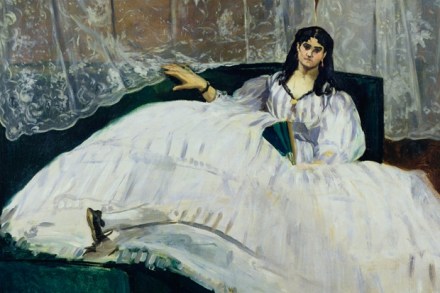
This novel is based on the life of Charles Baudelaire and the relationship he enjoyed — or endured — with his Haiti-born mistress, his Black Venus, Jeanne Duval. We first see him in 1842, a young poet of 20, making his dandyish way through the slums of Paris to meet his friends at a cabaret theatre for an evening of wine and hashish. Here he will encounter for the first time his future muse. She is voluptuous, in a long red dress, singing risqué songs. In no time he is unlacing her boots and preparing to squander the legacy which he is shortly expecting. However, there are, as the author shows us, three people in this relationship, and the third one is Baudelaire’s mother.

Robert Harris’s diary: My accidental war with Tony Blair

From our UK edition

To Paris, for the launch of the French edition of my novel about the Dreyfus affair. As we land, I isolate three anxieties out of my general sense of unease. First is the natural nervousness of any Englishman contemplating telling the French anything about their own country. Second is the French law which allows the descendants of actual historical figures — of whom there are dozens in my novel — to sue for defamation: the heirs of the Marquis de Sade even objected to an unflattering portrayal of the inventor of sadism. Third, I am required to make a speech in French, and while my grasp of that language is not as bad as my sister-in-law’s — who once genuinely inquired, at a restaurant in the Var: ‘What is the French for ratatouille?

The Paris of Napoleon III was one big brothel – which is why the future Edward VII loved it

From our UK edition

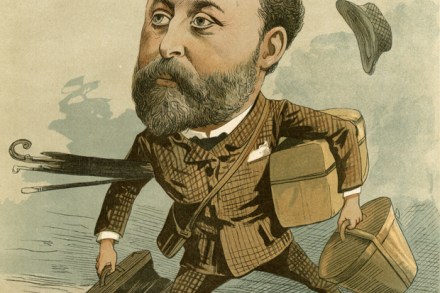
Stephen Clarke lives in Paris and writes book with titles such as 1,000 Years of Annoying the French. Dirty Bertie is a book in the same line — a comic history which manages to combine his brand of jaunty, bawdy humour (not mine, I confess) with being genuinely informative about French history. Clarke claims that there is a gap in the biography of King Edward VII. Biographers have not said nearly enough about Bertie’s jaunts to Paris. He is absolutely right about this. To Bertie’s British biographers Paris is a collection of clichés about grandes horizontales and a few well-worn anecdotes.