Parenting

Do parents really matter?

From our UK edition

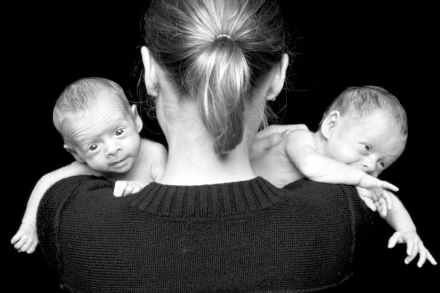
Parenting does not have a large impact on how children turn out. An incendiary claim, to be sure, but if you can bear with me until the close of this article I think I might be able to persuade you — or at the very least chip away at your certainty about parental influence. First, what if later today the phone were to ring and the voice at the other end informed you that you have an identical twin. You would have lived your entire life up to that point not realising that you had a clone. The bearer of this news says arrangements have been made to reunite you with your long-lost sibling. In something of a daze, you assent, realising as you hang up that you’ve just agreed to meet a perfect stranger.

The bawdy and beautiful game

From our UK edition

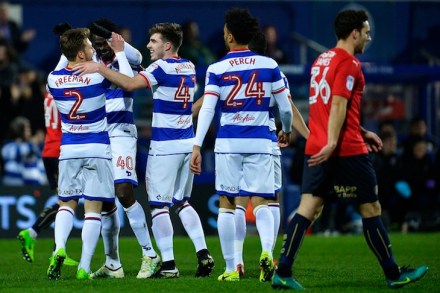
I can barely contain my excitement. The Easter break is nearly upon us and I will soon be heading off to an exotic locale where I can cast off my work-soiled garments and rediscover earthly pleasures. I will spend my time eating, drinking and singing, sure in the knowledge that no one will judge me because I’ll be surrounded by members of my elite metropolitan tribe. I’m talking, of course, about Pride Park, home of Derby County FC, where I’ll be travelling to an away game on Friday with 1,000 fellow QPR fans. This fixture clashes with a private party being thrown for my friend Barry Isaacson, once the most powerful British executive in Hollywood. Not so long ago I wouldn’t have missed that for the world.

They can’t handle the truth

From our UK edition

Every now and again I ask my daughter, who is a primary school teacher, if she is free for a curry after work. And almost always she replies that she can’t, as she has a ‘parents’ night’. Now, either she has become lazy in her excuses for not wanting to see me, or her school organises a great number of parents’ nights. Hoping it might be the latter, I consulted a friend called Lucy, a teacher at a primary near Guildford in Surrey. She said it was quite normal to have at least one parents’ night per term, plus two or even three ‘parents’ workshops’. These workshops are dedicated to specific themes such as ‘how to support your children’s homework’ or ‘how to support your child’s literacy development.

The don’ts of ‘parenting’

From our UK edition

In the American way, the child psychologist Alison Gopnik’s new book has an attractive sound-bitey title dragging a flat-footed subtitle in its wake: ‘What the New Science of Child Development Tells Us about the Relationship Between Parents and Children’.  And what this new(ish) science tells us is that we parents — or at least, our American counterparts — are doing it all wrong. Gopnik’s ‘carpenter’ is the parent who has a preconceived idea of how the child should turn out. A door is made according to a set of rules; if they are followed, it will be fit for purpose. The carpenter parent will raise the child ‘by the book’, ignoring individuality and denying opportunity for experimentation.

Why I’d like to be a more dangerous dad

From our UK edition

According to figures obtained by BBC Breakfast last week, more than 500 people were arrested in England and Wales in 2014–15 for leaving children unattended. In the majority of cases, the children concerned were aged ten or under, but some parents got into trouble for leaving their 15-year-olds home alone. It’s hard not to conclude that the police are being a bit heavy-handed, trying to take on responsibility for something that properly belongs to parents. As regular readers will know, Caroline and I have four children aged 12 and under and we don’t see eye to eye about this. Her level of anxiety about the various disasters that might befall them is about average for a west London yummy mummy, whereas I’m at the intensely relaxed end of the spectrum.

No, Prime Minister, we don’t need state parenting lessons. Just ask Scotland

From our UK edition

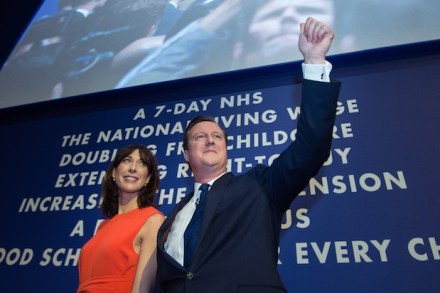
David Cameron has strong views about the family; often ones that ought to remain inside his head. He quite is keen on marriage and good parenting, but how to make this into a government policy? He offers some thoughts in his speech today. His words: 'In the end, getting parenting and the early years right isn’t just about the hardest-to-reach families; it’s about everyone. We all have to work at it. And if you don’t have a strong support network – if you don’t know other mums or dads – having your first child can be enormously isolating… Of course [kids] don’t come with a manual, but is it right that all of us get so little guidance? We’ve made progress.

Toxic fun with Mum and Dad

From our UK edition

In 2008, when Taylor Wilson was 14, he created a working nuclear fusion reactor, ‘a miniature sun on earth’. At 17 he entered his home-made radiation detector for inspecting cargo at the Intel International Science and Engineering Fair; his project was entitled ‘Countering Nuclear Terrorism: Novel Active and Passive Techniques for Detecting Nuclear Threats’. In a field of 1,500 entries, it swept the board. Winning the war against terror isn’t Taylor’s only ambition. He plans to provide affordable, sustainable energy for the whole planet, not to mention beating cancer. Aged 11, he watched his beloved grandmother withering from lung cancer, and became convinced that it was up to him to do something about it.

Barometer | 4 June 2015

From our UK edition

First test The driving test celebrated its 80th anniversary. The first person to take the test, R.E.L. Beene of Kensington, passed. Here is some of the advice given to candidates on a Pathé newsreel: — ‘Don’t flick your cigarette ash outside. It’s very confusing.’ (The driver behind would have been looking for hand signals.) — ‘Never drive on the crown of the road.’ — ‘Don’t look down at the gear lever while you change gear.’ — ‘Don’t be nervous. The examination is not an inquisition but a series of very reasonable tests.

Songs of innocence and experience

From our UK edition

We live in an age of generational turmoil. Baby-boom parents are accused of clinging on to jobs and houses which they should be freeing up for their children. Twentysomethings who can’t afford to leave home and can’t get jobs are attacked as aimless and immature. Both sides of the generational divide should take comfort from this timely, thoughtful work by Steven Mintz, professor of history at the University of Texas at Austin. In Mintz’s view, no one is to blame for these changes, neither the selfish baby boomers nor their Peter Pan offspring. What is happening is a shift in the nature of adulthood, and to understand this we need a historical perspective.

Nick Clegg’s self-pitying guide to parenting

From our UK edition

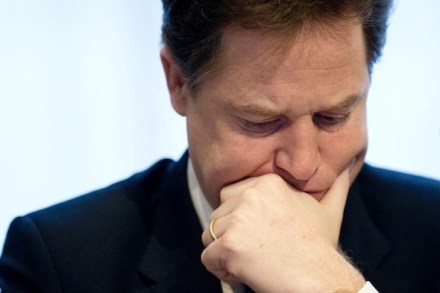
‘I’m like any parent,’ says Nick Clegg (Deputy Prime Minister, privy councillor and universally derided leader of the Liberal Democrats). Speaking to the Radio Times, as any old parent might do, Average Dad Nick pleaded with his offspring: 'The first, most visceral instinct you have as a parent is you want to protect your children, and politics is a very rough business you know. It’s absolutely not for the faint-hearted or the thin-skinned, so I wouldn’t likely recommend to my children to go into politics.' Pity. Mr S was getting rather misty eyed at the prospect of young Miguel or Antonio seeking high office in order to restore the family name. Who will avenge self-pitying Clegg now?

The bits of Magna Carta that David Cameron won’t want taught in schools

From our UK edition

The not-so-great charter David Cameron wants every child to be taught about Magna Carta. Some bits he might want to leave out: — ‘If one who has borrowed from the Jews any sum, great or small, die before that loan be repaid, the debt shall not bear interest while the heir is under age.’ — ‘No one shall be arrested or imprisoned upon the appeal of a woman, for the death of any other than her husband.’ Foul play Is there a correlation between bad behaviour from a country’s football team and violence in the country as a whole? WORST-BEHAVED TEAMS IN EUROPE Homicides per 100,000 people Ukraine 4.3 Romania 1.7 Croatia 1.2 Iceland 0.3 Bulgaria 1.

The publicist who’s doing her best to keep me off TV

From our UK edition

I went to a meeting at Penguin earlier this week to discuss ‘publicity opportunities’ for my forthcoming book. Chance would be a fine thing, I thought. It’s essentially a guide to what’s in the new national curriculum, how it’s likely to be taught at primary schools and what parents can do at home to supplement it. Surely, not a single radio or television producer will be interested in that? No, no, no, said the crack publicity team at Penguin. You’re quite wrong. This book’s going to get a ton of media attention. There are two reasons for this, apparently. First, the book is called What Every Parent Needs to Know and no one considering whether to cover it in their programme is going to bother opening the book or finding out what’s inside.

Why working class grandparents are better than middle class ones

From our UK edition

When I told a friend that my nine-year-old son was staying with his grandparents for the whole week of the half-term, she said: ‘A whole week! My son would be lucky to get his grandparents for a weekend! Who are these people?’ ‘His grandparents are working class,’ I said. She looked puzzled. ‘What?’ I explained. ‘Working-class grandparents are the best you can have — these days middle-class grandparents are bloody useless.’ I’m not alone in thinking this about the middle-class grandparent (MCGP).

Why Boris is wrong to say that the children of jihadis should be taken into care

From our UK edition

Do your children have a bleak and nihilistic view of the world? It’s hard to tell, really, when they spend 30 per cent of the day blamming away at those whores in Grand Theft Auto and the remaining 70 per cent asleep. How should one go about inquiring such a thing? Text them, maybe. ‘R U blk n nlstc lol? — Dad’. But they might well lie in response: ‘OMG no! (followed by five smiley emoticons)’. I have to say I’d be a little disappointed if they were not bleak and nihilistic, seeing how things are. One usually finds with relentlessly upbeat and chirpy children that they are receiving additional help in many subjects at school and may even travel each morning on a special bus with other similarly afflicted youngsters.

Opponents of marriage tax breaks need to ‘check their privilege’

From our UK edition

What with the flap about Ed Miliband’s dad, the legion of the outraged have forgotten what they were planning to get angry about this week – the marriage tax break, which is social engineering and a blatant Tory attempt to punish single mothers in favour of the patriarchy. As a paid-up member of the patriarchy it always sounds more fun coming from people complaining about it than it actually is. Marriage, for men, is a form of domestication and many would rather spend their 30s and 40s playing computer games, if possible with a live-in girlfriend to whom they have made no commitments. Many end up getting married partly because their peers do, and the social pressure to conform. Why do we do it?

Katie Hopkins gets her comeuppance

From our UK edition

Former Apprentice contestant Katie Hopkins, who has become a 'disgusted of Tunbridge Wells'-style rent-a-quote in middle age, was never going to applaud the appearance of names like Riley, Isla and Mia in the top ten popular baby names of last year. In high dudgeon, she interrupted elevenses to hit the airwaves: ‘These are the sort of names you can hear parents screaming across the playground, screaming because they have not done their home learning, they are the sort of people that choose names like this.’ Hopkins, a professional snob, reiterated that she uses names as ‘a shortcut, a very efficient shortcut to deciding who my children play with.

The odd couples

From our UK edition

This is the first post in an occasional series about rediscovering old science books. Twins, Lawrence Wright posits, pose a threat to the established order. People have long been scared of, and intrigued by, them. The doppelganger holds a special place in the gothic canon, whilst some cultures have even seen men cutting off a testicle in the hope it would eliminate the possibility of twin-bearing. Conversely, twins have been held up in voodoo ceremonies as objects of worship or been the subject of televised wonder and investigation. Whether the sentiment is positive or negative, we see them as an aberration and have tended to hold such specimens at arm’s length. More than anything else, Wright says, this is because we are scared of what they can tell us about ourselves.

Anon’s Baby Song; a lullaby for your baby tonight

From our UK edition

Writing, as I have done, about the Bodleian’s holdings of Jane Austen or Byron is all very well, but our most prolific author is Anon. He (or she) leaves his (or her) elusive  traces everywhere – in ancient papyrus fragments, clerkly rolls of the middle ages, early-verse anthologies, copperplate accounts of long lost estates. Or, in one case, a manuscript volume of rhymes and songs just acquired from our friendly neighbour, Blackwell’s. The book dates from around 1800 and is barely bigger than a playing card. Its physical format suits the person for whose little hands it was intended, an infant girl in the nursery.

Michael Gove: wind-up artist

From our UK edition

Michael Gove likes to make mischief. Every so often he stokes London’s liberal elite into fits of righteous indignation. If he does this out of pure joy, then his latest caper will not have disappointed. This afternoon the education secretary gave a speech to private school headmasters in which he made an important point about the quality of children’s education: ‘I suspect that all of us who are parents would be delighted if our children were learning to love George Eliot, write their own computer programmes, daring to take themselves out of their comfort zone and aspiring to be faster, higher or stronger.’ But Gove couldn’t resist teasing his pious critics: ‘Unless, of course, we write for Guardian Education.

Peter Stringfellow: Why wasn’t I hacked?

From our UK edition

Peter Stringfellow made headlines last week when he threatened to run against the Liberal Democrat leader in his hometown of Sheffield. He made more headlines last night when he gathered together a group of his closest friends, and representatives from the nation’s media, to announce that he is going to be a father again, at the age of 72. He treated guests to a private performance from the last of the rat-pack crooners, Buddy Greco, who had turned up in his slippers. Stringy had hoped for a little more stardust to be present. He said: ‘I did invite Andy Coulson but he's still lying low.’ He mused further on Coulson's decline and fall: ‘I think the press have had a bad game with this hacking stuff, but why did no one hack me?