Parenting

I was fathernapped

My body is limp and naked but for a thin, sullied sheet strewn around my waist. I’m on my back, my arms hang outstretched in a submissive crucifixion. My hair is matted and caked with dried blood around my right ear, my eyes clenched shut with fear. The downpour is relentless. Then my body flinches, my nostrils flare. Small expressions pop and twitch as I recover consciousness. The invisible straitjacket of sleep paralysis loosens. The dream recedes. And then my nightmare begins. Desperately parched, I pry open my cracked lips to take in the water, only to be shocked by its bitterness. My senses now tripped into awareness, I peer up and shock turns to disgust as it dawns on me that the rain is cascading from a penis protruding from a tangled forest of pubic hair.

greg ellis children

Why Chinese women don’t want more children

From our UK edition

Years after my mother and I left China, I found out the real reason why. A neighbour had reported my mother for being pregnant with her second child. She was paid a visit by local officials who gave her a choice: she could either take herself to the abortion clinic or they’d take her there themselves. She chose a third option: to move to London to join her husband, who was working in the UK. In August 2004, when six months pregnant, she left her family and friends behind in Nanjing. My brother was born later that year in Kingston Hospital. Other families weren’t so lucky. Beijing demographers were concerned that food production would not keep up with population growth. And it wasn’t just the Chinese who were worried.

Becoming a father

They say immersion journalism is dead, but I just might have proven them wrong. The night before I wrote this column, I took on a most unfamiliar role, one my wife has been playing for the past two months: waking up in the night to take care of our baby son. We recently started bottle-feeding him, which allowed me to overcome my, er, biological inabilities in this department. This won’t be so bad, I thought around 5 a.m., as I sat in the dark while he cooed and sucked down formula. Cut to an hour later as I lay in bed, my mind churning through the latest NFL trades. While my wife can fall asleep at the drop of a hat, I have a giant spinning turbine of an overactive imagination.

fatherhood parenting father

Do you have Bruenig Derangement Syndrome?

Oh, mother! What’s the most subversive argument a woman can make in the topsy-turvy la-la land that is America in 2021? It is of course a point that would have been regarded as utterly normal and sane just a few years ago — i.e., that women shouldn’t necessarily be afraid to have children. Elizabeth Bruenig, an opinion writer at the New York Times, this week made the shockingly transgressive point that ‘there are good reasons to wait to have children and good reasons not to’. She mildly suggested that the nation’s declining birthrates was a cause for concern, that the Biden administration was right to want to do more to support parents in need of financial help. She admitted that she found becoming a mother at 25 daunting but also a ‘relief...

bruenig

For my boy on Mother’s Day

This Mother’s Day, instead of booking an overpriced Sunday brunch, I am calling an emergency family meeting. I intend to sit both of my kids down and undo what the schools, the media and our political class are teaching them about 50 percent of the population, namely boys. I don’t need a Mother’s Day gift this year. I prefer my son’s integrity and self-worth be snatched back from the clutches of the identity-politics mob. That will do. First on my agenda is assuring my children there is no such thing as ‘toxic masculinity’. It is a baseless, unserious idea, made up by people who seek to elevate themselves by pulling others down. I want my son to hear his mother affirm for him that masculinity, like femininity, is natural, good, and nothing to minimize or malign.

mother's day

Lockdown used to be the norm for new mothers

From our UK edition

I laughed when my Spanish midwife mentioned in passing that in Latin American countries they have a custom for new mothers known as la cuarentena — the quarantine. This was back in late February, a few weeks before my daughter Lily was born. I remember thinking it seemed not only ludicrous but archaic for a woman to spend a 40-day period stuck at home after giving birth. Modern mothers got on with life. I planned to do just that. I had invested in all the necessary equipment. The car seat was installed. I had bought the state-of-the-art breast pump which connects to my phone. My husband and I had chosen the pram because the slick adverts boasted that it could fit into the overhead locker of an aeroplane.

Bad news, Boris – childcare has cost me £500,000 (and counting)

From our UK edition

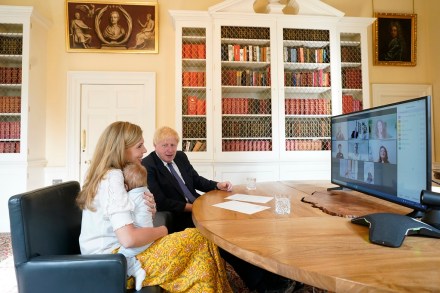
Has Boris Johnson only just discovered the ruinous cost of childcare in this country? He has, allegedly, been seeking a rich donor to pay for a nanny for his one-year-old son Wilfred. What’s surprising is not that the Prime Minister has apparently told friends he needs £300,000 a year to keep on top of his outgoings (life gets expensive when you have multiple dependents and properties), but that he has only now realised the cost of finding someone to look after his son. And how even a dual-income couple will struggle. Especially in London. I should know: I have been paying for full-time childcare for almost 14 years. For the most part, I have been in denial about the crippling cost.

A meditation on everyday life: Early Morning Riser, by Katherine Heiny, reviewed

From our UK edition

There were many moments in Early Morning Riser that made me laugh out loud in recognition. An episode where the main character, Jane, coaxes a wailing child to the car with marshmallows and milk after ‘a temper tantrum so severe that it might have qualified as a psychotic break’ so precisely pinpoints the absurdity of life with small children that it is hard to know whether to laugh or wince. ‘Patrice took a sip and yelled, Kalt! Apparently she had returned from psychosis speaking German.

I never considered sending my daughter to boarding school – until the pandemic hit

From our UK edition

Last summer, we joined the sharp-elbowed ‘exodus’ that saw demand for places at independent schools increase by up to 30 per cent. We were guilty, according to the Observer, of creating ‘an even larger divide between affluent and disadvantaged pupils’. Not to be out (middle) classed, we went one better, enrolling our 15-year-old daughter as a boarder. Home for the holidays, she so animatedly regaled us with her experiences that we might have smugly congratulated ourselves on our selfless financial sacrifice were it not for one qualification: ‘But I’d rather be here, with you.’ We’d never countenanced boarding.

A tiger mum’s recipe for academic success

From our UK edition

You might have seen ‘Asian dad’ memes on the internet, poking fun at the famously high expectations of fathers from my part of the world. ‘You Asian, not B-sian,’ he says in one version. Or: ‘After homework, you can play… the piano.’ My personal favourite is a picture of a crying Chinese girl saying: ‘I only got 99 per cent in test. What do I tell my parents?’ Her father’s reply: ‘What parents?’ Much of Asian parenting is laser-targeted at getting into a top-tier university: Peking or Tsinghua would do in China; Ivy League or Oxbridge abroad.

The moral debate over Covid jabs for children

From our UK edition

Israel has the world’s attention, becoming the first country to achieve mass vaccination. What it does now may be followed worldwide. The first big development has been the use of immunity ID cards which give vaccinated Israelis access to gyms, indoor restaurants and — soon — holidays in Greece. Britain is preparing to follow suit, with Michael Gove considering UK vaccine certificates ahead of the great unlocking on 21 June. He’s widely expected to come out in favour of IDs in some form. But the other idea attracting interest in Whitehall is Israel’s plan to vaccinate children. Israel’s deputy health minister Yoav Kisch has said those aged 12 to 16 could start to be vaccinated next month, pending regulatory approval.

The conservative appeal of drug gangs

From our UK edition

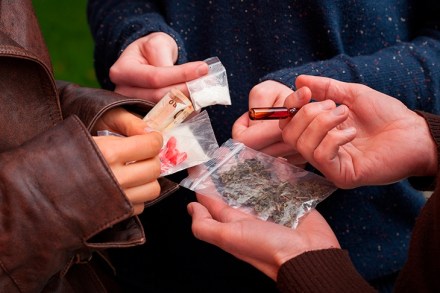
According to the Metropolitan Police Commissioner Cressida Dick, the easing of lock-down will be accompanied by a rise in crime in the capital, including the violent type associated with drug gangs. Just last week, the police recovered two zombie knives, two Rambo-style blades and a kitchen knife at the scene of an attack on a 16-year-old boy in Brixton. But it would be wrong to view this coming crimewave as a problem that just affects London’s underclass. According to Sheldon Thomas, the chief executive of an outreach organisation called Gangsline, a rising number of middle-class teenagers are being sucked into the gangster lifestyle in the wake of Covid. Thomas rather uncharitably attributes this to ‘the phenomenon of loveless middle-class homes’.

How middle-class is your dad?

From our UK edition

Not all Facebook groups are forums for insurrection, anti-vaccine propaganda and rude remarks about Bill Gates. Some are just places where people talk about their dads. ‘Middle Class “Your Dad” Talk’ is a group where some 23,000 members share observations and witticisms that all follow the same format: ‘your dad is extremely specific about how the dishwasher is loaded’; ‘your dad judges others’ success by how big their kitchen island is’; ‘your dad was building up the courage to confront the postman about leaving the garden gate open until he saw he had a tattoo on his arm’. Mums are generally left alone.

My kids think my move into the garden shed means divorce

From our UK edition

I’ve moved out of my home. No, Caroline and I haven’t broken up. It’s just that we’re having the house rewired, which means we have to be out of our bedroom by 8 a.m. Ordinarily, that wouldn’t matter but about eight months ago I started a blog about lockdown and I’m usually up until 4 a.m. working on it. We have almost 7,000 subscribers to our daily newsletter and I want it to be waiting for them when they wake up. And superhuman though I am, I can’t survive on four hours’ sleep a night. I haven’t gone very far. I’ve stuck a blow-up mattress in the garden shed that doubles as my office. But, weirdly, the children seem to think this is a prelude to divorce.

Can COVID-19 tell whether a protest is progressive?

New York City This past month shattered all my sense of stability and permanence in New York, the city I’ve called home since 2012 (though I’ve spent some of those years in London). The looting mobs that rampaged through Gotham’s streets put me in mind of my native Middle East, a phenomenon I thought I’d left behind ‘over there’, not to be encountered except on the occasional reporting trip to Iraq or Egypt. But no. An unjust police killing in Minneapolis — combined, no doubt, with the effects of a prolonged lockdown — Arab Spring’d the United States, if you will. Or rather, the riots revealed that America’s advanced liberal society isn’t all that different from the Arab client states Washington likes to lecture.

protest

Children of the revolution

Some steal their luxury leisure goods, but others take their leisure by the luxury of right, and all of it is wrong. While gangs using luxury vehicles and lookouts cross the bridges into Manhattan for targeted looting — as opposed to looting Target, which is how the George Floyd riots began — the children of the elite parade their virtue and distract the police by acting out fantasies of violent revolution. How proud Mr and Mrs de Blasio of Yorkville, Manhattan must be of young Chiara, arrested on Saturday night in Manhattan for unlawful assembly.

children

The power of children’s imaginations

From our UK edition

Last summer, in the bc era, I took my then three-year-old to a new group play session: ‘Lottie’s Magic Box.’ Off we trooped in the usual north London fashion: child on scooter, imperious and unmoving, hauled along by mother in the role of husky. Micro, purveyor of scooters to the middle-classes, sell colour-coordinated leads especially for this purpose. It sometimes crosses my mind that they should also sell whips for the pre-schoolers to brandish. The map on the event website directed us to what looked like an office block in a park and as we opened the door, any wisps of hope that this might be an uplifting hour of bonding and fun evaporated.

In defence of modern children’s books

From our UK edition

A few years ago, I was surprised to open a newspaper and read that the head teacher of a London public school had decided to ban my books from his library. He described the adventures of Alex Rider, which have sold around 20  million- copies worldwide, in terms so derogatory that I have no mind to repeat them. Suffice it to say that the article quite put me off my cornflakes. But the strange thing was that — once I had got past the sheer offensiveness of his language and a mindset that believed that banning books could ever have good connotations — I was actually quite sympathetic to his wider point of view. Everyone agrees that children benefit from reading, but we seldom discuss what exactly we would like them to read.

All I dream of is becoming a tradwife

‘A woman’s place is in the House and the Senate’, read the shirts assembled by slave labor in Myanmar, the messaging likely dreamed up by graduates of a small liberal arts school whose annual tuition would make a generous stimulus package for a city in any developing country. I like seeing women in the Senate, don’t get me wrong. I just see the former option, the house, as much more preferable for myself for a variety of reasons. I went through my Girl Boss phase in my late teens — my hard working immigrant parents, the descendants of a long, long line of ‘tradwives’, wanted different things for their only daughter.

tradwife

In defence of pocket money

From our UK edition

Our grandchildren are penniless. They have pretty much everything their hearts desire and they have parents with wallets full of plastic, but they lack the satisfying chink of coins in a jam jar. I was alerted to this state of affairs when one of our tribe turned nine and I asked his mother how much pocket money he was getting. The answer was: nothing. The very words ‘pocket money’ seemed to strike her as quaint. I said: ‘But what if he wants to walk down to the shops to buy a comic?’ The answer was that such a thing was very unlikely to occur to him but, if it did, she would drive him to the shop and pay for the comic. There, in a nutshell, were two worrying trends.