Pandemic

Why isn’t the vaccine approved for 12- to 15-year-olds?

From our UK edition

This afternoon, the JCVI has essentially passed the buck on vaccinating 12- to 15-year-olds. It has declared that the health benefits of a vaccine for this age group are ‘marginally greater' than the risks of Covid. But it has left the decision on whether to actually vaccinate them to the chief medical officers. It would surely have been better for the committee to have made a decision one way or the other In the past few weeks, tensions between ministers and the Joint Committee on Vaccination and Immunisation have been rising. Ministers are keen to get on with an autumn booster shots campaign for the elderly and to vaccinate more school children. Yet the JCVI has only approved boosters for those with weaker immune systems.
The NHS blood tube shortage should concern us

From our UK edition

One of the great lessons from the early stages of the pandemic was the need to shorten supply chains and make them more robust. This was especially true for medical supplies. Just-in-time supply chains have been developed over the years to increase efficiency, but had never been tested in a global crisis when demand for certain medical products is high and supply is weak. The government ended up paying huge sums for PPE which, in some cases, was not even suitable for use. The shortage raises eyebrows because a plastic tube is, after all, a plastic tube It seems the lesson has not entirely been learned. There is now a shortage of blood tubes – the small plastic tubes which are used for collecting samples of blood.

A volte face over what caused the pandemic needs explaining

From our UK edition

Sir Jeremy Farrar, the head of the Wellcome Trust, writes that ‘the last year has been an eye-opener for me. I thought, probably like most people, that the world works through official or formal channels, but much of it operates through private phone calls or messaging apps’. Hence his book, written with the journalist Anjana Ahuja, is a gossipy, sometimes angry, fast-paced tale, which quotes frequently from his own messages sent to other important people. No holds are barred or formal channels kept to.

Can Boris and his ministers agree on the point of the Covid app?

From our UK edition

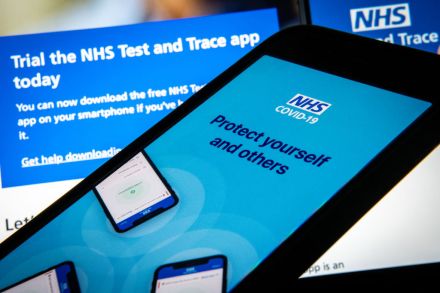
What is the point of the Covid-19 app? Ministers seem to be as in the dark about the answer to this question as the rest of us, with the government tying itself in knots over whether it means anything at all to get 'pinged' and told to self-isolate. Downing Street has contradicted Business Minister Paul Scully, who said this morning that there was no need to self-isolate if it was just the app that alerted you. He told Times Radio:  It seems that there is a genuine schism in Whitehall 'The app is there to give...to allow you to make informed decisions. And I think by backing out of mandating a lot of things, we're encouraging people to really get the data in their own hands to be able to make decisions on what's best for them, whether they're an employer or an employee.

What happens next? Gauging the fallout from the pandemic

From our UK edition

What just happened? Some 15 months after the pandemic first struck, it’s still horribly unclear, which is perhaps why there have been no decent books making sense of Covid-19. This is not just about a virus but a collision of politics, panic, digital media, human behaviour and incompetence. Niall Ferguson’s Doom looks at each of these aspects, putting them into historical perspective in a book of dazzling range and rigour. He offers several answers — and none of them is comforting. For most of human history, viruses were unexceptional — hard to research, because no one thought them remarkable. When plagues struck in the Middle Ages, we’d rush into quarantine, which acquired its name in 1383 when Marseilles asked sailors to self-isolate for 40 days.

Is Britain prepared for a different corona disaster?

From our UK edition

Amidst the drama of Dominic Cummings's appearance in front of MPs last week, perhaps the most important thing the PM's former adviser said was almost entirely ignored. As well as slating his former boss, Cummings criticised the UK’s disaster planning. The pandemic has shifted attention to how Britain would deal in the future with another respiratory virus, but arguably a bigger threat to this country – and, indeed, the world – has been forgotten. When it comes to dealing with solar flares, Cummings's said, ‘the current Government plan is completely hopeless. If that happens then we’re all going to be in a worse situation than Covid’.

A handy guide to hugging

From our UK edition

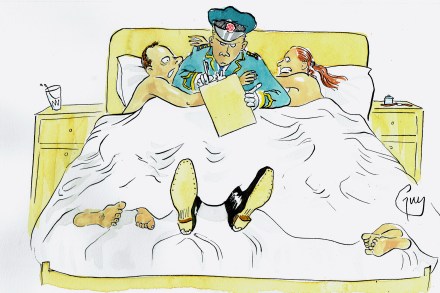
Boris Johnson has announced that the government will permit hugging from Monday 17 May. In subsequent weeks, it is expected that permission will be granted for people to hold hands, kiss and, perhaps, engage in even more intimate acts of mutual appreciation. However, the authorities remain cautious about mutant variants and their ability to spread through rampant hugging.  Former SAGE expert and BBC commentator, Neil Ferguson, has played a key role in government policy throughout the pandemic. Initially responsible for producing forecasts that led to social distancing policies, Ferguson is also rumoured to have performed a series of covert, close contact experiments with his married girlfriend.

Made of honor: the complexities of a COVID wedding

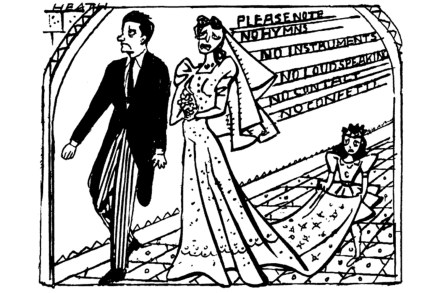
The birds are singing, the temperature is rising and I am frantically searching for a seamstress to hem three to four inches off a formal dress designed for a woman of normal height. You know what that means: it’s wedding season. This wedding season holds the uncertain distinction of being either the second under COVID or the first post-COVID, depending on your geography and luck. The pandemic was a tragedy for many couples who had planned their big day last year. According to the wedding website the Knot, less than half of couples who intended to get married in 2020 followed through with both their ceremony and reception.

wedding

It’s time to revive the handshake

From our UK edition

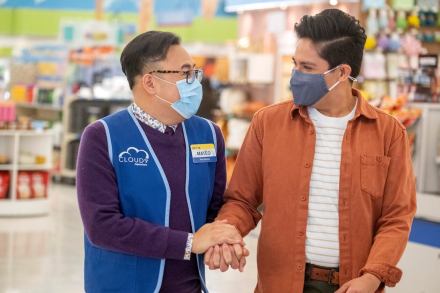
Those with a watchful eye might spot something this week (or next)  not seen in a while. And I’m not talking about a freshly poured pint, or the sight of your forehead after three months without a barber’s care. Rather, as England and the whole of the UK, begins to ‘open up’ after the third national lockdown, and as we emerge socially emboldened into the spring sunshine inoculated to the tune of some 32 million first doses of Covid vaccine, there's a chance we might see the handshake make a tentative return. I can't be the only one who has begun to wince slightly every time I see someone on TV shaking hands in a social setting, in a film or programme evidently filmed in the world before Covid robbed us of such basic, everyday civilities.

Covid virtue-signalling has infected our TV dramas

From our UK edition

Not for the first time in its history, Eastenders managed to make a bit of a stir last week. In a break from the more harrowing stuff, viewers were treated to the sight of the ever-sprightly Patrick Trueman waltzing into the Minute Mart to jubilantly announce he’d received his second Covid vaccine. ‘Good for you! I’m due my first one later today,’ replied the shop-keeper, before dismissing the objections of a vaccine hesitant customer (called Karen, of all things). As you can imagine, the scene went down like a cup of cold sick with conspiratorially-minded types online. But you don’t have to believe odd things about Bill Gates to ask the more obvious question: which is why soap operas are tackling the pandemic in the first place. I get it.

The French lesson that shames Britain

From our UK edition

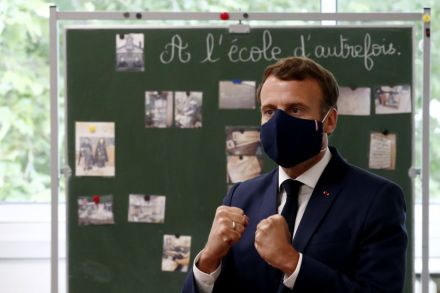
Emmanuel Macron has become the pantomime villain for much of the British press after his hissy fit last week in which he questioned the efficacy of the AstraZeneca jab. It was the latest in a series of snipes at the British that has made the French president the scourge of Fleet Street. 'Bargain-basement Bonaparte,' was how the Daily Mail described Macron, while the Sun plumped for 'pint-sized egomaniac'. He's none too popular among his own people, either, the figurehead of the French failure to be the only member of the UN Security Council incapable of producing their own vaccine. No wonder a recent opinion poll suggested Marine Le Pen is a stronger threat than ever ahead of next year's presidential election. But the president of France should be lauded for one triumph.

The myth of American freedom

From our UK edition

Gstaad Imagine a beautiful, sexy woman, an Ava Gardner or a Lily James, with a wart on the end of her nose. It stands out, whereas on an ugly mien it would go almost unnoticed. Noise in stunning and peaceful surroundings disturbs more than it would in grating, jarring cities. Last week, on a gorgeous sunny afternoon, after yet another record snowfall, I was cross-country skiing and stopped for a picnic lunch with Lara and Patricia, two married friends of mine who had left me miles behind. They were using the new skating method of cross-country skiing (I remain traditional, gliding on the double track). A cloudless and very blue sky accentuated the beauty of the landscape.

The joy of my new British passport

From our UK edition

‘Anything you want?’ says Catriona on her way out of the house to go to the shop. I’m standing at the hob stirring a first batch of Low Life’s 2021 Pandemic Second Wave green tomato chutney. (My outdoor homegrown tomatoes stopped turning red just before Christmas.) The wooden spoon stops revolving while I google my brain for things I want. No results. Materially, I have everything I need. Too much of everything. What I once looked on as too few clothes now strikes me as insane excess. I’ve got a Honda Jazz that starts first time parked down in the village, lent to me by a friend for as long as I need it. I’ve books, pens, paper, ink, fags, gin, tonics and there’s ice and a lemon in the fridge.

Why Imperial College’s REACT study is so problematic

From our UK edition

There was very gloomy news this week. ‘Coronavirus infections are not falling in England, latest REACT findings show,’ said a press release from Imperial College. It was widely covered in the press in this vein: Covid levels ‘may even have risen’ since the latest lockdown, BBC news reported. This reignited fears that further tighter lockdown measures might be needed to contain it. It was all a result of Imperial College's latest REACT study of Covid-19 infections, a massive study of 143,000 people and one of the biggest Covid surveys around. So its findings - and talk of rising cases - were taken very seriously. And understandably so.  The study’s author, moreover, was adamant that the virus has had a resurgence.

Why ban goal celebrations?

From our UK edition

Football is an emotional sport, as anyone who has ever had the misfortune of being in Glasgow on derby day will attest. When your team wins, or even just scores a goal, that emotion can be hard to contain. Players, on occasion, have been known to celebrate such occurrences; sometimes they even make physical contact with each other. And why not?  The FA has announced that it will take a dim view such behaviour from now on, after criticism from politicians that some players have reprehensibly been breaching social distancing guidelines that the wider public have to follow.

Nicola Sturgeon’s pandemic politics

From our UK edition

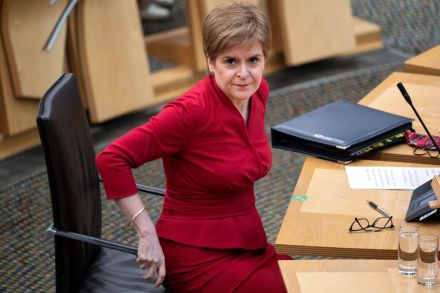
Nicola Sturgeon had some choice words to say about Brexit last month. Speaking at one of Scotland’s daily coronavirus briefings, the First Minister said she was ‘deeply frustrated and depressed’ about the prospect of no deal in the new year, and suggested that to talk about Brexit in the middle of a pandemic was not only dangerous, but deeply irresponsible. The country doesn’t need ‘another big thing to be dealing with’ when the focus should be on coronavirus, the First Minister lamented. So you can imagine Mr Steerpike’s surprise when Sturgeon appeared to embark on her own political pet project yesterday.

The big debate: is lockdown wrong?

Is lockdown a gargantuan mistake? That's the view of a growing number of thinkers and critics, including The Spectator’s very own Toby Young, who sees the political class's shutting down of entire populations as the most catastrophic policy error in history. Not every free thinker agrees, however. We asked Matt Labash, a contributing editor and a skeptic of lockdown skepticism, to challenge Toby over email. Matt Labash: Toby, thanks for stepping into the squared circle and joining me for a Pandemania tussle as a gentleman pugilist, sage, and co-equal partner in the search for truth. And also, as a fellow amateur epidemiologist, which there is no longer any shame in saying, since the pros have bunged things up so spectacularly.

civilization costs debate

Could this pandemic be the death of veganism?

From our UK edition

‘Do you want some of the private stuff from out the back?’ said the butcher to the builder boyfriend, leaning forward over the counter and winking theatrically. The builder b winced a little for this was starting to feel like the terrifying scene in League Of Gentlemen when Mr Briss starts selling a mysterious and highly addictive ‘special’ meat to the residents of Royston Vasey. Thankfully, this butcher was only selling private lamb. He revealed his secret stash to the BB because he took a liking to him. The butcher grinned, revealing big teeth between rosy cheeks, before disappearing out the back and returning with an entire side, which he butchered in front of him, offering him as much as he wanted.

Our exile in NW1

From our UK edition

Laikipia The sweetest sound to me now is the dawn chorus of birdsong at home on the farm. I lay awake in bed and listened, as a light rain fell on the coconut thatch above me. When I walked out into the garden the three dogs burst out of the house to go off exploring. While I made coffee in the kitchen, our cats Omar and Bernini rubbed against my legs until I fed them and then in walked Long John Silver the orphaned calf, looking for a bowl of milk. I headed out to the crush where the herds were coming in to be dipped. Cattle were mooing, the sheep were bleating and the cowhands were whistling and shouting. With dew sparkling on the grass and the air alive with the hum of bees, I felt so grateful to be here. Home.

Had the entire village population been wiped out since last week?

From our UK edition

With my signed and dated laissez-passer in my pocket, I trotted down to the village to see if I could buy anything to eat, drink or smoke. A sensation of being out and about in the world was also high on the agenda. Cycling and jogging earns you a fine, of which a quarter of a million have been doled out in a fortnight. But we are permitted to walk the dog for one kilometre, or 546 yards there and 546 yards back. We cheat a bit, Catriona and I, by taking the dog separately, meaning she gets two walks a day. She’s elderly and frail, the poor bewildered thing, and completely knackered. And if we tick the box on the laissez-passer we can also go out to the nearest grocery shop and tobacconist. Nevertheless confinement is beginning to chafe a bit.