Palestine Action

A commentary on the grim present: Glyph, by Ali Smith, reviewed

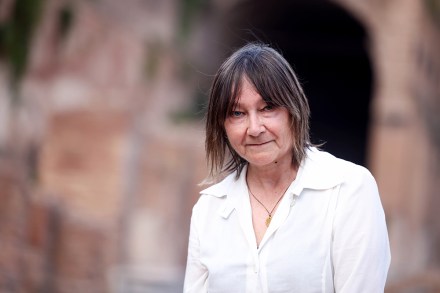
Glyph (whose sibling, Gliff, was published last year) is Ali Smith’s 14th novel and her fifth since 2016, when her ‘Seasonal Quartet’ saw the beginning of her project to use fiction to comment on contemporary events. It takes as its subject two sisters. Petra and Patricia (‘Patch’) negotiate their difficult childhood by retreating into a story world. Not that their escape is all unicorns and rainbows. The two stories they most often return to involve a horse blinded in the Great War and a man’s corpse flattened towards the end of the second world war. They call this flattened man ‘Glyph’: it’s ‘the sound he makes when he breathes out’. We soon skate from this grim past to the grim present.

Starmer’s authoritarian turn – with Ash Sarkar

15 min listen

Since the government’s decision to proscribe the group Palestine Action, arrests have mounted across the country, raising questions not only about the group’s tactics but also about the government’s handling of free speech and protest rights. On today’s special edition of Coffee House Shots, Michael Simmons is joined by The Spectator’s James Heale and journalist Ash Sarkar to debate whether this is evidence of an increasingly authoritarian bent to Starmer’s Labour. Has the ban made prosecutions easier, or has it created a chilling effect on freedom of expression? And is this further evidence of the overreach of the attorney-general, Lord Hermer?

Is the Met finally getting tough on pro-Palestine protests?

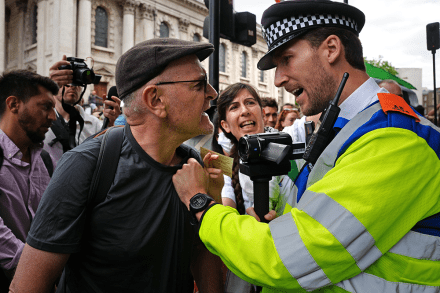
It was airily pleasant to walk round Parliament Square on Monday morning. I had come up to London to go to parliament and to interview Kemi Badenoch at a Policy Exchange event across the square. Palestine Action had announced a protest march against Donald Trump’s and Israel’s ‘genocide’ for that time. Although the Met had banned it from the area, I had recently witnessed so many ill-contained and threatening protests there – almost all for Palestinian causes – that I fully expected delay, disruption and occasional harassment. This time, however, it turned out that the Met meant business. The protest was well-contained in the designated streets round Trafalgar Square. May this mark the permanent change many of us have long been calling for.