Pakistan

Mullen adds to the tension between the US and Pakistan

From our UK edition

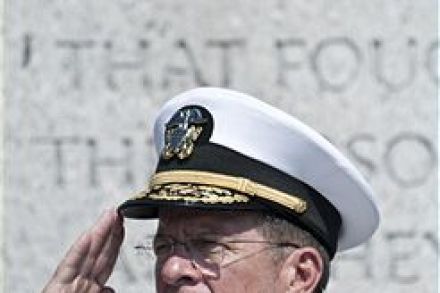
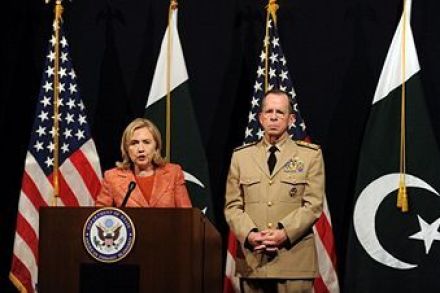
US-Pakistani relations will deteriorate even further following today’s claims by Admiral Mike Mullen, the outgoing chairman of the Joint Chiefs of Staff, that the Pakistani ISI aided and abetted the attack on the US embassy in Kabul. Mullen told a Senate panel that, "With ISI support, Haqqani operatives planned and conducted a truck bomb attack, as well as the assault on our embassy." This charge was part of broader criticism of what Washington sees as Pakistan’s strategy of exporting its internal problems.

The enemy within | 3 September 2011

From our UK edition

The most telling figure in Carey Schofield’s book on the Pakistan army is Faisal Alavi, a major general who was murdered in November 2008. The most telling figure in Carey Schofield’s book on the Pakistan army is Faisal Alavi, a major general who was murdered in November 2008. As head of Pakistan’s special forces, Alavi found himself in a bitter struggle against influential military opponents in the Pakistan army. They favoured secret deals, paying large sums to the Taleban leader Baitullah Mehsud so that his supporters should not target the army. Alavi was by contrast desperate to attack the Taleban, and made no secret of this when on a visit to SAS headquarters at Hereford in 2005.

Where next for the US and Pakistan?

From our UK edition

The US-Pakistani relationship is fast deteriorating. In May, I argued that unless President Asif Ali Zardari took decisive action against the ISI, the country's military would continue to undermine relations with the West. Last week, the New York Times reached the same conclusion, calling for the removal of Lieutenant-General Ahmed Shuja Pasha. As President Zardari did nothing — probably fearing a military coup if he did act — the situation has merely been aggravated. What's more, Secretary of State Hillary Clinton has warned that the US could suspend military aid to Pakistan unless it took unspecified steps to help find and fight terrorists. And the White House has since confirmed that it is doing just that.

What will emerge from the ashes in Afghanistan?

From our UK edition

On Monday, James drew attention to Dexter Filkins' stark assessment of the situation in Afghanstan and of the strength of the Taliban. Today, the attack on a hotel in Kabul gives that assessment a fresh and tragic resonance. What we seem to be witnessing is the Taliban, or at least elements of them, flaunting their murderous intent as the West prepares to leave the country. From the assassination of General Daud to this Mumbai-style raid, their methods are becoming more ambitious, more headline-grabbing. Around ten innocents are said to have been killed this time around, along with six to seven of the Islamist militiamen.

Afghanistan: The worries mount as the West prepares to drawdown

From our UK edition

Dexter Filkins is one of the great war correspondents of the post 9/11 world. So it is particularly sobering to read his assessment of the Afghan situation as the West prepares to drawdown. Filkins reports that: "According to American officers, the level of violence in Afghanistan this year is fifteen per cent higher than it was at this time last year. The insurgents, far from being degraded, appear to be as resilient as ever. And their sanctuaries in Pakistan, where the Taliban leadership resides mostly unmolested, remain more or less intact." Compounding this problem is that the levels of corruption in the Afghan government are continuing to alienate the population.

Could Warsi’s next job be High Commissioner to Pakistan?

From our UK edition

Sayeeda Warsi’s upbraiding of Pakistan for not living up to Jinnah’s ideals is another sign of how the government believes Baroness Warsi to be uniquely able to speak to Britain’s most difficult ‘ally’. David Cameron and his circle were thoroughly impressed by how Warsi managed to cool tempers in Islamabad following the Prime Minister’s criticism of Pakistan, in of all places India, for facing both ways in the war on terror and have been using her since to speak to the country’s leadership.

Will Pakistan’s politics help al-Qaeda’s new leader?

From our UK edition

Just as any major employer would, al-Qaeda released a statement earlier to confirm the identity of its new boss. "Sheikh Dr Ayman al-Zawahiri, may God guide him," it read, "assumed responsibility as the group's amir." And just in case you were wondering whether the organisation's attitude would change with its leadership, it added: "We ask God for this to be a new era for al-Qaeda under the leadership of Ayman Al-Zawahiri, an era that will purify Muslim land of every tyrant and infidel." Which is to say: new leader, same danger. The appointment of Zawahiri comes as little surprise, even if there has been talk of divide and dissent within al-Qaeda over the succession.

Where we are in Afghanistan

From our UK edition

I wrote back in November that as we approached the July deadline when President Obama promised to start drawing down troops from Afghanistan, the tensions between politicians and military would re-emerge, as “the military ask for more time to get it right, and Obama tries to hold them to the deal he thought he made in late 2009”. This is now coming to pass, in London as well as Washington. I also argued that having some sort of public timetable for the troop drawdown was a reasonable solution, perhaps the only solution, to the politicians’ problem of balancing conflicting messages to different audiences in Afghanistan and at home.

The ISI chief must be sacked

From our UK edition

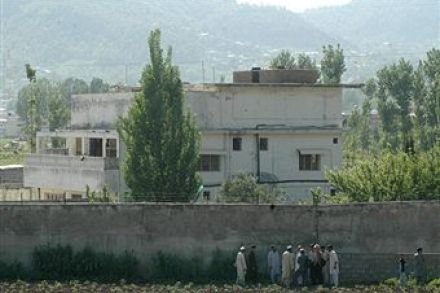
The US-Pakistani relationship has always been fraught, but it is particularly fractious right now. It is highly likely that the US will conduct more Abbottabad-type raids following the killing of Osama Bin Laden. According to sources in the US government, several locations were under surveillance alongside Bin Laden's compound. And that was before the CIA snatched the "motherlode" of information from the Bin Laden raid, which will give hundreds of new leads. People like Ayman al Zawahiri, Abu Yahya al Libi, and Saif al Adel will be sleeping a little less soundly these days. Regrettably, the Pakistani government has done little to prepare its population for the likelihood of new raids, preferring to blow off steam over the US violation of Pakistani sovereignty.

Imperfect working order

From our UK edition

The publication of Pakistan: A Hard Country could not be more timely. International attention has been focused on Pakistan since the Americans killed Osama bin Laden in Abbottabad. Being in the spotlight generally means trouble for this country that has been bedevilled by war and political drama for over three decades. Foreigners announce goodwill and arrive with generous aid, but Pakistanis are frequently left feeling bruised, as the outsiders become ever more bewildered by the workings of this beguiling and maddening place. Anatol Lieven originally planned to call his book ‘How Pakistan Works’. It would have been a good title, since this is exactly what he tries to explain.

Bin Laden strikes from beyond the grave

From our UK edition

And so it starts. The news that suicide bombers have attacked the military base at Shabqadar, northern Pakistan, sounds a chilling note. The Pakistani Taliban has claimed responsibility for the attacks, committed in retaliation for the assassination of Osama bin Laden. Security experts and politicians warned that it would be so. It is, we are told, inevitable that similar atrocities will be attempted closer to home. There will also be concern that this may aggravate the already strained relations between the US and Pakistan, which would only strengthen the terrorists. Perhaps Bin Laden has become a more potent force since his death. The sight of a squalid man sitting in exile watching videos of his bygone glories was almost pitiful.

Osama bin Laden at home

From our UK edition

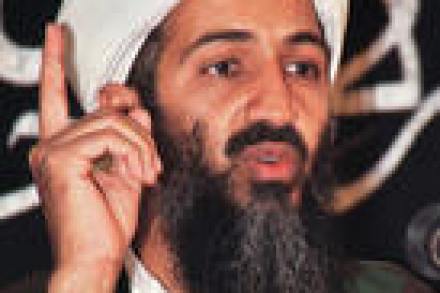
They may be mostly silent, and their content is rather mundane, but the five Osama bin Laden "home videos" released by the Pentagon today are still some of the most astonishing documents to emerge during the past week. The deceased al-Qaeda leader is shown watching himself on television; preparing his ranting-head diatribes against America and the West; and even with his greying beard dyed black all over. You can watch the full selection, with Al Jazeera commentary, above.

After bin Laden

From our UK edition

In this week’s Spectator, on sale today, we have an outstanding lineup on bin Laden’s death and its aftermath. I thought CoffeeHousers may be interested a preview of what’s in this week’s mag. Our lead feature is written by Christina Lamb of the Sunday Times: she has been writing about Pakistan for 24 years and is now based in Washington — so is ideally qualified to write about the changing relationship between the two countries. Bin Laden’s urban lair fits a trend, she says: other jihadis have been found in similar urban compounds near the Pakistan military. The country is playing a double game, she says.

Stray Thoughts on the Execution of Osama bin Laden

From our UK edition

Just as it's difficult for death penalty opponents to be too upset by the verdicts of the Nuremberg tribunal, so it is hard to be upset by the assassination (let us not be coy) of Osama bin Laden. Nevertheless, it seems increasingly probable that al-Qaeda's titular leader was executed "after" a firefight not, rather tellingly, "during" a firefight. Capturing him was never an option. It's easy to understand why this "clean" end was preferable to capturing bin Laden with all the awkward questions about interrogation and trials and due process and torture and everything else that would have followed. Too much trouble. For everyone. That too is part of George W Bush's legacy. (See the depressing debate over "enhanced interrogation techniques" for instance.

CIA director blasts Pakistan’s intelligence service

From our UK edition

"It was decided that any effort to work with the Pakistanis could jeopardise the mission. They might alert the targets." There have been few blunter, nor more high-profile, condemnations of Pakistan's intelligence operation than that made by Leon Panetta, the CIA chief, in interview with Time magazine today. And there are plenty of other noteworthy nuggets in the article as well: among them, Panetta's claim that the US has seized an "impressive amount" of raw intel from Bin Laden's compound. And how about this: "Intelligence reporting suggests that one of bin Laden’s wives who survived the attack has said the family had been living at the compound since 2005, a source tells TIME.

Pakistan responds

From our UK edition

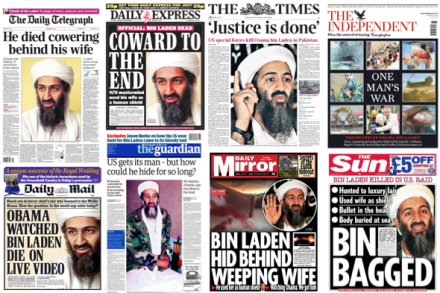
The covers of our newspapers are emblazoned with Bin Laden this morning — but it is an article in a US newspaper that really catches the eye. Pakistan's President, Asif Ali Zardari, has written an op-ed for the Washington Post that defends his country's role in the struggle against Al-Qaeda. It's a defence that has four components. 1) Sympathy: "Pakistan … joins the other targets of al-Qaeda in our satisfaction that the source of the greatest evil of the new millennium has been silenced." 2) Credit-sharing: "We in Pakistan take some satisfaction that our early assistance in identifying an al-Qaeda courier ultimately led to this day." 3) Defiance: "Pakistan has paid an enormous price for its stand against terrorism.

Why Bin Laden’s death matters

From our UK edition

The more we hear about the operation that killed Bin Laden, the more impressive it becomes. US Navy Seals held dummy-runs of the raid on April 7th and 13th part of the extensive, leak-free planning that appears to have been going on for months. I think there are two things that come out of this raid that the West need to talk about. First, Pakistan and its role: did no one in the Pakistani state have any idea that Bin Laden was in Abbottabad, a town dominated by the Pakistani military? As Steve Coll writes at the New Yorker, ‘Who owned the land on which the house was constructed? How was the land acquired, and from whom? Who designed the house, which seems to have been purpose-built to secure bin Laden? Who was the general contractor? Who installed the security systems?

Bin Laden died in Cairo<br />

From our UK edition

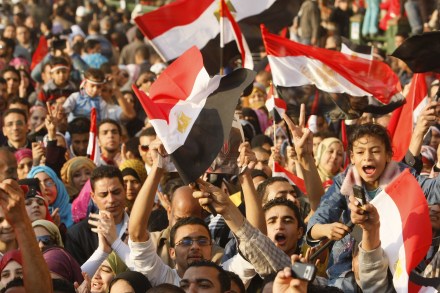
The world’s most wanted terrorist, Osama Bin Laden, was shot Sunday morning in Pakistan by US special forces. But in reality he had died months ago. On the 25 of January 2011 to be exact. Or that is at least when Bin Laden’s power ended. For on that day millions of protesters — predominantly young Muslims — took to the streets of Cairo and demanded the overthrow of the regime of Egyptian President Hosni Mubarak, and succeeded. With this act, they gave, for the first time since 9/1 and arguably for three decades, the Muslim world a more easily-understood and persuasive narrative than the one of anti-US resistance Al Qaeda had so successfully provided. After that, Bin Laden could carry out more attacks. He could kill more people.

What the death of Bin Laden means for Af-Pak policy

From our UK edition

The political and strategic implications of Osama Bin Laden’s death are legion. One of the biggest impacts of this operation could well be that it speeds up the US withdrawal from Afghanistan. Obama has long been keen to start bringing US troops home in large numbers. But a withdrawal from Afghanistan with Bin Laden not dealt with could have been portrayed as humiliating by Obama’s political opponents. Now, that Bin Laden is dead, it is much easier for Obama to scale down the US operation there, arguing that the central base of al Qaeda’s operations have now moved out of the country. The embarrassment for Pakistan of where Bin Laden was found is growing by the hour.

How the US pulled it off

From our UK edition

The veil is being pulled back on how the United States tracked down and killed Osama Bin Laden. The New York Times reveals that the intelligence trail started with information obtained from a Guantanamo Bay detainee about the courier that Bin Laden used to pass and receive messages to the outside world. This is proof that the public debate about the utility of Guantanamo is far too glib. This courier was then tracked down last August to the compound, in Abbottabad which was so secure and grand that the Americans realised that it could well be Bin Laden’s hide-out. These suspicions were reinforced when it became clear that this million dollar compound, built in 2005, had no telephone or internet connection and that its inhabitants incinerated their own rubbish.