Pakistan

What Obama said about Bin Laden and Pakistan before he became President

From our UK edition

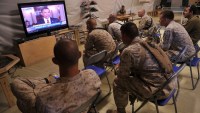
After the events of today, the video above has fresh resonance. It is from the first presidential debate in 2008, and features Barack Obama defending his previously stated view that "if the United States has Al Qaeda, Bin Laden, top level lieutenants in our sights, and Pakistan is unable or unwilling to act, then we should take them out." Turns out, in this case, he was true to his word.

Osama Bin Laden’s death: the world responds

From our UK edition

We have already seen Barack Obama's statement on the death of Osama Bin Laden. Below is more reaction from across the world: David Cameron: “The news that Osama Bin Laden is dead will bring great relief to people across the world. Osama Bin Laden was responsible for the worst terrorist atrocities the world has seen - for 9/11 and for so many attacks, which have cost thousands of lives, many of them British. It is a great success that he has been found and will no longer be able to pursue his campaign of global terror. This is a time to remember all those murdered by Osama Bin Laden, and all those who lost loved ones. It is also a time too to thank all those who work round the clock to keep us safe from terrorism. Their work will continue.

A map that raises questions

From our UK edition

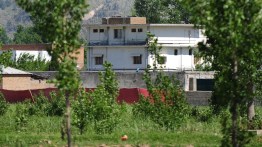
Here's a map that I've put together of the area where Bin Laden was discovered and killed. The red point is his suspected residence, the blue and green points are Pakistani military centres.

A triumph for America that raises questions about Pakistan

From our UK edition

The killing of Osama Bin Laden is one of the clearest victories in the war on terror since the fall of the Taliban government in Afghanistan in 2001. It is a major triumph for American intelligence. Bin Laden’s death does not mark the end of the war on terror. But it does close a chapter and demonstrate that the United States has the willingness and the determination to keep up a manhunt for a decade. Perhaps, the biggest question it raises is about Pakistan. Bin Laden was found not in the lawless, border regions of Pakistan but living in a mansion right in the heart of the country in Abbottabad.

Osama Bin Laden is dead

From our UK edition

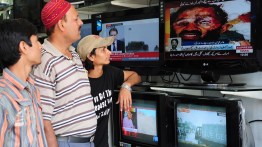
The manhunt is over, as is the man. After almost a decade since 11 September 2001, a decade of the Afghan conflict, Osama Bin Laden is dead. The Al Qaeda leader was shot by US forces, not in a dusty cave complex in the mountains, but at a large house north of Islamabad. Announcing the news last night, Barack Obama called it, "the most significant achievement to date in our nation's effort to defeat Al Qaeda." It will surely be remembered as the most significant achievement of his Presidency, too. Let's remember, though, that Bin Laden was not Islamist terror, just as Islamist terror is not Bin Laden. The fundamentalists are a diffuse and diverse poison. Even Al Qaeda itself has many chiefs and many bases of operation, from Afghanistan to Yemen.

Why Gitmo ought to be closed

From our UK edition

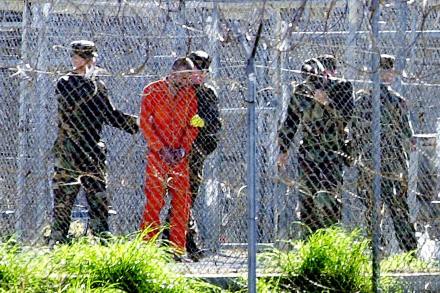
It is hard to feel anything but nauseous when reading the Guardian's continuing special report on Guantanamo Bay, which started yesterday. The paper has released hundreds of classified files which were obtained last year by Wikileaks, including detainee assessments prepared between 2002 and 2009 to summarise what the government knew about each detainee — and they do not paint a pretty picture. Some detainees are clearly guilty as sin. But others seem to have been caught in the crosshairs of conflict. One example seems to be Abdul Badr Mannan, who was arrested in Pakistan and turned over to US forces in the belief that he was affiliated with al-Qaeda.

A landmark judgment for the security services on torture

From our UK edition

The Court of Appeal made a momentous judgment this afternoon. It was hearing the appeal of Rangzieb Ahmed, the first man to be convicted on terror-related charges in this country, for which he is serving 10 years. Ahmed’s appeal was based on the allegation that British security services had been complicit in his torture and that the evidence for his conviction, gained by Pakistan’s ISI, was obtained by a series of extreme measures culminating in the slow removal of his finger nails. The appeal judges rejected Ahmed’s suit, saying that there was no evidence that his nails had been pulled out or that British officers ordered beatings. Ahmed’s claims had been proved ‘not to have occurred’.

Coffee House interview: Mark Sedwill

From our UK edition

Diplomats are often seen as stuffy characters from a different century, men who often appear lost in today’s chaotic world. Nobody could be further from that caricature than Mark Sedwill, the former British ambassador in Kabul and outgoing NATO Senior Civilian Representative to Afghanistan. For more than a year, Sedwill has been, first, General Stanley McChrystal’s right-hand and, more recently, the civilian counterpart to General David Petraeus. Since he took up his ambassadorial post in Kabul, after a stint as Deputy High Commissioner in Pakistan, few Britons have had as much influence on NATO’s strategy as him.

David Miliband’s options

From our UK edition

Downing Street may  have dismissed as “complete nonsense” a newspaper report that the coalition was considering inviting David Miliband to become British ambassador to Washington. But the former foreign secretary is one of a few younger British politicians with international standing and while it would be odd to appoint him to a government job – and stranger still for him to accept -- the coalition should consider putting him forward for a number of international assignments. Potential jobs include the international community’s “high representative” in Bosnia; as a UN envoy to Yemen; or as the representative of the Friends of Democratic Pakistan.

Richard Holbrooke: Last of the Big Beasts?

From our UK edition

In a sense, Richard Holbrooke is one of the few American foreign policy hands of recent years whom one can mention in the same league as the Big Beasts that prowled through the Cold War and the Vietnam disaster (Holbrooke was there too: he wrote one volume of the Pentagon Papers). His death - as Brother Korski says - is a great loss for American diplomacy and the Afghan effort. Holbrooke's last words (as reported by his family) were "You've got to stop this war in Afghanistan" have occasioned much comment. Blake Hounshell, for instance, considers Holbrooke's views on Afghanistan and asks if, latterly, Dick Holbrooke had discovered a dovish side. I don't know.

Holbrooke’s war ends

From our UK edition

He was known as brash and abrasive. A gale force wind. The "bulldozer" some called him based on his time bullying Slobodan Milosevic during the Dayton negotiations to end the Bosnian War in the 1990s. However, veteran US diplomat Richard Holbrooke, who died last night, had a far greater register. When he visited London before assuming his latest post, as President Obama's AfPak envoy, he surprised the US embassy staff by travelling alone, with no bag-carrying entourage, and exhibiting none of the airs he was expected to have. His first experience of the Balkans was not as the all-mighty diplomatic trouble-shooter, but as a normal citizen eager to highlight the plight of the refugees. He braved sniper fire and dangerous roads to document Yugoslavia’s tragedy.

Time for jaw-jaw

From our UK edition

Today I joined number of leading Afghan experts, from Ahmed Rashid to Gilles Dorronsoro, in calling on President Obama to change the American strategy in Afghanistan. Based on our work in and on Afghanistan, we wanted to make a number of points just as the White House begins reviewing its strategy: First, that the cost of the war is now over $120 billion per year for the United States alone. This is unsustainable in the long run. Second, despite these huge costs, the situation on the ground is much worse than a year ago because the Taliban insurgency has made progress across the country. The military campaign is suppressing, locally and temporarily, the symptoms of the disease, but fails to offer a long-term cure.

Pakistan’s double game comes under the spotlight once again

From our UK edition

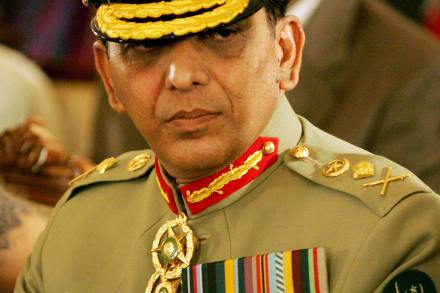
The leak that keeps on leaking has one or two embarrassing titbits about our domestic policymakers this morning. Yet far more noteworthy are the documents on Pakistan. While they don't tell us too much that is surprising – being mostly about the duplicitous game that country is playing with the West – they do highlight some potentially worrying trends. Chief among them is the growing influence of General Ashfaq Pervez Kiyani, the head of Pakistan's army. His name is littered generously throughout the US briefings, and it is often connected with dangerous conspiracy and double-dealing. One document, for instance, suggests that Kiyani was prepared to overthrow the Pakistani President, Asif Zardari, last year.

Julian Assange: the new face of anti-Americanism

From our UK edition

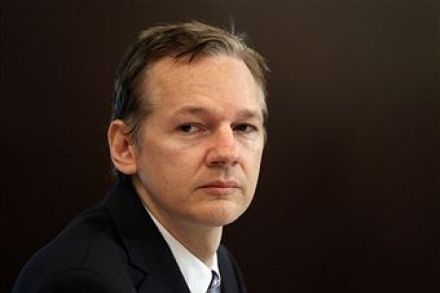
Like everyone else, I have poured over the latest cache of Wikileaks - the publication of which I find irresponsible and destructive. There are several pieces of information now in the public domain that will cause the US diplomatic embarrassment or worse may even help the regimes in Tehran, Pyongyang and Moscow. Just ask yourself a few questions. Will the West be safer if the Saudi leader cannot trust that a conversation he has with a US envoy will remain secret? Will that help or hinder Iran's nuclear prpgramme? Will US-German links be improved by the knowledge that US diplomats are sceptical of Angela Merkel's policies? Will that aid G20 coordination or hamper it?

The search for peace leads Britain to pay a Taliban impostor

From our UK edition

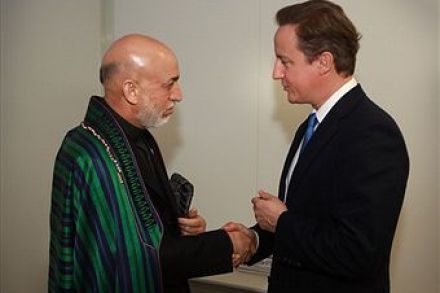
That the British government paid a substantial sums of money and attention to someone who they thought was Mullah Akhtar Mohammad Mansour, a Taliban leader who was the civil aviation minister in the Taliban government, but who turned out to be a shopkeeper from Pakistan shows just how eager Britain is for some kind of political deal that would make it possible for British troops to leave by 2015, the deadline that David Cameron has set. The Washington Post’s piece on the matter, has the Afghan government blaming the mistake on British ‘haste’ for a political settlement.

Pakistan refuses US request to expand drones’ area of operations

From our UK edition

Part of what makes the war in Afghanistan so complicated is how easily the Taliban can be supplied from over the border in Pakistan. Pakistan has been more cooperative recently but the Washington Post reports today that Pakistan has refused a US request to expand the areas in which its drones can operate. The Pakistanis are also resisting requests from the US to take a military grip on North Waziristan, a base for several of the groups fighting the US in Afghanistan. Worryingly, the Post quotes a senior Pakistani military official as saying, "You have timelines of November elections and July x'11 drawdowns - you're looking for short-term gains," the official said, referring to President Obama's pledge to begin withdrawing U.S. troops from Afghanistan in July.

Cricket’s dilemma

From our UK edition

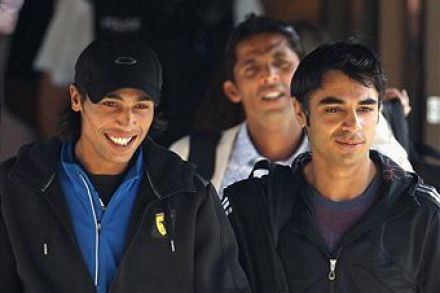
That the three Pakistani cricketers involved in the spot-fixing allegations have withdrawn from the rest of the tour means that the T20s and one day games will now definitely go ahead. If the accused had played, it would have been hard to see how the matches could have gone ahead and if they had, how they could have been taken at face-value by anyone. If the allegations against the men turn out to be correct, then the game will have to decide how to punish them. This is going to be a hard call. On the one hand, banning them for life would serve as a real deterrent to anyone tempted to get involved in future scams. But on the other, depriving Pakistan of two cricketers of the talents of Amir and Asif would further weaken Pakistani cricket.

Prohibition Doesn’t Work: Cricket & Gambling Edition

From our UK edition

The News of the World's revelations about connivance between cricketers and bookmakers is dismaying; the story can't alas, be considered wholly surprising. If proved - and on the face of it there's every reason to suppose that the allegations are accurate - then it's difficult to see how Salman Butt and the other players implicated can escape heavy punishment (and perhaps in the skipper's case a lifetime ban). The consolation, in as much as there is one, is that the evidence points to spot-fixing rather than match-fixing. Saying that the former is not as serious as the latter does not mean it's unserious. It just means that matters could be worse. And perhaps they are, given how much we don't know.

The Pity of Pakistan

From our UK edition

Broad and Trott skip on against Pakistan. Amir looks on in some pain. Photo: Clive Rose/Getty Images. One ball. One wicket. That's how far away Pakistan were from establishing a match-winning and series-squaring position at Lords. Now only god or, more probably, rain can save them. When Stuart Broad joined Jonathan Trott at the crease on Friday England were reeling at 102-7. If any one of the next, oh, 180 deliveries had dismissed either batsman England might have been dismissed for no more than 200 runs and Pakistan would have enjoyed every chance of forcing another improbable victory and, in so doing, levelling the series. Such are the margins between success and failure in test match cricket.