Pakistan

Malala for free schools

From our UK edition

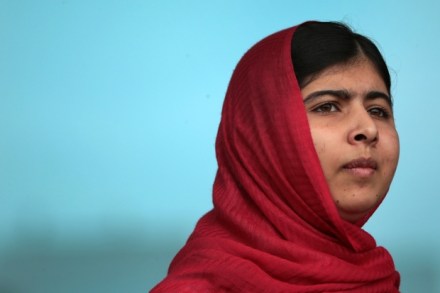
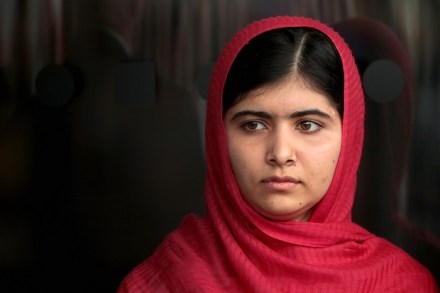
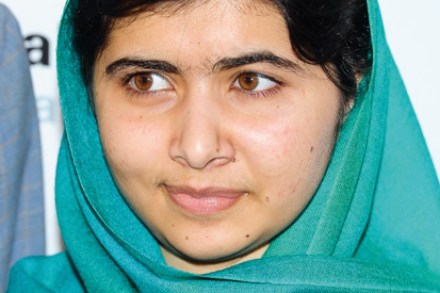
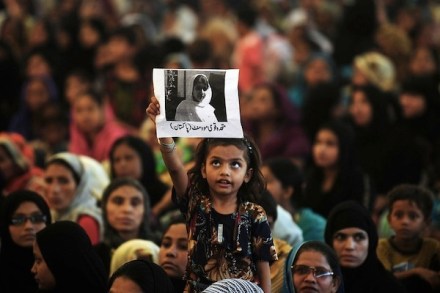
That Malala Yousafzai, the girl the Taleban tried to murder, is a brave and resolute young woman is not in doubt. The youngest person ever nominated for the Nobel Peace Prize, she has won many awards, including the Sakharov Prize and an honorary degree from Edinburgh University, in her campaign for ‘the right to -education’. But something curious is going on. Something crucial to her experience is always omitted when her life and mission are described by international agencies and the media. Education International, the global teachers’ union umbrella group, is typical. Malala is campaigning, they say, so that all can benefit from ‘equitable public education’; that is, government education.

Brave, non-denominational freedom fighters

From our UK edition

Those of you who wonder why the BBC is so politically correct, so craven in its expressions regarding, for example, Islamic terror, may find a partial answer here:  Stephen Whittle Director of Editorial Policy at the BBC Dear Stephen, We have received many complaints over the last 24 hours from British Muslims regarding the use of the phrase 'Islamic terrorists' by your news reporters in connection with the struggle for Kashmiri independence. We believe this phrase is totally inappropriate and adds nothing to the story and even distorts what is a long-standing struggle by the Kashmiri people to gain control of their own destiny. We have noticed that your news reports are also failing to adequately report the background to this conflict.

Malala – the girl who hates Britain

From our UK edition

Before a mob turns up at my house and someone starts dragging up that unfortunate picture of my grandfather with Hitler, the headline is a joke, but I do wonder if the media has given a rather misleading idea of Malala Yousafzai. For example, the Pakistani International Marxist Tendency claim that the schoolgirl sent a message to their 32nd congress stating: ‘I am convinced Socialism is the only answer and I urge all comrades to take this struggle to a victorious conclusion. Only this will free us from the chains of bigotry and exploitation.

Malala’s voice is defiant — but how much can she change Pakistan? 

From our UK edition

In 2012 a Taleban gunman, infuriated by Malala Yousafzai’s frequent television appearances insisting that girls had a right to education, shot her in the face. She survived and is now an inspirational symbol both of defiance and of the love of learning. As you might hope in a memoir by a 16- year-old, full acknowledgment is given to parental influence and particularly to the role of her father. Ziauddin Yousafzai is himself a long-standing champion of girls’ education who, until the Taleban forced the family into exile in Birmingham, ran girls’ schools in the famously beautiful Swat valley in northern Pakistan. And yet, as his daughter reveals, his life so nearly took a different path.

Two riveting journeys to the heart of India and Pakistan

From our UK edition

50 summers have passed since C.L.R. James asked, ‘What do they know of cricket who only cricket know?’ James’s belief, that this quaint game reveals profound truths of those who play and love it, is alive and well: evident in The Great Tamasha by James Astill, which describes India, and Cricket Cauldron by Shaharyar M. Khan, which fumigates Pakistan. Astill, who is a Raja at The Economist, tells the story of India’s turbulent rise with reference to the history of cricket in India, where the sport is a form of entertainment – or tamasha, as numerous sub-continental languages have it. Astill is a self-confessed ‘cricket tragic’ but he is good company nonetheless, with an eye for an anecdote and an ear for a joke.

‘I was detained as a potential suicide bomber’

From our UK edition

To the Lahore Literary Festival. As I cross the border from India, Pakistan is experiencing an unprecedented wave of sectarian violence: 400 Shias have been killed in bomb attacks this year, while more than 150 houses and two churches belonging to the Christians have been burned in mob attacks. Yet Pakistan always manages to stumble on. Sixty-five years after partition, Lahore still feels like Delhi’s sister city, and is much more like my adopted home than either Madras or Calcutta is. Moreover, there are some hopeful signs. Zardari’s government is about to complete its term in office — the first time in the country’s history that an elected government will manage to do so — and the literary festival itself is a huge success.

The importance of Pakistan’s literary festivals

From our UK edition

For a country often conceived of only in terms of its troubles with terrorism, extremists and bombs, you could easily be forgiven for thinking that, in Pakistan, all forms of cultural expression have long ceased. But, in the latest edition of Time, there's an interesting piece by Omar Waraich about the cultural flipside of Pakistan that caught my eye. As the world’s attention has been drawn to Pakistan’s problems with Islamist militancy in recent years, a flurry of exciting new voices have stepped forward to share with their readers a more intimate and rounded look at the country and its people — winning many plaudits along the way.

Cricket’s the loser

From our UK edition

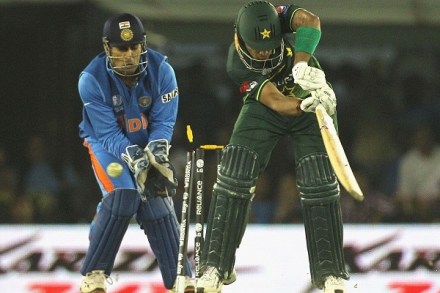
Cricket glorifies some cheats. W.G. Grace often batted on after being clean bowled; such was the public demand to watch him. Douglas Jardine’s bodyline tactics revolutionised fast bowling: eventually making it acceptable to target the batsman rather than the wicket. Fielders “work” the ball. Batsmen stand their ground when convention asks them to walk. Cheating is part of cricket. But match fixing? The culprits live forever in infamy, and deservedly so. The cricketing authorities (the ICC) believed that match fixing had died ten years ago; but the News of the World’s sting on the Pakistan team in 2010 demolished those hopes. The sting suggested that the problem was deep. Rumours abounded around the globe.

William Hague: Somalia, Pakistan and Afghanistan is where the threat to the British homeland is coming from

From our UK edition

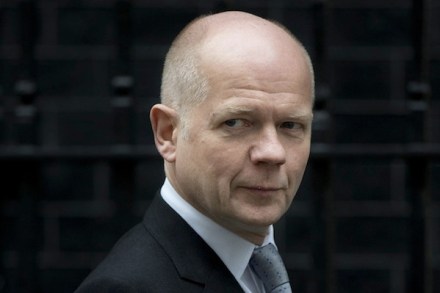
On the Sunday Politics, William Hague confirmed that the greatest terrorist threat to the British homeland come from Somalia, Pakistan and Afghanistan. But he argued that without intervention, the Sahel could become as dangerous to Britain. Those hoping for Hague to put flesh on the bones of the government’s European strategy will have been disappointed. The Tory leadership remains determined not to give out anything akin to a renegotiation scorecard. When pressed by Andrew Neil on whether he would advocate leaving if only the status quo was on offer, Hague said that the government would have to ‘use our judgment at the time.’ On gay marriage, Hague reiterated his support for it.

What can the Pakistani government do about drones?

From our UK edition

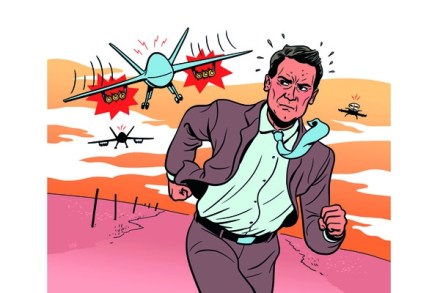
The dilemma over drones continues today with the announcement that a leading Taliban figure, Mullah Nazir, was killed earlier this morning. Public opinion in Pakistan is deeply hostile to such attacks even when militants are killed because of the perceived cost to civilians. Scores have been incorrectly identified as hostile jihadists and targeted as a result. Pakistan’s government has long adopted a dual-hatted approach. Officially it protests all drone strikes while privately sanctioning them. That now appears to be changing and the Foreign Ministry is now more committed than ever to stopping drones in Pakistan. Part of the pressure is explained by upcoming elections, with drones becoming a key electoral issue.

The Taliban’s peace offering

From our UK edition

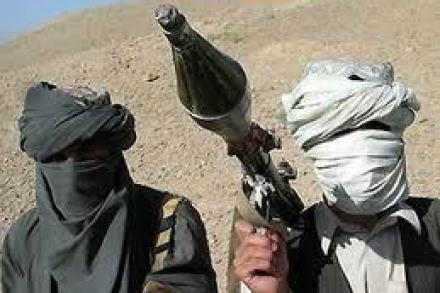
‘Taliban’ and ‘peace mission’ — the words sure don't fit very well together. But they're the words that you'll see in tomorrow's papers, given that the Taliban have today revealed their intention to open a peace mission in Qatar. The idea is that foreign diplomats can stop by, share a cup of tea and some Ferrero Rocher, and talk about ending the insurgency in Afghanistan. The news ought to treated with caution for now. After all, the Taliban haven't given a date for when their Qatar office will be open, and they're making noises about prisoners being released from Guantanamo Bay in return. But it's a still a significant moment, whatever happens. For the first time in public, the Taliban appear to be broaching the possibility of peace talks.

Few would shed tears if Britain barred Anjem Choudary from returning

From our UK edition

Britain’s best known Islamist, Anjem Choudary, is planning to hold a conference in Pakistan on Friday where, among other things, he will issue a fatwa on Malala Yousafzai. She is the schoolgirl from Pakistan’s Taliban-controlled tribal areas who was shot in the head for defying the terrorist group by demanding an education. Yousafzai survived the attempted assassination and was later flow to Birmingham for specialist medical treatment (the bill is being picked up by the Pakistani government). Choudary plans to hold his conference – 'Shariah for Pakistan' – at the Red Mosque in Islamabad which was the scene of a notorious standoff in 2007.

The shooting of Malala Yousufzai

From our UK edition

The culture of denial is so pervasive and prevalent in Pakistani politics that the government is now unable to govern the tribal areas. That much was clear yesterday when the Pakistani Taliban shot 14 year-old Malala Yousufzai in the tribal province of Swat as she walked home from school. Yousufzai is a prominent campaigner against religious extremism and promotes women’s rights, including their access to education. ‘She was pro-West, she was speaking against Taliban and she was calling President Obama her idol’, a spokesman for the Taliban, Ehsanullah Ehsan, said when claiming responsibility for the attack. ‘She was young but she was promoting Western culture in Pashtun areas’.

Save the Children and Osama bin Laden

From our UK edition

Have Pakistani children been the unintended victims of last year’s mission by the United States to kill Osama bin Laden? It might seem a ridiculous question to pose, but it’s clear they are being made to bear the brunt of that decision by an increasingly paranoid official and clerical establishment. The latest manifestation of this was the decision by Pakistan’s intelligence services to order all foreign staff working for Save the Children out of country. They claim to have found evidence of the charity indirectly assisting the United States in its operation to kill Osama bin Laden last year – a claim the group vehemently denies.

Pakistan and the Higgs Boson

From our UK edition

Have you heard about Pakistan’s contribution to last week’s discovery of the Higgs Boson? No, thought not. Remarkably, the reason you probably won’t have is because Pakistan doesn’t want you to. Dr Abdus Salam, a theoretical physicist, carried out pioneering work in the 1960s to suggest the existence of a hypothetical particle after creating a grand unification theory for weak forces and electromagnetic fields. He won the Nobel Prize in 1979 for his efforts, the only Pakistani to have ever received the honour. Yet, his name is largely airbrushed from textbooks in Pakistan and is rarely mentioned in public debate.

Dangerous territory | 14 April 2012

From our UK edition

Fifteen years ago Ahmed Rashid wrote an original, groundbreaking and wonderful book about the Taleban, a subject about which few people at the time knew or cared. Then along came 9/11 and Rashid turned overnight from obscure scribbler into global sage. He was courted (as he reminds us from time to time in this book) by presidents and celebrated by Washington think-tanks. But all this recognition, while well deserved, has had a terrible effect on his prose. Instead of writing very good books, he now writes very bad ones. His Descent into Chaos, published in 2008, an account of the years after 9/11, was ponderous and loaded with received wisdom. This volume is no better.

What the Taliban want

From our UK edition

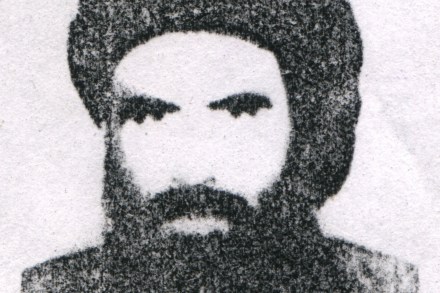
How go those talks with the Taliban in Doha? Quietly, that's how — although there's a report in yesterday's The Hindu that could reveal some of what's being said, and is worth the time reading because of it. According to the paper's diplomatic sources, the Taliban want Mullah Mohammed Omar installed as ‘supreme religious and political leader’ of Afghanistan. And, yes, that is the Mullah Omar who sheltered Al Qaeda when he actually was in charge of Afghanistan, and whose policy agenda included the death penalty for those converting to another religion, as well as the general subjugation of women, gay people, individuality, etc. He's currently wanted to the tune of $10 million by the US State Department.

Worrying developments in the Middle East

From our UK edition

It’s been an eventful , if worrying afternoon in the Middle East. First, the initial Egyptian election results confirm the expectation that Islamist parties would dominate the first round of elections: they've taken more than 50 per cent of the vote. Douglas Murray wrote a Spectator cover story two weeks ago on how the Arab Spring is turning to winter; it is required reading. Events in Iran are much more disturbing, though. Iran claims to have shot down an US drone in the east of the country and added further threats about further retaliation for the incursion.

Pakistan: A Personal History by Imran Khan

From our UK edition

Imran Khan’s Pakistan: A Personal History describes his journey from playboy cricketer through believer and charity worker to politician. His story is interwoven with highlights from Pakistan’s history. At times he seems to conflate his own destiny with that of Pakistan, and at others to be writing a beguilingly honest personal account. Khan describes how youthful hedonism eventually gave way to faith. His cricketing life led him to realise that talent and dedication were no guarantee of success. In the end, he says, it comes down to luck. ‘Over the years I began to ask myself the question — could what we call luck actually be the will of God?’ Khan’s religious awakening was further stimulated by physical vulnerability.

Beyond Gaddafi, America turns its attention to Pakistan

From our UK edition

It's hard to recall a more grisly complement of newspaper covers than those this morning. Only the FT refrains from showing either Gaddafi's stumbling last moments or his corpse, whereas the Sun runs with the headline, big and plain: "That's for Lockerbie". The insides of the papers are more uncertain. There are doubts about the details, such as what has happened to Gaddafi's infamous son Saif. And there are doubts about the general tide of events too. Several commentators, including Peter Oborne, make the point that the passing of Gaddafi is only the first phase in Libya's struggle towards democracy — and it is a struggle that might easily be forced off course by various factions, splinter groups and madmen.