Pakistan

Pakistan’s fight with Macron has taken a humiliating turn

From our UK edition

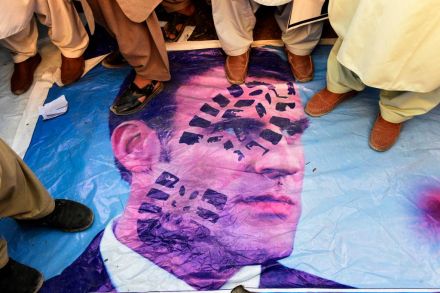
The war of words between Pakistan and France – sparked by president Macron's comments about radical Islam – rumbles on. But the latest skirmish has led to an embarrassing climbdown from one of Pakistan's top politicians. 'Macron is doing to Muslims what the Nazis did to the Jews – Muslim children will get ID numbers (other children won’t) just as Jews were forced to wear the yellow star on their clothing for identification,' wrote Pakistan's federal minister for human rights Shireen Mazari. Mazari's tweet was quickly picked up by those who have suggested there is something sinister to Macron's recent interventions. But there was a problem: it was nonsense. France soon hit back, calling out Mazari’s 'fake news'.

Sea change: China has its sights on the Bay of Bengal

From our UK edition

Pangong Lake is the most unlikely of places for a naval conflict between two of the world’s nuclear-powers, India and China, with a third, Pakistan, looking on with not a little interest. Lying some 280 miles east of Islamabad, 360 miles north of New Delhi and 2,170 miles west of Beijing, Pangong Lake is in the remote northern Himalayas. In 1905, the explorer Ellsworth Huntington said that its beauty could ‘rival, or even excel, the most famous lakes of Italy or Switzerland’. It is a harsh world, frozen in winter, inhabited by a sparse indigenous population of hardy goat herders.

The National Theatre’s live-streaming policy is bizarre

From our UK edition

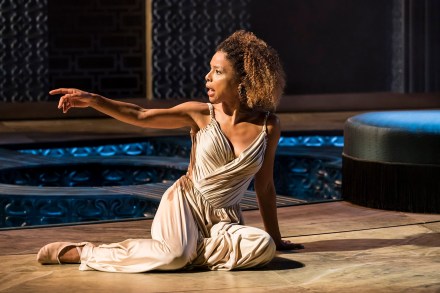
The National’s bizarre livestreaming service continues. On 7 May, for one week only, it released a modern-dress version of Antony and Cleopatra set in a series of strategy rooms, conference centres and five-star hotel suites. The lovestruck Roman was played by a louche, gruff, brooding Ralph Fiennes. Why is this man so watchable? He lacks the least mark of distinction. Face, height, physique and vocal ability are all in the middling range. In real life he could easily have assumed the role of the research assistant’s deputy. Perhaps it’s the Reggie Perrin ordinariness that makes his presence bewitching. Shakespeare was on unusually patchy form when he assembled this huge, rambling history play.

Islamists are frustrating Pakistan’s fight against coronavirus

From our UK edition

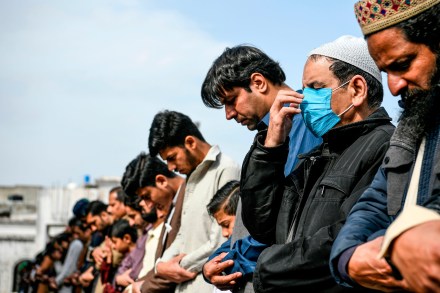
The number of confirmed Covid-19 cases in Pakistan currently sits at 2,042 alongside 26 deaths. With only limited healthcare facilities, the country is facing a perilously delayed reaction. Most of Pakistan’s initial cases were pilgrims returning from places like Iran and Saudi Arabia. But the virus quickly spread thanks to a failure to screen and quarantine. Even so, almost a third of the infections in Pakistan are now being spread from within the community. That figure is expected to rise owing to a combination of appalling mismanagement and masochistic inaction. Such failures can be gauged by the state’s refusal to shut down the mosques.

History will soon judge this fraught time

From our UK edition

Good stories have a dénouement. The Act III moment when all is revealed and the narrative comes in to land is critical to most plays and novels. And so we want it to be with Brexit. Who will turn out to have been right, and who wrong? Whose bluff will have been called, and to whom will go the secret pleasures of ‘I told you so’? Real life usually disappoints, however. No single event settles matters, and both sides of a dispute tend to find ways of maintaining that they were right all along, and if outcomes confound them then this was somebody else’s fault.

Is Imran Khan Pakistan’s prime minister or a puppet?

From our UK edition

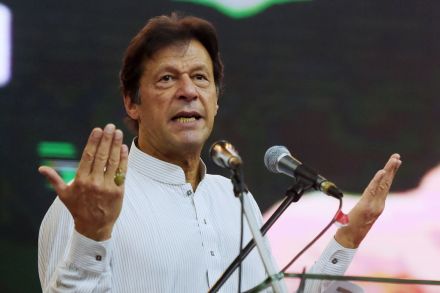
When Pakistan's prime minister Imran Khan handed the country’s army chief, general Qamar Javed Bajwa, a three-year extension on Monday, press reports didn't tell the full story. The true picture is very revealing of Khan’s own position and shows how his views have changed dramatically. To start with, this was no simple extension for a man appointed to Pakistan's most powerful position. That would suggest Bajwa's term of office had been increased by a limited period. In fact, general Bajwa was given a full second term. The official notification from the prime minister’s office makes this clear: “Gen. Qamar Javed Bajwa is appointed Chief of Army Staff for another term of three years from the date of completion of current tenure”.

India’s land grab

From our UK edition

Frank Johnson, editor of The Spectator until cruelly sacked to make way for Boris Johnson, never wasted ideas. He liked to reuse them. Often. Every summer he would write the same column attacking the silly season. August, Mr Johnson maintained, was not silly at all. The first world war started in August. The Nazi-Soviet pact was signed in August. Hitler ordered the invasion of Poland in August. Saddam Hussein marched into Kuwait also in the horror month of August. Once again August has vindicated Mr Johnson — and not only because of Brexit. Darkness has descended on the former princely state of (British-controlled) Kashmir. Meanwhile freedom is dying in the former British colony of Hong Kong. These two events are reported as if unconnected.

Why is no one boycotting India?

From our UK edition

Try as I might, I just can’t seem to get anyone interested in discriminating against Indians. No one is tearing open packets of imported turmeric and cardamom and dumping their contents on supermarket floors. British academics aren’t severing ties with professors from Delhi University. If pension funds are divesting from Tata Motors and ICICI Bank, the FT is still to pick up on it.  This is strange because on Monday Narendra Modi’s right-wing government revoked the special status of Jammu and Kashmir, site of a long-running territorial dispute between India and Pakistan. Both sides claim the entirety of the state, which has been under Indian administration since Partition, and which until now has enjoyed significant political autonomy.

It’s not just cricket

From our UK edition

There are plenty of much-anticipated contests in the 2019 Cricket World Cup. But nothing to compare with this Sunday’s match at Old Trafford, where India are billed to play Pakistan in the latest epic in a rivalry that dates back to Partition in 1947. It’s a rivalry that is regularly punctuated by war. No cricket was played between the two countries from 1961 until 1978. The 1965 conflict, caused by Pakistani aggression, severed relations. By the time a ceasefire was declared, Indian tanks were on the outskirts of Lahore, where a 12-year-old Imran Khan was distraught not to be allowed to join a local militia. The two countries fought again in 1971 when India backed insurgents in the liberation war which led to the secession of East Pakistan and the creation of Bangladesh.

Delhi Notebook

From our UK edition

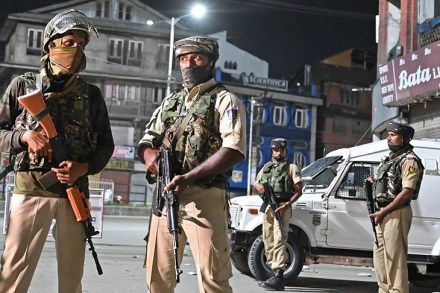
India is not preparing for war, but picking up the newspapers in Delhi you could be forgiven for thinking otherwise. For weeks, the papers have been blowing the horns of retribution against Islamabad after a convoy of police officers was rammed by a suicide bomber in Kashmir. Since both sides acquired nuclear weapons, neither had sent a warplane to bomb the other — until last week. Friends in Europe send me anxious messages: isn’t it time to leave Delhi while I still can? The Americans I meet are all a bit jumpy. A couple I chat with at the Khan Market doubt the US Embassy can rescue them if all goes off the rails — or, as they say, ‘Fubar’ (‘Fouled’ up beyond all recognition). Food and water are being stockpiled.

Portrait of the week | 21 February 2019

From our UK edition

Home Seven MPs resigned from the Labour party and sat in the Commons (next to the DUP) as the Independent Group, or Tig. They were Luciana Berger, Ann Coffey, Mike Gapes, Chris Leslie, Gavin Shuker, Angela Smith and Chuka Umunna. The next day they were joined by Joan Ryan and the following one by three Tories, Anna Soubry, Sarah Wollaston and Heidi Allen. The Labour eight said they objected to anti-Semitism in the party, the security risk should Jeremy Corbyn become prime minister and Labour’s lukewarm attitude to a second referendum. Derek Hatton, who had been the deputy leader of the Militant-controlled council which set an illegal budget in Liverpool, was readmitted to the Labour party after 34 years.

Modi’s operandi

From our UK edition

 Islamabad Six months into Imran Khan’s premiership and the new Pakistan prime minister has been plunged into his first major foreign crisis. Last week, a suicide bomber attacked Indian soldiers in Kashmir, killing more than 40 paramilitary troops. Simultaneously, another suicide attack massacred 27 members of Iran’s Revolutionary Guard near the Pakistani border of Iran’s troubled Sistan and Baluchestan Province. Khan has spent the early months of his premiership attempting to strengthen links with neighbours. He stretched out the hand of friendship to India. He opened the Kartarpur corridor to allow the visa-free passage of Sikh pilgrims. He has warmed up Pakistan’s old alliance with Iran, while working hard to flatter her bitter enemy Saudi Arabia.

‘Someone had to stand up’

From our UK edition

Saif ul-Malook greets me in the hallway of his daughter’s home. Pakistani hospitality dictates that a guest should not go hungry, so there are plates of samosas, kebabs and biscuits. I am also of Pakistani heritage, so know that etiquette dictates that I must politely refuse a few times — or until I can no longer ignore my rumbling stomach. Malook was flown out of Pakistan, because his life was in danger. Since leaving the country, he has kept a low profile in his daughter’s home, a modest detached house in a cul-de-sac off a busy road in a UK city. He asks for the location not to be revealed. The reason his life is in danger is because Malook was a key figure in one of the most renowned cases in recent times.

India on the brink

From our UK edition

Most religions bind their adherents into a community of believers. Hinduism segregates them into castes. And people excluded from the hierarchical caste system — the ‘untouchables’ — are permanently doomed to a life of scripturally sanctioned calvary. This hideousness doesn’t, however, hinder Shashi Tharoor from breathlessly exalting Hinduism as ‘a religion for the 21st century’.

‘Trump is a confused man’: Pervez Musharraf on global politics and his plans to return to Pakistan

From our UK edition

I was notified of my appointment with Pervez Musharraf by a text from his PR man: ‘General sahib has granted your request and wishes to see you in the afternoon.’ At the entrance to a gleaming skyscraper with views of the Burj Khalifa, I was greeted by a security guard in black sunglasses: ‘Welcome sir! You have 45 minutes.’ We ascended the elevator up to the penthouse, and were soon standing in the drawing room of Pakistan’s former president-dictator. The marble floors were strewn with Persian rugs; the walls were adorned with army mementos and Mughal paintings. The sound of ghazal music wafted through the air – as did the smell of cheese samosas. Musharraf entered, accompanied by one of the small dogs he reputedly adores.

Brexit Britain could do with some cricket diplomacy

From our UK edition

Peter Oborne, The Spectator’s associate editor, is something of a legend in Pakistan — as least among the defence establishment types we met there. That’s because every year he takes a cricket team on a tour of the country. Last September, in Miranshah, they played a ‘Peace Cup’ match against an XI consisting of current or retired Pakistani internationals in front of a crowd of about 15,000. The Pakistan army turned the occasion into a PR stunt, since Pakistanis love cricket and the military elite wants young people to take up sport rather than global jihad. I don’t want to detract from Peter’s efforts. Surely, though, our government should do one better and send the England cricket team over?

Diary – 15 February 2018

From our UK edition

Not so long ago, Barack Obama called Waziristan ‘the most dangerous place in the world’. It was the losing front in the war on terror, a lawless region in the Federally Administered Tribal Areas of Pakistan infested with Taleban and terrorism. Today, thanks to the Pakistan army, even a risk-averse hack like me can go there with scarcely a tremor. On Wednesday, as part of a British media delegation, I flew by military helicopter to Miranshah, the administrative HQ of north Waziristan. The soldiers took us to a newly built ‘markaz (hideout) re-enactment’ centre, which we quickly renamed Jihadi Disneyland. It is a true-to-life terrorist den, constructed by Pakistani soldiers with extraordinary attention to detail.

Books Podcast: Mohsin Hamid

From our UK edition

In this week’s books podcast I’m talking to the award-festooned writer Mohsin Hamid about his latest novel Exit West — touching on the effects of technology, the migrant crisis, political writing and why his eight-year-old daughter is shaping up to be an emo kid. You can listen to our conversation here: And do subscribe on iTunes for more like this, every week.

Portrait of the week | 4 January 2018

From our UK edition

Home In a message for the New Year, as though it were an immemorial custom, Theresa May, the Prime Minister, said: ‘Most people just want the government to get on and deliver a good Brexit, and that’s exactly what we are doing.’ It seemed a long time since, just before Christmas, Damian Green had resigned as the First Secretary of State, in a letter beginning, ‘I regret that I’ve been asked to resign’ and going on to ‘accept that I should have been clear in my press statements that police lawyers talked to my lawyers in 2008 about the pornography on the computers [in his parliamentary office], and that the police raised it with me in a subsequent phone call in 2013. I apologise that my statements were misleading on this point.

Imran’s biggest test

From our UK edition

It’s been a long journey for Imran Khan. He founded his political party, PTI (Pakistan Movement for Justice), in 1996, and for many years made no real progress. Many mocked him. The Guardian journalist Declan Walsh dismissed him as ‘a miserable politician’, whose ideas and affiliations had ‘swerved and skidded like a rickshaw in a rainshower’. PTI did make a limited amount of progress in the 2013 general elections, when it emerged as the second largest party by national vote and with 30 parliamentary seats. Furthermore, Khan’s party secured control of Khyber Pakhtunkhwa (formerly North-West Frontier Province). But none of this was enough to challenge for national power. The outlook has changed dramatically over the past three months.