Organ transplants

The doctor will kill you now

From our US edition

It’s the stuff of nightmares. You wake up on a cold metal table, fully conscious but unable to move or communicate as masked figures prep you for some unknown procedure – it turns out to be your last. This isn’t the plot of a Criminal Minds episode, but quite possibly a far too common reality in an American medical system that seeks to harvest organs from donors who are very much alive. It’s the latest example of modern progressive institutions committing harm in the name of help. A recent New York Times investigation revealed the disturbing lengths procurement agencies go to retrieve organs. Historically, organ donation occurred only from patients declared brain-dead, an “irreversible state.

Organ transplant in Paris (Getty)

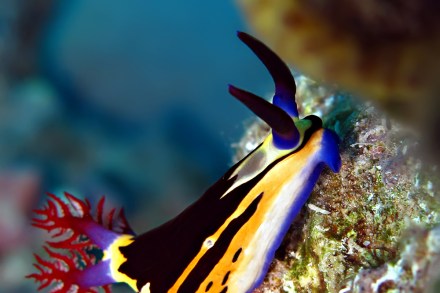
What sea slugs can teach us about organ transplants

While they may be outnumbered and outweighed by insects, the terrestrial world is really the kingdom of the vertebrates. Mammals, birds, reptiles and amphibians dominate most ecosystems. Yet, as Drew Harvell points out in her fascinating new book, the seeming diversity of the terrestrial vertebrates is deceptive. In fact all are contained within just one of the 34 groups of animals that live on our planet, and their many designs are really variations on a quite narrow set of themes. This means that all share bilateral symmetry – heads with eyes and brains atop bodies with four limbs that contain their organs. By contrast, the other 33 groups of animals, the invertebrates, are astonishingly various in their design, with arsenals of adaptations and biological tricks.