Opera

A booster shot of sunlight: Unsuk Chin’s new violin concerto reviewed

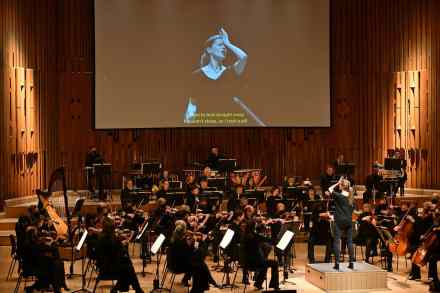
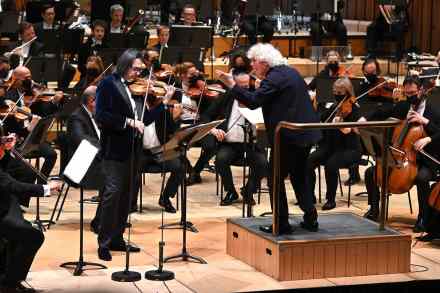
Sir Simon Rattle and the London Symphony Orchestra began the year with a world première. Unsuk Chin’s Second Violin Concerto opened with the soloist, Leonidas Kavakos, completely alone in front of a silent orchestra, playing phrases that rocked back and forth until, suddenly, they were striking sparks. As well they might; Kavakos, after all, is the reason that the concerto exists — the violinist whose ‘burningly intense’ (the composer’s words) artistry has prompted Chin to break her self-imposed rule of writing only one concerto for any given instrument. She explained in the programme notes that ‘the solo violin part forms the foundation of the whole score, the soloist triggering all of the orchestra’s actions and impulses.

40 per cent sublime, 60 per cent ridiculous: ENO’s The Valkyrie reviewed

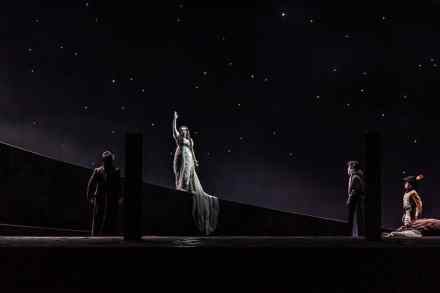
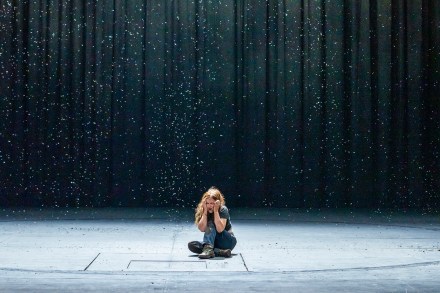
It’s the final scene of The Valkyrie and Wotan is wearing cords. They’re a sensible choice for a hard-working deity: practical but with a certain retro flair. Slumbering under a red puffer jacket lies his daughter Brünnhilde, and as Wagner’s music yearns and flickers, the Lord of Ravens shuffles slowly around on all fours, methodically attaching the carabiners for the climactic flying effect. First one, then another. Then another. Four more to go! Possibly we’re not meant to be seeing this. Possibly it was meant to be obscured by the ‘large final fire effect’ that a slip in the programme tells us has been cut (‘despite extensive planning’) at the last minute.

Hockney’s Rake’s Progress remains one of the supreme achievements

With Glyndebourne’s The Rake’s Progress, the show starts with David Hockney’s front cloth. The colour, the ingenuity, the visual bravura: 46 years after this production’s first appearance in 1975, it’s still capable of halting you in your tracks. So drink it in. No blockbuster art exhibition will ever give you such ideal viewing conditions, or so much time with a single artwork. And no mock-up or faded video will ever be able to restore to Hockney’s sets and costumes the meaning and the impact that they possess when they’re peopled by living performers and accompanied by Stravinsky’s score. Come for the backdrops, stay for the opera. This is one revival that nearly does send you out whistling the scenery.

This is how G&S should be staged: ENO’s HMS Pinafore reviewed

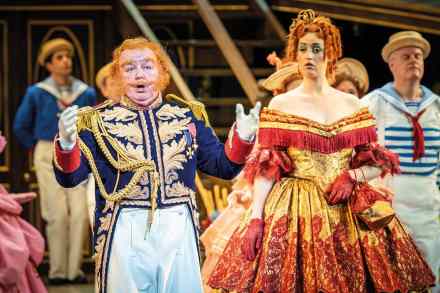
Until 1881, HMS Pinafore was the second-longest-running show in West End history. Within a year of its première it had broken America too; at one point there were eight competing productions on Broadway alone. The single most wrongheaded notion that still clings to Gilbert and Sullivan’s operas is that they’re somehow low-rent or parochial. They were blockbuster international hits, superbly written, lavishly staged and exported far beyond the Anglosphere. Pinafore was performed in Denmark as Frigate Jutland and in Vienna, Johann Strauss was driven off stage by the runaway success of The Mikado. In the words of the operetta historian Richard Traubner, Gilbert and Sullivan’s collaborations were ‘simply the best musical productions of the Victorian age’.

Very much NSFW: Jean-Efflam Bavouzet/Quatuor Danel at Wigmore Hall reviewed

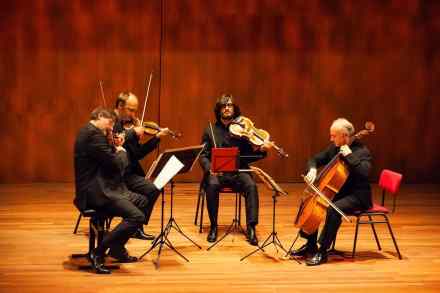
‘Drammatico’, wrote César Franck over the opening of his Piano Quintet, and you’d better believe he meant it. The score bulges with clues: piu dolce; espressivo sempre; eventually (and steamiest of all if you’re even slightly attuned to the absinthe-dazed atmosphere of French Wagnerism) tenero ma con passione — ‘tenderly, but with passion’. It was too much for Camille Saint-Saëns, who played the piano in the world première in 1880. The gossip was that Saint-Saëns knew of Franck’s infatuation with the composer Augusta Holmès, and was repulsed by music that — to jealous ears — sounded like the one-handed diary of a 58-year-old lecher.

We’ll be talking about Royal Opera’s Jenufa two decades from now

Leos Janacek cared about words. He’d hang about central Brno, notebook in hand, eavesdropping on conversations and trying to capture their exact rhythm and intonation in scribbled semitones and quavers. So there’s a tidy irony in the fact that the opera that made his name isn’t really called Jenufa at all. Janacek called it Jeji Pastorkyna, and if it’s easy enough for non-Czech speakers to understand why that was never likely to travel, it’s not without consequence. Another woman drives this story, and in the original title she’s present but unnamed: Jenufa’s stepmother, described simply as Kostelnicka, or churchwarden. Jeji Pastorkyna translates roughly as ‘Her Stepdaughter’. No matter.

Hits you where it hurts: Welsh National Opera’s Madam Butterfly reviewed

‘It’s generally agreed that in contemporary practice, this opera proposes significant ethical and cultural problems,’ says the director Lindy Hume in the programme book for her new production of Madam Butterfly, and if you’ve just shelled out 75 quid in the expectation of attractive scenery and luscious tunes, that’s you told. In truth, it’s rarely advisable to read what a director thinks about their own work, at least until after the show, when it can serve as a bemusing footnote to the evening’s entertainment. Ah, so that’s why they were wearing pink beehive wigs! If a director is any good at their job, it’ll come across on stage without any need for commentary.

A terrific night of opera: Zanetto/Orfeo ed Euridice, Arcola Theatre, reviewed

For a one-hit composer, we hear rather a lot of Pietro Mascagni. His reputation rests on his 1890 debut Cavalleria Rusticana, the one-act Sicilian shocker that’s usually yoked (not always to its advantage) to Leoncavallo’s Pagliacci. But in recent years we’ve also seen the cod-medieval car crash of Isabeau, and a couple of outings for Iris, an opera that fuses orientalist opulence with tentacle porn, but not in a good way. In fairness, there have been winners too: Opera Holland Park revived L’amico Fritz in July, and this sun-kissed romcom about an Alsatian cherry farmer slipped down like a Negroni with audiences thirsty for a strong, sweet triple-shot of escapism, verismo-style.

Neither Tristan nor Isolde quite convinced: Glyndebourne’s Tristan und Isolde reviewed

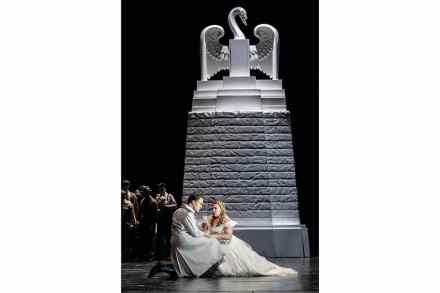
Glyndebourne is nothing if not honest. ‘In response to the ongoing Covid-19 restrictions our 2021 performances of Tristan und Isolde will be presented as a concert staging, after the 2003 production by Nikolaus Lehnhoff’, says the programme, and what we get is not a full production but a compromise imposed by the peculiar circumstances of August 2021. The London Philharmonic Orchestra huddles on stage. Behind them the back wall glows and fades in washes of blue and pink; in front, a stepped apron extends over the redundant orchestra pit. The singers slip on and off from the wings or, in a basic but effective trick of lighting design, appear to materialise from the embracing darkness. It’s an approach to Wagner that can work well.

Springtime for Putin: Grange Park’s The Life and Death of Alexander Litvinenko reviewed

Alexander Litvinenko lies in a London hospital, dying of polonium poisoning. That photograph from 2006 haunts the memory: the medical robe, the electronic monitors, Litvinenko’s accusing gaze and bald, ravaged head. But in case we needed reminding, Grange Park Opera handed out copies of Death of a Dissident, the account of the crime by Litvinenko’s widow Marina, and the principal source for Anthony Bolton and Kit Hesketh-Harvey’s new opera The Life and Death of Alexander Litvinenko. Minutes later, a hospital bed rolled on stage replicating that exact image. And then Litvinenko — the tenor Adrian Dwyer — opened his mouth and started to sing. Opera plays a high-stakes game with dramatic realism at the best of times, but this was startlingly upfront.

Zips along with enormous vim: Malcolm Arnold’s The Dancing Master reviewed

Malcolm Arnold composed his opera The Dancing Master in 1952 for BBC television. It never appeared, the problem being the source material — William Wycherley’s 1671 farce The Gentleman Dancing Master. Jokes about wedding nights and ‘scarlet foppery’ might have flown in the reign of Charles II but the New Elizabethans at Broadcasting House were altogether more shockable. ‘Too bawdy for family audiences,’ was Auntie’s official verdict, leaving The Dancing Master largely forgotten until a premiere recording late last year, and now — conducted by John Andrews and using almost the same cast — its first ever professional production, at the Buxton International Festival.

A short history of millionaire composers

Let me tell you about the very rich. They are different from you and me, though if you’ve spent much time in the world of classical music, and you hadn’t realised just how different, you could do worse than attend an opening night at Grange Park Opera. True, Grange Park’s founder, Wasfi Kani, is famously adept at cultivating donors: you don’t build an opera house on the late Duchess of Roxburghe’s Surrey estate without a certain fundraising flair. It was when Joanna Lumley shimmered on stage in a midnight-blue ball gown and suggested that we might each like to leave the company at least £25,000 in our wills that I really choked on my prosecco.

Comedy genius: Garsington Opera’s Le Comte Ory reviewed

Melons. An absolutely cracking pair of melons, right there on a platter: the centrepiece of the banquet that the chaste, all-female inhabitants of the castle of Formoutiers have provided for their surprise guests, a band of nuns. Except these sisters all seem to be singing well below the stave, and judging from the way she adjusts her crotch, Mother Superior has something more than a chastity belt beneath her habit. We all know where this is going. You can’t get your melons out on stage unless, sooner or later, some great hairy bloke in a wimple is going to shove them down his front. It’s the law.

The finest Falstaff you’ll see this summer

Comedy’s a funny thing. No, seriously, the business of making people laugh is as fragile, as mercurial as cryptocurrency — a constellation of shifting risk factors, many beyond control, any of which can kill a joke deader than Dogecoin. Opera is already at a disadvantage. Timing — comedy’s accelerant of choice — is predetermined, dictated by the demands of unwieldy choruses and slow-moving sets, pinned down to the second by a score whose creator may be anything but a natural comedian. Just ask Verdi, whose early farce Un Giorno di Regno was such a comprehensive flop that he gave up the genre altogether for almost an entire career. But at 75, all but retired after a sequence of bloody tragedies, the composer returned for one last shot at comic victory.

You’ll shrug where you should marvel: Garsington’s Amadigi reviewed

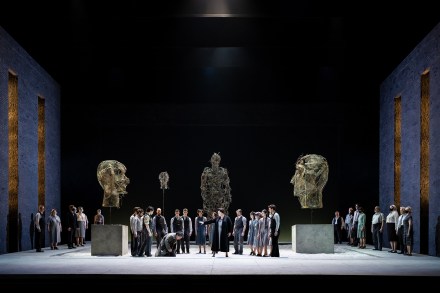
When you think of Handel’s Amadigi (in so far as anyone thinks about the composer’s rarely staged, also-ran London score at all) it’s as a magic-opera. Sorcerers and sorceresses do battle in a fantasy land not found on any map. The stage directions alone are enough to stir the commercial loins of any 18th-century impresario. Enchanted palaces are ‘split asunder’, caves transformed into ‘beautiful palaces’, monsters ‘ascend from the bowels of the Earth’ and a chariot ‘descends covered in clouds’.

Wow, this is good: Grange Park Opera’s Ivan the Terrible reviewed

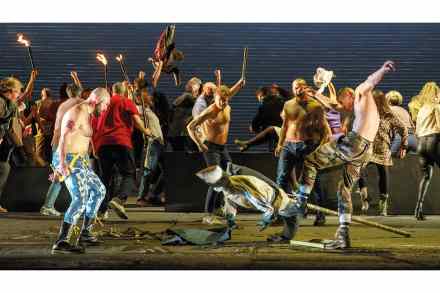
There are worse inconveniences than having to wear a face mask to the opera. But there’s one consequence that hadn’t really struck home until an hour into Rimsky-Korsakov’s Ivan the Terrible. The citizens of Pskov are massing in the streets. The Tsar’s army is approaching, and Rimsky is building one of those surging Russian crowd scenes: bass-heavy chorus blazing away while ominous bell sounds — basses, horns and rasping gong — shake the orchestra to its bones. Suddenly a bloodstained figure staggers in and collapses; a refugee from nearby Novgorod. ‘Your brother-city sends its greetings, and asks you to arrange its funeral,’ he gasps.

Lush, elegant and vivid: Der Rosenkavalier at Garsington reviewed

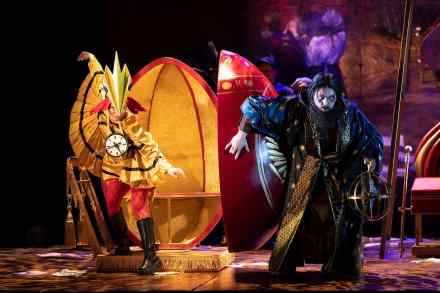
At the turning point of Richard Strauss and Hugo von Hofmannsthal’s Der Rosenkavalier, all the clocks stop. Octavian has arrived at the house of the teenage bride-to-be Sophie von Faninal as bearer of the silver rose — the symbol of a love that is simultaneously as artificial and as eternal as any human creation can be. Sophie smells real roses; yes, says Octavian, there is a drop of Persian fragrance amid the silver petals. ‘Like a heavenly, not an earthly rose’, sings Sophie: and her voice soars higher and purer than anything we’ve heard so far, suspended in stillness while Strauss’s orchestra shimmers around her. The thing is, in Bruno Ravella’s new staging for Garsington Opera we already know the rose’s secret.

World-class music, heavily symbolic staging: Glyndebourne’s Katya Kabanova reviewed

At the first night of Glyndebourne Festival 2021 there was relief and joyful expectation as Gus Christie made his speech of welcome. Never mind the hit to takings from the closed bar and the necessarily half-empty auditorium; never mind the scaled-back orchestra and abridged score. The new production of Katya Kabanova provided the thirsty opera-goer with a long cool drink of world-class music and heavily symbolic staging. Janacek’s exploration of a yearning female psyche has parallels with Anna Karenina and Madame Bovary. It lives or dies by its lead, and the Czech soprano Katerina Knezikova excelled as Katya.

Where to start with the music of Ethel Smyth

I’m reminded of an old Irish joke. A tourist approaches a local for directions to Dublin. The local, after much teeth-sucking and head-scratching, eventually replies: ‘Well, I wouldn’t start from here…’. The news that, 75 years after her death, English composer Ethel Smyth has won a Grammy Award for her last large-scale work The Prison is as excellent as it is unexpected. But it’s also frustrating because, well, if I were setting out into Smyth for the first time, I really wouldn’t start from there.

Astonishing, relentlessly pleasurable rediscovery – tantric opera: Luigi Rossi’s Il Palazzo incantato reviewed

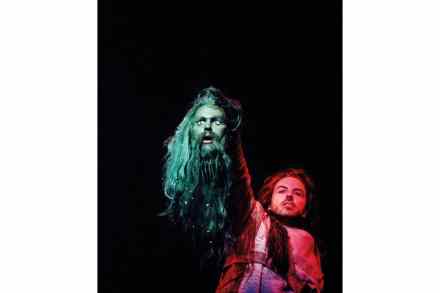
I don’t say this lightly, but after 20 years of opera-going, Luigi Rossi’s Il Palazzo incantato might just be the most baffling opera I’ve ever seen. And I’ve seen Stockhausen’s Licht. It starts with 27 named roles and originally featured no fewer than ten castrati among its cross-dressing, all-male cast. This operatic game of Twister was premièred in Rome in 1642, where it originally played out over seven scintillating hours and nearly 3,000 verses of poetry written, incidentally, by the man who would go on to become Pope Clement IX.