Opera

Do the British appreciate Ralph Fiennes enough?

From our UK edition

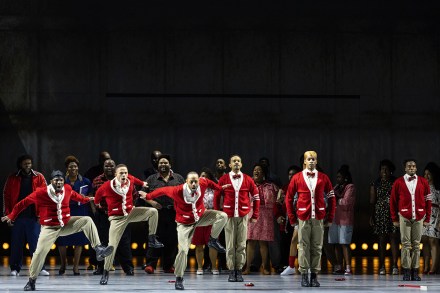
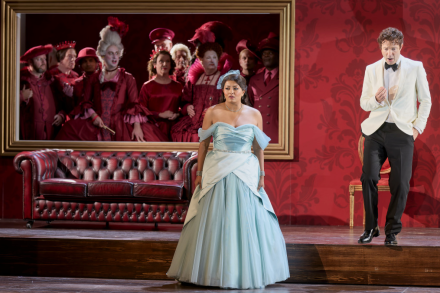
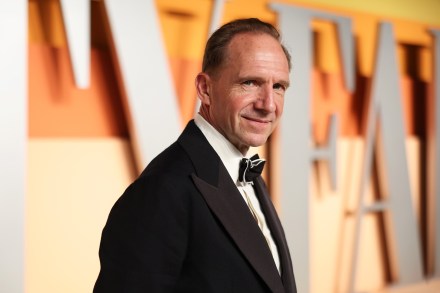
If you had been fortunate enough to see the first night of Tchaikovsky’s opera Eugene Onegin at the Opéra National de Paris last week, then it might have been with a slight jolt of surprise that you saw a familiar face take to the stage as the cast took their bows.  Ralph Fiennes, the award-winning actor, was not appearing in the opera – although he took on the role of Onegin in a 1999 film that his sister Martha directed – but instead he made his operatic directorial debut with the production. The reviews so far have been mixed rather than laudatory.
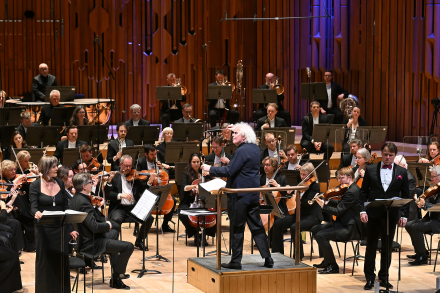
Rattle’s glorious Janacek

From our UK edition

The Czech author Karel Capek is probably best known for his plays: high-concept speculative dramas such as R.U.R. and The Insect Play, bristling with wit and ideas. But he paid his bills as a newspaper columnist, and he seems to have been pleasantly surprised when Janacek approached him about turning his ‘conversational, fairly unpoetical and over-garrulous play’ (Capek’s words) The Makropulos Affair into an opera. Capek licensed Janacek to adapt it as the composer saw fit, in words that have the authentic ring of the working journalist – ‘because I simply wouldn’t get round to revising it myself’. No fear on that count. The Makropulos Affair is a brisk, nervy play but Janacek, at 69 (there’s hope for us all), was an old theatrical hand.

This Royal Opera Traviata is no ordinary revival

From our UK edition

First opera of the year, first night back in London, and the jolly old metrop was already springing surprises. A hulking pink Rolls-Royce was parked on Bow Street – a real oaf of a car, the lumpish nepo-baby of a Humvee and Lady Penelope’s Fab 1. And as we stood outside the Royal Opera House, cooling off from Act Two of La traviata, a large fox came jogging out of Broad Court and urinated against the front tyre before sauntering off in the direction of Aldwych. Pure magic. You should never take the capital for granted, just as you should never assume that a mid-season revival of a standard repertoire opera in a 32-year old staging will ever – necessarily – be routine.

The magnificence of Beare’s Chamber Music Festival

From our UK edition

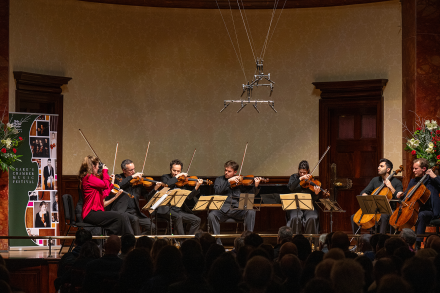
The quartet is the basic unit of string chamber music. Two violins, a viola and a cello: subtract any one of those, and you’re walking a tightrope. Add further players and the issue is redundancy: you’d better know precisely what you want to do with those additional voices, because otherwise they’ll congeal like cold gravy. When it comes to the string octet – two string quartets fused together – only the 16-year-old Mendelssohn really cracked it, going all out for transparency, daring and youthful verve. The Romanian George Enescu took the opposite approach. His Octet of 1900 is chamber music as epic construction project, wrought from steel, not spindrift.

An opera that will actually make you laugh

From our UK edition

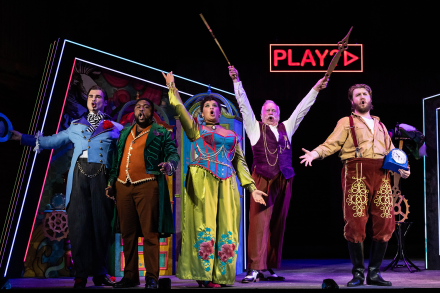
‘What we want is proper comedy!’ bellows the male chorus in the opening seconds of Prokofiev’s L’amour des trois oranges – in this case, a bevy of Monty Python bruisers in nylon frocks. The audience stirs. We’re being invaded by outsize schoolkids and what looks like a Scandinavian Eurovision entry, pushing through the stalls to the roars and whoops of a more-than-up-for-it student crowd. The previous night, I’d had four hours of manicured Handel and now a solo trombone was blowing raspberries in my face. ‘Stuff your tragedy! Take us out of ourselves!’ Yes, please! Do that. After prolonged exposure to da capo arias, a blast of raucous, multicoloured nonsense felt like shock therapy.

Intoxicating Elgar from the London Phil

From our UK edition

By all accounts, the world première of Elgar’s Sea Pictures at the October 1899 Norwich Festival made quite a splash. Elgar conducted, and the soloist was the 27-year-old contralto Clara Butt – dressed in a silky, sinuous number which drew gasps in those corseted late-Victorian days. Elgar thought she looked ‘like a mermaid’; the critics, of course (of course!) confined themselves to the music. They reported that Elgar and Butt were called back four times, and the second of the five songs – the delicate ‘In Haven’, to words by Elgar’s wife Caroline Alice – was singled out for particular praise Interesting how tastes change.

The orchestra that makes pros go weak at the knees

From our UK edition

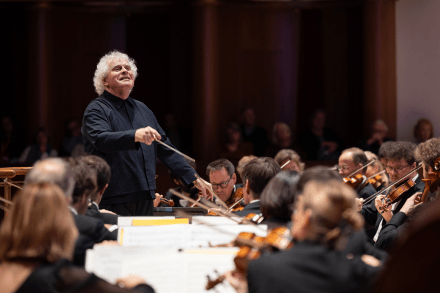
Stravinsky’s The Firebird begins in darkness, and it might be the softest, deepest darkness in all music. Basses and cellos rock slowly, pianissimo, in their lowest register; using mutes to give the sound that added touch of velvet. Far beneath them rumbles the bass drum: a halo of blackness, perceptible only at the very edge of the senses. In Liverpool Philharmonic Hall, with Sir Simon Rattle conducting the Bavarian Radio Symphony Orchestra, you felt your hairs tingle before you discerned a note. Seconds later, the very air within the hall seemed to be quivering with sensuous, engulfing bass warmth. You can be sure that Rattle anticipated that sensation; planned for it, in fact, from the moment that he confirmed this short British tour with his new orchestra.

Franco Zeffirelli’s slice of paradise in Positano

If you say the name Franco Zeffirelli to anyone under about 40, you’re likely to be met with bemusement. Find any opera or film lover over that age, however, and you will be greeted with a warm exclamation – “Ah!” – followed by a recitation of the Italian director’s greatest achievements. From his emergence in international culture in the 1960s with his seminal film of Romeo and Juliet to his legendary work on stage with such operatic titans as Maria Callas and Plácido Domingo, Zeffirelli became synonymous with tasteful, intelligent productions of the classics, all of which made him, for a time, the best-known cultural figure in Italy. It is fair to say that Zeffirelli, who died in 2019, didn’t always get it right, personally or politically.

In defence of Katie Mitchell

From our UK edition

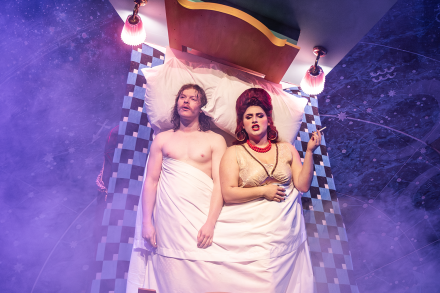
Janacek’s The Makropulos Case is a weird and very wonderful opera, but its basic plot isn’t hard to follow. Still, it seems to send directors into a tailspin. One recent production (since revised) had a cast member break character and pull out a flipchart to recap the story so far. Katie Mitchell’s new staging for the Royal Opera takes the more familiar route of updating the action to the present, and it’s always fascinating to see what opera directors think we’ll find relatable. Luxury hotels, recreational heroin use, Tinder hookups with locally sourced hotties: no, me neither. How the other half live, eh? In short, it’s a bit like Mitchell’s 2022 re-imagining of Handel’s Theodora.

Go to Cicoria for the food, stay for the opera

Smart Italian restaurants in cultural destinations are like buses: you wait ages for one and suddenly two come along at once. I recently praised Locatelli at London’s National Gallery. Returning to the city, it is the turn of Cicoria at the Royal Ballet and Opera, Covent Garden; a joint under the aegis of Angela Hartnett, well-known for her upscale restaurant Murano in Mayfair, her casual chain Cafe Murano and her frequent appearances on the box. Surprisingly few of the world’s great opera houses have given much thought to catering, although things are improving. I ate very well recently at Madrid’s Teatro Real and you can push the boat out with caviar at the Met in New York.

cicoria

A cracking little 1967 opera that we ought to see more often

From our UK edition

Ravel’s L’heure espagnole is set in a clockmaker’s shop and the first thing you hear is ticking and chiming. It’s not just a sound effect; with Ravel, it never is. He was an inventor’s son, half-Swiss, half-Basque, and timepieces, toys and Dresden figurines were in his soul. For Ravel, they seem to have possessed souls in their own right. ‘Does it not occur to people that one may be artificial by nature?’ he remarked, and few artists have shown such tenderness towards these small, lovingly made things that strive so tirelessly, and so hopelessly, to be alive. So that was something to think about, as Alexandra Cravero conducted the opening bars of this new production from Scottish Opera.

A Magic Flute that will make you weep

From our UK edition

English Touring Opera has begun its autumn season and the miracle isn’t so much that they’re touring at all these days, but that they do it so well. Two generations back, this was the natural condition of opera in the UK: not Netrebko at Covent Garden, but agile, medium-scale companies playing at the Wolverhampton Grand or the Sheffield Lyceum alongside the panto and the 1950s equivalent of Friends: The Musical and An Evening with Sandi Toksvig. Don’t believe it? It’s all in Alexandra Wilson’s new book Someone Else’s Music, which is out now, and which all British opera buffs should read because it’ll make their jaws drop.

Handel was derided in his own time – particularly by us, for which belated apologies

From our UK edition

Here’s a patriotic thought for you: baroque opera, as we now know it, was made in Britain. Sure, there are your Vivaldis and Cavallis; there’s always someone (usually French) trying to make Rameau stick and a few years back Opera North – bless them – even tried to exhume an opera by Reinhard Keiser. But realistically, if you’re going to see a pre-Mozart opera from a major company anywhere in the world, and it’s not by Monteverdi, it’s overwhelmingly likely to be by Purcell or Handel. And Handel wrote practically all of his surviving operas in London, for British audiences and British taste. So it’s only right that UK opera companies should go big on the old Saxon, and in truth they don’t need much encouragement.

How to fix the Met

The Metropolitan Opera has been in the hole for years and for most of that time company leadership has pleaded ignorance as to why. Just this February, general director Peter Gelb lamented audiences’ lack of interest in the Met’s slate of contemporary operas. “It’s impossible to predict hits,” said the man paid $1.4 million a year to, well, predict hits. In its 2025-26 season slate, the Met finally seems to be wising up – but it faces an uphill climb. For the better part of a decade, the company has been financially unprofitable, artistically boring and actively hostile to its audience. ‘It’s impossible to predict hits,’said the man paid $1.

Met

Pure feelgood: ENO’s Cinderella reviewed

From our UK edition

‘Goodness Triumphant’ is the alternative title of Rossini’s La Cenerentola, and you’d better believe he meant it. Possibly my reaction was coloured by last week’s experience with the weapons-grade cynicism of Stephen Sondheim’s Follies, but honestly – it’s just so sweet. A gentle, put-upon girl gets her fairy-tale ending in the face of stepsisters and a stepfather who are basically buffoons rather than outright villains. We’re in the realm of panto, or children’s TV: nothing really dark can happen here and the only sorcery is worked by Rossini, whose fountain of laughing, crystal-bright invention is as life-affirming as Haydn, if he’d been born 50 years later and in Italy. Pure feelgood, then, for kids of all ages.

A visit from the left-whingers

From our UK edition

The Americans wanted an argument and they weren’t going to take no, or indeed yes, for an answer. They arrived late at night and parked their car width-ways across the driveway, blocking it, while ignoring the parking area a few feet further on where there is space for about ten cars around a central fountain. I went out and asked them politely to move and they said they would, when they were ready. But first they wanted to stand on the driveway and complain about the cost of the hire car, the narrowness of the Irish roads, and the fact that their flight had taken nearly two days with three changes because they didn’t want to pay extra for a direct one.

The decline of Edinburgh International Festival

From our UK edition

Edinburgh International Festival was established to champion the civilising power of European high culture in a spirit of postwar healing. But its lustre and mission have now been largely eclipsed by the viral spread of its anarchic bastard offspring, the Fringe. In competition with the latter’s potty-mouthed stand-ups and numberless student hopefuls, the dignified old Festival proper struggles to make much mark on the hordes who descend on the city in August, inflating prices and infuriating the residents. Perhaps the kids will love it, but if this is the future of ballet, then count me out Nicola Benedetti, a splendid woman and a wonderful violinist, is now in her third year directing this beleaguered institution.

A Brigadoon better than most of us ever hoped to see

From our UK edition

The village of Brigadoon rises from the Scotch mists once every 100 years, and revivals of Lerner and Loewe’s musical are only slightly more frequent. The last major London production closed in 1989; and if you know Brigadoon at all it’s probably through the lush 1954 movie. The new staging at Regent’s Park takes a very different approach. The songs, the basic story and the heather (lots of it, pink and looking only slightly artificial) are all still there, but the director Rona Munro has rewritten the book, backdating the action to the second world war and turning Lerner and Loewe’s American tourists into a pair of shot-down bomber pilots. The music swings, the park supplies the scenery and the downpour only added to the fun It's a bold stroke, and it pays off.

The drama of an Irish supermarket car park

From our UK edition

The woman pushing a wheelchair was causing such a rumpus in the supermarket that whichever aisle I was in I could still hear her shouting. She was an Englishwoman abroad if ever I saw one. Resplendent in sleeveless vest and leggings, she was pushing her adult daughter around an Irish supermarket as a friend or family member pushed their trolley, and she was making sure that as many people as possible were aware of her. She was shouting so much, about everything, that nobody was taking the slightest notice, and she became the soundtrack of the shop, an integral background kerfuffle.

Why has the world turned on the Waltz King?

From our UK edition

On 17 June 1872, Johann Strauss II conducted the biggest concert of his life. The city was Boston, USA, and the promoters provided Strauss with an orchestra and a chorus numbering more than 20,000. One hundred assistant conductors were placed at his disposal, and a cannon shot cued The Blue Danube – the only way of silencing the expectant crowds. Estimates vary, but the audience was reckoned to number between 50,000 and 100,000; in all, there must have been a minimum of 70,000 people present. This month’s Oasis reunion only played to 80,000. The result, in an age before modern amplification, was much as you might expect. ‘A fearful racket that I shall never forget as long as I live,’ was Strauss’s own description. Still, the point stands.