
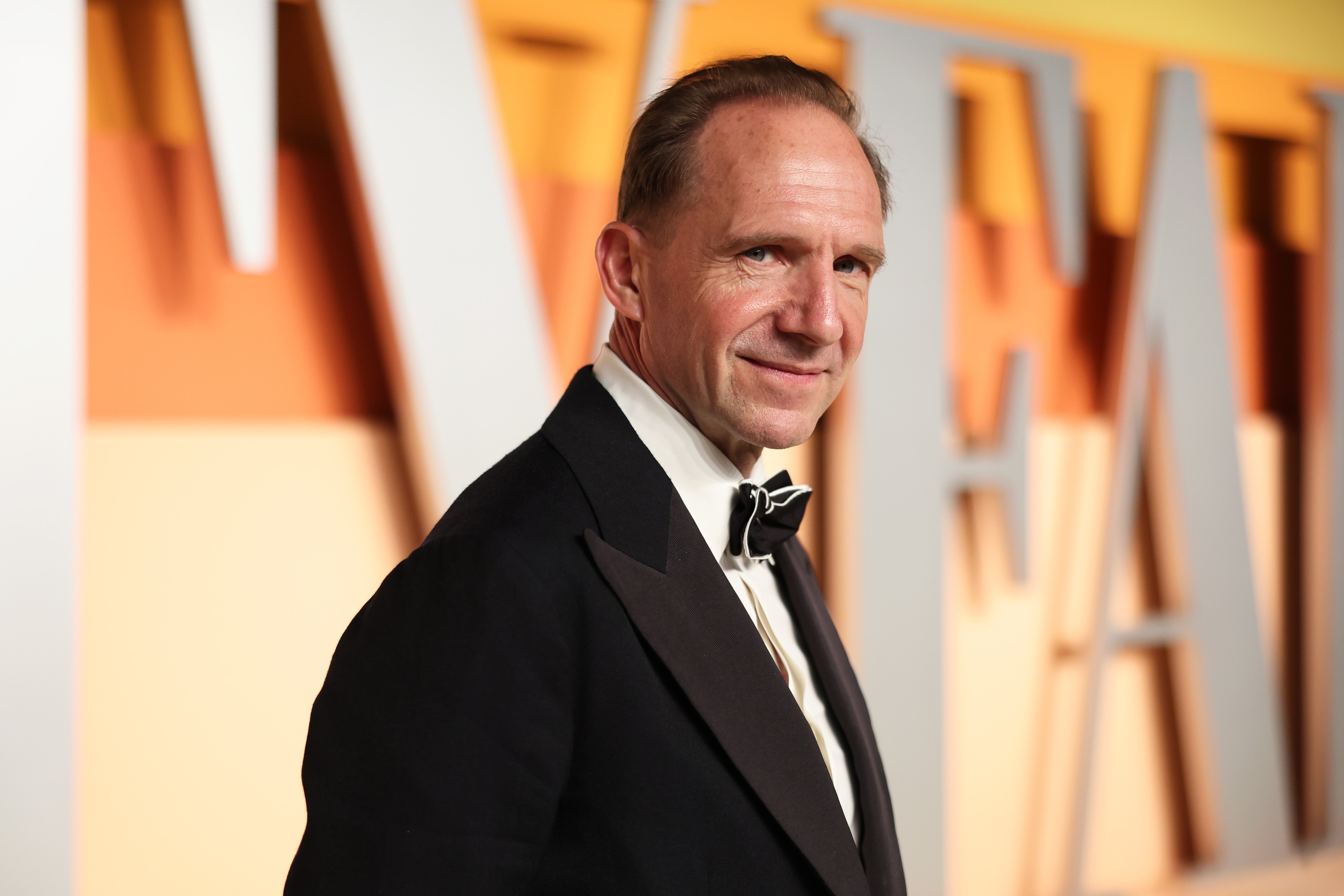
If you had been fortunate enough to see the first night of Tchaikovsky’s opera Eugene Onegin at the Opéra National de Paris last week, then it might have been with a slight jolt of surprise that you saw a familiar face take to the stage as the cast took their bows.

Ralph Fiennes, the award-winning actor, was not appearing in the opera – although he took on the role of Onegin in a 1999 film that his sister Martha directed – but instead he made his operatic directorial debut with the production. The reviews so far have been mixed rather than laudatory. The Times suggested that ‘the lingering feeling you’re left with… is that all this top talent would have benefited from a firmer directorial hand’, while Opera Now’s critic declared that ‘I could happily have watched the whole thing all over again’.
In any case, the high-profile nature of the staging, thanks to its director’s celebrity, means that it is a guaranteed sell-out over its brief run. While it might well transfer to the Royal Opera House or to the Met, Fiennes will soon be on to his next project with the air of a man who is perpetually in a hurry, like an unusually refined version of the White Rabbit from Alice in Wonderland. Rather than fretting about his ears and whiskers, Fiennes displays a rare degree of taste and intelligence for an actor that has seen him pursue perhaps the most interesting career of any thespian working today.
The past couple of years alone have seen him take on a mind-bogglingly eclectic range of roles that have included anything from a sensitive, discreetly gay choirmaster in the Alan Bennett-scripted first world war drama The Choral to an iodine-painted doctor, bringing zombies back to the light, in the recent The Bone Temple. He appeared on stage last year playing the actor Henry Irving in the David Hare play Grace Pervades, which he will reprise in London this year, and directed As You Like It in Bath, with Harriet Walter as the melancholic Jacques. Soon, he will appear in the new Hunger Games picture as the younger version of the autocratic president Coriolanus Snow – a role formerly played by Donald Sutherland – and the character’s name is a reminder that Fiennes directed and starred in an adaptation of Shakespeare’s Coriolanus in 2014.
Many actors take on any old rubbish for the money, accumulating a list of pay-cheque gigs that they will undoubtedly be embarrassed by in a few years. Fiennes, however, is in a rare purple patch that has lasted for the past decade and a half, if not longer. He has savvily juggled big mainstream roles in Harry Potter and James Bond as, respectively, the nefarious Voldemort and Bond’s superior M with leading parts in everything from Conclave (as a conscience-pricked cardinal) to the joyous Grand Budapest Hotel, in which he showed a fine talent for farce as the pernickety Monsieur Gustave, the eponymous hotel’s maitre’ d.
He conveys a sense of chilliness both on and off-screen
He is part of a loose generation of brilliant actors from varied backgrounds that includes Daniel Day-Lewis, Gary Oldman, Tilda Swinton and Lesley Manville. The only similarity between all of them is that they all emerged in the 1980s and made their names with performances of astonishing versatility. Yet even Day-Lewis, once talked of in awe as Britain’s greatest leading man, has somewhat faded from view. When he returned last year with the family drama Anemone, co-written and directed by his son Gabriel, even his starry presence could not lure in an audience. While Fiennes, meanwhile, would be the first to agree that he is hardly a commercial box office draw in the Tom Cruise or Sydney Sweeney mould, his presence is a rare guarantee of quality. Even if the film is bad, he will be magnetic.
By rights, then, he should be venerated in his home country as the greatest actor of his generation, as well as a hugely talented director of both theatre and cinema. That he isn’t is due to two factors. He conveys a sense of chilliness both on and off-screen that works extremely well for him professionally, but also implies that he is not willing to suffer the idiocies of the contemporary entertainment industry.
He was said to have been hugely embarrassed by a series of unflattering stories about his private life that appeared in the tabloid press – whether it was his leaving his wife Alex Kingston for his older co-star Francesca Annis, or having sex in an airplane loo with a flight attendant en route to Australia – and accordingly has retained an air of mystique. Consequently, that means that I, along with most Spectator readers, would be hard pressed to infer anything about his personal life other than what can be discerned from polite but gnomic interviews. Some remarks in support of J.K. Rowling from 2022 are about the only political bias he has displayed.
But the main reason why Fiennes – who remains ‘Mr’ as opposed to ‘Sir Ralph’, presumably by his own choice – is not rated more highly in Britain is because of the national distrust of polymaths. Jonathan Miller may not only have been a brilliant comedian but was a leading opera director, accomplished neurological physician and more than adept television presenter. Yet he never had the popularity of his Beyond the Fringe co-star Dudley Moore, who played the piano well and sparked off against Peter Cook.
Fiennes’s versatility and willingness to experiment in different forms – and usually succeed, too – have marked him out as that most dreadful of things, a true Renaissance man, and one who does his work without begging to be liked. If we do get Eugene Onegin in London, those who wish to take this talented, fascinating man down a peg or two will miss no opportunity to pile into him. And it is equally likely that Fiennes won’t care. Instead, he will move on to the next project with all the curiosity and pizzazz that have defined his career ever since he broke through with Schindler’s List. Wherever he goes, we will be privileged to follow him.





Comments