First opera of the year, first night back in London, and the jolly old metrop was already springing surprises. A hulking pink Rolls-Royce was parked on Bow Street – a real oaf of a car, the lumpish nepo-baby of a Humvee and Lady Penelope’s Fab 1. And as we stood outside the Royal Opera House, cooling off from Act Two of La traviata, a large fox came jogging out of Broad Court and urinated against the front tyre before sauntering off in the direction of Aldwych. Pure magic. You should never take the capital for granted, just as you should never assume that a mid-season revival of a standard repertoire opera in a 32-year old staging will ever – necessarily – be routine.
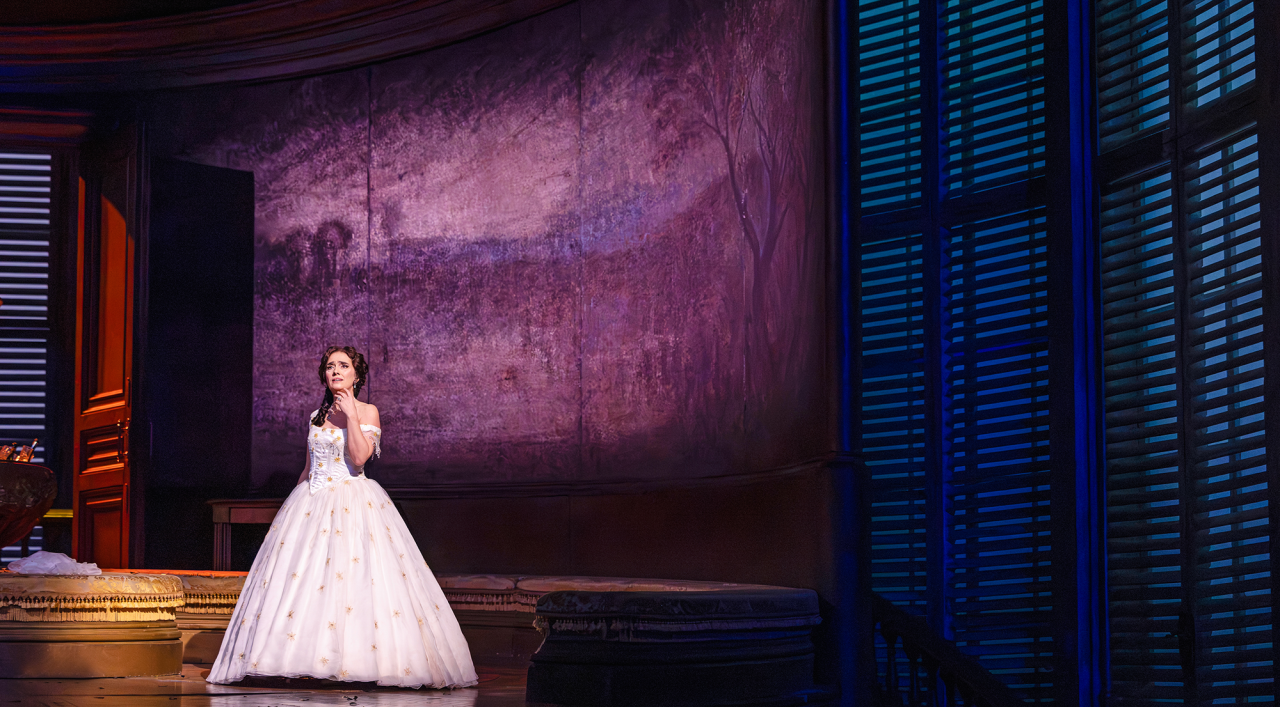
It’s fascinating, really, how on some nights you can sense the trajectory of a performance from the first sounds you hear. When the conductor Antonello Manacorda began the prelude, we had no way of knowing that Ermonela Jaho’s Violetta Valéry would be quite so inward, or so intimate. But with hindsight it was all there, anticipated in those long, seamless veils of violin tone. The art, with the Traviata prelude, is avoiding bathos; negotiating the bump when the basses enter and the rhythm cranks up. Manacorda streamed straight on in the same tremulous, trance-like quiet. Result: a fragile heartbeat, where we could easily have had (and so often get) your basic bel canto oom-pah.

Then the curtain rose on a party scene whose gaiety seemed – well, not muted, exactly, just slightly distant, as if heard from an adjacent room. Even the ‘Brindisi’ felt thoughtful. Richard Eyre’s production dates from 1994 and last time I saw it (in 2021) Manacorda was conducting then, too. But the entire character of the drama felt different, and more private. The natural conclusion is that Manacorda shaped his interpretation around Jaho, whose defining vocal quality – beside a sustained and beautifully controlled lyricism – was her sweetness and softness.
Brilliance, too, of course; there was plenty of that, though the magic lay in the way that Jaho suggested that although Violetta could glitter with the best, glamour was not her true element. Case in point: the bright, hectic edge to Jaho’s vocal acrobatics in ‘Sempre libera’, and then, in the middle of it all, her sudden soft gasp as she heard Alfredo (Giovanni Sala) singing his offstage serenade. It’s just a couple of notes, but in an instant the society songbird reveals herself as a woman in love. Taken cumulatively, details like these create a living character rather than just a familiar role.
Expectations met, and then wonderfully exceeded. I didn’t see that coming
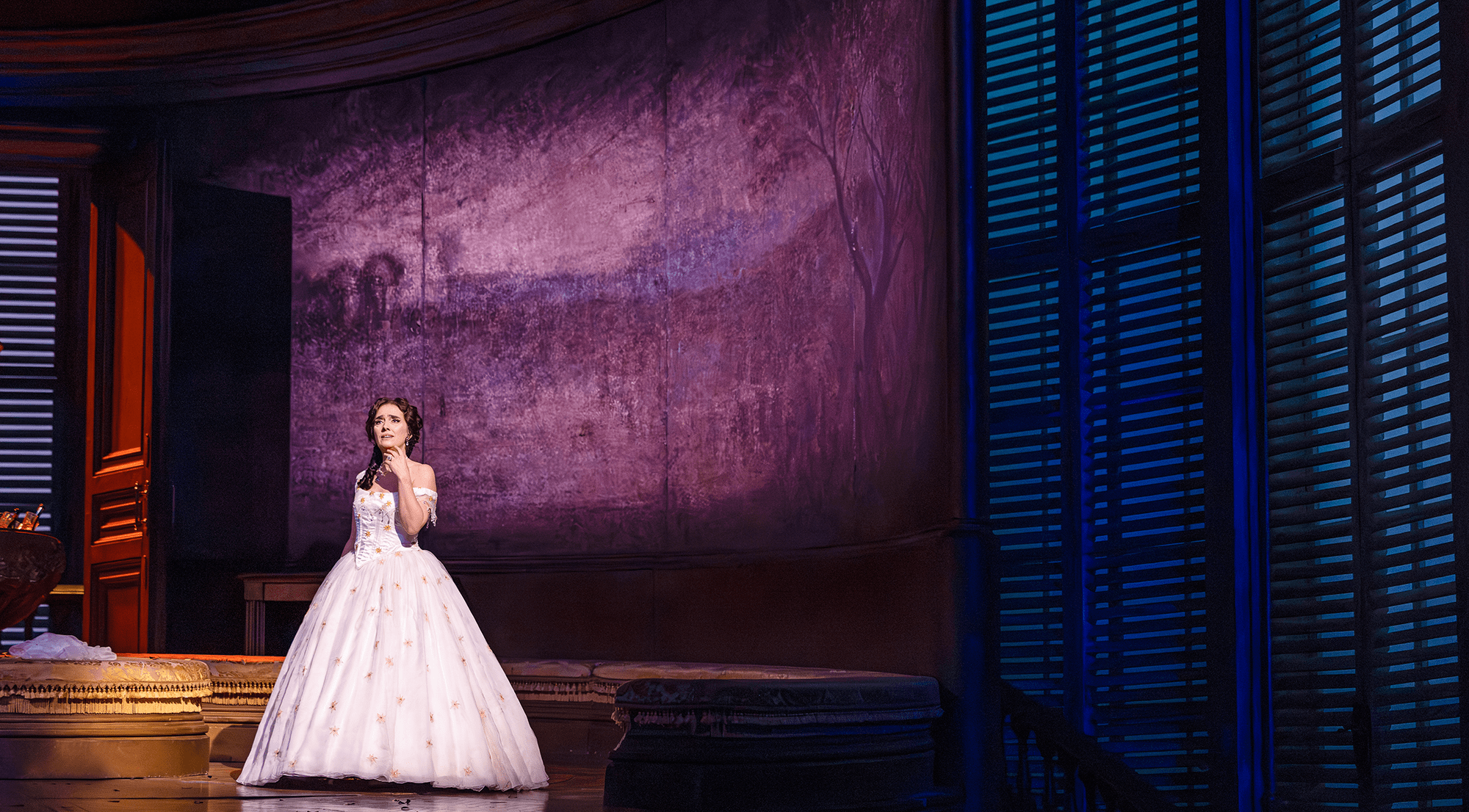
You’re not meant to say this, but Jaho looks the part, too, which matters in a staging as painterly as Eyre’s. His vision still holds up extraordinarily well, by the way: all those knowing touches (the shadows of the Act Three revellers; Alfredo coming over all ‘country’ in boots and tweeds in Act Two’s suburban idyll). Revival director Simon Iorio injects plenty of character into the crowd scenes, which resemble animated canvases by Frith. As Alfredo, Sala was certainly ardent; puppyishly so, in fact and his singing had a texture – a hormonal restlessness – that was wholly appropriate for a young man broken open by emotion. Alfredo isn’t supposed to be suave.
Aleksei Isaev was Germont père and he, too, opened out handsomely – oaky-sounding, and never labouring the character’s evolution from bluster, through paternal tenderness, to tower of moral strength. Veena Akama-Makia was a warm, compassionate Annina and if I don’t say more it’s because each of them seemed to be lifted by Jaho’s vulnerability and Manacorda’s sensitive, atmospheric orchestral support. In the final scenes Jaho and Manacorda drew the whole theatre in around the characters, silent and rapt. So there you go. Expectations met, and then wonderfully exceeded. I didn’t see that coming.
A few days earlier, the National Youth Orchestra of Great Britain made a brief national tour with the conductor Alexandre Bloch. The NYOGB regularly fields around 160 musicians, and despite some swashbuckling horn playing, I’m not sure that the subtleties of Debussy’s Ibéria benefited from going supersize, though that might have been down to Bloch’s cautious choice of speeds. But Karim Al-Zand’s City Scenes (Bernstein meets Messiaen, plus Red Bull) was pure bling and the teenage string players brought enveloping warmth to the scented-candle harmonies of Anna Clyne’s 2019 cello concerto Dance (played by the work’s dedicatee, Inbal Segev).
Finally, in Ravel’s Rapsodie Espagnole, everything seemed to snap into focus – playing as refined as it was exuberant, with great luscious string surges and woodwinds (flutes in particular) that melted like meringues. No one should be allowed to pontificate about the future of classical music unless they can show ticket stubs for at least one recent concert by a youth or student orchestra. On this showing, the kids are doing all right.




Comments