Opera

Speech impediment | 19 May 2016

From our UK edition

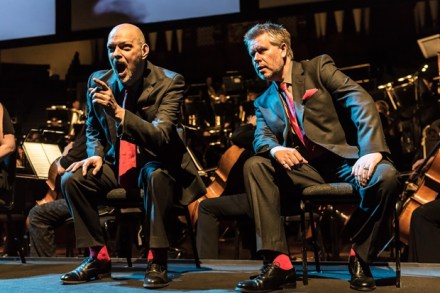
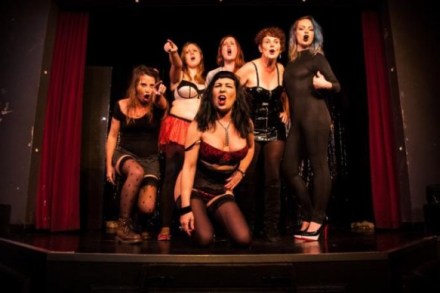
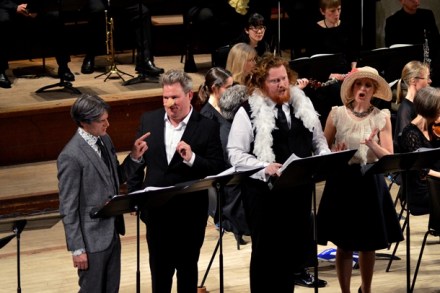
‘So you’re going to see the gay sex opera?’ exclaimed my friend, open-mouthed. People certainly seem to have had some odd preconceptions about Mark Simpson’s new chamber opera Pleasure. The distinguished critic of the Daily Telegraph let it be known that he awaited ‘with trepidation, something set in the lavatories of a gay nightclub’. And to be fair, the news that Pleasure was to star Lesley Garrett — last seen in Welsh National Opera’s Chorus! ascending to the heavens aboard an enormous pair of lips — didn’t exactly dampen suspicions that we were about to see some sort of camp spectacular: Adès’s Powder Her Face meets RuPaul’s Drag Race.

Verdi

From our UK edition

Verdi has a peculiar if not unique place in the pantheon of great composers. If you love classical music at all, and certainly if you love opera, then it is almost mandatory to love him. The great and good of the musical world, the kind of people who sit on the boards of opera houses and other cultural institutions, go out of their way to advertise their adoration of Verdi, usually at the expense of the other considerable operatic composer who was born a few months before him in 1813, Wagner. In fact, Verdi’s status and stature are often established by comparing the two.

Was Opera Rara justified in reviving Bellini’s first opera? Oh yes

From our UK edition

Adelson e Salvini Barbican First operas by composers who later became great or anyway expert in writing them tend to be at best of biographical interest, to be revived mainly for people who are interested to hear premonitions of the achievements that lay ahead. Up to a point that is the case with Bellini's Adelson e Salvini, which he wrote in his early twenties, and which at the time was a big local success, being performed every Sunday for a year.

Hit-and-miss Handel at the Göttingen Festival

From our UK edition

Ask anyone to name the greatest classical composers and certain names are bound to come up – Mozart, Wagner, Beethoven, Bach. But ask them which composer’s music they’d most like to live with for a week, exclusively, and answers will change. Greatness is one thing, but a great festival composer is quite another – someone whose works have not only sufficient quality and variety to stimulate, but also a certain comfort, a clubbable ease about them. Handel is one such, a composer whose music has spawned festivals from London to Halle, Dublin to Tokyo. It’s only appropriate, given the composer’s long association with England, that two of these festivals – London and Göttingen – are now directed by an Englishman.

Divine comedy | 12 May 2016

From our UK edition

You have to be quite silly to take Gilbert and Sullivan seriously. But even sillier not to. G&S is still a litmus test for a particularly British type of operatic snobbery: ‘Is there a place for Gilbert and Sullivan in the 21st century?’ asked a Radio 3 presenter last year, about the time that ENO’s new Pirates of Penzance broke all audience records for live cinema relays in the UK. The Royal Opera, of course, won’t touch it. Which, considering how comprehensively it botched Chabrier’s L’Étoile, is probably just as well. Scottish Opera’s new Mikado is very silly indeed. Nanki-Poo (Nicholas Sharratt) simpers and lisps like Gussie Fink-Nottle. A puppet bird flaps its wings to ‘Willow, titwillow’.

Unsung hero | 12 May 2016

From our UK edition

One of the greatest choral symphonies of the 20th century, entitled Das Siegeslied (Psalm of Victory), has been heard only three times since it was composed in 1933. The last performance took place in Bratislava in 1997. The text is a German translation of words from Psalm 68: ‘...as wax melteth before the fire, so let the wicked perish at the presence of God’. One critic has described Das Siegeslied as ‘a shattering, armour-plated juggernaut of a symphony’, whose huge orchestra marches in a frenzy across ‘voice parts conceived wholly in terms of the harsh consonants and barking vowels of German’. Yet there is also captivating beauty: the lapping of harps and muted horns; a serene interlude for a capella choir.

Deluded divas

From our UK edition

When the Fat Lady Sings, everyone is primed to chortle, even if she is Montserrat Caballé and doing it wonderfully well. Hergé’s cartoon creation of Bianca Castafiore embodies the type: with her flaxen plaits and heaving embonpoint, she is a ridiculously bad fit for the simpering virginal heroine of Gounod’s Faust, particularly when carolling her Jewel Song at such a pitch that an agonised Tintin and Captain Haddock are forced to cover their ears. But at least Madame Castafiore has a brilliant international career: what about the Fat Lady who Can’t Sing — the diva deluded into thinking she is a nightingale when in fact she is nothing but a crow? Two recent films explore this tragicomic syndrome.

Striking the wrong note

From our UK edition

Before we turn our attention to Florence Foster Jenkins — but if you can’t wait, it’s so-so — I feel I should address the several hundred (and counting; hell’s bells) comments below my negative review of Captain America: Civil War last week, and the many pleas that I should ‘get a life!’, which seemed a bit rich. Indeed, as I’m not the one overly invested in a film franchise where the films are barely films, just noisy assemblages of CGI set pieces, am I the one most in need of this ‘life’ being talked about?

Bell canto

From our UK edition

Cursed, or perhaps blessed, with almost no visual memory at all, I had almost completely forgotten what the Royal Opera’s current Tannhäuser, directed by Tim Albery and with set designs by Michael Levine, looks like. Or perhaps it was the natural tendency to repress the memory of unpleasant experiences. Wanting to enjoy the Overture, I closed my eyes until the moment the Venusberg ballet that Wagner composed for the doomed Paris version in 1861 began. However many hundreds of times I hear that Overture, with its wind chorale and weary strings, I still hang on every bar. It was instantly clear that Hartmut Haenchen, the conductor of this first revival, was going to be lighter and fleeter than Semyon Bychkov had been first time round. Mainly, Haenchen’s way is preferable.

Sound and vision | 28 April 2016

From our UK edition

Janacek’s Jenufa, his first great opera, had a one-night stand at the Royal Festival Hall last Monday, courtesy of the wonderful Czech Philharmonic Orchestra conducted by Jiri Belohlavek, the Czech Philharmonic Choir Brno, a large body that had all of five minutes’ singing, and a mainly excellent cast, with Karita Mattila making her transition from the title role, which she has so often performed to powerful effect, to that of the Kostelnicka, the terrifying figure of rectitude who drowns her daughter-in-law’s illegitimate baby rather than bring disgrace on the family.

Whose opera is it anyway?

From our UK edition

Disguises and mistaken identities are a staple of opera, but usually as part of the onstage, not the offstage, action. So what are we to make this week of a Handel opera that isn’t by Handel at all, and a Mozart opera that was largely composed in 1990? As usual in the opera house, there are good — if complicated — explanations. Every year the London Handel Festival tests the theory that forgotten operas are forgotten for a reason, rooting around the darkest corners of the composer’s output to find some abstruse treasures for their audience. This year they’ve outdone themselves, with a performance by Opera Settecento of Elpidia — an opera not heard since its initial run in 1725. The reason?

There will be blood | 14 April 2016

From our UK edition

Lucia di Lammermoor is one of the two or three Donizetti operas that have never fallen out of the repertoire, and the more of his operas it’s possible to see, or at least to hear on CD, the less explicable that becomes. The late and rightly venerated Rodney Milnes called Lucia ‘a blazing masterpiece’, but that does seem to be overdoing it, and in fact several of his other works are more worthy of that accolade. Throughout much of its history Lucia was prized primarily for its glorious sextet, and for the maddest of all mad scenes, added to by generations of sopranos until it became the ultimate coloratura showpiece.

Modernist cul-de-sac

From our UK edition

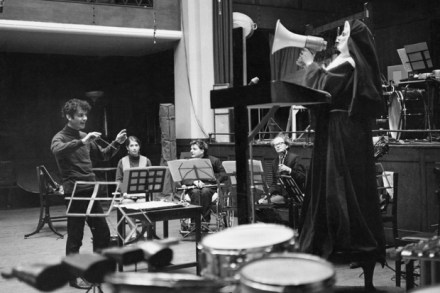
The intransigence of Maxwell Davies, Boulez and Stockhausen is coming home to roost. Here were three composers, famous if not exactly popular, who called many shots by the time they died yet whose works were little loved in their lifetimes by the concert-going public and stand little chance of performance now they are dead. How was such imbalance possible? The intransigence had a lot to do with it. People thrill to a bold stance, and they don’t come much bolder than Boulez and Stockhausen in the Sixties. To be fair, Max was a very British version of this attitude. When Boulez died, the French press focused on a national hero whose main achievement, it seemed, had been to impress generations of foreigners while building monuments in Paris, as a true Frenchman should.

Comic relief | 7 April 2016

From our UK edition

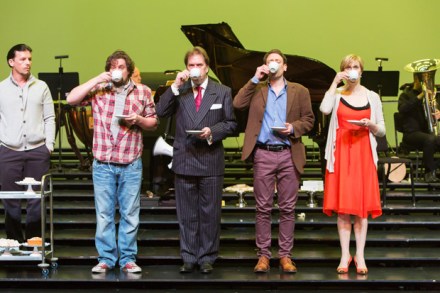
Comic opera is no laughing matter. Seriously, when was the last time you laughed out loud in the opera house? The vocal slapstick of Gianni Schicchi, laid on six banana skins deep? The farcical plot convulsions of Il barbiere? What about the arrival of Mozart’s ‘Albanians’ in Così? (Oh, those moustaches! Oh, those naughty boys!) It’s all about as spontaneous as a health-and-safety briefing, and almost as funny. Thank goodness, then, for Gerald Barry’s The Importance of Being Earnest — an opera that’s dangerously, anarchically hilarious. The project sounds like a joke in itself. Have you heard the one about the Irish composer who tried to improve on Oscar Wilde?

Giselle v Superman

From our UK edition

I’ve turned up at my local cinemas for quite a few of the live ballet relays that now represent a major arm of outreach to the masses by the Royal Ballet and other world companies. Wending my way through the blockbuster queues at Odeons and Empires, I’ve alarmingly often found myself among only 15 or 20 people speckling the black auditoria drinking in a rare chance to see great ballet. Tomorrow it’s the Royal Ballet’s Giselle that will beam out live to the nation with a transcendent cast in a hauntingly pretty production of the masterpiece of romantic ballet with a fantastic cast. The story is much more sophisticated and real than the average classical ballet (and shorter too).

Original sin | 17 March 2016

From our UK edition

The Royal Opera has bitten the bullet so far as Musorgsky’s Boris Godunov goes, and opted to stage the original 1869 version, with no modifications or additions from his revised 1874 edition, which used to be called ‘definitive’ but which seems to be under a cloud nowadays. Rimsky-Korsakov’s version has been pushed right to the back of the doghouse, so that it might soon be revived for its historical interest. Before I launch into my praise of the new production, which is an unqualified triumph, I would like to register some reservations about the work itself, in any of its versions. It’s routinely said that the hero of the opera is not Boris but the Russian people, tormented and downtrodden as they have always been and still are.

Round-up of new opera

From our UK edition

A mixed year so far for new opera. A few really dismal things have appeared from people who should know better. Did the world really need an operatic treatment of Dante’s Divine Comedy for orchestra and chorus? Louis Andriessen thought so; his La Commedia (2004–8) luckily only reared its drab head for one night at the Barbican. If you’re going to splurge as much money as opera often has to splurge, you have to ask yourself why. If you don’t, you create a situation in which operas come about merely because they can, often just to continue the tradition in the most inoffensive way possible. ‘Don’t mind me!’ says this kind of zombie opera.

Manon Lescaut is a shambolic opera – but the Met’s production is mainly excellent

From our UK edition

Manon Lescaut Met Opera Live Puccini's Manon Lescaut is his first opera worth seeing and hearing, and marks an astonishing progress from what preceded it. But Puccini had yet to learn how to bully his librettists into producing the well-constructed dramas of his later operas, and for all its delights Manon Lescaut is a shambles. Richard Eyre has updated it to France in 1941, to stress the moral ambiguity of everything there and then, with occupying forces, indecisive leading characters, a general unease. That works reasonably well, though the real problem is that Puccini is uncertain about the motives of his central characters, especially Manon herself, who veers between helpless anxiety and ruthless scheming.

What’s love got to do with it?

From our UK edition

The setting for Il tabarro, the first drama in Puccini’s 1918 triptych of one-act operas, is not the Paris of tourists and honeymooners, nor even the Paris of impoverished poets and painters. On a bend in the Seine a Dutch barge is moored at a soot-blackened wharf. A tableau of stevedores and seamstresses unfreezes. Sirens blast through the oily haze of muted violins. A tart touts for trade. There is no romance here: no first love, no new love, no true love. Just ordinary sadness and ordinary yearning: a marriage bruised beyond repair, a dead child kept alive in his father’s memory, and a futile and fatal affair. The first revival of Richard Jones’s Il trittico sees a new conductor at the helm, Nicola Luisotti, and several key cast changes.

Excess baggage

From our UK edition

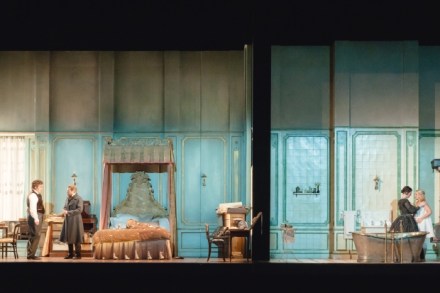
Near the end of Elena Langer’s new opera Figaro Gets a Divorce, as the Almaviva household — now emigrés in an unnamed 1930s police state — prepares to flee, the Countess announces that she intends to leave her trunk behind. It’s not the subtlest moment in David Pountney’s libretto. Any opera that sets itself up as a sequel to The Marriage of Figaro is already courting comparisons that are both completely unavoidable and massively unfair. When the production of Figaro is as good as this one, that baggage can become so heavy that it’s immovable.