Opera

Love Handel

From our UK edition

Handel’s Rinaldo has not been highly regarded even by his most ardent admirers. I have never understood why — even less so after the recent performance at the Barbican, with stunning forces, including the English Concert, under the inspiring direction of Harry Bicket. Certainly the plot is absurd, with a last-minute mass conversion of Muslims to Christianity in order to bring things to a happy conclusion. But there are only six main characters in complicated relationships with one another, turning on their love and hatred like a switch, and going through the usual hoops; that is what Handel operas are. The penny has dropped with me, almost too late, that it is a complete mistake to look for characterisation in Handel.

What’s in a name

From our UK edition

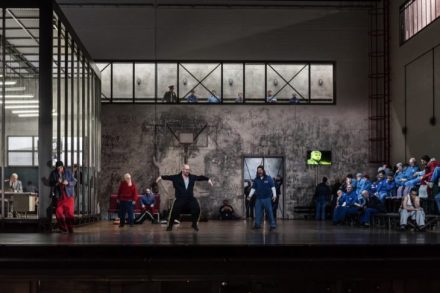
Janacek is the master of the operatic title. Think of the slippery, sleight-of-hand emphasis of Jenufa in its original Czech —Her Stepdaughter — or the elegant misdirection of The Beginning of a Romance. It encourages the suspicion that when Janacek christened his final opera, deliberately truncating the title of Dostoyevsky’s Siberian prison camp-inspired novel Notes From the House of the Dead, there was good reason. It’s a title that opens out a description into an implied question: From the House of the Dead to, where or what exactly? Where can you go, who can you cry out to, once you have crossed over into the underworld and witnessed its horrors? Where indeed.

Gallic pieties

From our UK edition

My two attempts to see Poulenc’s Dialogues des Carmélites at the Guildhall School were frustrated by the weather. Forced back on to my DVDs and CDs — vinyl, even — I took the opportunity to survey some of the manifestations and investigations of religious feeling in 20th-century French music. I began with Vincent d’Indy’s Fervaal, an opera he composed in 1895 which used to be referred to as ‘the French Parsifal’. Refreshing my memory of the plot by looking it up in The New Grove Dictionary of Opera, I was struck by the writer’s insistence that, while the work is heavily influenced by Wagner, ‘[d’Indy] had a better sense of dramatic pacing than Wagner, and more essential humanity’.

It’s the music, stupid

From our UK edition

‘Welcome to our hearts again, Iolanthe!’ sings the fairy chorus in Gilbert and Sullivan’s fantasy-satire, and during this exuberant new production by Cal McCrystal you could almost hear the assembled G&S fans sighing in agreement. Iolanthe is our trump card against the sceptics, and not merely because Gilbert’s digs at parliamentary politics are still so startlingly acute. No, we insist, it’s the music, stupid: just listen to it! Sullivan’s score gleefully assimilates Handel, Mendelssohn and Wagner (Tannhäuser, Rheingold; even Tristan und Isolde), and to fly that close to the magic flame of Bayreuth without getting frazzled is something that very few composers have achieved with such freshness and melodic grace.

‘I was really, really scared’

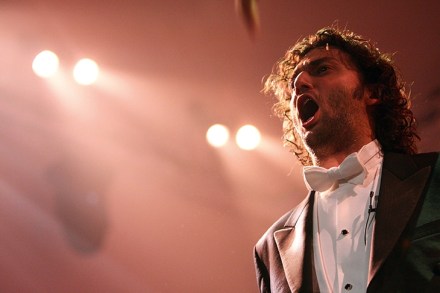
‘Hi, it’s Jonas.’ When the great tenor rings from Vienna, I ask if there are any topics he wants me to avoid, such are his minders’ anxieties. ‘Ask anything,’ laughs Jonas. ‘I’m not shy.’ He is heading in from the airport to see a physio — ‘these concerts, you have to stand there all the time’ — before taking Hugo Wolf’s Italian Songbook on a seven-city Baedeker tour: Vienna, Paris, London, Essen, Luxemburg, Budapest, Barcelona. I wonder if he is aware that Wolf is a hard sell to English audiences. ‘Not just the English,’ he replies. ‘Even in Germany promoters say to me, please don’t do a Wolf-only recital, no one will buy tickets.

No sense of direction

From our UK edition

The new production of Bizet’s Carmen at the Royal Opera has received mixed reviews. It shouldn’t have done. They should have been unmitigatedly hostile, indignant, outraged — except that all those reactions would almost certainly have delighted the director, Barrie Kosky. What might please him less is the accusation of tedium, of making what often seems an unsinkable work into a colossal bore. This Carmen lasts for three-and-a-half hours and feels as long as that after the first 20 minutes. The whole and only set is a stage-wide flight of 16 steep stairs, up and down which the cast has to run at frightening speeds. As Jakub Hrusa, the conductor, dashed into the opening bars, hectic rather than brilliant, one wondered what might be added on-stage.

Accentuate the negative

From our UK edition

A chaste act of adultery and a silent conversation: these are the encounters at the heart of Un ballo in maschera. On paper Verdi’s opera is a hot-blooded political thriller climaxing in a regicide, but in the watching it’s something entirely other. Just like the buoyant score, whose ‘aura of gaiety’ seems so at odds with the dark subject matter, the drama of Ballo is a sustained act of misdirection. The focus in this unusual piece is not on action and event but on absences, unspokens — the negative and not the photograph is what absorbs Verdi so compellingly here.

Get Carter | 1 February 2018

From our UK edition

Das Rheingold at the Royal Festival Hall was, all told, a disappointment, but it might not have been had there been one or two more rehearsals, and a replacement of one of the singers. Vladimir Jurowski plans to perform the whole Ring cycle in due course with the LPO, but he needs to remember that memories are still very fresh indeed of Opera North’s transcendently wonderful performance at the same venue in 2016. That showed, among other things, that you can semi-stage the Ring cycle with some imaginative lighting, a minimum of meaningful movement and no props.

Body language | 25 January 2018

From our UK edition

One of the Royal Opera’s greatest virtues is the care it takes with its revivals, even those that are virtually annuals, such as Jonathan Kent’s Tosca, the unnecessary replacement for Zeffirelli’s classic production. Kent’s version, with elaborate sets by the much-missed Paul Brown, was unveiled in 2006 and now has its ninth revival. It is a sloppy affair — three stars thrown together on the stage and told to get on with it. Since there is plenty of furniture around, and two precipitous flights of stairs, that isn’t as easy as it would be in any other UK production.

Up the revolution

From our UK edition

Spoiler alert: the final image of John Fulljames’s production of Monteverdi’s The Return of Ulysses at the Roundhouse is haunting. Ulysses (Roderick Williams) and Penelope (Christine Rice) stand facing each other at last, arms outstretched. But Penelope is on terra firma. Ulysses stands on the revolving walkway that has served as the stage throughout most of the evening. And though Monteverdi’s music has found stillness, the stage continues to revolve, carrying him away from his beloved — boats against the current, borne back ceaselessly into the past. Or something. Like many of this production’s most striking ideas, it’s poetic in the moment, but doesn’t really work once you step back. A metaphor for the alienating effect of war and exile?

Sonic youth

From our UK edition

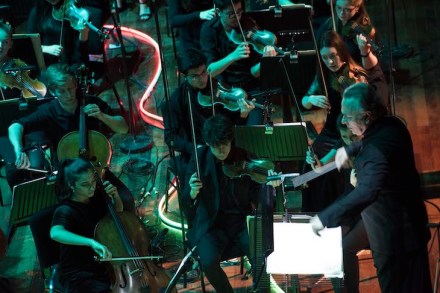
Everyone knows — don’t they? — that the National Youth Orchestra of Great Britain is the UK’s youngest world-class symphony orchestra — an ensemble of musicians aged 18 and under that’s the equal of any professional band (and better than some). But it’s also the largest, and we don’t hear enough about the sheer sonic impact of hearing 157 musicians moving with absolute precision. Even the smallest gesture by an 87-player string section has a sort of heft, a physical weight and depth that you can sense in the air around you. Overwhelming when the whole orchestra is playing at full power, it’s even more tangible in quiet passages, as if you’re in the vicinity of some vast, invisible living creature.

Hitting the high notes

From our UK edition

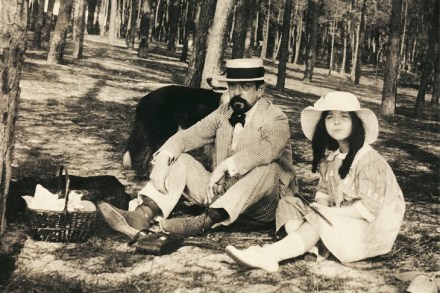
Claude Debussy died on 25 March 1918 to the sound of explosions. Four days earlier, the Kaiser’s army had deployed its long-range Paris Gun, and as Debussy’s cancer entered its final hours, artillery shells were bursting in the streets around his home in Avenue du Bois-de-Boulogne. This quiet modernist — who’d transformed music into an art of almost limitless expressive subtlety — died amid the thunder of mechanised war. The funeral was poorly attended, and as the cortège halted, curious shopkeepers glanced at the wreaths: ‘It seems he was a musician.’ The classical music world is morbidly addicted to anniversaries of major composers.

Les Troyens

From our UK edition

Grade: A-   Berlioz’s Les Troyens, one of the greatest operatic masterpieces, manages to be neglected even if it is quite often performed. The vast reputations of the most popular operatic composers seem to grow ever larger with the years, but Berlioz somehow always needs defending. Listening to this latest CD set, ‘live’ from Strasbourg, I was struck as always by the magnificence of much of the music, and the characteristic lurches into banality or irrelevance that account, I suspect, for the work being so often underrated.

Passion killer

From our UK edition

The late arch-Rossinian Philip Gossett regarded Semiramide as a neoclassical work, vaguely and alarmingly suggesting to me a musical equivalent of Canova, a sculptor I detest. Actually, I don’t think the terminology is helpful. Nor is Semiramide monumental in the way that the programme book suggests. There is a notable lack of ensembles and of anything except accompanied recitative and arias. The duets are as rare as in Handel, and come as just as great a relief. The culminating duets in Act Two are as balm to the soul. They even remind one that there is such a thing.

Fighting talk | 23 November 2017

From our UK edition

There’s a scene in Alfred Hitchcock’s Marnie in which Tippi Hedren is emptying a safe while a cleaning lady silently drags her mop towards her. Can Hedren, playing the disturbed Marnie, slip down the stairs before the woman turns her head? I felt a twinge of the same panic last week interviewing the composer Nico Muhly, whose opera Marnie — based more closely on Winston Graham’s novel than on Hitchcock’s film — was given its world première by English National Opera last Saturday. Would I make it out of the room without asking the Wrong Question? Muhly, who made his name as the cherubic, prodigiously gifted but prickly protégé of Philip Glass, is scary to interview. This is well known in New York.

Wholly gripping: Glyndebourne on Tour’s Hamlet reviewed

From our UK edition

Hamlet Theatre Royal, Norwich, and touring until 1 December I had mixed feelings about Brett Dean's Hamlet as I went into the Theatre Royal in Norwich and mixed feelings when I came out of it: unfavourable, largely, on the way in and favourable, largely, on the way out.  I am still left wondering why a composer would want to set this amazing, flawed and most memorable of tragedies to music, but more than one hundred have, so presumably they must feel they can add something, or alter something, or even improve it in some way.

Unclear Handeling

From our UK edition

ENO has revived Richard Jones’s production of Handel’s Rodelinda. It was warmly greeted on its first outing in 2014, though Jones was, as he remains, inveterately controversial. The opera itself seems to command universal admiration among Handelians, and widespread approval among those of us who have never quite managed to call ourselves that. The most unequivocally positive response I’ve had to it was at Glyndebourne in 1998, where it was produced as if it were an early black-and-white film, and superbly conducted by William Christie. Viewing the DVD has confirmed my warm feelings about it.

Salon Strauss

From our UK edition

An opera without singers, a Strauss orchestra of just 16, and an early music ensemble playing Mahler: welcome to the Oxford Lieder Festival, where familiar repertoire is getting a reboot this year thanks to some brilliantly ambitious programming. When it comes to classical music, we’re used to living in a bifurcated world. On the one hand, you have the contemporary ensembles: the orchestras, choirs and quartets performing pretty much everything from Mozart onwards. And on the other the early music groups, whose territory is everything that’s left — Bach, Byrd, Hildegard of Bingen. It’s only fairly recently, and thanks to groups such as the Orchestra of the Age of Enlightenment, that this crude, artificial divide has been challenged.

Soap opera

From our UK edition

Previously on Giulio Cesare… English Touring Opera’s new season caters cannily to the box-set generation by chopping Handel’s Egyptian power-and-politics opera in two, playing each half on consecutive evenings as edge-of-your-seat instalments in a sort of baroque House of Cards. Will Cleopatra outwit her wicked brother? Will she and Cesare ever get together? Will Sesto ever stop dithering and do the deed? Tune in tomorrow night to find out. If that sounds like the kind of pacy, racy entertainment you’ve always longed for in the opera house, be warned; this is Giulio Cesare: the Director’s Cut, doggedly and absolutely complete, down to every last recitative, aria and interlude.

Pole position | 5 October 2017

From our UK edition

Did you know that they used to make the Fiat 126 in the Eastern bloc? They did, apparently. There was a plant at Bielsko-Biala, and the car was widely driven throughout Poland in the 1970s, when you only had to wait a couple of years to buy one. It became an emblem of personal freedom, and Poles even gave it a nickname: Maluch, or ‘little one’. That’s the principal insight that I gleaned from director Karolina Sofulak’s decision to set Cavalleria rusticana in communist Poland. She explains her thinking in the programme book: essentially, 19th-century Sicily was Catholic and repressive, and 1970s Poland was Catholic and repressive, so why not? Cue the latest one-size-fits-all operatic design cliché — fastidiously rendered depictions of 1970s squalor.