Omicron

Returning to live gigs

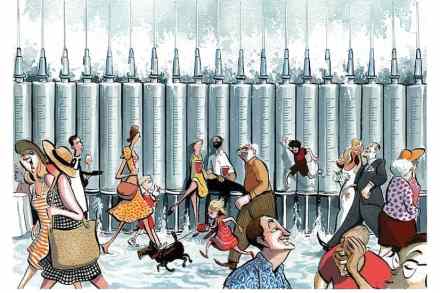
Gigs. Remember them? They were awful. You’d get to some dump of avenue, in a bad part of town (if a small capacity) or out in some apocalyptic wasteland (if an enormo-dome). You’d arrive too early and have to try and dodge some mediocre support band (who’d bought their way on to the tour) or queue for seven hours for a beer in a plastic cup. If you dared to speak while some awful act was plodding away, some goody-goody would hold a finger up to their lips, glare and shoosh you. An hour and a half later in the back of the venue, you’d stand gratefully nearer to death’s beckoning cold hand. “Ever get the feeling you’ve been cheated?” Yes. When Covid rampaged through the world like a Viking raid of death-cult realtors, the world was suddenly shorn of live music.

gigs

The evidence is in: remote learning doesn’t work

As the omicron wave crests and public schools face teacher sickouts, strikes, and a rash of student absences, it is worth reviewing some basic facts about the pandemic and public education. The results of last year's experiment in remote learning have confirmed what any minimally competent teacher could have told you from the outset: instructing students online yields disastrous consequences. Indeed, the results are so bad that defenders of a maximally cautious approach can only argue about terminology (please don’t say “learning loss!”) while proposing that we shouldn’t actually measure how far students fell behind under lockdown. Meanwhile, the psychological costs of the pandemic era continue to mount.

zoom

Farewell to 2021, 2020’s dull hangover

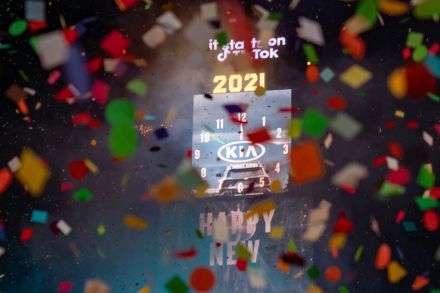
The thing about an annus horribilis is that eventually it's supposed to end. Yet this has not been the case with 2020, which incidentally, according to the Chinese calendar, was a Year of the Rat, proving that the universe can be just a bit too literal sometimes. Dashed were the hopes that 2021 would be a fresh start, that the endless problems of 2020 would dissolve into the ether like so much smoke at a mostly peaceful protest. Instead this year began like it was going to be even more 2020 than 2020 was. Six days into 2021 and we'd already suffered an event so jarring that it's now denoted by just a date.

Pro sports can lead us out of pandemic insanity

With the emergence of the Omicron variant, a new Covid panic has swept through the country, driven by twin forces: the New York and DC-based national media, and professional sports leagues. The National Hockey League suspended games through December 26 and all cross-border games until December 23. The National Football League scrambled to reschedule games based on over 150 players entering Covid protocols. Games were suspended, regardless of player vaccination status. The NHL touts an almost 99 percent vaccination rate. When the National Basketball Association suspended games and vaccinated Brooklyn Nets players went into the Covid protocol, they invited star player and anti-vaccination spokes-star Kyrie Irving back to the team.

sports

Is Pfizer about to cash in on the Omicron variant?

The new Omicron variant of Covid-19 is “mild” and no reason to panic, according to one of the South African doctors who discovered the new strain. Nonetheless, American politicians and public health officials are extending mask mandates, expanding vaccine mandates, and warning of the potential for another lockdown. Pfizer is taking their cues and stepping in to play hero. Despite only having a week or two of research available to them, the pharmaceutical giant insists that preliminary lab results show that three doses of their vaccine work well at neutralizing the Omicron variant. How convenient that the so-called “booster” shot Pfizer and President Joe Biden have been pushing for months is now found to be super effective against this new variant.

pfizer

Escaping from South Africa during the Omicron panic

One of the most gripping scenes in the classic film Casablanca is at the very beginning, when many of the characters who would feature in the story are seen together in a busy city plaza. Suddenly silent as a small Lisbon-bound plane passes overhead, they all look up, and the audience can see in their faces the cumulating stress of not knowing when, or even if, they would get out of wartime Morocco and fly to America. I never imagined I would experience anything remotely like that until just a few days ago when my twenty-eight-year-old son Zachary and I were wrapping up a long-planned and, due to the coronavirus, frequently postponed vacation to South Africa.

omicron