Odessa

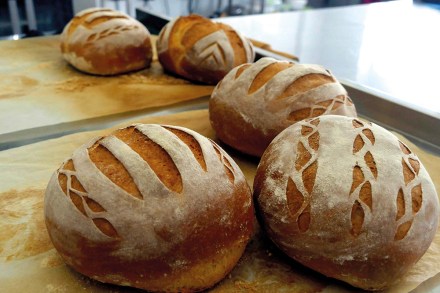
The importance of bread as a symbol of Ukrainian resistance

When Russia invaded Ukraine three years ago, the chef Olia Hercules lost the will to cook. With food so deeply connected to pleasure and to her Ukrainian roots, it somehow felt like an unbearable frivolity to be thinking about recipes while family members were under fire. ‘How,’ she asked, ‘can I cook while my brother is running with a gun in a forest defending Kyiv and my mum and dad are living under occupation?’ When her parents finally managed to leave the country and meet her in Italy, she began cooking again to welcome them. First she made borscht, following her mother’s recipe; then pasta. She could have just bought the dough ready-made – ‘but the gates are now open wide, and I can’t stop’, she writes in Strong Roots.

Ukraine’s greatest, yet least publicised success

Odessa Our conference here is about Black Sea security, where I am the guest of UK Friends of Ukraine. Its subject reflects one of Ukraine’s greatest, yet least publicised successes. Almost a third of the Russian fleet has been destroyed, mostly by sea drones. The rest is trapped in ports much further east. As a result, almost normal amounts of grain and other goods flow to the wider world. It says something not good about third-world politics that all 11 recipients of WFP relief in the form of Ukrainian grain, including Nigeria, Yemen, the Democratic Republic of Congo and Gaza, support Russia in international forums. Tony Abbott, the former prime minister of Australia, gives us a rousing keynote speech, praising Ukraine for ‘defeating the Russian fleet without a navy’.

Ukraine is convinced that time is on its side. So is Russia

From our US edition

As the war in Ukraine approaches its six-month anniversary this coming Wednesday, the fighting shows no sign of stopping. Peace talks are a figment of the imagination, as Russian president Vladimir Putin and Ukrainian president Volodymyr Zelensky remain just as committed to achieving their objectives today as they were when the war first broke out. The Russians continue to pound residential areas with artillery in the Donbas, hoping to slowly capture more territory after months of slow, high-cost maneuvering in the Donetsk region. The Ukrainians, meanwhile, are settling on a new strategy in the south, harassing Russian supply lines deep into Russian-occupied territory.

ukraine

The Soviets were imperialists. Stalin’s architecture proves it

The invasion of Ukraine by Russian forces has rendered what might otherwise have seemed a fairly niche study of a Soviet-era architect rather more resonant. Boris Iofan was born to a Russian-speaking Jewish family in Odessa in 1891. After initial studies in his home city and a brief period working with his older brother Dimitri in St Petersburg, he fled the war engulfing Tsarist Russia for Italy, where he trained at the Istituto Superiore di Belle Arti in Rome.

Ukraine and the art of viral war

From our US edition

The sky is dull and gray, the sun obscured by clouds. The camera pans down past some desolate Soviet housing blocks. Some wintry, apocalyptic trees line a road. It could be Kyiv, it could be Bucharest, it could be any city where the residents liberally pepper their words with the -sky suffix. Suddenly, a flash of metal across the sky, a fighter plane roars into shot, then out again. The caption proudly declares, “This is the Ghost of Kyiv, the bravest fighter pilot in the Ukrainian Air Force. He has downed six Russian planes just today.” You don’t know that much about Ukrainian fighter pilots, but placed among a million other viral clips of heroic Ukrainians fighting against Goliath, you think it seems believable enough. You retweet it. You send it down group texts.

The return of Marty Peretz

From our US edition

Cockburn slummed it on Friday night at an elegantly appointed penthouse on Park Avenue in Manhattan. The host was Martin Peretz, a singularly influential intellectual entrepreneur for decades, notably as the publisher of the New Republic when it was worth reading. Peretz threw the party to celebrate the publication of From Odessa With Love, a new collection of political and literary essays by Vladislav Davidzon. A European cultural critic for Tablet, Davidzon, who moved to Ukraine in 2015 to found the Odessa Review, was in his element as Peretz’s protégé. Like Oscar Wilde’s, Davidzon’s credo appears to be that you can never be too overdressed or overeducated.

peretz