Obituaries

David Abulafia was a rare, truth-seeking historian

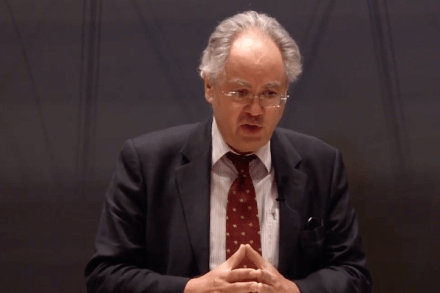
Death arrives on a day just like any other, often rudely unheralded. We all know that, but it never ceases to shock. So it was with news that David Abulafia had died on Saturday night. Notwithstanding his lifelong fascination with the Mediterranean, David was a Brexiteer in 2016 Readers of The Spectator will know him as one of the shockingly small number of professional historians who care enough about the historical truth – and the public’s perception of it – to risk woke ire in exposing ideologically fabricated history for the corrupting trash it is. So, last June here he was, in these pages, debunking yet another attempt to make the past a boring, narcissistic mirror of ourselves, by claiming that the "diverse" Vikings were sometimes black and Muslim.
david abulafia

Julie Burchill, remembered

From our UK edition

When I was told that a newspaper had asked someone to write my obituary, my first instinct was excitement. I’m not easily offended and I’ve always been an attention-seeker. Once, when I was fat, a magazine printed a photograph of Jabba the Hutt and said it was me. I cut it out and pinned it on the wall above my typewriter with other images that inspired and amused me. Another time, when I was doing loads of drugs, I made it on to an online Death List of the ten public figures most likely to turn their toes up in the near future; again, I found this highly entertaining, and went around boasting to my drug buddies about it.

Spare us from ‘nobituaries’

From our UK edition

Sometimes it seemed to me as a young hack that writing obituaries must be the best job in newspapers. You can’t get sued – though people tend not to take the gloves off out of ‘respect’ and use ancient phrases like ‘bon viveur’ and ‘did not suffer fools gladly’ when everyone knows you mean ‘well-connected drunk’ and ‘ill-tempered’. It’s only once in a blue moon that someone really says what they think, like when the ‘social influencer’ Jameela Jamil barely waited until the fashion designer Karl Lagerfeld was cold in his casket before X-ing that the capering clown – widely being celebrated as a ‘genius’ – was in fact ‘a racist, misogynistic, fat-phobic rape apologist who shouldn’t be posted all over the internet as a saint gone-too-soon’.

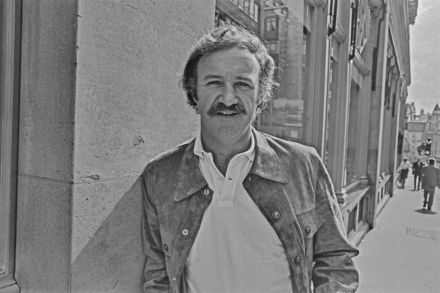
Gene Hackman was never, ever bad, whatever the role

Somehow the strange circumstances of the death of Gene Hackman, found dead in his New Mexico home with his wife Betsy and their dog, make the end of one of America’s finest actors all the more poignant. The full details will presumably become clear soon — but whatever happened, it is more important to remember Hackman’s legendary on-screen career than to waste time fixating on his final moments. He was an actor without sentiment, but with enormous amounts of fierce compassion — even when playing villains — and it is those qualities that should be celebrated. Hackman began his life in the Marine Corps before he became an actor, and many of his best performances have the tough, unbending quality that he developed in the military.

Labour’s Irish insurgent, Germany’s ‘firewall’ falls & finding joy in obituaries

From our UK edition

48 min listen

As a man with the instincts of an insurgent, Morgan McSweeney, Keir Starmer’s chief of staff, has found Labour’s first six months in office a frustrating time, writes The Spectator’s editor Michael Gove. ‘Many of his insights – those that made Labour electable – appeared to have been overlooked by the very ministers he propelled into power.’ McSweeney is trying to wrench the government away from complacent incumbency: there is a new emphasis on growth, a tougher line on borders, an impatience with establishment excuses for inertia. Will McSweeney win his battle? And what does this mean for figures in Starmer’s government, like Richard Hermer and Ed Miliband? Michael joined the podcast alongside Starmer’s biographer Tom Baldwin. (1:04) Next: can the AfD be stopped?

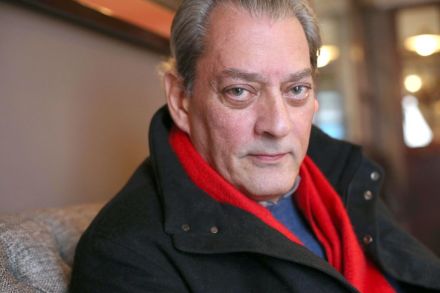
Remembering the postmodern Paul Auster

In Salman Rushdie’s new memoir Knife, there is a powerful and moving moment — amid the many other powerful and moving moments — in which Rushdie visits his ailing friend Paul Auster at the latter’s house in Brooklyn and describes his sorrow at seeing him so reduced by illness. It may have been that the extent of the cancer that killed Auster had not been made public knowledge, although a statement was released about his condition, until Rushdie’s description of his encounter — and some might accuse him of indiscretion or indelicacy. Yet the news of Auster’s death, anticipated though it undoubtedly was, has meant that such questions recede almost immediately — and instead a consideration of his legacy as a writer, rather than an invalid, can begin.

paul auster

Tina Turner was greater than a rock star

Even rock and roll can have produced few stranger paths than the one that led a then physically unprepossessing, raspy-voiced African-American named Anna Mae Bullock from her early days as a devoutly Baptist sharecropper’s daughter in Depression-era Tennessee, to her final years as a practicing Buddhist living in a whitewashed mansion overlooking the dove-blue haze of Lake Geneva. That was the life trajectory of the artist known to the world as Tina Turner, who died Wednesday at the age of eighty-three.

tina turner

Angelo Badalamenti, the maestro of mystery

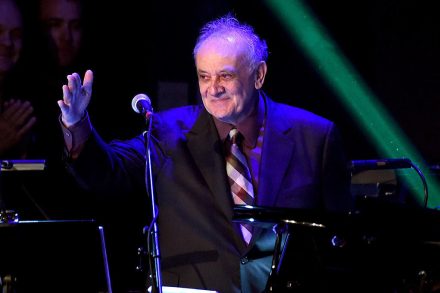
Every film composer hopes that they will have at least one piece of music that they will always be synonymous with. (Some greedy bastards, such as John Williams and Hans Zimmer, have loads.) Whether it’s Henry Mancini’s Pink Panther theme, John Barry’s James Bond epics or, more recently, Howard Shore’s Lord of the Rings majesty, it’s a wonderful thing to have elevated a film or television series single-handedly with one’s scoring. And so it has proved with Angelo Badalamenti, who has died at the age of eighty-five.

angelo badalamenti

Angela Lansbury was so much more than Murder, She Wrote

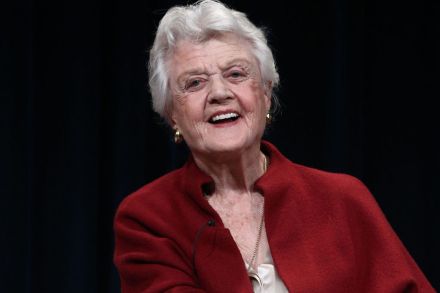
The only time I ever saw Angela Lansbury on stage was in 2014 in London, when she played the half-baked medium Madame Arcati in a revival of Noel Coward’s supernatural comedy Blithe Spirit. Although it was rumored that the then-88-year-old Lansbury was having her lines fed to her via earpieces, it did not affect her comic timing one iota. It is no exaggeration to say that Lansbury took a character who has passed into over-familiarity via decades of revivals and made her fresh and hilarious once again. For anyone to achieve this is remarkable, but to do so at an age when most actors would have long since retired is little short of phenomenal. Lansbury’s death at the age of 96 — a few days shy of her 97th birthday — has some uncanny parallels with the recent passing of the Queen.

William Hurt — a life in two acts

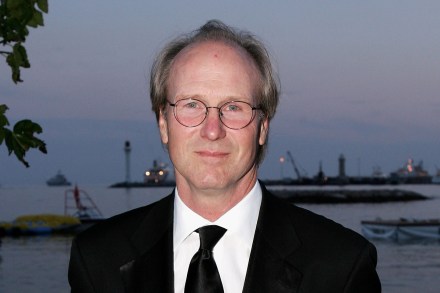
It is a depressing statement on the banality of the film industry that the death of actor William Hurt, at the age of seventy-one, was marked by at least one obituary stating, “Avengers star dies.” Hurt, who appeared in several Marvel films as the military character Thaddeus Ross in his latter-day career, did indeed appear in the mega-grossing Avengers films Infinity War and Endgame, and I very much hope that he received some tiny portion of the films’ enormous box office receipts in recognition of his appearance. But to describe Hurt’s life and work as defined by his Marvel roles reminded me of the great Alan Bennett line about his sexuality: “It’s like asking a man who has just crossed the Sahara whether he would prefer Perrier or Evian water.

william hurt

Writing obituaries can be strangely life-affirming

From our UK edition

In my line of work I sometimes owe a cock to Asclepius. The ancient Greeks believed that a sacrificial offering to Asclepius, the god of good health, could buy you time. Perhaps it worked in the case of Boris Johnson. On the night he was taken into intensive care, I had the digital team of the Times breathing down my neck. They wanted to know if I, the paper’s obituaries editor, had an obit ready to go straight up online, ahead of the print version. I was up until midnight making sure we had, updating and recasting our existing one, trying to get the tone right. The cock may have been metaphorical, but it was offered all the same.

Russell Baker and Masterpiece Journalism

The one program worth watching on PBS isn’t made by PBS. It’s Masterpiece on Sunday nights, and the masterpieces are British-made. PBS puts in a small amount funding before filming starts, then packages the variable results with a flourish of Baroque music and a spoken introduction. Since 2009, this address to the nation has been delivered by Laura Linney, affecting the gown and breathlessness of a Henry James ingénue about to attend a ball in old Vienna. Earlier speakers included Alastair Cooke, and Russell Baker, who died yesterday at 93. Baker and Cooke were writers, not actors.

russell baker masterpiece

The obituaries guide that fills me with terror

From our UK edition

The Times’s internal guide to writing its obituaries has fallen into my hands. It adds new terrors to death. Questing after interest (‘the quirkier the better’), it invites obituarists to ask unusual questions about the dead: ‘Were they cold-hearted bastards in the workplace?’ ‘Did they enjoy baiting their neighbour’s dog and teaching their grandchildren to smoke?’ It also advocates ‘the gentle saying of the opposite of what is meant… If, for example, we say that the wife of XXXXX [here it names a well-known politician] “definitely was not once a high-class prostitute”, British readers would assume she definitely was’.

The Spectator’s notes | 23 March 2017

From our UK edition

We keep being incited to find it heartwarming that Martin McGuinness and Ian Paisley were known as the Chuckle Brothers. But what were they chuckling about? Their shared success at outwitting the British state. Both, though for opposite reasons, had made their careers out of harassing Britain, and both, in their later years, had acquired money, power and status by doing so. In the case of McGuinness and his gang, Britain greatly underplayed its hand. Having militarily beaten the IRA, successive British governments could have marginalised them, but instead they accepted them as authentic representatives of the Irish people who had to be included in any settlement. The process for doing this systematically disadvantaged the moderates and bigged up the thugs.

The Spectator’s Notes | 16 February 2017

From our UK edition

How does Vladimir Putin think about the world? It becomes dangerously important to know. I still have not seen a revealing speech by or discussion with him. I have found out a bit more, however, about the two-hour private interview conducted with him by several young Etonians last summer. One reason they got into the room, it seems, is that Mr Putin wanted to know about Eton and why it produced 19 prime ministers. The boys explained that one of the school’s great advantages was its societies — Political, Literary, Cheese etc. — largely organised by them, not by masters. They said these brought them into contact with a wide range of visiting speakers, broadening their minds.

In this digital age, should we worry about bank branch closures? Yes we should

From our UK edition

Almost a decade after the financial crisis loomed, our high streets and town centres are full of life again: who ever thought consumers could sustain so many cafés, bakeries and nail bars? But the revival is being undermined by yet another wave of bank branch closures, leaving small businesses adrift and personal customers at the mercy of call centres and insecure, ill-designed online platforms. More than a thousand branches have closed over the past two years, and another 400 or so are scheduled to go soon. HSBC is showing the way with a savage cull of its network.

‘Above all else, fun’

From our UK edition

Alexander Chancellor’s ‘Long Life’ is over; but it was not nearly long enough. I was feeling rather gloomy last Friday, having just had our old terrier put down, when I opened The Spectator and was immediately cheered up by the first paragraph of Alexander’s column. It was so typical of the way that he often looked at the world, and of his delightfully quirky sense of humour, that he should relate a children’s song to the new President of the United States. Recalling Nellie the elephant and her trumpety-trump, he wrote: ‘I’m hoping against hope that Donald Trumpety-Trump will also say goodbye to the circus in Washington and return to the jungle whence he came.

The Spectator’s Notes | 3 November 2016

From our UK edition

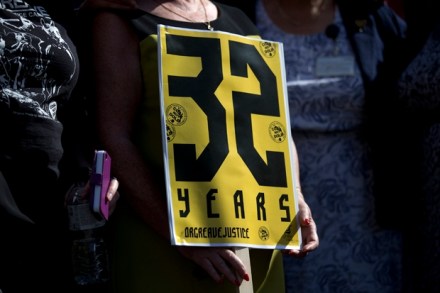
It is a great relief that there will be no inquiry into the ‘Battle of Orgreave’ in 1984. The weirdness is that Mrs May’s people ever entertained the thought in the first place. The push for an inquiry is a classic example of the attempt by the aggrieved, usually on the left, to turn history into a trial. If we were to inquire into the miners’ strike, more than 30 years on, it would be far more pertinent — though still a very bad, divisive idea — to establish the full facts about how Arthur Scargill got money from Gaddafi’s Libya and was promised it by the Soviet Union. The Independent Inquiry into Child Sexual Abuse is current proof of how retributive urges make a just process impossible.

The Nissan test: can we really negotiate Brexit sector by sector?

From our UK edition

I wrote last month that a key test of Brexit success will be whether Nissan is still making cars here in ten years’ time. A few days later, Nissan chief Carlos Ghosn issued a warning that ‘If I need to make an investment in the next few months and I can’t wait until the end of Brexit, then I have to make a deal with the UK government.’ The investment decision he referred to — expected by Christmas, which means before Brexit talks even begin — is whether to build the next Qashqai model at Sunderland or in France, to avoid tariffs on exports when we leave the single market. And the deal he was fishing for was a promise of compensation if tariffs are imposed. What’s at stake is huge: the wider UK automotive sector supports 800,000 jobs.

The Spectator’s Notes | 11 August 2016

From our UK edition

Those who want to revive grammar schools are accused of ‘bring backery’ — the unthinking idea that the past was better. But many of their accusers suffer from the rigid mindset of which they complain. They say that grammar schools ‘condemned most children to failure at the age of 11’, and that, even at their peak, grammars catered for less than 20 per cent of the school population. Why assume that the return of grammars must re-create either of these things? Grammar schools grew up, historically, in different ways and at different times. Then, in the mid‑20th-century mania for uniformity, they were standardised and, in the later 20th-century mania for comprehensives, almost completely abolished.