Obituaries

Despite rumours to the contrary, the high-speed loco has left the drawing board

From our UK edition

There’s a lot of negativity around HS2, and I sniff a Brexit connection. You might think Leave campaigners whose aim is to boost British self-belief would promote the idea that we have a talent for grands projets such as the Olympic Park and Crossrail, rather than a propensity to deliver half what’s promised at double the cost. But there’s also an overlap between Tory MPs opposed to the northbound high-speed rail link, usually because it bisects their constituencies, and Tory MPs opposed to the government on the EU referendum. So I suspect that’s where the trouble lies. The spin is that cabinet secretary Sir Jeremy Heywood is reviewing the project ‘as fears grow’ that it will bust its already inflated £55 billion budget.

How is it where you live? A tale of two nations and a message for George

From our UK edition

Upbeat or downbeat? I asked last month whether the mood where you live is energised by enterprise or demoralised by public-sector retreat — or both. Replies poured in while the news mostly got worse. Governor Carney warned that ‘the UK cannot help but be affected by an unforgiving global environment and sustained financial market turbulence’ as shares took another dive. BP and Shell announced profit falls and job cuts. The Brexit debate took off, but the migrant benefits row overwhelmed any sensible discussion of economic pros and cons, on which voters must so far be utterly confused. Then again, it wasn’t all bad: like-for-like retail sales surged by 2.

We must play the blame game over HBOS. How else will bankers learn?

From our UK edition

‘Everyone remembers the names of Applegarth of Northern Rock and Goodwin of RBS, but history may judge the HBOS men to have been the worst of the lot,’ I wrote four years ago. Judgment has arrived at last in a Bank of England report on the 2008 HBOS collapse — plus a second report, by Andrew Green QC, on the adequacy of investigations by the now-defunct Financial Services Authority. The Bank does not go as far as I did with ‘worst of the lot’.

The spectre haunting George Osborne

From our UK edition

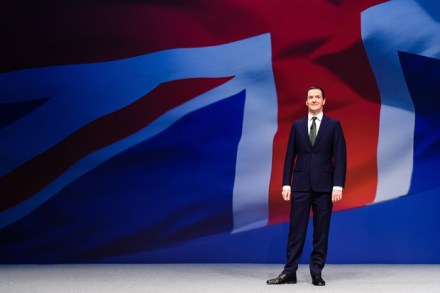
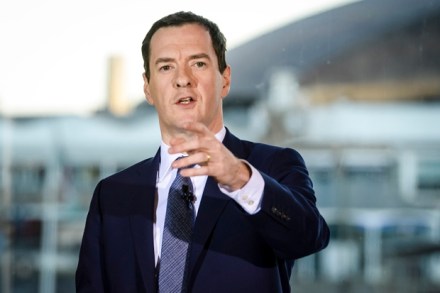
Rather more attention was paid last week to the strange position of George Osborne’s feet than to the dark shape lurking behind him. My own theory about his stance on the conference platform is that he was imagining himself as a operatic tenor, belting out an aria in praise the magic elixir he has administered to the formerly consumptive heroine, the UK economy, and pitching to be her next prince. But operas, like political careers, tend to end badly: so why the rumbling bass notes from the orchestra pit, and what is that sinister thing in the shadows? I’m not talking about Corbyn and McDonnell fighting in a sack with their own colleagues: they’re a comic subplot.

All those boardroom codes still can’t catch rogues and incompetents

From our UK edition

Sir Adrian Cadbury, who has died aged 86, is remembered as the author in 1992 of a first stab at a corporate governance code for public companies — which thereafter were expected to show ‘Cadbuarial correctness’ in the separation of chief executive and chairman and the powers of non-executive directors. Cadbury’s work was taken forward by the 1995 Greenbury report, the 1998 Hampel report, the Higgs review in 2003 and a subsequent drawing-together into a ‘Combined Code’. Finally Vince Cable, as business secretary, left his own mark by setting a target of 25 per cent women on FTSE100 boards by this year.

Contagion of a different kind as Greece wriggles off the hook

From our UK edition

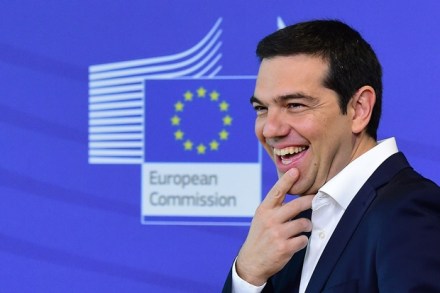
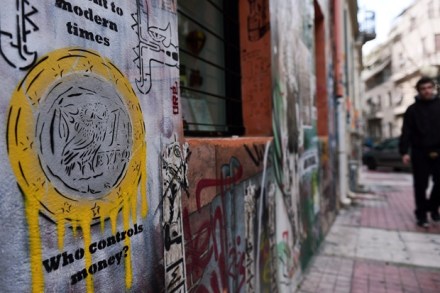
The clear winner in the Greek crisis is the author of The Little Book of Negotiating Clichés, whose royalties must have been pouring in as the clock ticked towards midnight while European leaders took positive steps back from the brink and found themselves speaking the same language, perhaps because they were reading from the same page. But assuming this predictable dance results in terms that Prime Minister Tsipras can persuade his comrades to accept before the IMF’s default deadline and the moment when the Greek banking system can no longer seek life-support from the European Central Bank — which is all still quite a big assumption — who will be the loser?

The surfer, the sailor and the horseman: prosperity is all about personal stories

From our UK edition

The tectonic plates of economic life rumble and shift. As ever, market watchers are obsessed by big themes — and the demand for predictions about them even though so many past predictions have turned out wrong. Right now, we’re gripped by the endgame for Greece, the timing of the first US rate rise, the future of energy prices given Opec’s decision to maintain output above demand, the slowing of Chinese industrial growth, and the unresolved destiny of the global debt bubble. Yet we also know that wealth creation is fundamentally a matter of individual risk and endeavour, often pursued in defiance of the adverse alignment of market forces.

Highland star

From our UK edition

[audioplayer src="http://rss.acast.com/viewfrom22/thehighpriestsofhealth/media.mp3" title="James Forsyth and Isabel Hardman discuss Charles Kennedy's career" startat=1211] Listen [/audioplayer]Charles Kennedy’s eloquence, intelligence and humour were famous in the Highlands long before his election to the Commons at the age of 23. When I started at Lochaber High School, the prizes he had won as a school debater adorned the walls; as pupils knew, at university he had gone on to win the national championship for Glasgow. It was clear that he was a phenomenon. Charles knew, perhaps better than anyone in British politics today, that how you say something is critical to being understood. Politics is the art of making and winning arguments.

The Spectator’s Notes | 21 May 2015

From our UK edition

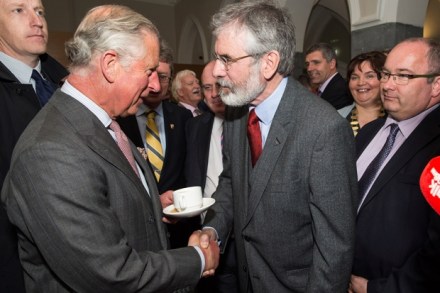
Who benefits from Prince Charles’s handshake with Gerry Adams? Not the victims of IRA violence, including the 18 soldiers who died at Warrenpoint on the same day as Lord Mountbatten was murdered. Not the moderate parties in Ireland, north or south, who never blew up anybody and so can get no kudos for pretending to be sorry about it afterwards. Only Adams (who was a senior IRA commander at the time of the killings) and Sinn Fein. His party has thus been relieved of current unpopularity in the Republic caused by long-running rape accusations, and is suddenly made to look good in the run-up to the centenary of the Easter Rising. I gather the bright idea to involve the royal family in this tasteless choreography came from our own Foreign Office.

Remembering Raymond

From our UK edition

I first heard of Raymond Carr, who wrote for this magazine for more than 40 years, when I was in Italy in the army at the end of the second world war, and I had a letter from my sister in London saying that she had met the most marvellous man who was not only very funny but immensely clever, and I must meet him when I got back. By the time I did, Raymond had moved from being a wartime schoolmaster at Wellington College to a being a resident fellow of All Souls, Oxford. He was, yes, both immensely funny and rather grand. Raymond Carr had been educated at Brockenhurst school, and then in 1941 won a history scholarship to Christ Church, Oxford, having continued his education (as he used to put it) by teaching himself the clarinet and supporting himself by performing in a jazz band.

Cricket’s glorious dead

From our UK edition

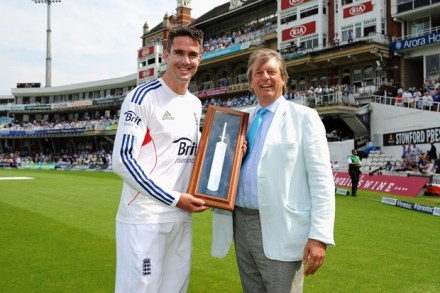
He’s a tall man, Kevin Pietersen, and he casts a long shadow. It loomed large over the Long Room at Lord’s last week where the great, the good, and the not very good at all of the cricket world had gathered for the annual Wisden dinner, one of the most enjoyable events in the life of man. For starters, indeed only a few minutes before we did get stuck into our starters, the hapless Paul Downton had been suddenly sacked as managing director of English cricket. It seems nonsense to blame Downton for all the failures of the England team, but he was the main man in the room for the botched firing of Pietersen last year.

End of the Rainbow

From our UK edition

The golden age of pop music may be long gone, but the golden age of pop musicians’ obituaries is definitely with us. Soon I shall have to start apologising for returning to this subject with such regularity, but barely a week now seems to pass without some rock legend turning his or her eminent toes up. Last week it was John Renbourn, gruff beardy guitarist for Pentangle, and the week before Daevid Allen, who founded Soft Machine and about 73 different manifestations of Gong. On social media Nick Hornby asked us to name which dead people we had seen live (when they were alive, obviously). His list included Bobby Womack, Luther Vandross, Bob Marley, Joe Strummer, the Ramones, Rory Gallagher and Lee Brilleaux of Dr Feelgood (a lot). Hundreds of people responded.

Switch over to the Greek debt drama: the final episode must be coming shortly

From our UK edition

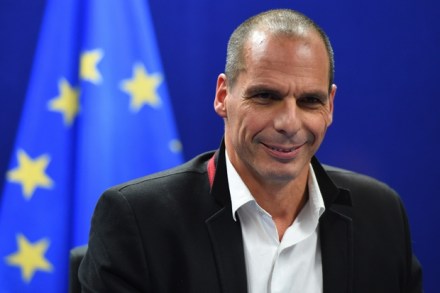
Bored with the election? Switch over to the Greek debt drama. In this week’s cliffhanger, silver-tongued finance minister Yanis Varoufakis visited IMF chief Christine Lagarde on Sunday, promised to meet his country’s obligations ‘ad infinitum’, and was expected to meet a €450 million repayment to the IMF on Thursday. But more troublesome members of the ruling Syriza party denounced the IMF and Brussels for treating Greece as ‘a colony’, threatening a snap election ‘if creditors insist on an inflexible line’, and warning that public-sector salaries and social security payments must rank ahead of debt as cash runs out. Which it will before August.

So the FTSE100 has finally broken its record – it’s still not doing nearly as well as executive pay

From our UK edition

The FTSE100 index has at last breached 7,000, surpassing its peak of 30 December 1999 and provoking moderate celebration among investors who have enjoyed such poor returns all these years. A thousand pounds invested in FTSE100 stocks on Millennium Eve, with dividends reinvested, was worth £1,670 by last month, an annual return of 3.4 per cent compared to inflation over the period of around 2.9 per cent. The same sum invested in a London house would have been worth £3,200, nearly twice the return on shares if we ignore running costs and the leverage effect of mortgage borrowing; invested on the rollercoaster of gold bullion, it would have been worth £4,500.

How Labour’s 50p tax trick has ended up helping George Osborne

From our UK edition

Last week’s public borrowing and tax-receipt figures, headlined ‘Chancellor hails biggest monthly surplus in seven years’, received considerably less attention than the employment and wage-growth numbers a week earlier, underlining my belief that voters care a lot less (or indeed not at all) about the intangible ‘fiscal deficit’ and its implications than they do about their own prospects and spending power. And rightly so. Failure to shrink the deficit at the rate he first promised is nevertheless the one major issue on which George Osborne is seriously open to criticism as Chancellor. But what matters in political terms at this stage is that borrowing this year is 7.

Bet on a swift Grexit

From our UK edition

'Will Greece exit the eurozone in 2015?’ Paddy Power was pricing ‘yes’ at 3-to-1 on Tuesday, with 5-to-2 on another Greek general election within the year and 6-to-4 on the more cautious ‘Greece to adopt an official currency other than the euro by the end of 2017.’ I’m no betting man — as I reminded myself after backing a parade of point-to-point losers on Sunday — and I defer to our in-house speculator Freddy Gray, who will offer a wider guide to political bets worth having in the forthcoming Spectator Money (7 March).

The wonderful and unpredictable Candida Lycett Green

From our UK edition

With Candida, you learned to expect the unexpected. She said she might make the charity sale at my house on Thursday, but not to rely on her. I didn’t. But on Friday, a bright red pick-up truck turned into the yard and out got Candida with a bagful of contributions. But she also brought a birthday present of a beautiful Alice Temperley skirt for my younger daughter. The red pick-up was a present for Candida’s own birthday, thrilling her as much as any red bike for a six-year-old. ‘I’m an old hippy,’ she once said. Perhaps. She was certainly a child of the Sixties, when half the aristocracy’s offspring were hippies.

Lauren Bacall — a true great

From our UK edition

As so often, no one put it better than Papa. Here is Ernest Hemingway talking of all the movies made from his novels and short stories: ‘The only two I could sit through were The Killers and To Have and Have Not — I guess Ava Gardner and Lauren Bacall had a lot to do with it.’ Mr S can’t say fairer than that of Lauren Bacall, who has died at the age of 89. Bacall was, however, rather more than a husky voice and a sultry look. In 1981 she starred in The Fan, in which she played a middle-aged film star idolised by a demented fan (played by Douglas Breem) who mutilates or kills those close to the object of his desire. But the ageing star’s beauty has faded, and bears only passing resemblance to the youthful image that captivates the fan.

RIP Mark Shand

From our UK edition

Mr S was saddened to hear of the untimely death of Mark Shand, the Duchess of Cornwall's brother. He was a kind and witty man: a natural bon viveur. Parties for his charity, Elephant Family, which campaigned to protect the habitats of the endangered Asian elephant, were always splendid affairs. Shand’s vivacity and generosity came to the fore and partygoers gave generously. Mr S remembers one bash at Lakshmi Mittal’s gaffe. Lalit Modi, Vijay Mallya, Michiel Mol, Sir Evelyn de Rothschild, Joanna Lumley, Sarah Ferguson and countless faceless financiers were dolling out cash like nobody’s business. London society has lost one of its most dashing players. And the Indian elephant has lost its most determined protector. RIP.

We have to tell the truth about Tony Benn now. Who will hear it later?

From our UK edition

I could start by remarking that we should not speak ill of the dead, quoting the pertinent Latin phrase: de mortuis nil nisi bonum (‘of the dead, only good’). But this would be to miss a key qualification because the whole quote (from Diogenes Laertius, circa ad 300) adds ‘dicendum est’: ‘is to be said’. And that puts a different complexion on things. Commentators have preferred to describe the advice as an established social convention rather than necessarily their own opinion. Indeed it is often used as a sly way of indicating (without stating) the speaker’s disapproval of the deceased. But if the phrase has been thrown once at my head by my newspaper readers this week, it has been thrown a score of times.