Notebooks

Nothing beats writing by hand

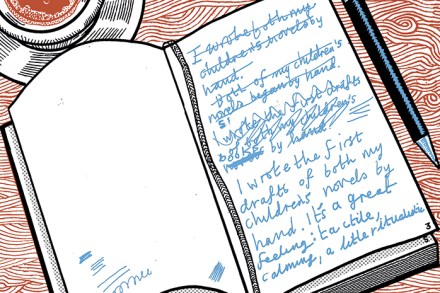
I wrote the first drafts of both of my children’s novels by hand. It’s a great feeling: tactile, calming, a little ritualistic. I crack open a brand new Leuchtturm notebook, bought from the artsy place round the corner, pour myself an espresso, and set to work with the Cross ballpoint my nan gave me as a graduation present. It’s a slow and painstaking process, but one that is hugely rewarding. As a journalist and novelist, I can touch-type 100-odd words per minute, which is great when I’ve got a deadline for an article. It’s not what I’m after in a novel’s first draft manuscript, however. Time needs to be taken, the narrative voice discovered, pacing slowed a bit.
The wry humour of Franz Kafka

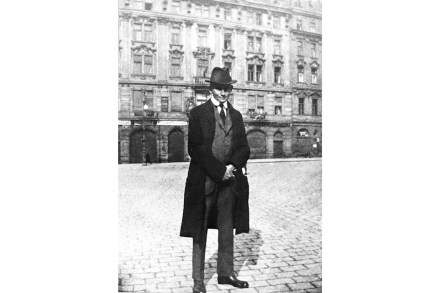
How do you see Franz Kafka? That is, how do you picture him in your mind’s eye? If you are Nicolas Mahler, the writer and illustrator of a short but engaging graphic biography of the man, you’d see him as a sort of blob of hair and eyebrows on a stick. The illustrations of Completely Kafka may look rudimentary, but they work. In fact they’re similar in style to the doodles Kafka himself would make in his notebooks. If you were Kafka, you’d see yourself as a spindly man, head on desk, leaning on your hands, arms bent, in a posture of defeat and exhaustion. That image is chosen for the cover of a translation by Mark Harman of Selected Stories.

A glimpse of the real Patricia Highsmith through her diaries and notebooks

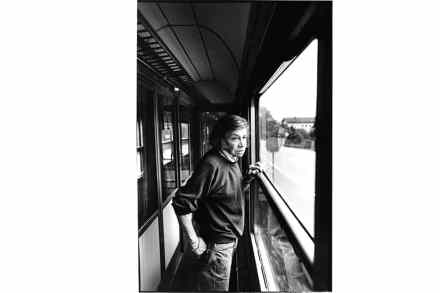
There are three ways of knowing Patricia Highsmith. First, of course, she was the author of 22 novels and several story collections published between 1950 and 1995, the year of her death. Then the woman herself: Mary Patricia Plangman, born in Dallas in 1921, long-term resident of New York City, when young a socially and sexually active lesbian, later in life a mostly solitary literary figure in almost constant movement around Europe. Much biographical work has been written about her. And, finally, a revelation: she was the keeper of not only an intimate diary for most of those years, but also workbooks she called ‘cahiers’, all now published in a single volume.