Notebook

Thankfully, Tony Blair was nowhere near my Sicilian holiday

Sicily is far removed from the gracious suavities of Tuscany. With the souk-like atmosphere of its markets and obscure exuberance of life in the old Cosa Nostra towns, the Mediterranean island is halfway to Muslim Tunisia. The British Tuscanites who descend on the hills around Florence during the summer holidays as part of their ‘Toujours Tuscany’ dream – Tony Blair, Sting, David Cameron – are thankfully nowhere in evidence. In our post-Godfather world no history of Sicily would be complete without mention of the Mafia. The word is said to derive from the Arabic mahyas, meaning ‘aggressive boasting’: for almost three centuries until the Norman Conquest of 1061, Sicily was an Islamic emirate.

A private life

From our US edition

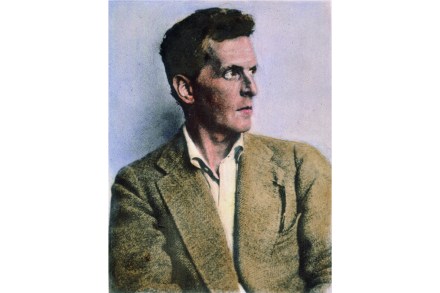
When Ludwig Wittgenstein died in 1951, he had only published one book — the Tractatus Logico-Philosophicus, which was first translated into English in 1922 (with an introduction by Wittgenstein’s former professor and mentor Bertrand Russell, to which Wittgenstein strongly objected). Philosophical Investigations, which Wittgenstein was working on at the time of his death, was published in 1953. His wartime notebooks, which he kept between 1914 and 1916, appeared in 1961. These are important. The Tractatus is famously dense, being composed of a series of statements on the relationship between words and objects and the nature of knowledge. The notebooks provide a clearer sense of the problem Wittgenstein was trying to solve and the progression of his thought.

wittgenstein