Northern ireland

Ripping up the Northern Ireland protocol is diplomacy in action

From our UK edition

Lord Frost’s Lisbon speech represents the most cogent argument yet for replacing the Northern Ireland protocol. So naturally it has been buried under a slurry of snark, solemn head-shaking and breathless indignation. It is worth stepping back from the noise. Switch off the shouty man on LBC, mute the ‘this is not normal’ people on Twitter, and avoid at all costs the catastrophist-analysis of the academic-activists. You will miss nothing. In fact, read Frost's speech for yourself. It was meant to send a message about the protocol and it does so directly. The Irish are our neighbours. It is in both our countries’ interests that we maintain and enhance the ties between us..
David Frost’s protocol diplomacy

From our UK edition

As a general rule in post-Brexit politics, when David Frost makes a public intervention on the Northern Ireland protocol, it tends to dampen rather than soothe UK-EU relations. Frost, charged with improving the protocol, is a divisive figure in Brussels who is seen to catch flies with vinegar rather than honey. His speech was expected to be an escalation in the current war of words between the two sides. In the end, the talk itself was slightly less confrontational than expected. Frost effectively declared the Northern Ireland protocol dead and called on the EU to work with the UK Frost effectively declared the Northern Ireland protocol dead and called on the EU to work with the UK to come up with a new protocol to prevent a hard border on the island of Ireland.

When will the DUP realise the truth about the Tory Brexit strategy?

From our UK edition

Are the Tories serious about getting rid of the troublesome Northern Ireland Protocol? The latest extension to the so-called grace period – the third in recent months – means that plans for post-Brexit checks on some goods entering Northern Ireland have been suspended again. But this isn't the good news you might think it is for unionists in Northern Ireland. In the short term, of course, it avoids a repeat of 'sausage wars' and megaphone diplomacy around the Protocol's Article 16 (which allows Britain or the EU to take unilateral action in certain circumstances). This can only be good news. Yet for nervous unionists there is a disturbing lack of security about what might happen when this grace period does eventually come to an end.

Why are armed men still able to parade around Northern Ireland?

From our UK edition

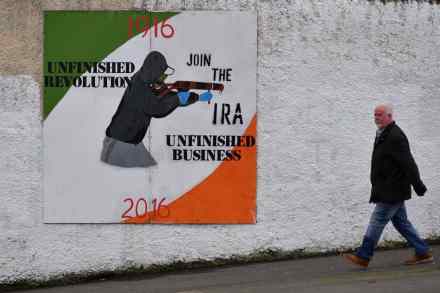
Is the Police Service of Northern Ireland equal to the task of dealing with the sour, indigestible remnants of Troubles paramilitarism? Events this weekend in an estate on the outskirts of Derry, showing yet more glorification of a terrorist by armed men firing weapons, suggests otherwise. Michael Devine, the man who was venerated by half a dozen goons dressed in black this weekend, starved himself to death in Northern Ireland’s notorious Maze prison in 1981 along with nine other republican prisoners in pursuit of political status. He was also a founder of the Irish National Liberation Army (INLA), one of the most viciously and overtly sectarian paramilitary death squads produced by the Troubles.

Sinn Fein’s troubling veneration of terrorists

From our UK edition

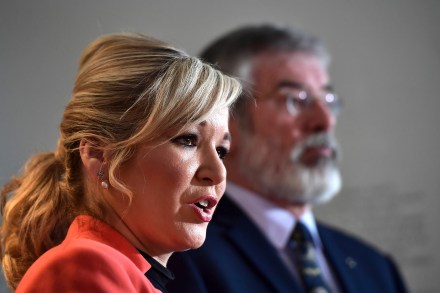
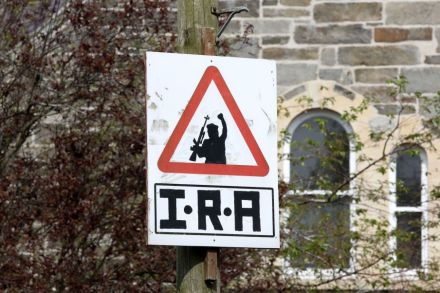
Sinn Fein is not a normal party. It sometimes feels impolite to point it out in the era of the Belfast Agreement. But the legal amnesty from criminal charges offered to IRA terrorists as part of the peace process does not oblige individuals to abstain from moral judgement of their political wing. Especially when it continues to venerate those terrorists. The past year offered a grim reminder of this when the party’s leadership turned out in force, in the middle of lockdown, for a show of strength at the funeral of Bobby Storey, a Provisional IRA ‘volunteer’ who spent 20 years in prison for various offences.

Visit Ulster: Why unionists should holiday in Northern Ireland

From our UK edition

I’ve written a lot about what unionists should do to help strengthen the Union with Northern Ireland. Top of the list is obviously securing much-needed changes to the Protocol before it turns the Province into an economic satrapy of the EU. Then there’s Westminster’s need to get to grips with its actual obligations under the Belfast Agreement, rather than the never-ending wish-list dreamed up by Dublin that Theresa May signed up to. After that, there’s the new UK Internal Market Act 2021, which authorises Westminster to make top-up investment in areas normally reserved for the devolved assemblies. But for a while, I have had a sneaking suspicion that there may a task even more important than that, and over the past month, I have convinced myself of it.

How Boris can save Northern Ireland

From our UK edition

Over the past few weeks and months, there has been plenty of focus on the Northern Ireland Brexit Protocol, and the impact it is having on the province. Less attention has been paid, however, to the equally serious problems in Northern Ireland which still need to be solved. It is an uncomfortable truth, but the problem with Northern Ireland is largely in Westminster. The institutionalised neglect over the past few decades has brought the region to where it is now. How do you know Northern Ireland has been neglected? Easy. Look up the time it takes to travel between just about any town in the province to Belfast by public transport. The results will shock you. It is quicker to get to London from Belfast than it is to Londonderry.

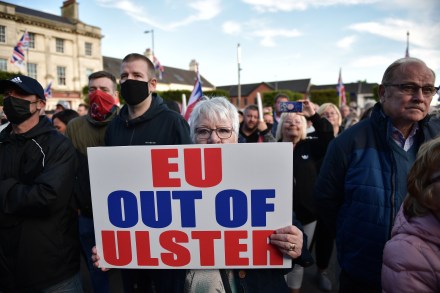
Northern Irish unionists are united against the protocol

From our UK edition

The DUP’s departed leader Edwin Poots spoke in his valedictory interview of a 'significant victory' heading unionism’s way regarding its bête noire, the Northern Ireland protocol. The outright, irrevocable removal of the ‘sea border’ imposed by the protocol has become the fundamental objective of all shades of political unionism and loyalism.  Anti-protocol street art garlanded two deeply different citadels of unionism in the past week — the working-class heartland of Belfast’s Shankill Road and the affluent County Down village of Killyleagh. There is a sense of shared purpose.

The Troubles amnesty and the hypocrisy of Sinn Fein

From our UK edition

Predictably – and understandably – the Northern Ireland Office’s proposed amnesty for crimes relating to the Troubles has resulted in a backlash across both sides of the Ulster divide. Yet, while the criticism was initially uniform, rifts have already emerged in the week since they were first unveiled. The noble ideal that justice delayed is justice denied has proved relatively feeble as a unifying glue, despite the Northern Ireland Assembly voting on Tuesday for a motion rejecting Westminster’s proposals. Prior to that vote, which heard many heartfelt and worthy speeches from across the chamber about the moral and legal basis for rejecting the amnesty, a gathering took place outside the Stormont chamber to protest the proposals.

Boris’s Brexit deal isn’t worth sacrificing Northern Ireland for

From our UK edition

There will be chaos at the borders. Food will run out at the supermarkets. Travellers will face long queues, and companies yet another round of disruption. As the UK lays the groundwork for breaking with the Northern Ireland Protocol, we will hear plenty of scare stories about how it might mean losing the Free Trade Agreement with the European Union. There is an element of truth in that, of course. The EU may well decide that if we are not sticking to the Protocol then the free trade deal has to go as well. But there is a flaw in that argument, and it is not exactly a minor one. In truth, the FTA is not worth saving – and certainly not worth sacrificing Northern Ireland for.

Has Boris Johnson forgotten what he once said about IRA terrorists?

From our UK edition

Boris Johnson's approach to dealing with historical prosecutions in Northern Ireland has achieved that unique political feat in the Province: uniting both sides in revulsion at what is being proposed. Northern Ireland minister Brandon Lewis is expected to announce a statute of limitations ending prosecutions in cases which pre-date the 1998 Belfast Agreement. Reports suggest that this will apply not only to members of the security forces but also republican and loyalist paramilitaries. This was always a likely end point in Northern Ireland’s 'process', indicative of the British political class’ reflex instinct to wish the Province and its troubles away.

The hollowing out of the Belfast Agreement

From our UK edition

There is a lot to unpack in Sir Keir Starmer’s suggestion that he would campaign for the Union in the event of a future border poll in Northern Ireland. It’s a welcome repudiation of decades of Labour policy, which has been to support Irish nationalism. Would-be members in the Province were directed to join the separatist ‘sister party’ the SDLP instead. But just as interesting is the reaction of the many commentators who sallied out to suggest that the Labour leader had somehow breached the Belfast Agreement, the Anglo-Irish Agreement, the Downing Street Declaration or any other of the peace’s sacred texts.

Troubles’ veterans on both sides deserve immunity from prosecution

From our UK edition

The recent decision by Boris Johnson's government to put a five-year time-bar, save in exceptional circumstances, on the prosecution of British troops for crimes committed during overseas operations, came as a welcome relief to soldiers. Those who served their country abroad now know they are effectively safe from stale prosecutions in the distant future; veterans who have long since moved on can now live in peace.  But note the word 'overseas'. Why not everywhere? The answer is easy: the Irish elephant in the room. The government feared that any attempt to time-limit prosecutions over events during the Northern Ireland Troubles would stir a hornets’ nest. It chose instead to leave those who had served in Northern Ireland exposed for ever.

I’m calling my removal from office ‘the great betrayal’

From our UK edition

I’ve always maintained I go to Fermanagh for sanity, and after the past few months, I need a return to sanity more than ever. Fermanagh is by far the least populated of Northern Ireland’s six counties and it’s beautiful. I grew up here in the countryside, playing in fields, and now live near Brookebrough in the east of the county. From the sanctuary of Fermanagh I think about the fact that the new DUP leader and his team will now have to negotiate with Sinn Fein to get the first minister nominated again. Once I resigned, it meant that the deputy first minister was also out: for both ministers to be appointed there has to be agreement between the parties. This is not an easy process, as you might imagine.

Portrait of the week: A bombshell by-election, Scotland bans Mancunians and China staffs its space station

From our UK edition

Home The government contemplated its promised Planning Bill, blamed for contributing to the astonishing victory for the Liberal Democrat Sarah Green in the Chesham and Amersham by-election. She had gained 21,517 votes to transform the former Conservative majority of 16,223 into one of 8,028. Labour did worse than in any by-election before, securing only 622 votes, 1.6 per cent of the total. John Bercow, the former Speaker, joined the Labour party. Clayton Dubilier & Rice, an American private equity company, offered to buy Morrisons, the supermarket chain, for £5.5 billion. White working-class pupils in England have been failed by decades of neglect, the Education Select Committee found in a report.

Can Jeffrey Donaldson halt the DUP’s civil war?

From our UK edition

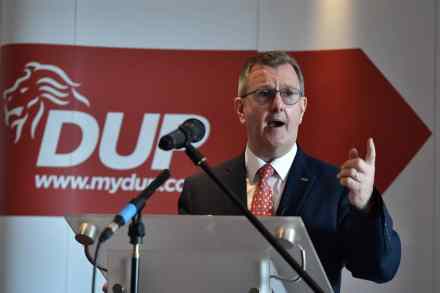
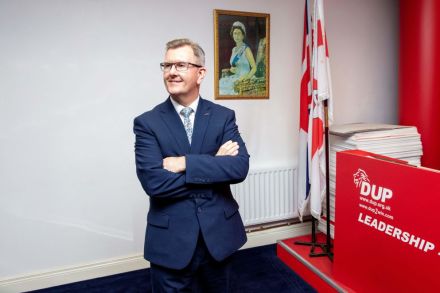
Sir Jeffrey Donaldson, the Lagan Valley MP, has triumphed in the one-horse race to replace Edwin Poots as leader of the DUP, getting the top job at the second time of asking. Nobody else came forward to instigate a leadership election, meaning that his appointment will be rubber stamped when the party's electoral college meets this Saturday. Respected at Westminster, Donaldson seems a more plausible fit for high office than the gauche Poots, though both men are remarkably similar; Donaldson, like Poots, is a committed Christian and is a prominent Orangeman. History is never far away from the politics of Northern Ireland. Donaldson’s win coincides with the centenary of the opening of the Northern Ireland parliament.

Edwin Poots’s resignation could cause a crisis in Northern Ireland

From our UK edition

The end of Edwin Poots’s 21-day spell as leader of the DUP sums up the ordeal of being a unionist leader. Elected as a hard-line replacement for Arlene Foster, he has departed now after being seen to have given too much away to Sinn Fein over the Irish language. Who will replace him? The early candidate appears to be Sir Jeffrey Donaldson, the party’s Westminster leader who was defeated by Poots in last month’s contest. His supporters are championing him as a stabilising influence in a party which has ripped itself apart, with others suggesting that he should be elected without a contest. Poots’s election was a last roll of the dice for his wing of the party, the fundamentalists who didn’t really get over the departure of Ian Paisley in 2008.

Edwin Poots’s departure is a sign of the chaos engulfing the DUP

From our UK edition

Only 20 days after winning the party leadership by one vote, Edwin Poots has resigned as DUP leader. The immediate trigger for his departure is him nominating a First Minister today in spite of the opposition of a majority of both DUP MLAs and MPs. (They were unhappy about the late night Irish Language Act compromise). But him being forced out can only really be understood in the context of bad blood created by his brutal ouster of Arlene Foster and his decision to sack all her ministers bar one, himself, in a reshuffle last week. Poots’s departure is a sign of the chaos engulfing the DUP. It is being squeezed on two sides.

The protocol may be Boris’s greatest masterstroke

From our UK edition

The jibes thrown at Boris Johnson over his unhappiness with the Northern Ireland protocol — based on the obvious observation that he was the one who signed it — have been based on the assumption that he is either a liar or a fool. A liar because he knew full well what he was signing up to, or a fool for not knowing what he was agreeing to. Does anyone think that officials told him that the protocol would prevent Northern Ireland having access to some cancer drugs? Or guide dogs being unable to move between GB and NI? Keir Starmer has repeated the jibe about Johnson. A further version is that Johnson did not care if Northern Ireland paid the price so long as the UK left the EU.

Boris Johnson’s Northern Ireland problem

From our UK edition

In an at times grouchy press conference, Boris Johnson tried to calm the row over the Northern Ireland protocol. The Prime Minister declined to comment on what Emmanuel Macron is supposed to have said about Northern Ireland’s position in the UK. He said that the whole issue of the protocol had taken up a ‘vestigial’ amount of time at the summit. (Interestingly, Mujtaba Rahman of Eurasia Group, who is particularly well connected in EU capitals, says that he has been told it took up two-thirds of the conversations in the margins of the summit).  Instead, Johnson wanted to emphasise the vaccine commitments that the summit had made and how these would help ‘demonstrate the benefits of democracy and freedom and human rights’ to the rest of the world.