Nigel farage

Weimar Britain, the war on science & are you a competitive reader?

From our UK edition

36 min listen

First: a warning from history Politics moving increasingly from the corridors of power into the streets, economic insecurity exacerbating tensions and the centre of politics failing to hold; these are just some of the echoes from Weimar Germany that the Spectator’s editor Michael Gove sees when looking at present-day Britain. But, he says, ‘there are grounds for hope’ – what are they? Michael joined the podcast to discuss.   Next: why did science succumb to the ‘culture wars’? Biologist and peer Matt Ridley bemoans the ‘cultification of science’, arguing that ‘left-wing ideological nonsense’ ended up permeating through all scientific disciplines.

Why I gave up on the Tories

From our UK edition

The days between my leaving the Tories and joining Reform were an odd uneven time. It was the hardest decision I have ever made – I’d been a Conservative party member for 30 years, after all. Before the announcement, only three people knew what I was planning to do. In Westminster almost everything leaks so we kept the information tight. Once I had made up my mind, Nigel Farage and I held several clandestine meetings in a secluded room in a Mayfair members’ club to decide how to break the news. I initially rather fancied defecting on the eve of the Conservative party conference, for maximum impact. But in the end we decided to drop the story in the Daily Mail on Thursday night.

Reform conference review: is this ‘British MAGA’?

From our UK edition

16 min listen

Reform UK’s annual conference wrapped up this weekend – and it was anything but dull. From Andrea Jenkyns belting out her original song ‘I’m an Insomniac’ on stage to Nigel Farage trying to keep a sometimes chaotic movement united, the mood was more rally than conference. Despite the optimism in the room, there were obvious cracks under the surface: mainly, do Reform have enough experience in their ranks for the business of serious government? On Coffee House Shots, Oscar Edmondson is joined by Tim Shipman and James Heale fresh from the conference floor.

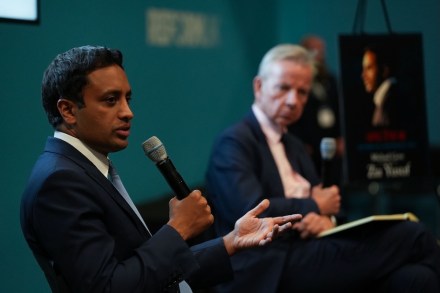
Reform’s Zia Yusuf in conversation with Michael Gove

From our UK edition

70 min listen

At the Reform conference in Birmingham, the Spectator's editor Michael Gove sat down with Reform UK's head of their department of government efficiency Zia Yusuf. They discussed Labour's track record in government, Zia's faith and his tech background, why leader Nigel Farage is his political hero and how AI could change Britain.

The red reshuffle overshadows Reform

From our UK edition

14 min listen

Lucy Dunn catches up with Tim Shipman at Reform's party conference, taking place in Birmingham, to get his reaction to Labour's reshuffle. The reshuffle took place following Angela Rayner's resignation from government. Tim argues that it's clear the reshuffle centred around getting Shabana Mahmood into the Home Office, where she can tackle some of the biggest issues for Labour – small boats and asylum hotels. They also round up the goings on at Reform including leader Nigel Farage's speech, who claimed Labour's reshuffle proved an election could be sooner than we think... Produced by Patrick Gibbons and Megan McElroy.

Inside GB News’s Great British bash

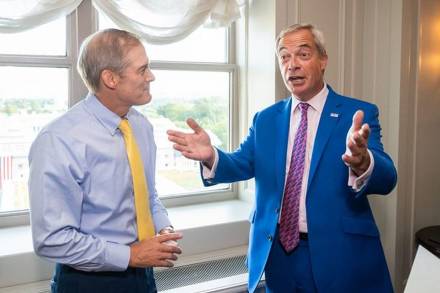
Cockburn spent Wednesday night at the ultra-exclusive Ned’s Club near the White House for a shindig celebrating the launch of GB News’s DC bureau. The network, which launched in 2021, will be airing a US politics show from 7-9 p.m. ET (that’s midnight to 2 a.m. UK time), anchored by Bev Turner. Nigel Farage, who hosts a primetime show on the network, held court by the central bar. Cockburn spotted him chatting to Jim Jordan, who chairs the House Judiciary Committee which Farage had addressed on free speech in Britain earlier in the day.

GB

Reform’s camp following, masculine rage & why do people make up languages?

From our UK edition

51 min listen

First: Reform is naff – and that’s why people like it Gareth Roberts warns this week that ‘the Overton window is shifting’ but in a very unexpected way. Nigel Farage is ahead in the polls – not only because his party is ‘bracingly right-wing’, but ‘because Reform is camp’. Farage offers what Britain wants: ‘a cheeky, up-yours, never-mind-the-knockers revolt against our agonisingly earnest political masters’. ‘From Farage on down,’ Roberts argues, ‘there is a glorious kind of naffness’ to Reform: daytime-TV aesthetics, ‘bargain-basement’ celebrities and big-breasted local councillors. ‘The progressive activists thought they could win the culture war simply by saying they had won it’, but ‘the John Bulls and Greasy Joans are stirring again’.

Britain free speech

The death throes of free speech in Britain – and its opponents

Free speech, the very bedrock of constitutional democracy, is writhing on its deathbed in England. It will take a mass movement to restore its vitality. Fortunately, one can see that movement emerging among a once-free people, tired of government suppression. The dire state of British liberties was outlined Wednesday in Congressional testimony by British MP, Nigel Farage, who testified before the US House Judiciary Committee. He was backed by the committee’s Republican members and attacked, alas, by Democrats.

The glorious campness of Reform

From our UK edition

It’s a very serious and rancorous time in Britain. Social strife is simmering. The asylum system is at breaking point. The lines on the economics graphs are all going in unsettling directions – the ones you’d prefer to see going down are going up, and vice versa. And inevitably the Overton window is shifting. Though perhaps not in the way any of us expected. Reform is currently odds-on to form the next government. Nigel Farage’s party meets for its conference in Birmingham this week at 35 per cent in the polls. But that’s not because it’s bracingly right-wing. Or not just. It’s because Reform is camp.

Letters: Bring back the hotel bath!

From our UK edition

Moore problems Sir: Many years ago a colleague warned me that I was so impossibly uncool that one day I was bound to become hip. Has this moment arrived? Charles Moore (Notes, 23 August) informs me that there is a ‘currently fashionable conservatism’ which is ‘militantly against Ukraine’. By this he presumably means not regarding Ukraine as a sort of lovely Narnia, full of birdsong, democracy and honesty, which – as it happens – it isn’t. Even so, I wonder where this ‘fashionable conservatism’ is to be found? After more than a decade of suggesting the Ukraine issue is not as simple as many believe, I have – as far as I know – failed to change a single mind.

The risks of Reform

From our UK edition

In 1979, XTC sang: ‘We’re only making plans for Nigel/ We only want what’s best for him.’ The song is from the perspective of two overbearing parents, confident that their son is ‘happy in his world’ and that his future ‘is as good as sealed’. Nigel Farage is making plans for his own future but it’s doubtful it’s as good as sealed. This week, he announced Reform UK’s proposal for mass deportations, ‘Operation Restoring Justice’. Some 600,000 illegal migrants will be removed, he promised, should his party win the next election. Britain will leave the European Convention on Human Rights (ECHR) so we can return people to countries such as Afghanistan and Eritrea, currently deemed too dangerous.

Nigel Farage is banking on a political sea change

From our UK edition

Nigel Farage is adept at riding the currents of British politics. When he named Reform after the Canadian party in 2020, it was a statement of intent. Like Preston Manning in the 1990s, he aimed to displace this country’s main centre-right party and refashion it in his image. But where Manning fell short, handing over the reins to Stephen Harper, Farage aims to go one better by becoming prime minister himself. A keen angler, Farage has spent his few moments of downtime this summer fishing. On one such trip, he took an assembled group of journalists to the English Channel to highlight the small boat crossings.

Farage goes for the Lords

From our UK edition

15 min listen

The big news today is of course the bilateral between Donald Trump and Vladimir Putin in Alaska. We should know by around 8 p.m. whether they have successfully negotiated an end to the war in Ukraine – and at what cost – but in the meantime Westminster is abuzz with the news that Nigel Farage is going for the Lords. This morning the Times splashes on a letter from Nigel Farage to the Prime Minister, Keir Starmer, in which he demands that Starmer allow him to nominate Reform peers to the House of Lords. It is not a totally unreasonable request either, with the Greens and the DUP represented in the chamber and Farage has gone after Starmer for ‘democratic disparity’.

Can Reform beat the blob?

From our UK edition

Shortly after he was elected as Britain’s youngest council leader last month, 19-year-old George Finch of Reform UK had a conversation with Monica Fogarty, the chief executive of Warwickshire county council, about which of them was really running the show. In Finch’s telling, this was a watershed moment: he offered a ‘professional working relationship’ but the relationship quickly soured. ‘I know you’re trying to get rid of me,’ Fogarty said, according to Finch. ‘Well, you can’t get rid of me. The way it works around here is: your councillors play ball.’ Finch allegedly replied: ‘Are you joking? You have to work with us. It’s not the other way around. We’ve been put here by the electorate. You haven’t.

Motherland: how Reform is winning over women

From our UK edition

17 min listen

Does – or did – Nigel Farage have a woman problem? ‘Around me there’s always been a perception of a laddish culture,’ he tells political editor Tim Shipman, for the cover piece of the Spectator this week. In last year’s election, 58 per cent of Reform voters were men. But, Shipman argues, ‘that has begun to change’. According to More in Common, Reform has gained 14% among women, while Labour has lost 12%. ‘Women are ‘more likely than men… to worry that the country is broken.’ Many of Reform’s most recent victories have been by women: Andrea Jenkyns in the mayoral elections, Sarah Pochin to Parliament; plus, their most recent high profile defections include a former Tory Welsh Assembly member and a former Labour London councillor.

Reform’s motherland, Meloni’s Italian renaissance & the adults learning to swim

From our UK edition

46 min listen

First: Nigel Farage is winning over women Does – or did – Nigel Farage have a woman problem? ‘Around me there’s always been a perception of a laddish culture,’ he tells political editor Tim Shipman. In last year’s election, 58 per cent of Reform voters were men. But, Shipman argues, ‘that has begun to change’. According to More in Common, Reform has gained 14% among women, while Labour has lost 12%. ‘Women are ‘more likely than men… to worry that the country is broken.’ Many of Reform’s most recent victories have been by women: Andrea Jenkyns in the mayoral elections, Sarah Pochin to Parliament; plus, there most recent high profile defections include a former Tory Welsh Assembly member and a former Labour London councillor.

Motherland: how Farage is winning over women

From our UK edition

On the campaign trail in the Midlands ahead of May’s local elections, a journalist asked Nigel Farage: ‘Do you have a woman problem?’ The twice-married, twice-separated father of four laughed and said: ‘God, yes. I’ve had 40 years of it.’ His response was characteristic of Reform UK’s leader – a determination not to take things too seriously and a tacit acknowledgement that every political cause he has espoused has been more popular with men than women. ‘Around me there’s always been a perception of a laddish culture,’ he says. ‘Ukip was the rugby club on tour.’ In last year’s general election, 58 per cent of Reformvoters were men. Since May, when Reform seized 700 seats and ten councils, that has begun to change.

Vance & Farage’s budding bromance

From our UK edition

16 min listen

Nigel Farage hosted a press conference today as part of Reform's summer crime campaign 'Britain is lawless'. He unveiled the latest Tory defector: Leicestershire's Police & Crime Commissioner Rupert Matthews. Amidst all the noise of whether crime in the UK is falling or not, plus the impact of migration on crime, is Reform's messaging cutting through? Would US Vice President agree with Farage's message that Britain is lawless? Vance is in the UK, staying in the Cotswolds, as part of his summer holiday. Tim Shipman and Lucy Dunn are joined by James Orr, associate professor at Cambridge University, and a friend of Vance's to talk us through the dynamics between Trump, Vance, Starmer, Lammy and Farage. Does Farage have Vance's ear?

Could Reform’s Scottish surge provoke indyref2?

From our UK edition

20 min listen

Scotland's First Minister John Swinney unveiled his strategy for pursuing a second independence referendum this week, arguing that an SNP majority at next year's Holyrood elections is the only way to guarantee it. This is seen as an attempt to put Scottish independence back on the table as well as combat the rising popularity of Reform. Pollster Mark Diffley of Diffley Partnership joins Lucy Dunn to unpack the SNP's independence strategy. Mark points out that while Reform are consistently outperforming expectations, their support still primarily comes from ex-Conservatives. This, plus the unpopularity of the current UK Labour government, could provide the SNP with an opening to exploit and shore up nationalist support.

Can anything stop Reform?

From our UK edition

A close associate of Nigel Farage received phone calls from three civil servants in the past week, asking how they might help Reform UK prepare for government. Officially, mandarins won’t begin talks with the opposition until six months before a general election, which might be nearly four years away. And Reform currently has just four MPs. But behind the scenes, the source reveals: ‘I’m personally getting middle-ranking civil servants in various departments asking if they can help – people who actually understand how to get things done. They don’t want to lose their jobs, but they want to tell us what’s going on.’ MPs may have departed Westminster for recess, but that also marks the firing of a starting gun on a highly consequential political summer.