Nigel farage

The rise and rise of Australia’s Nigel Farage

From our UK edition

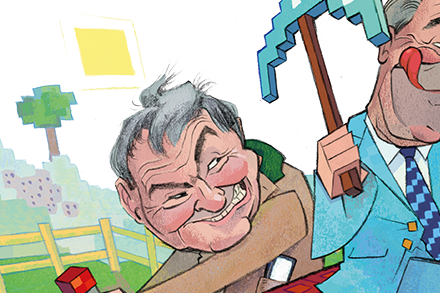
Sydney For three decades, Australia’s political Establishment has been predicting Pauline Hanson’s demise. But whenever critics tried to administer the kiss of death to the flame-haired firebrand, it somehow functioned as mouth-to-mouth resuscitation. Today her One Nation party is polling at levels once thought unimaginable. In recent polls, it even surpasses support for Australia’s centre-left Labor government and centre-right Liberal-National party opposition. Last month, One Nation won its first lower-house seat. Whatever happens next, Hanson has become one of the most consequential figures in modern Australian politics. To British readers, Hanson is often described as Australia’s answer to Nigel Farage. The reverse is closer to the truth.

‘I identify with Daenerys Targaryen before she went mad’: an interview with Kemi Badenoch

There was a moment backstage, before I interviewed Kemi Badenoch for a Spectator event, when I felt like John Sergeant with Margaret Thatcher bearing down on him as he pronounced her leadership in difficulty. I suggested to Badenoch that she was a rare example of a politician I had changed my mind about. “You mean you were very negative before?” she said, fixing me with the full alpha female glare. I muttered something placatory, but the truth is that a year ago I thought she was rubbish – and that was the mainstream view in her own party. She was arrogant, flat-footed, absenting herself from a stage that was being dominated by Nigel Farage, resistant to advice, convinced she was great at PMQs when even Keir Starmer was wiping the floor with her.

kemi badenoch
restore

Can Reform see off the threat from Restore?

Nigel Farage has always prided himself on being able to see off any threat from his right flank. But now a new force has emerged in the form of his ex-colleague Rupert Lowe. When the two Reform MPs fell out 15 months ago, friends shared memes of Farage’s past fallen rivals ascending to heaven. “Come and join us, Rupert!” they exhorted. Instead, Lowe fought back, setting up his own party, Restore Britain. In the Makerfield by-election on June 18, one poll puts Restore on 7 percent – enough to stop Reform and hand the seat to Labour’s Andy Burnham. Restore’s strategy is simple: use Farage’s playbook against him. Like Farage, Lowe has put his faith in social media, building up a noisy following that can then be turned into a campaigning force.

Britain imported a problem it refuses to name

I get the sense that the political and media class badly miss Katie Hopkins. Back when the reality TV star was still a regular on Britain's screens and in our newspapers, she could be relied upon to be the focus of attention whenever the people in charge didn’t want the public’s attention to be focused where it ought to be. So when a British soldier was decapitated on the streets of London, or a suicide bomber went off at a pop concert packed with teenage girls, Ms. Hopkins could be found saying something that a lot of people were thinking – only in a more colorful or unwise way.

‘Rupert Lowe turns up for work, Nigel Farage doesn’t’: an interview with Kemi Badenoch

There was a moment backstage, before I interviewed Kemi Badenoch for a Spectator event this week, when I felt like John Sergeant with Margaret Thatcher bearing down on him as he pronounced her leadership in difficulty. I suggested to Badenoch that she was a rare example of a politician I had changed my mind about. ‘You mean you were very negative before?’ she said, fixing me with the full alpha female glare. I muttered something placatory, but the truth is that a year ago I thought she was rubbish – and that was the mainstream view in her own party. She was arrogant, flat-footed, absenting herself from a stage that was being dominated by Nigel Farage, resistant to advice, convinced she was great at PMQs when even Keir Starmer was wiping the floor with her.

Why gentlemen relish Kemi

From our UK edition

As seen in the Telegraph Two thoughts on the sad and controversial death of Henry Nowak. The first is about Kemi. Wow. She really is The One. While Nigel Farage has angrily stomped about, demanding certain laws and policies be changed to stop something like that happening again, Mrs Badenoch instead forensically called for people to be mindful of their language. Mummy has done it again. Little do they know that until 2020 there were no racial tensions in this country at all And here is thought two: I despise Americans, and the Americanisation of our culture. Nowak’s death has opened the floodgates to all sorts of barking, ill-informed commentary from the Yanks about this seat of Mars.

Henry Nowak and the politics of deflection

While Britain is still reeling from the horrific murder of 18-year-old student Henry Nowak, an astonishing article has appeared in El País, Spain’s largest national newspaper. Rather than focus on the failures of the police officers, or the institutional bias within the force, the headline steers its readers away from the case and towards the outlet’s own obsessions. The headline translates as "Farage’s far right stirs up hatred in the UK after a young man is stabbed to death by a Sikh man." As Alejo Schapire (an Argentine journalist based in France) has pointed out, this is the first and only article produced by El País on the subject of the Nowak killing. Instead of an image of the victim, the newspaper has opted for a photograph of Nigel Farage.

henry nowak

The secret shame of being ‘Reform-curious’

As a sucker for any melody which relies heavily upon fourth and eighth notes hammered out on a piano, I was always going to fall for Billy Joel’s 1978 hit single "My Life." The lyrics were, as ever with Joel, awful, mixing his cringeworthy ordinary guy New York vernacular shtick with what I dare say he thought were original and profound psychological insights. He is such a hack singer-songwriter. He makes Neil Diamond resemble Wittgenstein. But the tune made me swoon, even its two predictable cod-Beatles middle eights. What to do? Obviously, I couldn’t buy it. There were four record shops in Middlesbrough back then and I was known in all of them.

Can British democracy survive the ‘bad chaps?’

What is the greatest threat to British democracy? Zack Polanski’s call for “building a society” that “doesn’t include” people who “identify as right-wing?” Labour’s efforts to flood the Upper House with party apparatchiks? Islamist extremism? The correct answer is Reform UK. That, at least, is the conclusion of a new book called What If Reform Wins by the Times reporter Peter Chappell. Before I get to its flaws, I should acknowledge it’s an enjoyable read, with plenty of deft, comic touches. It imagines that Reform wins a majority in June 2029, and then gives a blow-by-blow account of the constitutional crisis that follows, with the informal rules and conventions underpinning our democracy being stress-tested and found wanting.

british democracy

Farage’s plan to win over the left

The loudest man in politics knows when to keep his silence. Nigel Farage held his tongue on Monday as Keir Starmer’s premiership floundered. Aside from a few PFLs – proper f***ing lunches – to celebrate the local election results, the Reform UK leader was already looking to the next challenge. Like a shark, Farage keeps moving forward, into new waters, hungry for more. One ally sums up his approach to politics in a single word: ‘Momentum’. For the past few months, Farage has had one goal: destroying the Tories. The figure ‘1,453’ was the total of gains proudly pumped out on Reform’s Instagram. For Farage, 7 May was the political equivalent of the fall of Constantinople – the point when the Conservatives ceased to be a national party.

18 ways to save your political career

From our UK edition

Dear wannabe leaders of Britain. What a lot of you there are! I’ve been writing about leadership and the craft of politics for 25 years and I’m sick of watching the same mistakes repeated. I’m keen to help. So listen up Nigel, Kemi, Zack, Ed, Ed, Andy, Angela and Wes – and you Keir, it’s never too late to learn. 1) TL;DR: If you have no time for impertinent journalists, here’s the executive summary. You need a plan, plus strategy and tactics to deliver it. You need a narrative to explain it to voters. You need the charisma and application to take your party, the civil service and the country with you. And you need to build a team to do the bits that you cannot accomplish alone.

Can our democracy survive the ‘bad chaps’? 

What is the greatest threat to British democracy? Zack Polanski’s call for ‘building a society’ that ‘doesn’t include’ people who ‘identify as right-wing’? Labour’s efforts to flood the Upper House with party apparatchiks? Islamist extremism? The correct answer is Reform UK. That, at least, is the conclusion of a new book called What If Reform Wins by the Times reporter Peter Chappell. Before I get to its flaws, I should acknowledge it’s an enjoyable read, with plenty of deft, comic touches. It imagines that Reform wins a majority in June 2029, and then gives a blow-by-blow account of the constitutional crisis that follows, with the informal rules and conventions underpinning our democracy being stress-tested and found wanting.

Populism curve: what is the supply side of Britain and Europe’s decline?

In his new book Why Populists Are Winning: and How to Beat Them, British MP Liam Byrne argues that it’s time to go after the “supply side” of populism – time, that is, to curb freedom of the press and the right of individuals to spend money on causes they believe in. For a decade, you see, the European and British establishments have focused on quashing the demand side of populism. They have employed police, prison, censorship and shame to stop people from voicing anti-establishment opinions, demanding populist policies or voting for populist parties. They have formed preposterously broad coalitions to exclude populist parties from power.

decline britain british

Can Liz Truss and CPAC Make England Great Again?

“We have an elite who have been in power for at least the last 40 years, who fundamentally don’t like western civilization and they wanna destroy it,” said Liz Truss, who was prime minister for 49 days in 2022, as she spoke to a half-full room at the Conservative Political Action Conference in Texas. It was her third such speech. The Liz Truss who addresses American audiences bears little resemblance to the awkward, growth-obsessed economics nerd who somehow ascended the greasy pole of British politics, only to slide back down at staggering speed. She’s changed her vocabulary – and her talking points. The few attendees of her panel, snappily titled “Europestan: Can Europe Survive?” could hear Truss lambasting “grooming gangs” and “transgender ideology.

liz truss matt schlapp

Left turn: who should Reform target?

From our UK edition

15 min listen

Gawain Towler, Reform UK board member and their former director of communications, sits down with James Heale to talk about Reform's appeal ahead of the local elections. Gawain argues that Reform needs to broaden its appeal as it won't find the votes to win to its right, but points to their anti-establishment, nationalist and pro-business credentials. While acknowledging that some of the negative stories about a minority of Reform councillors is uncomfortable, he argues that the scrutiny that comes with governing is necessary in order for Reform to prove credibility and competency for national government.

Left turn: who should Reform target?

Does Nigel Farage really want to be Prime Minister?

From our UK edition

45 min listen

Nigel Farage is a shark – hell bent on devouring Britain's political class, as illustrated with the Spectator's cover story this week, co-authored by James Heale and Tim Shipman. Yet, from rows over the pension triple lock to stagnation in the polls, it isn't clear that Farage has a strategy for power. Reform may win the battle of the Right, but does its leader really want to be Prime Minister? For this week's Edition, host Lara Prendergast is joined by the Spectator's Chairman Charles Moore, deputy political editor James Heale and Times Radio broadcaster Jo Coburn. The panel ponder the idea that Farage may crave power without responsibility. As James puts it, Farage is akin to a southern revivalist – but is momentum waning?

Does Nigel Farage really want to be Prime Minister?

‘We’ll wake up on 8 May and realise that the Conservative party’s gone’: Inside Reform’s plan to devour the Tories

From our UK edition

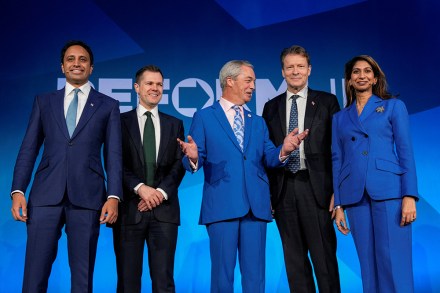
When Zia Yusuf first walked into the headquarters of Reform UK, he gestured at the empty room and asked: ‘Where’s the office?’ Ed Sumner, the party’s director of communications, replied: ‘This is it. It’s empty. This is the party.’ That was not even two years ago. Since then, Nigel Farage and Yusuf have built a party from scratch and expect to be the biggest winners in the local elections on 7 May. With more than 270,000 members, their grassroots base is the largest in Britain, bigger than both Labour and the Tories. ‘I would argue no party has built political infrastructure and established itself more quickly in British history than Reform,’ Yusuf says.

Is my book about Meghan and Harry a ‘deranged conspiracy’?

From our UK edition

‘Deranged conspiracy’. That’s the Sussexes’ verdict of Betrayal, my second blast at Harry and Meghan, after the serialisation was in the papers at the weekend. Naturally, I’m grateful. The book now ranks No. 1 on Amazon. My biography of Robert Maxwell also benefited from his endless writs. Similarly, Richard Branson sued twice to prevent publication. He lost and was denied the licence to run the National Lottery. The tycoon Tiny Rowland was more subtle and effective. ‘Bower’s book,’ he announced, ‘is boring. He’s missed all the good bits.’ That hurt. My new book exposes the vainglorious Duke and Duchess’s downwards spiral over the past five years towards an inglorious endgame. Dwindling fame and fortune is forcing them to revalidate their royal status.

Has Reform peaked?

From our UK edition

Murton is a rather frowsy former pit village in County Durham, about half a dozen miles down the A19 from Sunderland. Chip shops, tanning salons, elderly people with no teeth on mobility scooters, huge cannabis farm in the disused old Co-op store which has just been busted by the Old Bill. It almost became a ghost town after the pit closed in 1991, but they built a largeish retail park on the outskirts so people could spend money they didn’t have on useless shit and bad food. Its north side has one of the lowest average incomes in the county (£34,400) and a much lower than average life expectancy. Benefit take-up somewhat high, above 50 per cent. I hope, in these few sentences, I have brought the place to life for you.

Did I ever really stand a chance in the by-election?

From our UK edition

Four weeks after I decided to upend my life by standing as the Reform UK candidate at the Gorton and Denton by-election, I was in the small living room of a constituent listening to Nigel Farage give a lecture on phaleristics – the study and collection of war medals. The poor chap whose home we were visiting had barely processed who was at his door before Nigel spotted a collection of medals over his shoulder and charged into his living room to give him chapter and verse. ‘This one’s from 1914! The British Expeditionary Force! Incredibly rare!’ I couldn’t help but notice that, despite his wild enthusiasm at the prospect of us winning one of Labour’s safest seats, he was even more thrilled by the medals. Then again, his ability to connect with ordinary people is unmatched.