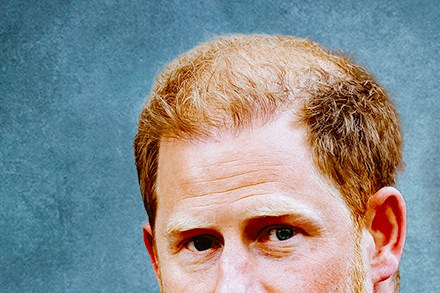
Nigel farage

The thinking behind Nigel Farage’s shadow cabinet

There is an old joke about Nigel Farage, put about by former colleagues. ‘Why is Nigel like a beech tree?… Because nothing grows under him.’ The comparison to this acid-leafed tree which stifles all beneath it is one the Reform UK leader has never accepted. ‘I don’t fall out with people,’ he once said. ‘They fall out with me.’ Like Tintin, Farage has enjoyed many different adventures in different guises: ‘Nigel in America’, ‘Nigel in the Jungle’, ‘Nigel in the City’. This week, we got another: ‘Nigel and the Gang of Four’, the leader who seeks power only to yield it to others. Four names were unveiled as part of

Nigel Farage unveils his shadow cabinet

12 min listen

Reform UK is no longer a one-man band. Nigel Farage has unveiled Reform’s four spokesmen for the “great offices of state” at a press conference in Westminster. Recent Tory defector Robert Jenrick has been given the Chancellor brief, Zia Yusuf is in charge of home affairs, Suella Braverman is responsible for education and Richard Tice will look after business and energy. The format resembled a game show like the ‘Weakest Link’ or ‘Take Me Out’. Each of the quartet was introduced, given a spotlight and then had it turned out when their time was up. Is this new ‘shadow cabinet’ ready for No. 10, or just Tory 2.0? Tim Shipman,

Nigel Farage unveils his shadow cabinet

Robert Jenrick: Why I defected to Reform

Those pondering why Robert Jenrick defected to Reform UK have focused on the political momentum of Nigel Farage or the performance of Kemi Badenoch, but the key conversation was the one he had with his father on Boxing Day. ‘He’s a very straight talker,’ Jenrick explains when we meet at Reform’s headquarters on Tuesday afternoon. ‘He said, “If you weren’t in politics and there was a general election to-morrow, which party would you vote for?” I said, “Reform.” He said, “If you weren’t in politics, weren’t a candidate, had no particular loyalty, who would you want to be prime minister if the choice was Keir Starmer, Kemi Badenoch and Nigel

The real reason Farage wants Kemi gone

The invitation came from Ewan Venters, a Scot who currently steers the Paul Smith brand, and the venue was Angela Hartnett’s Cafe Murano in Marylebone. Would I like to come to a ‘small, intimate’ dinner (which usually means a small multitude) to meet Anas Sarwar, the leader of the Labour party in Scotland, who obviously has his sights on Bute House come May? The aim was to understand more about the issues which affect the Union and the evening was reasonably subject to the Chatham House rule, although the meal was basically just to reassure us all that Sarwar thinks our unbeloved Prime Minister is a blithering idiot. Sarwar knows

The allure of Reform

Kemi Badenoch’s travails with Nigel Farage’s Reform UK party have taken me back to the politics of the 1980s and the Social Democratic party’s challenge to Labour at the time. Like Reform now, the SDP sought to replace one of the main incumbent parties of British politics, but the SDP’s case went beyond finishing off Labour. Like Farage now, they argued that the whole two-party system was ailing, that neither was capable of providing a political home for millions of voters who felt unrepresented by them, and that each was, in their own way, so stuck in their furrows that only a new party could give Britain the leadership it

Is Jenrick joining Reform?

8 min listen

Kemi Badenoch has sacked Robert Jenrick from the shadow cabinet, removed the Tory whip and suspended his party membership. In a video on X she claims, ‘I was presented with clear, irrefutable evidence that he was plotting in secret to defect in a way designed to be as damaging as possible’. The Tories compiled a bundle of evidence that included a dinner between Jenrick and Nigel Farage last month, and the fact that he had discussed switching to Reform with at least two allies. It is understood that he left a copy of his defection speech lying around, which included passages criticising Conservative colleagues. Is this – as we all

Why Nadhim Zahawi (and Reform) are making a mistake

50 min listen

This week on Quite right!, Michael and Maddie examine Nadhim Zahawi’s dramatic defection to Reform UK and ask whether it strengthens the party’s insurgent credentials or exposes a deeper strategic mistake. Is Reform becoming a genuine outsider movement, or simply a refuge for disaffected Tories? And what does the pattern of Boris-era defections reveal about credibility, competence and the challenge of turning populist energy into a governing force? Then, Iran: mass protests against the regime have erupted onto the streets of Tehran and beyond. Are these demonstrations the prelude to real regime change – or another brutal crackdown waiting to happen? And what role should the West, and the United

Stormy seas, Trump’s revolution & Gen Z’s sex recession

43 min listen

Can Farage plot a route to Number 10, asks Tim Shipman in our cover article this week. He might be flanked by heavyweights – such as his head of policy Zia Yusuf and Conservative Party defector Danny Kruger MP – but he will need a lot more people to pull off his biggest upset for British politics yet. Where will they come from? And what’s the balance he needs to strike between being radical enough to win power but also without alienating significant chunks of the electorate? Plus, as former UK ambassador to the US Peter Mandelson breaks his silence – in this week’s Spectator – to argue that Europe

How Reform plans to govern

18 min listen

2025 was the easy part for Reform. If they win the election, however, how do they actually govern? In The Spectator this week, Tim Shipman writes about the party’s plans to tackle Whitehall bloat, bypass the Lords and restore the authority of the Prime Minister over the various institutions of state. The man tasked with working this out is Danny Kruger, who is working up plans to push change through using Orders in Council – a device in the Privy Council – as well as statutory instruments and ministerial guidance to avoid the need for primary legislation. But the party is only in the foothills, and one source warns that

From Porn Britannia to Political Chaos: The Spectator’s Year in Review

31 min listen

The Spectator’s senior editorial team – Michael Gove, Freddy Gray, Lara Prendergast and William Moore – sit down to reflect on 2025. From Trump’s inauguration to the calamitous year for Labour, a new Pope and a new Archbishop of Canterbury, and the ongoing wars in Gaza and Ukraine, the year has not been short of things to write about. The team take us through their favourite political and cultural topics highlighted in the magazine this year, from the Assisted Dying debate, the ongoing feud over Your Party and Reform’s plan for power, to Scuzz Nation, Broke Britain – and Porn Britannia. Produced by Patrick Gibbons.  

From The Queen to Bonnie Blue: The Spectator’s Christmas Edition 2025 

40 min listen

The Spectator’s bumper Christmas issue is a feast for all, with offerings from Nigel Farage, Matthew McConaughey and Andrew Strauss to Dominic Sandbrook, David Deutsch and Bonnie Blue – and even from Her Majesty The Queen. To take us through the Christmas Edition, host Lara Prendergast is joined by deputy political editor James Heale, associate editor Damian Thompson and writer of the Spectator’s new morning newsletter, Morning Press, Angus Colwell.  They discuss: the state of British politics as we leave 2025 behind, and who will have a worse year ahead between Kemi and Keir; what physicist David Deutsch’s enthusiasm for humanity can teach us all in the age of AI; why the Sherlock Holmes

Does Farage really want to be Prime Minister?

25 min listen

How does Reform go from political insurgents to a government in waiting? Political editor Tim Shipman gives an insight into his interview with Nigel Farage, which you can read in The Spectator’s Christmas edition. In the background at party headquarters, discussions are under way to work out how Reform would bring sweeping changes to the British state, looking at the model of the American system of executive power. But once handed the reins of power, would Farage actually enjoy the day-to-day business of being prime minister? In the meantime, how are Reform MPs finding Westminster? Tim reveals the unlikely relationship between Reform and the SNP, and how respect shown to

‘We must not be the Tory party 2.0’: Nigel Farage on his plans for power

Nigel Farage is signing football shirts when I arrive at Reform’s campaign headquarters in Millbank Tower, the building where New Labour prepared for power before 1997. The black shirts are emblazoned with ‘Farage 10’ in gold. ‘Someone called them Nazi colours,’ the leader complains. ‘This always happens when we do well.’ As favourite to be the next prime minister, Farage is sanguine. ‘They’re a special edition, £350 each.’ How many is he signing? ‘—king hundreds,’ he says, pulling his punches on the profanity. Seven hundred to be precise, a cool £245,000 for party coffers. This is the same week the party registers a £9 million donation from the crypto millionaire

Has Reform peaked? – racism allegations & Farage's toughest week yet

45 min listen

After a summer in which Nigel Farage seemed to bend the news cycle to his will, Michael and Maddie ask whether the party’s momentum is slipping. Do the allegations dredged up from Farage’s schooldays mark a decisive turning point – or, perversely, strengthen his outsider appeal? And with questions over Reform’s election spending, defections from the Conservatives, and the small matter of finding 500 people to staff a government, is the insurgent right entering its moment of vulnerability? Then: two stories that lay bare a crisis in women’s healthcare. Baroness Amos’s damning interim review of maternity services and the astonishing employment tribunal ruling in the Sandy Peggie case raise the

The murky world of political donations

15 min listen

Reform are in the money. This morning the Electoral Commission has dropped the latest figures on political donations, and Reform are streets ahead. Former Tory donor Christopher Harborne has handed Nigel Farage £9 million, what we believe to be a record amount from a single donor. How much impact will this have on Reform’s chances of electoral success? How much influence do political donors have over how their money is spent? Elsewhere, Reform are conducting a press conference later this afternoon where they will be sticking it to Labour over its decision to postpone more local elections. Without new mayoral elections in four more areas, where are Reform going to

So what if Nigel Farage was the school bully?

There may well be, somewhere in this nation of ours, a long-established succession of sensitive, emotionally aware 14-year-olds who can appreciate and denounce the impact of bullying. But, honestly, none of them went to my school.  It doesn’t sound like there were many of this cadre at Dulwich College half a century ago either. At least, not if we believe the recent Guardian ‘scoop’ which claims, thanks to the testimony of Nigel Farage’s fellow pupils (much of which was made public years ago), that the Reform leader was a racist, hate-fuelled youth who taunted anyone of a different faith or ethnicity. It all sounds pretty familiar to me, though my

Mystic Milei proves ‘austerity’ needn't be a dirty word

Javier Milei’s election in 2023 was a repudiation of decades of Peronist turmoil, corruption and inflation. Milei offered shock therapy, delivered with an Austin Powers haircut and chainsaws. This is a man who had worked as a tantric sex coach and claims to speak not just with animals but also with God himself. Eyebrows were raised. Could such a strange man, one who seems to embrace the new occultism outlined in our cover piece, deliver his promised reconstruction of Argentina? Or would voters soon grow tired of the state-slashing mystic? Yet this former frontman of a Rolling Stones tribute band has proved his sceptics wrong. He took office with inflation

To win, the Tories should be the party of motorists

The path to electoral success at the next election is straightforward. Just follow what I call the Channel 5 strategy. Channel 5 is a rare success story in the world of free-to-air broadcasting, a feat attained by following a simple playbook: making programmes the public likes to watch, but which people working in television are mostly too precious to make. Channel 4 got there first. By broadcasting American football, it found a sport which was far more popular with the public than most ‘people in television’ realised. Every NFL game played in London since 2007 saw sold-out crowds at Twickenham or Wembley; when the Pittsburgh Steelers made an appearance in

Portrait of the week: Keir vs Nigel, ID cards and Trump’s peace deal

Home Sir Keir Starmer, the Prime Minister, addressed delegates at the Labour party conference in Liverpool who had been issued with little flags of the home nations to wave. He said Nigel Farage, the leader of Reform UK, ‘doesn’t like Britain, doesn’t believe in Britain’. He had earlier put forward the difficult argument that Farage’s party was ‘racist’ in its migrant policy while Reform supporters were not racist but ‘frustrated’. Asked seven times whether there would be VAT rises, he repeated that ‘the manifesto stands’. Rachel Reeves, the Chancellor of the Exchequer, promised to keep ‘taxes, inflation and interest rates as low as possible’. Ofgem raised the energy price cap

Kemi Badenoch: how I plan to save the Tories

Kemi Badenoch is in ebullient form. She promises the Conservative party conference, which begins this weekend in Manchester, will be ‘more fun than usual’. But that does not mean the Tory leader plans to sweep on stage like Reform’s Andrea Jenkyns. ‘I won’t be wearing any jumpsuits with sequins on,’ Badenoch says. ‘I won’t be singing “Insomniac”.’ The state of the opinion polls, with the Tories at well below 20 per cent, ought to give her sleepless nights, but she is upbeat. What, I wonder, is her karaoke song? Her three children ‘are the DJs’ in the Badenoch household and ‘all they sing are Taylor Swift songs’. I push my