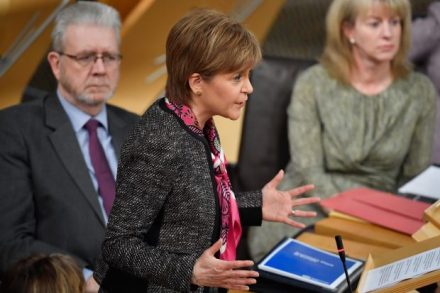
Nicola sturgeon

The Spectator podcast: Double trouble

From our UK edition

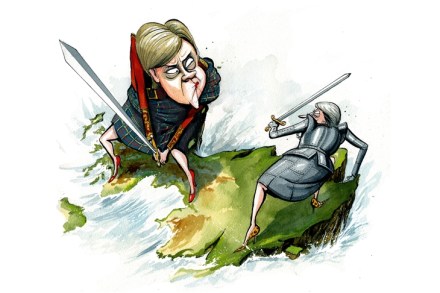
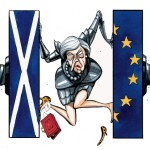
On this week's edition of The Spectator Podcast, we discuss Theresa May's double bind in Edinburgh and Brussels, Milton's cultural relevance in 2017, and the slaughter of Cypriot songbirds. First, Lara Prendergast spoke to James Forsyth about his cover piece in this week's magazine. Have Theresa May's negotations with the European Union been hamstrung by this latest intervention from Holyrood? And will she be able to find a version of Brexit that soothes the fears of pro-Remain Scots? Time will, of course, tell, but in the meantime James joins the podcast along with the Spectator's Scotland Editor, Alex Massie. As James writes in his piece this week: "Theresa May is a cautious politician.

Sturgeon’s great trick has been to convince us the SNP represent all Scots

From our UK edition

The great achievement of the Scottish Nationalists is to persuade people outside the borders of their own nation — including the London-based media — to equate them with the Scottish people. Obviously, they are their chief elected representatives just now, but the result of the referendum on Scottish independence quite clearly showed that the equation is false. So when Nicola Sturgeon says there has to be another referendum because of Brexit, the equation should be much more firmly challenged. There is no moral reason why the result of a declaredly UK-wide referendum should require another vote in part of the kingdom (next, UDI for London?). Nor is there a constitutional right.

Double trouble | 16 March 2017

From our UK edition

Theresa May is a cautious politician. She has risen to the top by avoiding unnecessary risks; no one survives 18 years on the Tory front bench by being a gambler. But few prime ministers have the luxury of choosing their battles, and she would not have chosen the two that may now define her premiership: successfully negotiating Britain’s exit from the European Union while saving the United Kingdom. If she achieves both, she will join the pantheon of great prime ministers. If she fails, she’ll be keeping Lord North company in the history books. Unlike David Cameron, May has been preparing for a new Scottish referendum from the moment she entered Downing Street.
Another Scottish independence referendum? The Union can win it

From our UK edition

Fraser Nelson is joined by Alex Massie and James Forsyth to discuss IndyRef2: When will the politics ever end? Now Nicola Sturgeon says she wants a second Scottish independence referendum, and so we plunge ourselves – wearily but no less determined – into yet another fight to save our country. The nationalists operate on the principle of being a persistent irritant. Demand independence so often and so annoyingly that eventually the country just says: 'Have it, if it will shut you up.' But no. We proud Unionists cannot submit to the SNP’s logic that independence is 'only a matter of time'. We have to fight this. And we can win. First, let me shoot down the Brexit myth.

Nicola Sturgeon announces a second Scottish referendum: full speech

From our UK edition

Before the end of this month - and very possibly as early as tomorrow - the Prime Minister will trigger Article 50 of the Lisbon Treaty, setting the UK on course to leave the EU in March 2019. It is important, therefore, for me to report now on the Scottish Government's attempts to find compromise with the UK government and set out our plan to protect Scotland's interests. Right now, Scotland stands at a hugely important crossroads. We didn't choose to be in this position. In common with most people across the country, I wish that we weren't in this position. But we are and the stakes are high - so we must have a plan for the way forward. For better or worse - depending on your point of view - the future of the UK looks very different today than it did two years ago.

Scottish nationalists will now use a simple slogan: ‘Take back control’

From our UK edition

Fraser Nelson is joined by Alex Massie and James Forsyth to discuss IndyRef2: You were warned, you know. You were told this would happen. And you voted for Brexit anyway. Because you privileged leaving the European Union over not giving the Scottish government an excuse to put the future integrity of the United Kingdom back at the heart of our politics. And then you did it anyway. That was your right. Of course it was. But you were told what would happen next and, lo, it has. So do not feign surprise today. Choices have consequences and some of them were not hard to foresee. This morning, Nicola Sturgeon made the biggest gamble of her political life. Brexit, she confirmed, has changed everything.

Nicola Sturgeon’s second independence referendum announcement puts the unionists on the back foot

From our UK edition

After spending the past few months declaring that a second Scottish independence referendum is highly likely as a result of the UK government's plans for a 'hard Brexit', this morning Nicola Sturgeon bit the bullet and vowed to ensure Scotland has an independence referendum at the end of the Brexit process. In a speech at Bute House, the SNP leader said she had tried 'really hard' to find an agreement but had been met with a 'brick wall of intransigence' by Theresa May. Sturgeon's plans will begin to fall into place next week when she will seek a Section 30 order for a second independence referendum and ask Scottish parliament to vote in favour.

Might Nicola Sturgeon’s sinking approval ratings explain her appetite for a referendum?

From our UK edition

In an interview with the BBC last night, Nicola Sturgeon suggested that the autumn of next year would be a ‘common sense’ time to hold another referendum on Scottish independence. Which would, of course, mean voting without knowing what the terms of the Brexit would be. (Or, perhaps, whether it will really happen.) Why the haste? This is another topic that came up on Question Time last night. I suggested that Sturgeon’s sense of urgency might be explained by opinion polls showing her ‘tanking’ approval rating. The 2021 Holyrood election will probably end the majority for independence, given that the SNP will have been in power for 14 years by then and Scots will already be ‘scunnered’ with them (as Ms Sturgeon might put it).

The SNP’s rosy-tartaned independence vision comes unstuck

From our UK edition

In 2013, the Scottish National Party claimed an independent Scotland would be the sixth richest country on earth. Like many extravagant suggestions, this contained the essence of its own downfall. It would be lovely if it were true but didn't it seem just a tiny bit too good to be true? At the same time, and for the next 18 months or so, SNP politicians assured the Scottish people that there was no need to worry about the economic case for independence. They had the numbers to prove it. Granted, no one was ever encouraged to ask awkward questions about the assumptions made to generate this rosy-tartaned vision. For instance, what level of immigration would be needed to compensate for a population ageing more rapidly than the UK as a whole?

The Spectator podcast: Sturgeon’s second stab

From our UK edition

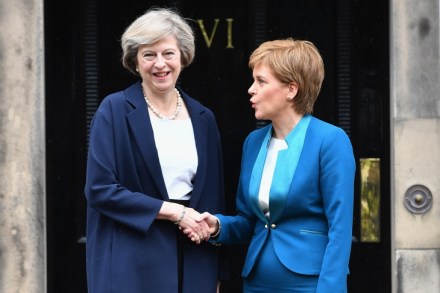
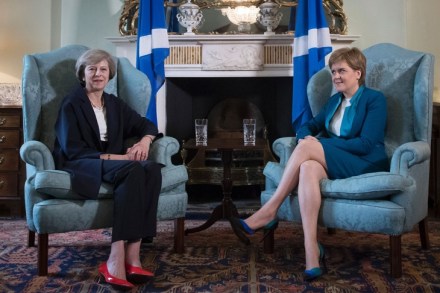
On this week’s episode we question whether Nicola Sturgeon might be tempted by a second independence referendum, consider the increasingly frosty relations between the USA and Russia, and ask whether city dogs are a menace to sheep. First, Theresa May was in Scotland this week for meetings with Nicola Sturgeon ahead of Scottish Tory conference. Thanks to Brexit, the Scots appear to have another opportunity to try and go it alone, but with support for independence still routinely polling below 50 per cent, will she pull the trigger?

Back into battle

From our UK edition

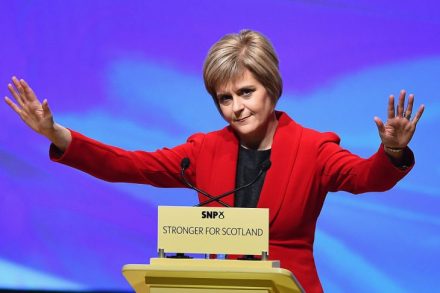
On 24 June last year, in the Georgian splendour of her official residence in Edinburgh’s Charlotte Square, Scotland’s First Minister offered her reaction to Britain’s decision to leave the European Union. Since Scottish voters endorsed Remain, it was now, Nicola Sturgeon said, ‘highly likely’ there would be another referendum on Scottish independence. Since then that promise — one viewed with dread by the two million Scots who voted to preserve the Union in 2014 — has been variously ‘on the table’, ‘more likely’ than ever and even ‘all but inevitable’. The clock is ticking. Later this month, Sturgeon will address her party’s annual conference.

Nicola Sturgeon’s ‘neverendum’ is hammering the Scottish economy

From our UK edition

Its economy will be destroyed by leaving the single market. Losing access to European sales will destroy swathes of industry, and without free movement, employers will be crucified by skill shortages. Nicola Sturgeon is no doubt already preparing her lines for a vote on Scottish independence once the UK leaves the EU. Right now, that looks as if it could come a lot sooner than anyone imagined. It is reported that as soon as the Prime Minister Theresa May triggers Article 50 and starts the process of leaving the European Union, Scotland’s First Minister will announce plans for a second referendum on independence – a demand that May could find impossible to resist. But hold on.

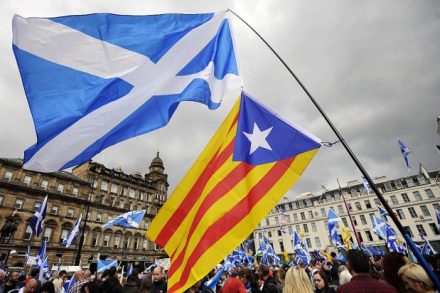
Can Brexit inspire Catalan independence?

From our UK edition

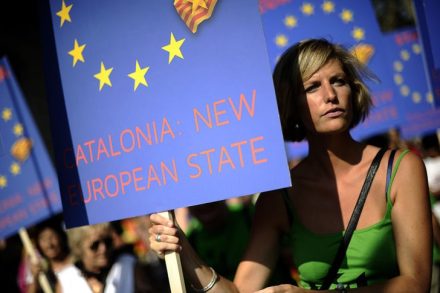
The increasingly radical Catalonian independence project has been dealt its latest blow this week: on Tuesday, Spain's constitutional court ruled that a projected September referendum on secession would be illegal. This means any plebiscite is effectively banned. But whether Catalonia's pro-independence president Carles Puigdemont goes ahead anyway remains to be seen. A similarly defiant course of action was pursued by his predecessor Artur Mas, who held a vote in 2014 (in which eighty per cent of people backed independence), and is currently on trial. The latest setback in the quest for Catalonian secessionism is particularly ill-timed.

May just made another Scottish referendum ‘more likely’, says Sturgeon

From our UK edition

Nicola Sturgeon inched Scotland closer to a re-run of its independence referendum today by reacting angrily to Theresa May’s Brexit speech. Having already put indyref2 'on the table' – but not for this year – Scotland’s First Minister said the Prime Minister’s speech today had made another independence vote 'more likely'. 'The UK Government cannot be allowed to take us out of the EU and the single market regardless of the impact on our economy, jobs, living standards and our reputation as an open, tolerant country, without Scotland having the ability to choose between that and a different future,' the First Minister said. And she added: 'With her comments today, the Prime Minister has only succeeded in making that choice more likely.

The SNP’s dominance in Scotland is complete

From our UK edition

Like the past, Scotland is a different country. Things are done differently here. What might be thought eyebrow-raisingly inappropriate in a larger polity is considered normal here. Consider these three examples: In 2015, Scottish Television decided it was a good idea to make Nicola Sturgeon, together with her sister and her mother, the star of its Hogmanay broadcast. New Year with the Sturgeon's was in turn hosted by Elaine C Smith, the comedienne who was, conveniently, also a member of Yes Scotland's advisory board during the 2014 independence referendum. Earlier this month, the SNP rolled-out the first 'baby boxes' that will be delivered to every new-born infant in Scotland. The idea, borrowed from Finland, is to support mothers by providing a kind of starter-pack for infancy.

Nicola Sturgeon is making it up as she goes along

From our UK edition

Because the SNP have won so often and so conclusively in recent years there is an understandable temptation to suppose they must always know what they are doing. Accordingly, Nicola Sturgeon sits in Bute House like some political Moriarty: motionless, perhaps, but like a spider at the centre of its web. And 'that web has a thousand radiations, and [s]he knows well every quiver of each of them'. Other political parties may plan, but the SNP plots. Everything is done for a reason and nothing is left to chance. The nationalists are relentless and implacable. No wonder they put the fear of God into their foes (especially a Labour party they long since supplanted as the natural party of government in Scotland).

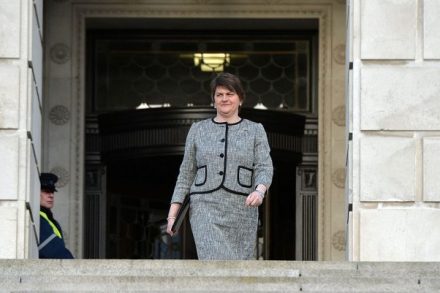
Politics can be sexist, but Arlene Foster was wrong to play the misogyny card

From our UK edition

Let’s say you’re a rising minister put in charge of the department for enterprise. You have the great idea to incentivise businesses to invest in low-carbon energy by offering a subsidy for renewable fuel used. Unfortunately, something goes wrong in the planning or execution of the scheme, with the result that claimants are paid more for low-carbon fuel than the amount the fuel actually cost them. Market forces kick in, businesses use as much fuel as possible to gain the maximum profit, the fancy renewable energy scheme ends up £490 million over budget. The opposition, the media, and most importantly the public are understandably very upset, and call for you to resign.

It’s no surprise Spain has already blocked Nicola Sturgeon’s half-baked Brexit plan

From our UK edition

It should come as no surprise that the Spanish government has so swiftly rejected Nicola Sturgeon’s proposal of a bespoke Brexit deal for Scotland. Although Spain might have finally ended its ten month political freeze a couple of months ago, the febrile issue of Catalonian independence remains unresolved. Far from quietening down or going away, the secessionist movement in Barcelona is becoming more aggressive and radical. As it does so, the central government in Madrid adopts tougher measures to try and suppress it including, last week, another ruling by its constitutional court against a referendum on the region’s independence.

Nicola Sturgeon’s Baldrick moment

From our UK edition

Yesterday, the Scottish government published its ‘plan’ for life after Brexit. It was, at 60 or so pages, more detailed than anything we have yet seen from Theresa May’s ministry. But then it would be, given that Nicola Sturgeon will not be leading the UK’s negotiations as and when they begin. Still, plenty of nationalists crowed that, whatever else might be said of the Scottish government’s document, at least Sturgeon has a plan. But so did Baldrick.  That a plan exists does not make it a good plan. Or even an achievable one. And since we are still in the early stages of the Brexit waiting game the Scottish government’s proposals have the advantage of novelty but freshness is not enough either.