Nicholas hytner

Shakespeare as cruise-ship entertainment: Jamie Lloyd’s Much Ado About Nothing reviewed

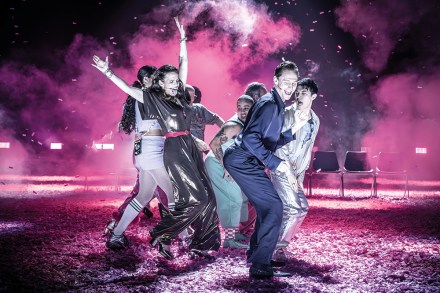
Nicholas Hytner’s Richard II is a high-calibre version of a fascinating story. A king reluctantly yields his crown to a usurper who wants his violent revolt to seem like a peaceful transfer of authority. This delicate, complex narrative is presented as a boardroom power struggle in corporate Britain. Snappy suits for the dukes and princes. Commando uniforms when they take to the battlefield. Jonathan Bailey (Richard) starts as a swaggering, coke-snorting yuppie who dreams of extending his realm overseas with someone’s else money. Disaster strikes, the crown slips. Calamity sharpens his awareness and he becomes a lyrical philosopher who laments the bewitchments and pitfalls of power.
Hytner hits the bull’s eye: The Southbury Child, at the Bridge Theatre, reviewed

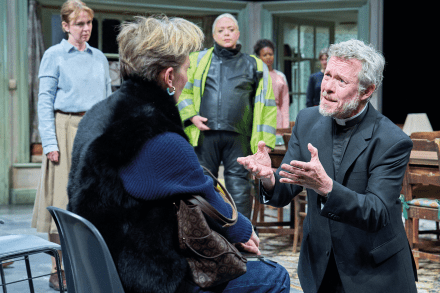
The Southbury Child is a comedy drama set in east Devon featuring a distressed vicar, Fr David, with a complex addiction history. Alex Jennings stars with his habitual urbane charm. Is there perhaps a credibility gap there? Jennings seems far too decent, clever and friendly to be a problem drinker who likes nothing better than a fling with a randy wench. And, more crucially, he doesn’t face the fallout from his days of boozing and bedhopping. His dramatic task is unconnected to his personal flaws. https://www.youtube.com/watch?v=z8Nei2P9xeA A little girl has died in controversial circumstances and her parents want balloons at her funeral. No way, says the vicar. The family fight back.

This play is a wonder: Bach & Sons at the Bridge Theatre reviewed

Bach & Sons opens with the great composer tinkling away on a harpsichord while a toddler screeches his head off in the nursery. The script becomes a broader portrait of a richly creative and competitive family where everyone is bright, loud, witty, inventive, good-natured and affectionate. Bach teaches the elements of composition to his gifted sons. ‘Rules provoke expression. They challenge your ingenuity.’ And the audience is unobtrusively schooled in the elements of counterpoint by four actors singing ‘Frère Jacques’. Bach considers Carl’s work good but workmanlike. Wilhelm is better, a wayward, inspired and anarchic talent. When Carl hears this verdict he falls into a jealous rage but it doesn’t last.

Pure poison: BBC1’s Talking Heads reviewed

The big mistake people make with Alan Bennett is to conflate him with his fellow Yorkshireman David Hockney. But whereas Hockney’s art is generous, warm, bright, life-affirming, Bennett’s is crabbed, catty, dingy, insinuating. The fact that the BBC-led establishment keeps telling us he’s a National Treasure tells us more about the BBC-led establishment than it does about Bennett. Bennett is typical of the English intelligentsia Orwell anatomised in his ‘The Lion and the Unicorn’ essay: ‘It is always felt that there is something slightly disgraceful in being an Englishman and that it is a duty to snigger at every English institution, from horse racing to suet puddings.

Privatisation is the best option for the South Bank Centre

I must have written about this subject 100 times in 30 years and I’m still having to restate the bloody obvious. London’s South Bank Centre, which has just gone bleating to the government for more money, is the biggest subsidy guzzler in the country and the despair of the rest of British arts. The South Bank receives £19 million a year from the Arts Council, on top of the many millions that go to each of the so-called ‘resident ensembles’ that perform within it. What it does with the money is anyone’s guess because, as far as the eye can see and the nostrils can smell, the South Bank is now a fast-food mall with an occasional classical concert buried within it. How did it get so bad?