Nhs

Cameron must defeat Clegg and break the NHS’ monopoly

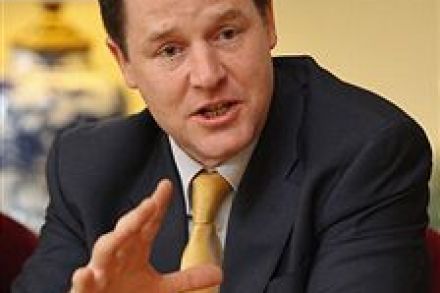
‘NHS good, private health bad’. ‘State good, market bad’. ‘Four legs good, two legs bad’. Whenever political leaders get into a tight corner they have to find allies fast. There is no time for reasoning to work its gentle magic. Basic sentiments need to be stirred and the popular favourite is usually hate. Yesterday Mr Clegg used this classic strategy to rebuild his support base. The cold-hearted Tories were at it again, dismantling that icon of compassion the NHS. In public they were declaring their undying love for it but out of sight they were promising fat profits for ‘health care corporations’ once the new law was passed. Mr Clegg

Coalition’s NHS battle turns personal

David Cameron’s ‘love for the NHS’ is a critical part of his political persona. It is, his advisers believe, what proves that he is a different kind of Tory. So it is remarkable that Nick Clegg is questioning it in semi-public. In a speech to Lib Dem MPs and peers last night — that Clegg would have known was bound to leak, he criticised politicians — eg, the Prime Minister — who express their love for the NHS but take advice from people who see NHS reform as a chance for private companies to make big profits. What makes this intervention all the more remarkable is that Downing Street has

Lansley stands up for his reforms

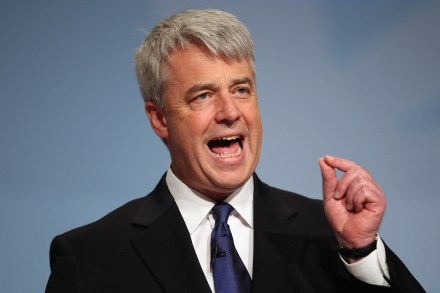
If there’s anything that stands out from Andrew Lansley’s interview with the Sunday Times (£) it is his air of quiet defiance. Of course, the Health Secretary sounds some of the conciliatory notes that have crept in to the government’s rhetoric since they decided to pause, listen and engage on NHS reform. But he also stands up for the original reforms as he conceived them. “From my point of view,” he says, “the White Paper was setting out what sensible, intelligent people inside the NHS were saying.” For him, the concerns that remain are not with the general thrust of his reforms, but with “implementation, the nuts and bolts of

Another blow to the Lansley plan

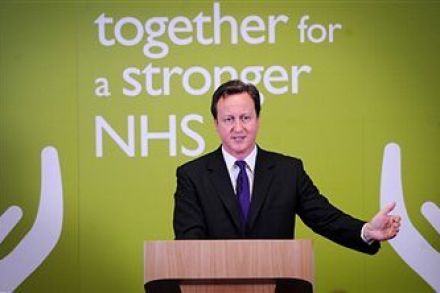
Number 10 has now taken charge of coalition health policy to such an extent that the Department of Health press office was caught unawares by the news that the Prime Minister was to deliver a major speech on health next week. David Cameron is determined to present the coming substantial changes to the Lansley reform plan as the changes he wants, not the ones forced on him by the Lib Dems. To that end, the head of the NHS future forum, a body Cameron has set up to oversee the NHS listening exercise, Steve Field telling The Guardian that he thinks all competition should be removed from the bill is

Can Lansley stay?

The Prime Minister, it seems, is now finally accepting what everyone else has been saying for a long time: that the NHS reforms were dangerous and would hurt the government. If Nick Clegg forced a re-think — even one that is supported by many Tories — then he may, in the end, play a greater part in delivering the next election for Cameron’s party than many triumphalist right-wingers now realise. For CameronCare was badly-timed, poorly-delivered and strikes at the heart of the PM’s message that the Conservative Party can be trusted. Large-scale reforms need time. Time for people to accept a problem. Time for people to accept the solution.  Where

The Tories’ intellectual dishonesty over the NHS

Why should Cameron ditch the Lib Dems? Coalition has made his party more radical, more electorally successful – and the worst ideas in the Cabinet come from men with blue lapels. Take Andrew Lansley. His press release today would have been shocking had it come from a Lib Dem, and denounced as dangerous leftist nonsense that renders the government’s overall message incoherent. Ed Balls’ arguments against cuts have routinely been challenged in Coffee House. So we can hardly be expected to applaud when his arguments are plagiarised by a Tory. The hapless Lansley, whose needless and complex heath reform bill has stalled, is today trying to win back the initiative

Why Clegg will get his way on NHS reform

On Andrew Marr this morning, Nick Clegg made clear that changes to the NHS bill are his new priority. He said that there would be ‘substantial’ changes to it and declared that ‘no bill is better than a bad bill.’ I suspect that Clegg will get what he wants on the NHS bill. When I spoke to one senior Clegg ally after the AV vote, I was told that Number 10 is ‘conceding everything to us in that area.’ My source went on to say that because of the Tories’ traditional weakness on the the NHS, the Tories ‘are mortally afraid of a row over the NHS with us on

The NHS furore rumbles on

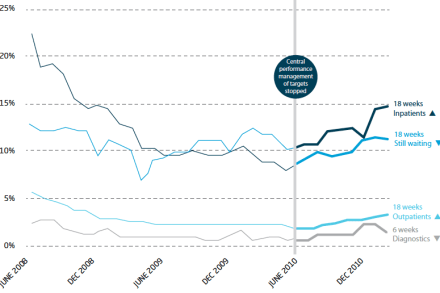
Another story to sour Andrew Lansley’s cornflakes this morning: the King’s Fund has released a “monitoring report” into the NHS which highlights, among other things, that hospital waiting times are at a 3-year high. The figures they have used are available on the Department of Health website — but unshackled from Excel files, and transcribed into graph form (see above, click for a larger version), they are now, it seems, a discussion point. The Today Programme tried to bait a couple of NHS chieftains on the matter earlier. The worst they could extract from either of them was that, “[waiting times] haven’t got massively longer now, but people are worried

Councils can seriously damage your health

There’s a fantastic post by Nicholas Timmins at the FT’s Westminster blog. Using the example of Enfield Council, which has just blocked moves to close failing wards in a local hospital, Timmins argues that councils commissioning healthcare is a recipe for disaster: ‘The reason council commissioning of care is a not a good idea is that it mixes representation without taxation. Councillors have democratic legitimacy. But they don’t raise the money for the NHS. So over the long term, giving them responsibility for commissioning is simply a recipe for councils to say there is not enough money in the system and to blame central government for the NHS’s deficiencies, rather

Cameron quells the storm

David Cameron turned in an emollient performance on the Today Programme this morning. He declined to stoke the coalition row over immigration, heaped praise on Vince Cable and stressed that the Liberal Democrats have been good coalition partners. Even when pressed on the question of whether Britain would block Gordon Brown from becoming director of the International Monetary Fund, Cameron spoke softly. The only line of questioning in the interview that discomforted the Prime Minister was when Evan Davis pressed him on why a localist government was placing restrictions on what local government could charge residents for recycling or rubbish collection. Cameron seemed to think that Davis was asking him

Lansley needs to get his quiet friends talking

Is Andrew Lansley hearing rather than listening? Dame Barbara Hakin, one of the Department of Health’s national managing directors, has written a letter to some GPs that suggests the pace of health reform will not be affected by the ‘legislative pause’. Hakin writes: ‘Everyone within the Department of Health is very aware of the support shown by the GP community to date and we have been struck by the energy and enthusiasm demonstrated in pathfinders across the country. Therefore, although the Government has taken the opportunity of a natural break in the passage of the Health and Social Care Bill, we are very keen that the momentum we have built

Lansley and Cameron in the firing line

The coalition’s decision to ‘pause’ its NHS reforms has left an open goal for its opponents, and they’ve been busy tapping the ball into this empty net this morning. At its conference up in Liverpool, the Royal College of Nursing has, predictably but embarrassingly, declared that it has no confidence in the health secretary. Back in London, Ed Miliband has been making hay while the sun shines attacking both the bill and the pause. His refrain at his press conference this morning was ‘the answer to a bad bill is not to slow it down but to junk it.’ Miliband’s performance this morning was striking for him speaking at a

Lamb volunteers for the slaughter

We’ll try to get the video later, but, for now, a transcript of Norman Lamb’s appearance on the Politics Show will have to do (UPDATE: video added above). Here we had a very unusual political moment: an assistant whip, and adviser to Nick Clegg, not only calling for changes to government policy, but also threatening to resign should they not happen. His main argument was that the NHS reforms should be dealt with more slowly: “I think it would be a crying shame if that really important principle [giving GPs more power and responsibility] was lost because we rushed the reform process and got it wrong. My real concern is

Lansley fights back, sorta

Pause, listen, engage and … push back. That just about sums up Andrew Lansley’s article for the Sunday Express today, as well as the government’s general effort to reconstruct and repackage its shaky NHS reforms. Which is to say, the Health Secretary makes sure to mix reassurance (“There is no more important institution in this country than the NHS”) with resolve (“The NHS is not some kind of museum”) for his Sunday sermon. He dwells on the failures of the Labour years, particularly the proliferation of bureaucrats ahead of doctors and nurses. And he even suggests — although one should always be wary of this sort of numerical soothsaying —

Whither the NHS Bill?

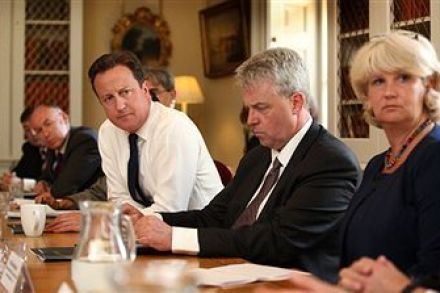
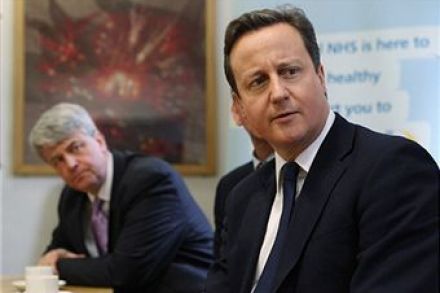
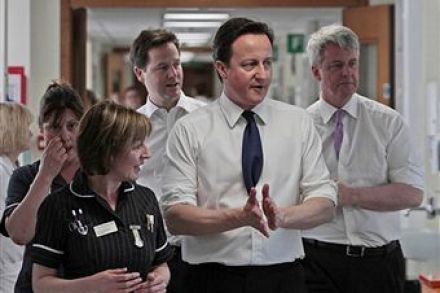
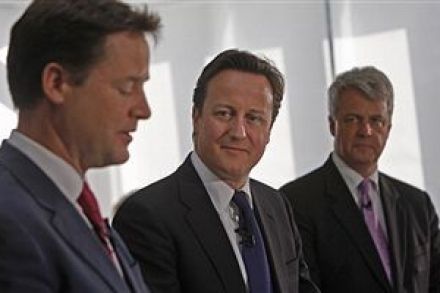
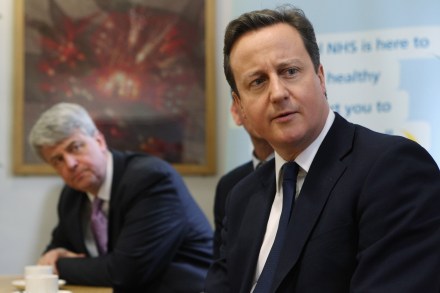
Reassurance — that’s what the happy trio of David Cameron, Nick Clegg and Andrew Lansley sought to emit during their NHS event earlier. And reassurance not just about where the coalition is taking the health service (although there was plenty of that), but also about the “listening exercise” they are engaging in now. Although all three men suggested that the broad scope of the NHS reforms would remain — decentralisation, greater responsibilities for GPs, and all that — they also hinted that “substantive” changes will be made to the Bill as it stands. As for what those changes will look like, there were few specifics. Yet it did sound as

Get ready for the Cameron, Clegg and Lansley NHS show

Get your guide to body language out for tomorrow morning Cameron, Clegg and Lansley will be doing a joint event on NHS reforms. The three men all have subtly different messages to get across and there are concerns in Tory circle that Clegg will use the occasion to present himself as the defender of the NHS against these Tory reforms. Cameron will be walking a tightrope at tomorrow’s event. He will have to show that he is listening, that this whole exercise is not a sham, but without abandoning the principles on which the reforms are based. Expect Cameron, who will only have arrived back in the country hours before

The health select committee delivers its verdict

Grenades are seldom expected – yet Andrew Lansley knew that one was going to fall into his lap this morning. The Health Select Committee has today released its much trumpeted report on the government’s plans for NHS commissioning. In normal circumstances its dry take on an even drier subject would evade public notice. As it is, with the coalition rocking and reeling as they are, this is fissile stuff. It is yet another voice in the chorus of opposition to Lansley’s reforms. The report’s recommendations are plural, but one stands out: that the government should drop its plans for GP consortia, and instead create “local commissioning boards” that involve not

Explaining the Coalition’s NHS Reforms in Two Sentences.

I’m sure James is right and that the government’s NHS problems – a political difficulty that may also be a policy conundrum – ensure that the NHS will be “rewarded” with more money and the coalition will use increased funding as a defence against criticisms of its reforms. It matters little that this accepts Labour’s eternal argument that spending=investment=love=ponies-for-all. The NHS is not to be subjected to the usual rules of either policy or politics. Meanwhile, in his Mail on Sunday column James had this: Lansley’s main problem is that hardly anyone understands what he is trying to do. As one colleague laments: ‘Andrew knows everything but can’t explain it

Lansley faces the music alone

A weary-looking Andrew Lansley has just finished answering MPs’ questions following his statement announcing a delay to the coalition’s NHS reforms. The statement left us none the wiser as to what is up for review in the listening exercise the coalition is about to undertake. What it did demonstrate was both Lansley’s encyclopedic knowledge of the NHS: he seemed to know the GP who was leading the consortium in the area of every MP who questioned him: and his inability to clearly explain the purpose of his reforms. Indeed, if it had not been for a question from John Redwood the point that these reforms are meant to free up

Losing control | 4 April 2011

The future of the Health and Social Care Bill is a test of Craig Oliver. For months there has been a steady drip of quiet critiques of the bill; but some Liberal Democrat grandees have suddenly broken cover and burst into open dissent. David Owen and Shirley Williams have called for the bill’s implementation to be slowed and for consultation to re-open. Both are especially concerned that private sector involvement will expose the NHS to competition law, which they believe would be detrimental to the NHS. As Williams put it: “If it looks as if it’s simply part of what’s becoming a private market we’ll be slap-bang in the middle