Nhs

The full story on NHS spending

I make no apologies for returning to government spending on health. The Tory promise in the election to ring-fence health spending and increase it in real terms every year even during a period of public spending cuts was distinctive and much-touted during the 2010 election campaign. A quick recap: during my extended interview with Health Secretary Andrew Lansley which went out live on the BBC News Channel on Sunday evening, I suggested that higher inflation than anticipated when the health spending promise was given would make it more difficult to meet the Tory promise of real annual rises. Indeed I put to him a projection for real health spending which

Is the health budget falling or not?

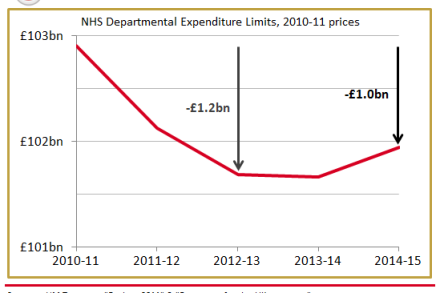
Before the election, the Conservatives promised they’d “protect” the NHS, which they defined as increasing its real-terms budget year-on-year. This is a rather dangerous promise because it makes ministers hostage to inflation. Now that inflation has surged, expectations have been revised upwards, and it looks like the NHS budget will suffer a real-terms cut. In its monthly update of City consensus forecasts, the Treasury has released new figures for inflation over the next five years.Apply the latest inflation figures to health spending in the last budget and it implies a £1bn shortfall . The graph below shows the change over five years: Back in March, the IFS said that the

Miliband’s empty promise

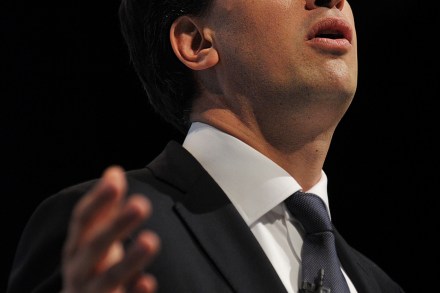
Miliband’s speech was meant to reach beyond the hall. “I aspire to be your Prime Minister,” he told country, “to fulfil the promise of Britain.” But, after an hour long speech, it is not wholly clear what the “promise of Britain” is. Miliband offered the hand of partnership to small businesses, the ordinary working family, those who want a cheap further education, working mothers, but it was not clear what they would obtain from the Labour leader. This was a speech virtually bereft of policy direction or a coherent theme. We have a clear idea of what and whom Miliband is against, but very little idea of what he is

Battling it out over Brown’s legacy

Gordon Brown is back in the news this morning, or rather his legacy of debt is (an issue examined in depth by Pete and Fraser in 2008). The disastrous £12.7 billion NHS computer project is to be scrapped and, more important than that, the Telegraph reports that the care budgets at 60 hospitals are being squeezed by the costs of repaying PFI contracts totalling more than £5.4 billion. Andrew Lansley has taken to the airwaves to explain that Labour left the NHS with an “enormous legacy of debt”; he was keen to point out that no hospitals were built under PFI before 1997, so that there was no doubt where blame should

Time to recognise that the hospital is dead

For many years, it has been Government policy to move healthcare out of hospitals and into community units and homes, and concentrate specialist surgeries in centres of clinical excellence. This is politically contentious: former Secretary of State for Health Patricia Hewitt was closing local maternity units, but she had to deal with the humiliation of Ivan Lewis, a minister in her department, fighting her changes in his own constituency. But the time has finally come to break our national addiction to hospitals. In a report published today by Reform, Professor Paul Corrigan, who was a health special advisor to Tony Blair, argues that “the old model and concept of the

Who cares about abortion?

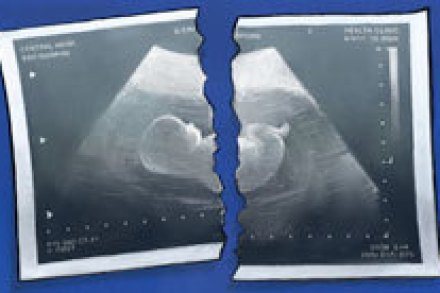
Thanks to Nadine Dorries’ amendment to the Health and Social Care bill, abortion rights have been discussed a great deal this week – both inside and outside of Parliament. In her cover article for this week’s Spectator (out today), Mary Wakefield says that this debate has revealed a “strange and unpleasant consensus… that abortion is not just a necessary evil, but a jolly good thing.” In the piece, Mary asks “Why are we so keen on abortion?”: “The fact is that unless you’re a fan of infanticide you’ve got to agree that somewhere along the slippery ascent from that little Alka-Seltzer of pluripotent cells to the birth of an actual

Public reject Dorries’ abortion proposal

Tomorrow, MPs will debate whether to prevent abortion providers from counselling women seeking an abortion. The motion – put forward by Tory backbencher Nadine Dorries as an amendment to the Health and Social Care bill – is being opposed by the government, and pro-choice groups are backing a rival amendment, which reinforces the status quo. The amendement’s author, Lib Dem MP Julian Huppert says: “The present system which allows women access to evidence-based guidance works, therefore I cannot see why we need to change it. I do not want to see us opening the door to anti choice organisations which could prevent women making their own decision on such a

Lansley’s letter pours fuel on Labour’s bonfire

Just when everyone is all afroth about the murky connections between the political class and the media, a letter by Andrew Lansley to Danny Alexander has mysteriously leaked to the Telegraph. It was sent two months ago, and it concerns the government’s public sector pension proposals. For five pages, Lansley riffs on about why the reforms may not be such a good idea, particularly when it comes to NHS workers. “We face a real risk, if we push too hard,” he says, “of industrial action involving staff groups delivering key public services.” He suggests that lower and higher paid staff may just opt-out of the pensions scheme altogether, leaving the

Gove goes forwards, while other reforms stall

The good, the bad and the ugly of the coalition’s reform agenda are all on display this morning. The good is the quickening of the pace in education. As Michael Gove tells this week’s Spectator, the 200 worst primary schools will now be taken over by new management, 88 failing secondary schools are to be converted into academies and any school where half the pupils are not reaching the basic standard of five good GCSEs including English and Maths will be earmarked for a takeover. Gove’s aim is remarkably simple: he wants good schools to take over bad ones.   The bad is yet another delay to the public service

Milburn withdraws the Blairite seal of approval

Alan Milburn’s article for the Telegraph this morning is a rhetorical blitzkreig against the coalition and their NHS reforms. From its opening shot that “The Government health reforms are the biggest car crash in NHS history,” to its closing call for Labour to “restake its claim to be the party of progressive, radical reform,” it is searing stuff. And no-one is spared, least of all Andrew Lansley and his “foolish bout of policy-wonking”. Such fierce language is unusual, even by the standards of cross-party rough ‘n’ tumble. What makes it extraordinary is that Milburn is employed by the government to work on their social mobility agenda. The coalition’s last report

Cameron on a charm defensive

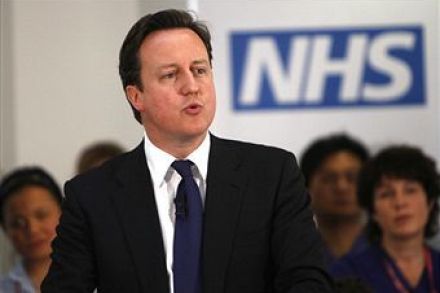
David Cameron is at his best when his back is to the wall. His speech on the NHS was largely as expected – a charm offensive designed to appease his warring coalition and reassure a fevered public. I’ll wager that he has succeeded; but reservations and pitfalls remain. Cameron recognises that competition is the stiking point for most Liberal Democrats, while the Tories insist on it. Competition will stay. He said, “New providers, more choice and competition raises standards and delivers value for money.” However, competition will not be unbridled. Cameron reassured doubters, “But let me clear, no: we will not be selling off the NHS, we will not be

Controlling NHS Costs Will Be A Radical Achievement

I don’t care to delve too deeply into the clump of giant hogweed that is health policy but if Andrew Lasley succeeds in freezing health spending in real terms then he will have been one of the more successful cabinet ministers even if his ambitious reforms go nowhere or achieve nothing. It is annoying, as Pete says, that this will have to be a secret triumph since it has become an article of faith, apparently, that spending more money on the NHS is always the virtuous thing to do. Nevertheless, a secret triumph that cannot be proclaimed is better than failure. Every developed country must confront the horror of sharply-increasing

Lansley’s inflated sense of his own department’s spending

The listening is over, now for the legislating. But if you’re keen to find out how Andrew Lansley’s health reforms will look in the end, then don’t expect many clues in his article for the Telegraph today. Aside from some sustained hints about involving “town halls” and “nurses” in the process, this is really just another explanation of why the NHS needs to change — not how it will change. Lansley’s central justification is one that he has deployed with greater frequency over the last few weeks: that, without change, the NHS will become too cumbersome and costly a beast. Thanks to the pressures of an ageing population, more expensive

Testing the health of the coalition

Listening is seriously damaging the coalition’s health. The Sunday Mirror carries a report that chimes with a week of rumours in Westminster: the NHS reforms are going to be significantly diluted to appease warring Liberal Democrats. The Mirror adds that Lansley is likely to quit in protest. Matt d’Ancona argues, in his essential column this morning, that this is not a listening exercise but a ‘full blown carefully orchestrated retreat’. It is, if you will, a political version of the battle of Arnhem: the NHS reforms were a reform too far in this parliament, so tactical withdrawal is now imperative. Clegg and Cameron’s signatures are on the original White Paper.

NHS Reform: In praise of ‘cherry-picking’

The British Medical Association (BMA) has always been a trade union with elements of professionalism on the edges. Its report this week on the NHS reforms was the work of unadulterated, self-serving trade unionism. Our modern trade union leaders would have been embarrassed to publish it, even Bob Crow. It tries to portray competition as the opposite of co-operation, when competition is the opposite of monopoly, in this case a public sector medical monopoly. Competition describes an arrangement under which teams of people co-operate with each other to find better ways of serving customers than rival teams of collaborators. The co-operation of which the BMA speaks is a weasel word

Less listening, more talking

There was an exchange on Question Time last night that may go some way to explaining why the government’s health plans are so mired. One panellist, media lawyer Charlotte Harris, said that she was very worried by the substantial cuts being made to the NHS’ budget. Large sections of audience greeted this with rapture. (From 44 mins.) Immediately, Tory Louise Bagshawe and Lib Dem Jeremy Browne tried to grab David Dimbleby’s attention. It fell to Bagshawe to correct Harris, pointing out that the government has increased spending on the NHS when Labour would cut. The audience responded with boos – more in disbelief than disagreement, incredulous that the Tories would

Lansley’s original reforms are off the table

Nick Clegg’s speech on the NHS this morning was not as bad as many feared it would be. It recognised that there is a role for competition in the NHS, something that the Lib Dems were questioning last weekend, and that the NHS needs to be opened up to any qualified provider. But, on the other hand, the idea that any willing provider should be able to deliver NHS services — an idea which was in the manifesto of all three parties — will now only be introduced at a glacial pace. There’ll also be a two-tier NHS for the foreseeable future with some areas having GP-led commissioning, while NHS

The state of the NHS

I know most CoffeeHousers aren’t particularly enamoured of paywalls, but the Times has given you a persuasive reason (£) to dive behind theirs today. (Or least to borrow a copy of the paper.) It’s the first of three reports by Camilla Cavendish on the NHS, this one concentrating on the Way Things Are Now. It is both a disheartening read and a powerful reminder of how taxpayers’ cash is being funnelled into a system that is dysfunctional in the extreme. Here is one snippet for your displeasure: “Care in Britain ranges from world-class to shocking. Between 1998 and 2006, 1.6 per cent of bowel cancer sufferers died within a month

Clegg: No MP is above the law

The sun shone on the deputy prime minister at DPMQs earlier today. Nick Clegg usually wears a grimace at the despatch box; but he was assured this morning, successfully defending a Labour onslaught on the NHS reforms. There were even flashes of, well, Flashman. He replied to a question from Chris Bryant by quipping, “Every time the Honourable member asks a question, I wonder why anyone bugged his phone.” Clegg also rebuked John Hemming for breaking the Giggs super-injunction yesterday; a popular move among those MPs who think Hemming degraded parliamentary privilege. Clegg said: “I don’t think anyone should be above the rule of law. And if we don’t like