Nhs

Miliband to keep pressing on with his NHS attacks

The last PMQs before recess gives Ed Miliband a chance to have another go at the coalition’s NHS reforms. I suspect that the ‘Andrew Lansley should be taken out and shot’ quote that appeared in Rachel Sylvester’s column (£) will make an appearance at some point.   Miliband will keep going on the NHS because he knows it is one of the Tories’ biggest vulnerabilities and one of the few subjects on which Cameron isn’t confident attacking. Based on past performance, any PMQs where the focus is on NHS reform will produce at least a score draw for the Labour leader.   But I still don’t expect Cameron to move

No-one emerges from the health reform smash-up with any credit

Andrew Lansley should be grateful for small mercies. Rachel Sylvester’s column (£) today may quote a Downing Street source to the effect that ‘Lansley should be taken out and shot’, but there is yet no sign that a hundred Conservative MPs will write to the Prime Minister to say that the Health Secretary’s reforms have to stop. We’ve had such a letter for wind farms and for Europe, but on the NHS it’s not very likely. Most Tory MPs find the NHS a difficult rallying point at the best of times. And these are the worst: they are acutely embarrassed by the car-crash that has been the Health and Social

Higher weekend mortality is not down to Saturday night drunks

You’re more likely to die if admitted to hospital during the weekend. It’s a shocking truth, and one that’s explored further in the Journal of the Royal Society of Medicine today. Last year, as Pete blogged at the time, the 2011 Dr Foster Hospital Guide discovered that emergency patients are 10 per cent more likely to die if admitted at the weekend. Today’s report goes further than that, and finds that patients are 16 per cent more likely to die if admitted on a Sunday as opposed to a weekday — for all admissions, not just emergency. It’s a finding that undermines the idea that the increased mortality rate can be put down

Lansley's headache becomes a migraine

Now that the three party leaders have each pronounced on capitalism, domestic politics is returning to its familiar battlegrounds. And there are few more familiar battlegrounds, for this government, than the NHS. Earlier this week a couple of unions came out completely against Andrew Lansley’s health reforms, despite his previous efforts to accommodate their concerns. And now we learn that the Commons health select committee, chaired by the former Tory Health Secretary Stephen Dorrell, is set to criticise those reforms as well. According to the Observer, a report that they’re publishing this week will raise a common complaint: that it’s tricky for the NHS to both reorganise and find efficiencies

Lansley's health problems return

Another day, another exercise in obstructionism from the unions. Only this time it’s not Ed Miliband that they’re complaining about. It’s Andrew Lansley and the government’s health reforms. The Royal College of Nursing and the Royal College of Midwives have said that the entire Health Bill should be dropped. They have shifted, as they put it rather dramatically, to ‘outright opposition’. Which must be annoying for Lansley, given how he took time to ‘pause, listen and engage’ last summer, and adjusted his Bill accordingly. That whole process was meant to anaethetise this sort of disagreement, but the tensions clearly persist and could indeed get worse from here. It’s telling that

Lansley stakes his claim on the post-2015 budget

Look slightly to the left, CoffeeHousers, and what you’ll see is the cover image to this week’s Christmas double issue of The Spectator — a brilliant send-up of Bruegel’s ‘The Hunters in the Snow’ by Peter Brookes. You’re now able to buy your own copy, but we thought we’d pull out an intriguing little snippet from James Forsyth’s interview with Andrew Lansley, by way of a taster. The Health Secretary, it seems, isn’t just determined to see health spending rise in real terms in this parliament, but beyond that too: ‘I ask him whether, despite the ramifications of the autumn statement, the NHS budget will still be immune from cuts.

The trouble with the NHS's working week

If you like your literature gloomy, then, at first, there may not be much to interest you in the latest Dr Foster Hospital Guide. A double-page diagram, across pages 10 and 11, is mostly about the positive trends of the past ten years: declining mortality rates and waiting times, that sort of thing. The only particularly sour note sounds out from the timeline at the bottom of the spread, which notes the creation of that big, galumphing NHS computer system in 2002, and then its abolition this year for not ‘achieving objectives’.   But keep pressing on, because there is much to be concerned about in the pages that follow

Remember the living | 11 November 2011

Every time a politician suggests a introducing a flag-waving British national day, the idea falls flat. We already have one: 11 November, Remembrance Day, where we remember our war dead and resolve to help the living. In my Daily Telegraph column today, I talk about how the government can better serve the tens of thousands who have come back from active service in Afghanistan and Iraq.   Britain is, for the first time since the post-war years, a nation with a large veteran community. And we’re still not quite sure how to handle it. The Americans are: they had Vietnam, and learnt the hard way about post-traumatic stress disorder (PTSD)

Labour start attacking the NHS reforms – but did they need to?

So, the Labour Party has finally woken up to the idea that there might be some mileage in opposing the Government’s health reforms. Throughout much of this year a predictable alliance of the perennially opposed – doctors, health unions, Liberal Democrats, among others – has maintained a barrage of malice and misinformation against the Health and Social Care Bill. Nothing in their tactics, from their arrogant assumption of a monopoly of concern for ‘patients’ to their endless whining about ‘privatisation’, has come as much surprise.  The only remotely unusual thing about their campaign has been Labour’s near-total absence from it. Andy Burnham, who was made shadow health secretary last month,

Lansley's historic debacle

I’ve just come back from a Health Service Journal conference of medics, where all manner of subjects came up. One audience member asked what historical event stood comparison to Lansley’s mishandling of the Health Bill. What else has caused so much controversy, to such little purpose? No one knew. Many of those present — senior doctors, NHS executives, etc — knew Lansley, and everyone seemed to agree that he is a policy wonk fatally miscast as Health Secretary. Politics is about making and winning arguments; whereas Lansley wanted to work on details so complex that, even now, almost no one in government can explain what is being done. The Bill

How Lansley won over the Lords

As Ben Brogan wrote this week, the House of Lords is threatening to become one of the biggest obstacles to the coalition’s reform agenda. But the way in which the Health and Social Care Bill was steered through its second reading in the upper house does provide a model for how even the trickiest votes can be won. Andrew Lansley’s much derided operation got this one right. It realised months ago that the crucial thing was to stop the crossbenchers voting against the bill en masse. So, the health minister in the Lords, Earl Howe, and Lansley’s long-serving aide Jenny Jackson have been on a cup of tea offensive for

The ongoing NHS scandal

Shock! Horror! Another report reveals the shameful care given to the elderly in British hospitals. People in the twilight of their life reduced to begging for food and rattling the bars of their beds in a desperate attempt to get the attention of medical staff paid to care for them. The findings came in reports of random inspections by the Care Quality Commission watchdog that found concerns in 55 of the 100 hospitals visited, with 20 of them — one in five — breaking the law in its levels of neglect. They found patients starved of food, denied water, spoken to rudely or simply ignored. It is sickening stuff. But

Lansley offers reassurance

After Gove, a minister whose agenda has gone less smoothly — and it showed. Andrew Lansley’s speech to Tory conference was part re-re-restatement of the case for reform, part massage for any residual tensions left over from the summer. Here’s a five-point summary of the things that stood out to me: i) An appeal to NHS workers. Lansley began not just by paying extended tribute to NHS staff, but by encouraging everyone else to do the same. “I want to thank them,” he said, “and I know we all want to thank them” — to which the audience duly responded with applause. Although this was designed to sweeten some of

The full story on NHS spending

I make no apologies for returning to government spending on health. The Tory promise in the election to ring-fence health spending and increase it in real terms every year even during a period of public spending cuts was distinctive and much-touted during the 2010 election campaign. A quick recap: during my extended interview with Health Secretary Andrew Lansley which went out live on the BBC News Channel on Sunday evening, I suggested that higher inflation than anticipated when the health spending promise was given would make it more difficult to meet the Tory promise of real annual rises. Indeed I put to him a projection for real health spending which

Is the health budget falling or not?

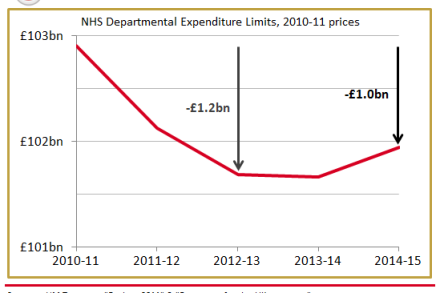
Before the election, the Conservatives promised they’d “protect” the NHS, which they defined as increasing its real-terms budget year-on-year. This is a rather dangerous promise because it makes ministers hostage to inflation. Now that inflation has surged, expectations have been revised upwards, and it looks like the NHS budget will suffer a real-terms cut. In its monthly update of City consensus forecasts, the Treasury has released new figures for inflation over the next five years.Apply the latest inflation figures to health spending in the last budget and it implies a £1bn shortfall . The graph below shows the change over five years: Back in March, the IFS said that the

Miliband's empty promise

Miliband’s speech was meant to reach beyond the hall. “I aspire to be your Prime Minister,” he told country, “to fulfil the promise of Britain.” But, after an hour long speech, it is not wholly clear what the “promise of Britain” is. Miliband offered the hand of partnership to small businesses, the ordinary working family, those who want a cheap further education, working mothers, but it was not clear what they would obtain from the Labour leader. This was a speech virtually bereft of policy direction or a coherent theme. We have a clear idea of what and whom Miliband is against, but very little idea of what he is

Battling it out over Brown’s legacy

Gordon Brown is back in the news this morning, or rather his legacy of debt is (an issue examined in depth by Pete and Fraser in 2008). The disastrous £12.7 billion NHS computer project is to be scrapped and, more important than that, the Telegraph reports that the care budgets at 60 hospitals are being squeezed by the costs of repaying PFI contracts totalling more than £5.4 billion. Andrew Lansley has taken to the airwaves to explain that Labour left the NHS with an “enormous legacy of debt”; he was keen to point out that no hospitals were built under PFI before 1997, so that there was no doubt where blame should

Time to recognise that the hospital is dead

For many years, it has been Government policy to move healthcare out of hospitals and into community units and homes, and concentrate specialist surgeries in centres of clinical excellence. This is politically contentious: former Secretary of State for Health Patricia Hewitt was closing local maternity units, but she had to deal with the humiliation of Ivan Lewis, a minister in her department, fighting her changes in his own constituency. But the time has finally come to break our national addiction to hospitals. In a report published today by Reform, Professor Paul Corrigan, who was a health special advisor to Tony Blair, argues that “the old model and concept of the

Who cares about abortion?

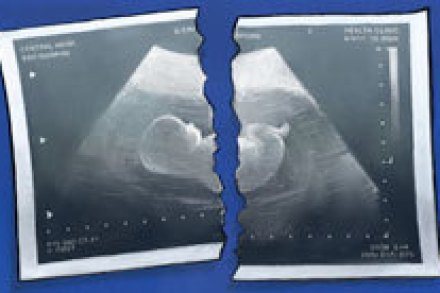
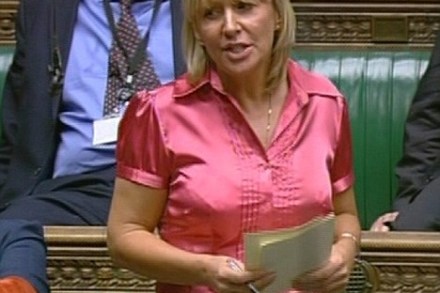
Thanks to Nadine Dorries’ amendment to the Health and Social Care bill, abortion rights have been discussed a great deal this week – both inside and outside of Parliament. In her cover article for this week’s Spectator (out today), Mary Wakefield says that this debate has revealed a “strange and unpleasant consensus… that abortion is not just a necessary evil, but a jolly good thing.” In the piece, Mary asks “Why are we so keen on abortion?”: “The fact is that unless you’re a fan of infanticide you’ve got to agree that somewhere along the slippery ascent from that little Alka-Seltzer of pluripotent cells to the birth of an actual

Public reject Dorries' abortion proposal

Tomorrow, MPs will debate whether to prevent abortion providers from counselling women seeking an abortion. The motion – put forward by Tory backbencher Nadine Dorries as an amendment to the Health and Social Care bill – is being opposed by the government, and pro-choice groups are backing a rival amendment, which reinforces the status quo. The amendement’s author, Lib Dem MP Julian Huppert says: “The present system which allows women access to evidence-based guidance works, therefore I cannot see why we need to change it. I do not want to see us opening the door to anti choice organisations which could prevent women making their own decision on such a