Nhs

Burstow goes rogue to attack Treasury

Hell hath no fury like a government minister sacked (as proven by our anonymous ‘Dumped by Dave’ piece this week). Another former minister, Paul Burstow, lost his job because Nick Clegg was miffed at the way the Lib Dem had failed to flag up the dangers in the Health and Social Care Bill. He’d already formed a habit of briefing against his own department when he was in office, so it’s no great shock that Burstow has decided to dish the dirt on the Treasury in the Telegraph today, claiming it is responsible for blocking reform of the social care system. He writes: ‘Of course, if fixing this was easy

What will happen to the NHS budget?

George Osborne has long regarded support for the NHS as the most important aspect of Tory modernisation. For this reason, I think it is highly unlikely that the ring-fence will be removed from around the NHS budget. But I suspect that the practical, as opposed to symbolic, importance of the ring-fence will be diluted by more and more things being classified as health spending. At a Quad meeting on the Dilnot proposals on social care, George Osborne told Andrew Lansley that the £1.7bn cost of them, which rises to £5bn within 3 years, should be met out of the NHS budget. Lansley resisted this idea. But I understand from senior

Anna Soubry's NHS clean-up operation

Anna Soubry has given a wonderfully colourful interview to The Times today about her new job as Health Minister. The Conservative MP jumps through the usual hoops of having to talk about how she loves wearing high heels but doesn’t enjoy baking cupcakes, but she also makes a number of striking comments about health policy. The most-widely-picked-up have been her comments on euthanasia. She told the newspaper: ‘The rules that we have about who we don’t prosecute allow things to happen but there’s a good argument that we should be a bit more honest about it.’ Norman Lamb appeared on Sky News this morning to say he also felt there

Jeremy Hunt and NHS spending

Reshuffles are significant when they change policy and not just personnel. The reason that so much attention is focused on Transport is that the decision to move Justine Greening does suggest that Number 10 wants, at the very least, more room to maneuver on aviation policy. But speaking on the Today Programme this morning, Matthew d’Ancona – the coalition’s biographer —suggested two other departments where a personnel change could be a prelude to a policy change. He said that George Osborne was keen to have new Secretaries of State in the Department of International Development and the Department of Health so that he could explore removing the ring fences round

Ministers take brand NHS to the world

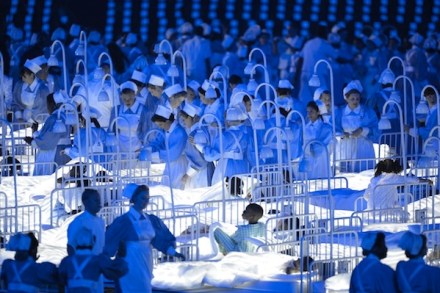
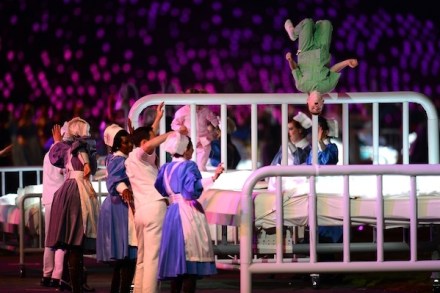
Danny Boyle had us all fooled. There we were, thinking the dancing nurses and luminous NHS logo in his opening ceremony for the Olympic Games were part of a piece of ‘Marxist propaganda’, when actually he was sneakily paving the way for what Labour this morning derided as the ‘rampant commercialisation’ of the health service. Yes: it turns out that the Olympic opening ceremony was just one big fat right wing advertising ploy to entice the world to buy into Brand NHS. Whoops. The government is opening an agency called Healthcare UK, which is designed to set up contacts between world-respected NHS operations and private clients overseas. The Health department

The straightforward solution for mental health treatment

Yesterday Nick Clegg published an ‘implementation framework’ for the government’s  mental health strategy. This follows his announcement in February 2011 of a ‘No Health without Mental Health’ policy, which has not been delivered and is now fragmenting under the changes being implemented to the commissioning structure of the health service. I have a special interest in this subject. About four years ago the failure of both the NHS and the private sector to deliver moderately competent mental health treatment (to me) nearly killed me; I was very ill with complex PTSD. The cost to the state of my death (in the absence of other resources and leaving behind a family

Closing cardiac units might be right, but it won't be easy

Yesterday, Health Secretary Andrew Lansley reported to MPs on the state of the NHS. The state of the NHS, you’ll be relieved to know, is good, or at least it is in Mr Lansley’s estimation. Budgets are in surplus, waiting lists are down and, unless you are very unlucky, you won’t have to hang around for more than four hours in A&E before they see you. One thing, however, that the Health Secretary didn’t volunteer – curiously, since it was the biggest NHS news of the day – was the reorganisation of heart care for children, and the closure of three specialist surgery centres in England. This is probably just

The PFI bailout machine has run out of juice

Although it is nearly 20 years ago, I can still recall being lobbied by the representatives of a private consortium who had nascent plans to redevelop a hospital in south London using the then fabulous new idea we called the private finance initiative.  Before you jump to too many delirious conclusions, the meeting took place in my office, not in an expensive restaurant, and it was the only one I ever had with the group. I may have splashed out on a plate of civil service issue custard creams. At the time I was the special adviser to the then Secretary of State for Health, Virginia Bottomley, and the main

The doctors’ strike

No public sector strike is easy to sell to the public. I recently did a stint of jury service and witnessed the chaos caused by court staff, members of the PCS union, striking over pensions. It’s one thing working around the inconvenience of jury service, but it’s quite another being kept on the premises when there is little chance of the courts actually sitting, as proved to be the case. But, the BMA have it doubly difficult. Today, doctors decided to strike for the first time in more than 40 years. Doctors have a reputation for being well-paid, a reputation that is ingrained and, when one examines the NHS pay structure,

More evidence of the need for NHS reform

If you want to know why the great Labour-NHS argument about healthcare is wrong, read today’s National Audit Office report on the provision of diabetes care in England. Diabetes is one of this country’s biggest health problems and it is getting worse. There are currently over three million people with diabetes here today, and, on some estimates, by 2020 there will be nearly four. In the last 15 years the number of people with the condition in England has more than doubled. Yet according to the NAO, the treatment they receive from the NHS is little short of shocking. There are nine main standards for proper diabetes care, laid down

Cameron looks to his early leadership period for inspiration

David Cameron’s big parenting push this week is a reminder of what the Prime Minister would have liked to have been before the economic crisis intervened. Cameron believes that encouraging stable, loving families is the best way to prevent social failure. Doing that reduces the demand for government and, so the logic goes, shrinking the state then becomes a lot easier.   How the government can try and help people be better parents without falling into the nanny state is undoubtedly tricky. But Cameron’s emphasis so far has, rightly, been on simply giving people more information to help them make their own decisions. Part of this approach is a series

Choice — easy to talk about, a slog to deliver

The birth of the White Paper on public service reform was a tortuous business — but, now it’s been out for several months, the government is keen to make the most of it. David Cameron is launching an ‘updated’ version today, with a few new proposals contained therein. He also has an article in the Telegraph outlining those ideas, including the one that seems to be getting the most attention: draft legislation to give people a ‘right to choose’ their public services. It feels like both an important and potentially inconsequential moment all at once. Enshrining choice in the laws of this land is a powerful symbol that people shouldn’t

Lansley has won, in a way

At two thirty this afternoon, the Deputy Speaker announced to the House of Commons that the Queen had granted Royal Assent to the Health and Social Care Act. It seemed fitting that the House was debating assisted suicide at the time. The agonies of watching this cursed legislation twitch and stumble its way onto the statute book were enough to make anyone with half a concern for well-ordered public policy start Googling the names of Swiss exit clinics. Albeit there would have been the risk that Number 10 had already paid for Andrew Lansley’s ticket to join you there. Suddenly, though, the politics of health are very different. Mr Lansley,

Yes, the NHS Must Treat Fat Folk

A truly repellent piece by Cristina Odone in the Telegraph in which she argues for NHS-rationing by liefestyle and wealth. That’s not quite how she puts it, for sure, but her suggestion that (middle-class) pensioners are losing out to (lower-class) fat people and that something should be bloody done about this is the kind of classist call for healthcare rationing that well, let her make her case herself… [A]ge comes to us all, and is not the result of  lifestyle choices. There are plenty of conditions, though, that are the direct result of bad habits, poor diet, and the wrong choices [Sic]. These conditions range from obesity and diabetes to

Is Andrew Lansley’s time finally running out?

A few months ago, I was invited to speak at the Health Service Journal conference, and hugely enjoyed meeting various reformers from within the NHS (and, of course, their enemies). One representative from the NHS Confederation pointed out that in most countries which were run by coalitions, the junior party was always given control of health — because nothing good can ever come from it. When things are going well, you hear nothing. When flu epidemics strike, then health is a horrible brief. A good point, which David Cameron may be taking to heart. Patrick Hennessy reveals in tomorrow’s Sunday Telegraph that Cameron is mulling a pre-Olympics reshuffle which would

Nick rises to Harriet's limp challenge

Basketball in America. Netball at PMQs. Harriet Harman, Labour’s venerable form-prefect, took her leader’s place today and lobbed a few rubbery missiles at the PM’s under-study, Nick Clegg.  It came down to arithmetic. Even if Hattie had stormed it at PMQs she had no hope of reviving her extinct career. But Clegg has it all to play for. He was ready for it too. Assured, combative and well-briefed, he filled his replies with fresh, punchy rhetoric. (Mind you, his match-fit performance should be credited to his party activists. Clegg must have spent the last 22 months fielding nasty questions from chippy wonks at Lib Dem constituency meetings.)  Hattie tried to

The Lib Dems vote ambiguously on the Health Bill

The motion passed by Liberal Democrat conference this morning means that the party is neither supporting nor opposing the Health Bill. The rebels having lost the vote on whether or not to debate their ‘Drop the Bill’ motion, but managed to amend the so-called Shirley Williams’ motion to remove the line calling on their peers to vote for it. This is a blow to the leadership who were confident last night of winning the vote this morning. But it is nowhere near as bad as the conference — which, remember, still has the power to make party policy — deciding that the bill should be dropped. It is, though, another

Clegg reassures his party about the Health Bill

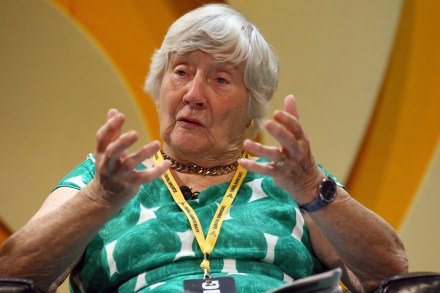
Lib Dem Spring conference is turning out as the leadership would have wished. The support of Shirley Williams for the Health Bill seems to have been enough to reassure delegates that they should back the bill in its amended form; they’ve already voted to debate the leadership friendly motion tomorrow morning not the ‘Drop the Bill’ one. In a question and answer session with activists just now, Clegg — to huge applause — urged the party to side with Shirley Williams not Andy Burnham. This appeal to Lib Dem tribalism seems to be winning the day on the health issue. Clegg, as he always does at conference, used the Q&A

Clegg rallies his party

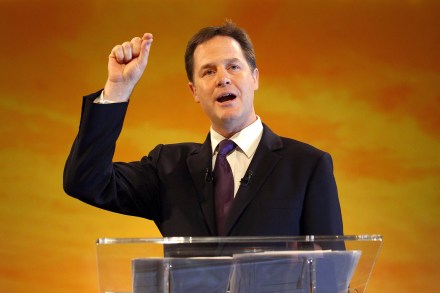
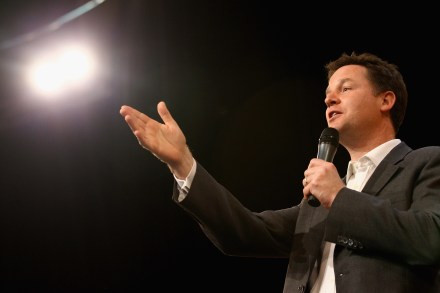
Nick Clegg pushed his members to ‘stop lamenting what might have been and start celebrating what is’ in his rally speech to the Liberal Democrat spring conference. He told them ‘now is the time to move on, to stop justifying being in government and start advertising being in government’. The debate over the Health Bill, though, threatens to dominate the conference. Clegg in his speech went out of his way to pay tribute to Shirley Williams, who is now on the leadership’s side on this issue, lauding the ‘outstanding work Shirley is doing in the House of Lords to protect our NHS’.  This was met with warm applause. But it

The Lib Dems could kick up a storm over the NHS Bill

Lib Dem spring conference is, perhaps, the most potent reminder of the cultural differences between the two coalition partners. In the Tory party pretty much the only thing that members get a real vote on is who the candidate in their constituency should be and who they want as party leader, even then that choice has been whittled down to two options by the MPs first. By contrast, the Lib Dems grassroots still get to determine the detail of party policy. The Health Bill’s problems really began at the last Lib Dem spring conference. It was a vote there that led to Nick Clegg seeking a whole host of changes