Nhs

How will Ed Miliband use the A&E crisis at PMQs?

From our UK edition

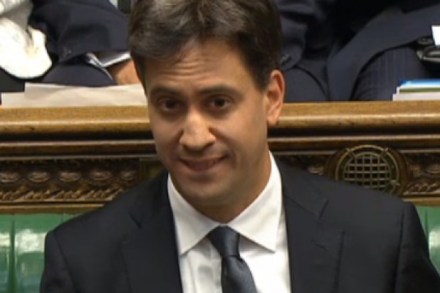
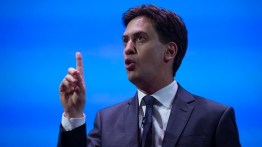
Towards the end of 2014, David Cameron was finding PMQs ‘boring’. He knew that it was turning into a session where each week both he and Ed Miliband basically said the same thing over and over again, usually with a long string of statistics that the other couldn’t quibble while in the Chamber. He would talk about the importance of a strong economy, while Miliband would talk about the NHS. And then everyone would filter back out of the Chamber having learned nothing. Well, today the Prime Minister will probably find PMQs takes the same ‘boring’ format, but if Miliband crafts something less stunningly dull than a string of statistics (which both men are guilty of) then he could make the exchanges really quite difficult for the Prime Minister.

The A&E crisis must be all my fault, obviously

From our UK edition

A preview of Hugo Rifkind's column in this week's Spectator, out tomorrow... Oh, I see. So it’s my fault. There I was, thinking that the general swamping and near collapse of accident and emergency services in hospitals across Britain might be the result of, you know, some sort of systemic problem within the NHS. With me, a mere member of the public, just being an occasional victim. But no! Apparently it’s all because I took my wailing two-year-old daughter in, one Sunday afternoon last year, to get some antibiotics for her ear. This is good to know.

Does anyone in London actually know how the Barnett Formula works?

From our UK edition

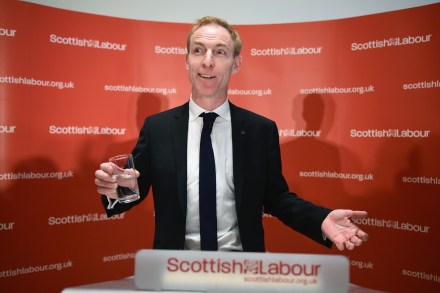
We've just had two years of intensive constitutional politics. Time enough, you'd think, for even London-based politicians and commentators to work out how British politics actually works. But if you think that you'd be wrong. Very wrong. Consider our old friend the Barnett Formula. Antiquated and not entirely fit for purpose - it being a 1970s convenience that was itself an updated version of the 1880s Goschen Formula - but hardly a mystery or a terribly complicated piece of financial wizardry. And yet it seems that almost no-one in the Westminster village actually understands how Barnett works. Yesterday, you see, Jim Murphy promised that he would use Scotland's share of the proceeds from Labour's so-called Mansion Tax to hire an extra 1,000 nurses north of the Border.

Is the NHS ‘crisis’ too complex for politicians to solve?

From our UK edition

Is the NHS in crisis, or isn’t it? Jeremy Hunt doesn’t want to use the word, telling the Today programme that ‘there’s a huge amount of pressure’, while Norman Lamb argued that ‘I wouldn’t describe it as a crisis’ but ‘I readily acknowledge that the system is under intense pressure’. Few politicians want to describe something they’re notionally responsible for as ‘in crisis’ (though Lamb isn’t afraid to use pretty strong language about some areas of his portfolio, including mental health). But whatever word they use, ministers know that things aren’t hunky dory in accident and emergency departments at the moment - and this hasn’t been a cold winter.

How the NHS silenced a whistleblowing doctor

From our UK edition

Almost two years ago, a cancer surgeon named Joseph Meirion Thomas decided that he could no longer keep quiet about what he regarded as a major abuse of the NHS. The Francis inquiry into the scandal at Stafford Hospital had just published its report, reminding doctors of their ‘duty of candour’. Thomas interpreted that to mean that health professionals ‘should feel supported and protected should they ever need to speak out.’ In that spirit, he wrote in The Spectator about ‘health tourism’ — foreign nationals using NHS services to which they are not entitled, placing an already overburdened system under yet more strain. His article caught the attention of Jeremy Hunt, the Health Secretary, who ordered a full investigation.

Even Ukip don’t dare break the unhealthy consensus on the NHS

From our UK edition

There’s an irony about Ukip’s rise. Nigel Farage party’s popularity is driven by a widespread sense that the main parties are all the same. Yet in the past four years, the differences between the Labour party and the Conservatives have grown substantially, on issues from the size of the state to an EU referendum. In an election year you might expect parties to converge in the centre ground as they chased swing voters. It won’t happen this time. Labour is determined to stop left-wingers defecting to the SNP and the Greens, while the Tories, who have long had their own issue on the right because of Ukip, believe that their best chance of victory comes from heightening the contrast between them and the other parties.

How not to be taken for a mug by misleading health stories this New Year

From our UK edition

The Christmas/New Year period is always fun for health balls. Because we like drinking lots of wine and eating lots of chocolate around this time of year, newspapers like to pick up on weird little studies which purport to show that those things are good for us, while leaving out inconvenient details, stuff like ‘the study was on some tissue samples in a petri dish' or ‘the study was on a chemical which exists in wine in trace amounts but we’re pretending it’s about wine in general’ or ‘obviously chocolate isn’t good for you, for God’s sake’. So here are some hints and tips to avoid being taken for a mug.

PMQs sketch: Three senior politicians are accused of mass murder

From our UK edition

Time travel came to PMQs today. The leaders discussed what year it will be in 2020. The answer, naturally, isn’t 2020. Ed Miliband quoted the OBR and claimed that the Coalition plans to shrink the state to the sort of slim-line figure it last sported in the 1930s. Rubbish, said Cameron. His diet will trim the national waistline to the dimensions it enjoyed in the late 1990s. Kenneth Clarke wittily chipped in to remind us that Blair’s government only hit this modest target by adopting the budget limits of the previous Tory administration. In which the chancellor was K Clarke. That was funny. Not much else was. Miliband’s gnashers are currently locked around his favourite soundbite: the ‘1930s vision’ of the Tory party.

Who privatised Hinchingbrooke hospital? And does it matter?

From our UK edition

When it comes to rows about the NHS, these days it doesn’t rain, it pours. In fact, fights between the parties about who cares more/privatised the most are turning into a weather bomb, such is their frequency. Today Nick Clegg turned up to Prime Minister’s Questions determined to highlight Labour hypocrisy on the health service, and he managed to shoehorn it in to an answer to Harriet Harman’s question about people trusting the Lib Dems (or not). The Lib Dem leader said: ‘In fact, the Shadow Health Secretary, sitting there demurely, is the only man in England who has ever privatised an NHS hospital, and they dare to lecture us. Hinchingbrooke hospital - the only NHS hospital to be privatised, and by the Labour party.

Jeremy Hunt and Andy Burnham’s NHS battle heats up

From our UK edition

Two politicians unashamedly and eternally at one another’s throats are Jeremy Hunt and Andy Burnham, scrapping over who cares more about ‘Our NHS’. Today Hunt has written to Burnham complaining about a story in the Sunday People this weekend that 1,800 nurses have left the NHS in two months. Hunt is accusing Burnham of dodgy figures, writing: ‘As you will know as a former Secretary of State for Health, nursing numbers are subject to seasonal variation, which means there is always a temporary dip in the summer months - including when you were in office.

Portrait of the week | 4 December 2014

From our UK edition

Home The government spent days announcing how the Autumn Statement would allocate funds. ‘Frontline’ parts of the National Health Service would get an extra £2 billion for the time being, £750 million of it diverted from elsewhere in the Department of Health budget. Another £1.1 billion from bankers’ fines would go to support GPs. Labour said it would give the NHS twice as much. Out of the £15 billion already set aside by the government for roads, a tunnel would be built for the A303 past Stonehenge. Of £2.3 billion (over six years) earmarked for flood prevention, only £4.3 million was set aside for the Somerset Levels, but £196 million for the Thames estuary.

The very model of a political Chancellor

From our UK edition

Autumn Statements lack the drama and traditions of the Budget. Gladstone never delivered one, there is no Autumn Statement box and no possibility of a dram of whisky as the chancellor delivers it. But this year’s Autumn Statement was more important, and more substantial, than next year’s Budget will be: the Liberal Democrats are adamant that March is too close to the general election for the Budget to do anything other than update the fiscal forecasts and set out the duty rates. The test this week isn’t economic but political. As with last year, the Tories have spent the autumn racing down a rabbit hole after a populist policy initiative: this time it was Ukip’s immigration policy, last year it was Ed Miliband’s energy price freeze.

Why you have to listen to this year’s Reith Lectures

From our UK edition

Each year the Reith Lectures come round as Radio 4’s annual assertion of intellectual authority, fulfilling the BBC’s original aspiration to inform and educate (although not always to also entertain). Each year, though, it’s hard not to feel a certain resistance to Lord Reith’s lofty legacy. Radio might be the perfect format for delivering a talk. Perfect for the lecturer because there is just an audience of one to focus on. Perfect for the listener because there’s nothing else to distract you. No intrusive soundscape. No other voices to confuse. But not all intellectual giants have the ability to communicate, nor an understanding of radio’s particular qualities.

Surgical league tables: no, thank you

From our UK edition

After the Bristol Heart Scandal in the 1990’s, the speciality of cardiac surgery rose to the occasion, leading the way in publishing individual surgeon’s mortality figures and self-audit, which made it perhaps the most transparent speciality in the UK, and thus consolidating its long-held position as a world leader in the training of surgeons and patient safety. Professor Bruce Keogh, head of NHS England, recently announced that NHS surgeons will now be asked to submit their mortality data online to public scrutiny, and failure to do so will result in medical purgatory. The cardiac surgery experience suggests that 'league tables' will improve outcomes; I disagree. The public deserves competence from their surgeons, something prevalent in the NHS 99.9% of the time.

Tories to shut up about immigration and talk about the economy instead

From our UK edition

There is a simple political test for the autumn statement, does it make the economy Topic A again? The Tories’ election strategy relies on the economy being the dominant issue of the campaign. If it is not, it is very hard to see how Cameron and co can win.   The Tories want everything to be seen through the prism of the economy. Hence Osborne’s emphasis this morning that he can only put an extra £2 billion into the NHS because the economy is strong.   In recent months, immigration has supplanted the economy as voters’ top concern. This has been to Ukip—and not the Tories—benefit. This is why Cameron’s speech last Friday was designed to shut the issue down.

PMQs sketch: In sickness and in health

From our UK edition

Health, health, health. Viewers of PMQs must be sick of it by now. Health this, health that. Health, health. On and on. Ad nauseam. Today’s exchanges involved the usual tussle over which Superman can save the NHS. Dave and his virile economy or Ed with his honked out assertions that he’s the patient’s champion? The only place where healthcare isn’t massively overstretched is west Africa. Tory Edward Garnier revealed that a spanking new hospital in Sierra Leone, completed with UK money, and run by Save the Children, is currently treating just five patients. So that’s how you hit waiting time targets. Run the place so badly that everyone runs in the opposite direction. Cameron promised to chivvy this somnolent facility into life.

Reckless criticised by Medway NHS for Ukip election leaflet

From our UK edition

Mark Reckless is in trouble for reckless campaigning. One of his promotional leaflets (pdf), noting his plans for the NHS in Rochester and Strood, features a photo of Reckless alongside the Medway NHS Trust chief executive Phillip Barnes. Unsurprisingly, the local NHS chiefs aren't happy about this. By using a photo of Barnes and Reckless, taken when he was the Conservative MP for Rochester, on a campaign leaflet the Medway NHS trust believes it may be taken as 'inferring that both Dr Barnes and the hospital were supporting Mr Reckless' campaign.

How does naturopathy work? A bit like a flying vacuum-cleaner to Mars

From our UK edition

Every so often you read a piece about alternative medicine that asks: how does it work? How does homeopathy work, how does acupuncture work, etc. There was a piece in the Telegraph recently that asked: how does naturopathy work? There was a complicated answer about 'healthy electromagnetic frequencies' and so on; 'bioresonance', 'modalities', and a marvellous quote about how 'Every cell in the body puts out a certain electromagnetic frequency, that can be measured – a healthy stomach cell sounds different to a healthy brain cell...' Presumably those words have some sort of meaning to someone. But the problem with this piece - and with an awful lot of other pieces on similar topics - is that there's no point answering the question 'how does X work?

Old, vulnerable and hungry – the shocking view from inside the NHS

From our UK edition

I am leaving London soon, coming to the end of my time as a voluntary hospital visitor working from a chaplaincy in a London teaching hospital. I have been roaming around a variety of wards for the last three years, only one day a week, but in those few hours I have seen quite a lot. The most disturbing things have been the poor quality food, which cannot aid anyone’s recovery, and the neglect of the very old and vulnerable, the patients rather ominously labelled ‘bed blockers’. On my last visit, the Anglican chaplain was not in the hospital, so instead of attending a morning service with him in the hospital chapel, I went up onto the wards early, at breakfast time. In one ward there is a neighbour of mine, an old man I’ve known for years.

Keep your hair on! Seven tips for doing so, past Movember

From our UK edition

[audioplayer src="http://traffic.libsyn.com/spectator/TheViewFrom22_30_Oct_2014_v4.mp3" title="Henry Jeffreys and Sarah Coghlan join Mary Wakefield to discuss Movember and other wackiness." startat=1456.1] Listen [/audioplayer]Some men are growing facial hair for Movember but lots of people are just trying not to go bald. Male pattern baldness affects half of men over the age of 50, according to the British Association of Dermatologists. But that’s not all – half of women over the age of 65 are also grappling with hair loss. Usually, though, their hair thins, rather than disappearing quite so radically as it does in men. So what can both sexes do to preserve their crowning glory, or mitigate what they’ve lost? 1.