Nhs

Budget 2015: The challenges for Labour

From our UK edition

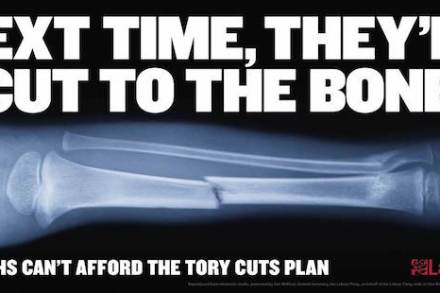
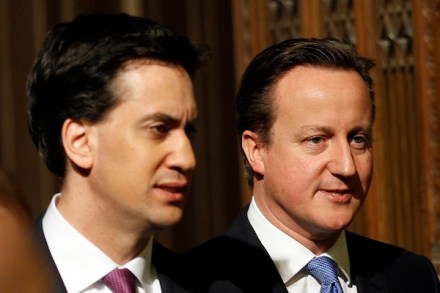
Ed Miliband will respond to the Budget today (the Shadow Chancellor responds to the Autumn Statement, and has a Budget speech the day after the main event). In the past couple of years the Labour response hasn’t been fantastic, partly because the Tories have got a very well-organised (and at times just rather brutish and silly) heckling squad ready to create a wall of noise, and partly because it is difficult to respond to a Budget that contains good figures. But Labour thinks the Autumn Statement gave it the opportunity to attack the Tories on something other than the cost-of-living. The party can now say that George Osborne is planning ‘extreme’ cuts that will take Britain back to the 1930s and that this will damage the NHS, which voters hold dear.

Andy Burnham burnishes his foreign policy credentials

From our UK edition

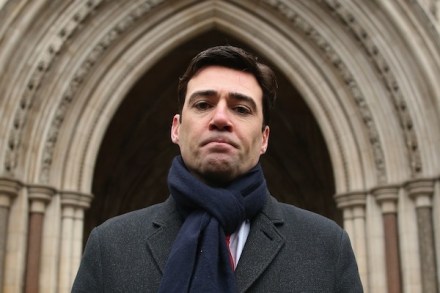
If Shadow Health Secretary Andy Burnham's future leadership aspirations were ever in doubt, then take a look at his reaction to the news of Benjamin Netanyahu's re-election as Prime Minister of Israel last night: https://twitter.com/andyburnhammp/status/578116833653305344 Burnishing his foreign policy expertise: tick. Cat-nipping the Labour left: tick. About as subtle as Burnham's recent attempts in The Spectator to rebrand himself as 'mainstream Labour'. The general election campaign has barely begun, and already potential Miliband successors are getting their ducks in a row.

Andy Burnham: I am mainstream Labour

From our UK edition

Has Andy Burnham really reinvented himself to prepare for a future leadership bid? In this week’s Spectator, I interviewed the Shadow Health Secretary about his rather forthright views on the NHS: views that some suspect have conveniently changed in order to appeal to Labour’s base. You can read the interview here, but for Coffee House readers, here are some extended quotes from our discussion. Burnham was insistent that his views on the health service today are the ones he put into practice when he was Health Secretary under the last Labour government. When I asked whether he’d changed politically, he said: ‘Well, there are a couple of ways to answer that.

The Tories must commit to spending 2 percent of GDP on defence

From our UK edition

At a time when Russian fighter jets are forcing civilian flights into UK airports to be diverted, you would expect defence to be one of the big issues of the election campaign. But it is not. It doesn’t fit into the script that the two main parties want to stick to. The Tories’ long-term economic plan doesn’t have space for any foreign entanglements and Labour would rather talk about the National Health Service than national security. But we do need to have a discussion about Britain’s role in the world and how we respond to the Russian threat. It is worth remembering that if Putin tried any funny business in the Baltics we would be obliged—because of Nato Article 5—to come to their aid.

Andy Burnham interview: ‘I wanted a different approach, because I’m mainstream Labour’

From our UK edition

Time was when Andy Burnham passed for a middle-of-the-road Labourite: he was deemed insufficiently dramatic and impressive to secure much support when he stood for leader five years ago. But these days, his colleagues — and the bookmakers — consider the shadow health secretary the frontrunner in any new contest. At an otherwise funereal Labour conference last year, his speech received standing ovations. In three months’ time, Burnham will either be health secretary or a serious contender for Labour leader. He has already survived calls from within his party to remove him from the health brief, though he claims Miliband has never raised the prospect.

Exclusive: the NHS report that Labour tried to block

From our UK edition

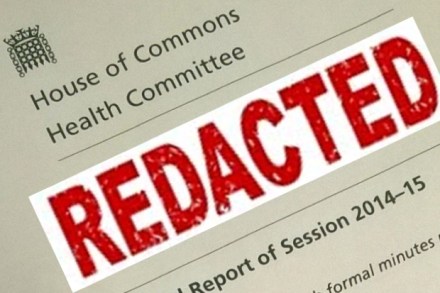
It emerged this morning that Labour MPs took the extraordinary step of blocking the publication of the Health Select Committee report into the NHS – because the conclusions backed up government reforms. I have just been handed details of this report, and it’s clear why Labour wanted it suppressed: it contradicts the party’s attack message. Here are the main points: No sweeping privatisations: there has been little increase in private sector providers since 2010. Nor has there been an extension of charges or top-ups during the current parliament, and that these are not planned. Less red tape: a general trend of declining administration costs in the NHS. No evidence that the Transatlantic Trade and Investment Partnership poses a threat to the NHS.

This idiotic NHS ‘calculator’ can’t predict heart attacks. But it might well give you one

From our UK edition

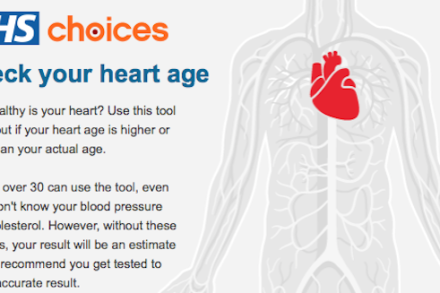
I can understand why the Tories have ring-fenced the NHS, but if they do want to indulge in a little trimming I know just where to start – with the moron who signed off on the online 'calculator' that assesses your risk of a heart attack. 'Official NHS calculator predicts when you will have a heart attack,' says a piece in today's Telegraph. Actually, it doesn't. Nor does it pretend to. But the NHS can hardly complain about being misrepresented for clickbait, since – even if you report its claims accurately – the 'calculator' is nothing more than an expensive PR gimmick.

Why is the NHS ring-fenced but the justice system isn’t?

From our UK edition

Earlier this week, Sadiq Khan MP ‘admitted Labour could not reinstate £600m of legal aid cuts imposed by the government’. These are cuts which continue to have a very real impact on our society. They’ve left parents unrepresented when family judges are considering the future care of their children. They have deterred workers who are racially or sexually discriminated against in the workplace from bringing actions in the employment tribunals and priced out those who have suffered loss from bringing claims in the civil courts. The cuts have also driven the best lawyers away from publicly-funded civil work into private practice, and they have dried up the recruitment of junior barristers.

My life in ailments

From our UK edition

My request to see my medical notes was granted in the end. I honestly don’t know why I wanted to see them, really. I’m just one of those people who suspects the worst of the state, and other large organisations, so if I get the chance to have a peek into what they’ve been up to behind my back I take it. This was my second Subject Access Request. The first was of the RSPCA, who I got a tad suspicious about after writing several critical articles and attracting weirdly sour-sounding complaints from them in which they claimed I was only criticising them because I was a supporter of hunting. That put my back up slightly. So I demanded to see everything in their possession that mentioned me.

If you really love the NHS, you know it needs to change

From our UK edition

To adapt Aeschylus’s aphorism on war and truth, the first casualty in a general election campaign is objectivity. Over the next eight weeks NHS staff can expect nothing but saccharine praise from politicians who are falling over themselves to say how wonderful the health service is, how committed they are to it. The Conservatives may revive their ‘NH-yes’ slogan, promising to safeguard its budget. Labour proposes to protect it from what few reforms the Conservatives promise and even Ukip is posing as ‘the party of the NHS’. A true friend of the NHS, however, would accept that all is not well, and that ‘protecting’ its current structure is an act of cruelty rather than kindness.

Has a Tory MP been editing his Wikipedia page from the Houses of Parliament?

From our UK edition

Thanks to the internet, it has become increasingly difficult for politicians to hide any past indiscretions. However, this hasn't put some MPs off from trying. Mr S has noticed some edits have recently been made to Tory MP Craig Whittaker's Wikipedia profile. The page has had some interesting amendments, with two negative references to the MP for Calder Valley being deleted. First, an edit in December saw all reference taken out to an incident in 2011 where Whittaker was arrested for an alleged attack on his son outside a petrol station. A second change was then made which saw a line deleted regarding claims that he had misled his constituents over cuts to the NHS.

National parties no more

From our UK edition

All the election forecast models agree, the next election result is going to be remarkably tight. On these models, neither Labour nor the Tories are going to come close to winning a majority. They would both be about 40 seats short. Now, events could intervene to change things. But, as I argue in the magazine this week, one of the reasons Labour and the Tories are finding it so hard to win a majority is that they are not national parties anymore. Compounding this is that no party is aiming for full spectrum dominance in this campaign. Rather, they are trying to talk up the issues that are best for them and worst for their opponents. So, you hear the Tories talking about their long term economic plan and leadership. While Labour want the debate to be focused on the NHS and fairness.

My request to see my medical notes has sparked all-out panic at my GP surgery

From our UK edition

My request to see my medical notes has sparked all-out panic at the GP surgery. ‘What do you mean?’ said the receptionist who answered the phone when I called to ask. She sounded even more furious than the time I rang to ask if I could possibly have an appointment to see the doctor. On that occasion, she affected her best Lady Bracknell impression, ‘The doctor? You want to see the doctor?’ ‘Well, yes if it isn’t too much trouble,’ I spluttered, as she audibly bashed her keyboard in ill-disguised rage at my impertinence. On this occasion, she was horribly icy. ‘I mean,’ I stammered, ‘I want to see my medical notes, as the law entitles me.’ ‘The law?’ she said. A haaaaaaaaaa-aaaaaaand-bag!

The footprint of Britain’s immigrants – and emigrants – is important

From our UK edition

Half a million people. That’s quite a lot, isn’t it? I mean, half a million here, half a million there, why, soon you’re talking a million, which is even more of a nice round figure. But that’s the statistic we should be talking about when it comes to the migration stats today from the Office for National Statistics. The crucial figure tucked away in there is in fact 542,000, which is the number of people who came to Britain in the year up to September 2014, excluding returning Brits. And of these foreign immigrants, non-EU citizens were the majority, 292,000 of them.

Why are the Lib Dems spending so much time talking about mental health?

From our UK edition

Nick Clegg is to hold an hour-long phone-in next week on mental health. The Deputy Prime Minister will host the session himself on LBC on Monday. This is part of the emphasis that the Lib Dems are placing on mental health in their election campaigning. Now, there are lots of good reasons why the Lib Dems might want to campaign on mental health, including that it jolly well needs campaigning on because it is, as Clegg says, a ‘Cinderella service’ that suffers from long waits, poor research and less funding, yet one in four people will suffer from some kind of mental ill-health. But there are sound political reasons too. The first is that it is very popular with potential Lib Dem voters, as explained here.

Labour unsure about health policy its own councils support

From our UK edition

The announcement today that Greater Manchester will receive full control of health spending - worth £6bn - has left Labour in a rather interesting position. On the one hand, it is easy for Andy Burnham to say that this sounds ‘like yet another NHS reorganisation’. But on the other, Greater Manchester includes a number of Labour councils who appear pretty happy to sign up to the provisional deal. Indeed, one of those councils is Wigan, which covers Burnham’s own constituency. Now one of the reasons that spending has been devolved to this area is that councils in Greater Manchester are keen, forward-looking and ambitious.

Let Greece leave the eurozone

From our UK edition

To listen to Greek government ministers addressing the outside world during their breaks from negotiations with eurozone leaders this week, it would be easy to form the impression that Greece had a mighty economy upon which all other eurozone countries were pathetically dependent. ‘Europe is going through the difficult process of understanding that Greece has a new government committed to changing a programme that has failed in the eyes of everyone who doesn’t have a vested interest,’ said finance minister Yanis Varoufakis. The reality is that Greece is the dependent country, propped up by its creditors, and it is Greek government ministers who are having trouble in understanding the situation in which they find themselves.

The Burnham message

From our UK edition

Andy Burnham’s interview in The Times today lays down several markers. He praises Len McCluskey, declares that trade union funding is best for Labour, slates Alan Milburn, criticises Peter Mandelson for being relaxed about people getting filthy rich and distances himself from the Blairite mantra that ‘what matters is what works.’ It will, to put it mildly, do nothing to discourage speculation that he is preparing to run for the leadership on a left-wing ticket if Labour loses the election. To be fair, Burnham is frank in this interview that he has changed his mind on various subjects. As he puts it, 'There was a period in the 80s and 90s and the first decade of this century when people said the market has the answer to everything and I honestly don’t think it has .

To reform the NHS, use the politics of envy | 6 February 2015

From our UK edition

‘Let’s make the rich pay more.’ Does that sound so right-wing? To me it has a positively socialist ring. It should appeal to egalitarians: to those who call themselves socially concerned and seek new ways to redistribute wealth. So why not apply it for the NHS? Let’s make the rich pay more for health care. I’m no health policy wonk. I chip in with just this one small suggestion, which is not really about market-based reform of our health service, but about how to sell the idea to a deeply reactionary electorate. The British are positively neuralgic on health. They shudder at the use of words like ‘profit’. Expressions such as ‘privatise’, ‘charge’ or ‘insurance’ are incendiary in our health politics.

To reform the NHS, use the politics of envy

From our UK edition

‘Let’s make the rich pay more.’ Does that sound so right-wing? To me it has a positively socialist ring. It should appeal to egalitarians: to those who call themselves socially concerned and seek new ways to redistribute wealth. So why not apply it for the NHS? Let’s make the rich pay more for health care. I’m no health policy wonk. I chip in with just this one small suggestion, which is not really about market-based reform of our health service, but about how to sell the idea to a deeply reactionary electorate. The British are positively neuralgic on health. They shudder at the use of words like ‘profit’. Expressions such as ‘privatise’, ‘charge’ or ‘insurance’ are incendiary in our health politics.