Nhs

Labour MPs’ minds wander to a post-election contest

From our UK edition

With the opinion polls so tight at the moment, we’re having to look for other ways to try and work out what the general election result will be. One indicator worth watching is which party is spending more time thinking about the leadership contest that would follow an election. Now, there has been plenty of speculation about this on both the Tory and Labour benches in recent times. But in the last few weeks, I’ve picked up more of it from the Labour side. One Labour frontbencher calculates that the focus of ‘half the party is on what happens next’.

Andy Burnham’s car crash interview shows why Labour can’t be trusted with the NHS

From our UK edition

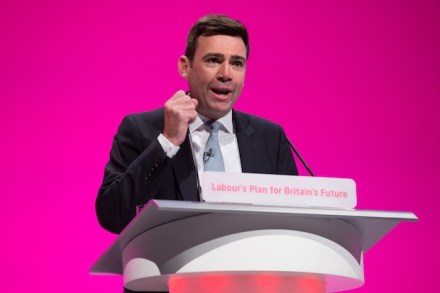
If Labour is weaponising the NHS, maybe it needs to sharpen its tools. Shadow Health Secretary Andy Burnham had a difficult and ill-tempered interview on Newsnight yesterday about what he actually thinks about private sector involvement in the NHS. When asked about the role he sees for the private sector under his reshaped health service, Burnham said private companies would not be entirely excluded: 'There is still a role for private and voluntary providers but I also did say very clearly that the market is not the answer.' Presented with a graph (below) showing how private sector outsourcing grew to four per cent under Labour — but rose two per cent under the coalition — Burnham was unable to say what he thinks is the right level: 'There isn't a right percentage.

Labour’s new political broadcast uses a veteran to promote NHS scare stories

From our UK edition

Now we know what ‘weaponising’ the NHS looks like: a World War II veteran. Labour has released an emotive party political broadcast via Mirror Online starring Harry Leslie Smith. The 91-year old received two standing ovations at the Labour conference last year for his strident defence of the NHS — a theme continued in this video. The purpose of the PPB can be summed up in two words: emotional blackmail. Labour appear to have used Leslie Smith, telling a very moving story about his family and how much the NHS has done to improve our quality of life, to point to the notion that the health service is somehow in danger: ‘The NHS is not just important; it is essential in a healthy society. A healthy society means a healthy country.

The coalition government is not blame for the latest NHS ‘crisis’

From our UK edition

Of all the accusations thrust at the Conservatives by Labour over the NHS in recent weeks, their weakest has been the attempt to blame the Government’s reforms to the NHS for the pressures it is facing. Some will recall that we have been here before. In winter 2010, waiting times lengthened as the NHS was shaken by a serious flu outbreak. On that occasion, a shortage of critical care beds in the [pre-reform] NHS inherited from Labour meant that huge numbers of operations had to be cancelled. Though the problem was rapidly rectified, that did not stop Labour calling out a ‘crisis’ on the NHS, and blaming the reforms even before they had started.

Spectator letters: A GP’s cry of distress and a defence of Stephen Hawking

From our UK edition

Dreadful treatment Sir: I worked as a GP through the Thatcher, Major, Blair, and Brown eras, apart from a spell as an A&E doctor, and never experienced such a depressing and worrying time for the NHS as now (‘Wrong diagnosis’, 10 January). There was frequently strain on the service from underfunding, but not the crisis we are now experiencing across the country, proving to me fundamental mismanagement and policy errors. When this government finally revealed its NHS ‘reforms’, which were kept quiet before the 2010 election, I was convinced the health service was under great threat, and that the electorate was being deviously misled. This crisis was predicted in the risk register, which Andrew Lansley refused to publish.

Obesity a disability? Only lawyers will benefit from the ECJ’s farcical classification

From our UK edition

Real disability is humbling for those who have to live with it and those who care for the disabled. A true disability — degenerative neurological disease, for instance — involves the equivalent of a daily war to live in the way that most of us take for granted. We shouldn’t mock the truly disabled by misusing the word. Yet the European Court of Justice has classified obesity as a disability, meaning that we are all now expected to view those who, in the majority of cases, attained morbidly-obese status by determined and unrelentless bad-lifestyle choices as deserving of our understanding and admiration as those who battle real disability everyday.

The real reason GPs are grumpy: the robots are coming for them | 15 January 2015

From our UK edition

There’s something wrong with the relationship between patients and their GPs. I’ve spent much of this winter in my local surgery, what with one thing and another, sitting among the stoic and snivelling, drifting between different doctors. They’re pleasant, if perfunctory, but with each visit I became more sure that something fundamental is awry. The docs seem ill at ease, as if their collective nose is out of joint, and I don’t think it’s overstretching or underfunding that’s the problem. My unprofessional diagnosis is that there’s a change under way in the balance of power between patients and medics; the status of GP as unimpeachable oracle is under threat, he feels the first tremors of what may be a seismic shift, and he doesn’t like it.

The real reason GPs are grumpy: the robots are coming for them

From our UK edition

There’s something wrong with the relationship between patients and their GPs. I’ve spent much of this winter in my local surgery, what with one thing and another, sitting among the stoic and snivelling, drifting between different doctors. They’re pleasant, if perfunctory, but with each visit I became more sure that something fundamental is awry. The docs seem ill at ease, as if their collective nose is out of joint, and I don’t think it’s overstretching or underfunding that’s the problem. My unprofessional diagnosis is that there’s a change under way in the balance of power between patients and medics; the status of GP as unimpeachable oracle is under threat, he feels the first tremors of what may be a seismic shift, and he doesn’t like it.

The Tories are likely to ‘weaponise’ in the lead up to the election

From our UK edition

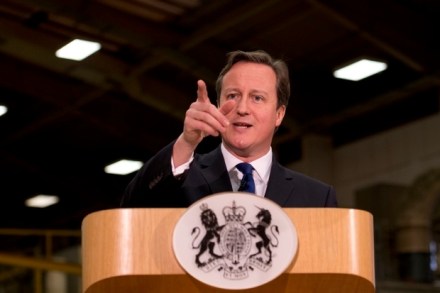
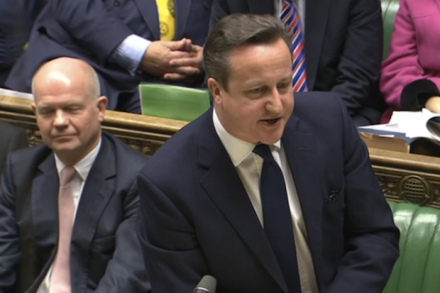
David Cameron did, as James says, manage to avoid debating the rather more electorally damaging issue of the A&E crisis at Prime Minister’s Questions today because Ed Miliband chose to talk about the TV debates instead. But he still had a good opportunity to raise the Labour leader’s refusal to confirm or deny that he had said he wanted to ‘weaponise’ the NHS as an issue. When Labour’s Toby Perkins asked him whether he was ashamed of what happens when the Tories run the NHS, Cameron replied: ‘Now he quite rightly says it’s very important that we conduct this debate in a very good and civilised way. Now at the weekend, the leader of the Opposition was asked seven times whether he had used the phrase that he wanted to weaponise the NHS.

Tories drop weak policy areas for ‘six election priorities’ launch

From our UK edition

Why have the Conservatives left out immigration and the NHS - two of the three issues that voters consistently cite as the most important in forming their decision about who to back in the General Election - out of their list of six priorities? Among the deficit, jobs, taxes, education, housing and retirement there is no room for the health service, immigration or Europe: which also tend to be the things David Cameron and Ed Miliband fight most vehemently over at Prime Minister’s Questions. Labour is very pleased about this, and is pretending to be very cross that the Prime Minister is ignoring the NHS.

Private companies can deliver exactly what the NHS needs

From our UK edition

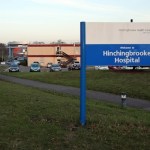
The end of the private management of Hinchingbrooke Hospital is not a dagger in the heart of NHS competition and reform. It does not mean, as the BBC’s business editor wrote today, that a private business cannot run an acute hospital (which is an extraordinary statement given that such businesses routinely do so in other countries). Competition is at the heart of the NHS England Five Year Forward View (5YFV), which all major political parties have supported. The degree of successful private sector delivery in and around health is often underestimated. The much-used figure is that 6 per cent of the NHS budget is spent on private providers (i.e. just over £6 billion a year). That obscures the fact that some parts of the NHS use the private sector much more extensively.

Circle’s exit from Hinchingbrooke is a serious blow to competition in the NHS

From our UK edition

This morning’s announcement by Circle that it will be leaving the contract to run Hinchingbrooke Hospital makes it even more difficult politically for anyone who believes in greater competition in the NHS to make their case. Opponents of private sector involvement in healthcare provision will say - with good reason - that this shows you cannot trust anyone other than the public sector to stick with a hospital in the tough times. Proponents will point out that ultimately providers leaving is better than entrenched failure. But in a way Circle needed to perform in a way that was atypical of the market: I had to succeed and it had to sty the course of its contract. That it hasn’t puts back the case for markets in the health sector by a very long way.

When the NHS is treated like a religion, is it any wonder whistleblowers are considered pariahs?

From our UK edition

I will start by publicly apologising to Professor Meirion Thomas; in a moment of folly, I erroneously signed a petition decrying his alleged 'disrespect' of colleagues, in the wake of one of his articles in the Daily Mail. In my defence, my newborn was crying at the time and I was sleep deprived. Now, however, I believe that the undignified manner - see the abuse and attacks against him, as detailed in last week’s Spectator - in which members of his own profession reacted to his views speaks ill of the medical profession and says a lot about how public discourse has deteriorated. I have read Professor Thomas’ articles.

Letters: The silencing of Meirion Thomas; finding the Cross of St George in Tuscany; and healthy scepticism about NHS privatisation

From our UK edition

This turbulent surgeon Sir: I have taken Meirion Thomas to task before in your letters pages, saying that since one third of NHS professional staff are immigrants, it would seem churlish to deny health visitors access to the very doctors we have poached from them. Meirion Thomas is not a whistle-blower (‘Bitter medicine’, 3 January) — he has not told us anything that our own prejudices haven’t already informed us of. And quite rightly he is being encouraged by his colleagues to zip it. Is there any business, let alone political party, that would tolerate such pointless, if not divisive, mudslinging from within?

Podcast: the 2015 campaign begins, Charlie Hebdo and Britain’s A&E crisis

From our UK edition

Will the next Parliament be impossible to handle? On this week's View from 22 podcast, James Forsyth and Compass' Neal Lawson discuss the latest Spectator cover feature on the challenges facing Ed Miliband or David Cameron if either manage to secure a majority on 7 May 2015. Will the Labour left or Tory right prove too troublesome for the respective leaders? Should Miliband or Cameron be the most worried? And are we on the brink of major electoral reform? Hugo Rifkind and Isabel Hardman also discuss the A&E crisis facing Britain and the problems of the NHS being used a political football. Who is to blame for the current crisis and will the government do anything in the short term? Can there even be a, rational debate about fixing the health service?

So the near collapse of A&Es around the country is all my fault?

From our UK edition

Oh, I see. So it’s my fault. There I was, thinking that the general swamping and near collapse of accident and emergency services in hospitals across Britain might be the result of, you know, some sort of systemic problem within the NHS. With me, a mere member of the public, just being an occasional victim. But no! Apparently it’s all because I took my wailing two-year-old daughter in, one Sunday afternoon last year, to get some antibiotics for her ear. This is good to know. For, had I not been told that all this was the fault of chumps such as me heading to such places for the sorts of trivial ailments better treated by a traditional family doctor, I might in my ignorance have been inclined to blame other people.

PMQs sketch: In which today’s big loser is the NHS

From our UK edition

Everyone predicted a sombre PMQs. It was anything but. A mood of opportunistic and lacerating silliness dominated today’s exchanges. The NHS – poor thing – was fought over like a bunny rabbit caught by two packs of ravening hounds. Miliband’s aim was to take the word ‘crisis’ and gum it to the health service with Superglue. He accused Cameron of destroying walk-in centres, wrecking social care and wasting billions on reorganisation. In reply Cameron airily waved five billion brand new pounds to be spent on social care which he says Labour opposes. Then he blundered by asking Miliband to suggest a solution to the problem. This not only validated Miliband’s ‘crisis’ claim but it handed the Labour leader a free hit.

A & E just saved my son’s life. Let’s not forget how important it is

From our UK edition

We were lucky. The ambulance came in half an hour. By then my teenage son Edward was unconscious. He’d had a headache the day before, but by the evening he seemed to be getting better – sitting on the sofa, watching telly, annoying his little sister. We’d been through the meningitis checklist on the NHS website: no rash; no stiff neck; no aversion to bright light. He ate a big supper and went to bed. In the small hours he started vomiting. We thought it was the norovirus. By dawn he was delirious. Then he stopped responding altogether. My wife and I went with Edward in the ambulance. The paramedics wired him up to all sorts of devices and drove to hospital with the siren on. When we arrived at A&E, a full team of medics was waiting for us.

PMQs: Playing Punch and Judy with the NHS

From our UK edition

Today’s PMQs was, predictably, about the NHS. But the Punch and Judy nature of the session seemed particularly small in the light of events in Paris. After expressions of solidarity with the French, normal business was resumed. Ed Miliband was enjoying himself, confident that he was on his party’s chosen turf. He piled into Cameron accusing him of blaming patients for the crisis and demanding that he apologise to those who have had to wait for more than four hours. Cameron fended him off, but didn’t look particularly comfortable. However, he had a good counter-attack ready, attacking Miliband for allegedly having told the BBC’s Nick Robinson that he wanted to ‘weaponise’ the NHS. Interestingly, Miliband did not deny that he had said this.

Labour seeks urgent question on A&E crisis

From our UK edition

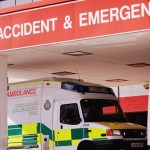
Andy Burnham has put in a request for an urgent question on the A&E crisis, I have learned. The question, which the Speaker has yet to decide whether or not to grant, is as follows: URGENT QUESTION Rt Hon Andy Burnham MP To ask the Secretary of State for Health if he will make a statement on the major incidents that have been declared at a number of hospitals and on A&E performance in England. This might seem rather unsurprising at first glance, and it would be on any other day of the week. Today Ed Miliband will face David Cameron at PMQs and as I blogged earlier, it would be extremely odd if he didn’t use his questions to the Prime Minister to ask about the NHS.