Neurology

The mystery of what makes us special remains unsolved

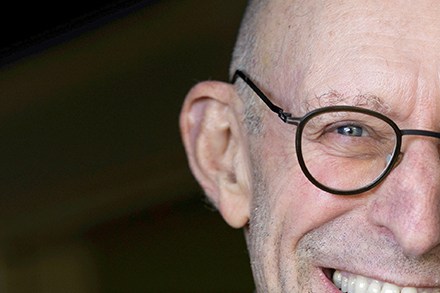
Consciousness is thought by many to define what it is to be human. We know that animals are conscious to some extent, but they don’t have what we have in that department. So if we can explain how human self-awareness works it will be a Rosetta Stone to understanding what makes our species so odd, or, depending on your view, so special. Also: big brains love exercise. And the great thing about this topic is that it can be tackled by biologists, neurologists, philosophers, physicists and even novelists. It’s an interdisciplinary, no-holds-barred intellectual wrestling match. Michael Pollan, an American journalist and academic who works at both Harvard and Berkeley, comes from a literature background but is fluent in the relevant science.
The boundless curiosity of Oliver Sacks

Oliver Sacks, who died in 2015, first came to public attention with his descriptions of fascinating neurological conditions in accessible articles and books. He was one of the first doctors to attempt to break down the barriers between the medical profession and the layman by eschewing esoteric jargon and explaining complex brain pathology simply while never losing sight of the patient as a human being. He exuded compassion and honesty. He brought attention to little-known illnesses such as encephalitis lethargica, or sleeping sickness, of which there was an epidemic after the first world war.

All hell breaks loose when our senses go haywire

Jesus is a Malteser. You might say I’m a liar or accuse me of the most egregious heresy, but the fact remains that Jesus is a Malteser. This is because I have a neurological quirk known as synaesthesia, commonly described as a fusing of the senses. Its most common manifestation prompts people to see colour when they hear music. But my version is the rare lexical-gustatory kind, which means that I can taste words; and so Jesus is a Malteser, Sam is tinned tuna and Donald is a rubber duck bobbing around in vinegar. This could seem nightmarish: life as a constant assault of rubber ducks and whiffy fish — a gustatory whack-a-mole — but it produces no intrusion. I consider it nothing other than a party trick, although it can also be useful as an aide-memoire.

Going both ways

From our US edition

Probably most of the world is bilingual, or more than bilingual. It is common in many countries to speak a national language alongside an international lingua franca such as Arabic, Spanish or English. On top of that, there may be a mother tongue that is not the same as a national language. A Nigerian, for instance, may be at once one of the million speakers of Berom, one of the 64 million speakers of Hausa and one of the 1.13 billion speakers of English. The same pattern is repeated across the globe.

bilingual brain

Elon Musk’s brain game

From our US edition

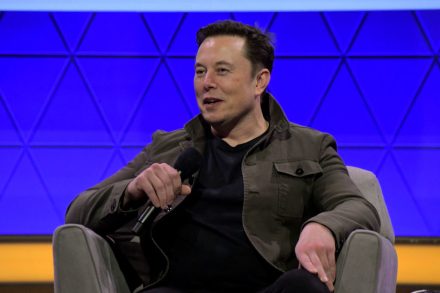
When Elon Musk took to the stage at the California Academy of Sciences on Tuesday, he gave the world the first insight into his vision for mapping and ultimately controlling the brain. Three years ago, Musk formed Neuralink which was specifically created to respond to the threat that Musk’ believes is posed by the imminent threat of thinking machines powered by AI. Musk believes that phase of the information revolution could mark the end of humanity as robots outpace humans in intelligence and pace of evolution. His answer is to fully understand exactly how the brain works and, in the process, he believes that the new science will find the cure for many of humanity’s most deadly illnesses such as Parkinson’s, Alzheimer’s and PTSD.

elon musk brain