Netflix

Our love affair with the Anglo-Saxons

From our UK edition

On 5 July 2009, an unemployed 54-year-old metal detectorist called Terry Herbert was walking through a Staffordshire field when his detector started to beep and didn’t stop. Herbert guessed almost immediately that he’d found gold. What he didn’t realise was that he had made Britain’s greatest archaeological discovery since the second world war. Three hundred sword-hilt fittings, many of them spectacular examples of Anglo-Saxon metalwork; a mysterious gold-and-garnet headdress, apparently for a priest; miniature sculptures of horses, fish, snakes, eagles and boars.
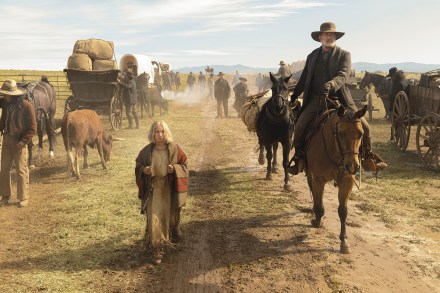
This is cinema as car ad, says Geoff Dyer: News of the World reviewed

From our UK edition

It’s a premise with plenty of previous. Children whose parents were murdered by Indians on the frontier of the American west are abducted and then adopted by the tribe. Their plight is appalling — female captives were raped as a matter of course — but sometimes the hostages forget their mother tongue and come to relish the nomadic life of the plains. Another round of trauma follows when the adopted guardians are in turn massacred and the orphans are returned to the alien captivity of civilisation. The famous abduction of Cynthia Ann Parker by Comanches in 1836 and the prolonged attempts to find her — followed by her attempts to escape from her rescuers — served as source material for John Ford’s The Searchers.

How chess got cool

From our UK edition

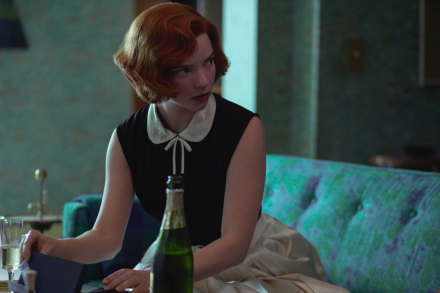
Ten years ago, comedian Matt Kirshen’s one-liner was voted the fifth-best at the Edinburgh Fringe. ‘I was playing chess with my friend and he said “Let’s make this interesting”. So we stopped playing chess.’ Not bad, as jabs go, and I’ve heard a few — as has any lifelong chess player. Well, times have changed. Late last year, Netflix TV series The Queen’s Gambit was watched by 62 million households in its first 28 days. Who’s laughing now? I suppose I can admit that the popularity of the series wasn’t entirely down to the chess. The wondrous eyes of Anya Taylor-Joy as heroine Beth Harmon surely played a part, and period styling works like catnip on TV audiences.

The Netflix generation has lost its grip on history

From our UK edition

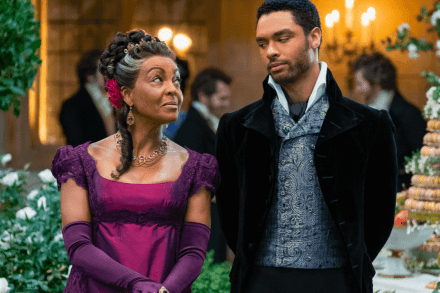
The first thing you notice about Bridgerton, Netflix’s big winter blockbuster set in Regency England, is how bad it is: an expensive assemblage of clichés that smacks of the American’s-eye view of Britain’s aristocratic past. The dialogue is execrable, the ladies’ pouts infuriating. But bad things can be good, especially when it comes to sexy period romps. Bridgerton is no different. The story follows the elder children of the Bridgerton family as they look for love in a utopian sprawl of courtly landscape and sociality.

Why feminists should watch serial killer dramas

From our UK edition

I connect to Netflix for yet another evening of no-choice entertainment. Well, I suppose I could take a turn around the room, mulling over the local gossip before playing a few notes on a musical instrument. But wait, there is NO gossip under this relentless lockdown, and I don’t have a musical instrument. So, as someone who is proud of my prolific TV habit I scroll through the crime section, and can’t help but notice the saturation of serial killer themed documentaries and dramas on offer. Night Stalker, Serial Killer with Piers Morgan, Confessions of a Serial Killer, Inside the Criminal mind, Mrs Serial Killer, Psychopath, Mindhunter, Evil Genius, Killer Women.

The Netflix sommelier: what to drink while you watch

From our UK edition

Are we there yet? No, not a child on a long drive (remember those?) but me every day of last week as I struggled to stay strong towards the closing stages of Dry January. Yes - finally we are there: the sunlit uplands of 1 February. Having spent the best part of a month dry, it’s fair to say I have done a good amount of reflection on the subject of alcohol and abstention thereof. No, not about how awful I’ve realised drinking is and how I now plan to stop drinking forever - none of that nonsense. I was thinking more about how it’s made me realise once again quite how much I love wine.

Remarkably moving: The Dig reviewed

From our UK edition

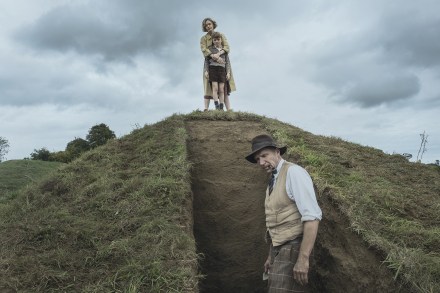
Just before the outbreak of the second world war a discovery was made in a riverside field at Sutton Hoo in Suffolk. It was an immense buried boat, dating from the 7th century, and it yielded gilded treasure after gilded treasure, thereby wholly changing our understanding of the Dark Ages. ‘They weren’t dark… by Jupiter!’ as one archaeologist puts it here. It is a fascinating story that could have been told as a full-on thriller. But instead the film employs a delicious, graceful restraint, paying as much attention to deeply buried feeling as to what’s buried deeply in the earth. It’s remarkably moving. By Jupiter, I even cried by the end.

The BBC needs to face up to the truth about the licence fee’s future

From our UK edition

It won’t come as much of a surprise to learn that the National Audit Office thinks the BBC faces 'significant' uncertainty over its financial future due to changes in viewing habits. The NAO’s findings are about as ground-breaking as your average anodyne Beeb drama, but they do tighten the cilice on a funding model that is impossibly outdated in the 21st century.  In the past decade alone, there has been a 30 per cent decline in BBC TV viewing; on average, the amount of time an adult spent watching broadcast BBC TV fell from 80 minutes per day in 2010 to 56 minutes in 2019. When it comes to younger viewers, the NAO’s findings are ever more troubling for the BBC: in the UK, 18-34 year olds now watch seven times as much Netflix and YouTube as BBC1 content.

So good I watched it twice: Netflix’s The White Tiger reviewed

From our UK edition

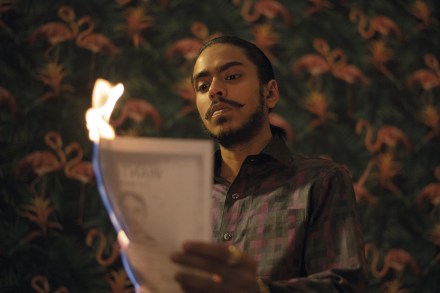
The White Tiger is adapted from the Booker-prize winning novel (2008) by Aravind Adiga. It is directed by Ramin Bahrani (Man Push Cart, 99 Homes) who also wrote the screenplay. It stars Adarsh Gourav, otherwise a songwriter and singer. It’s a rags-to-riches story set in India but it’s not at all a typical rags-to-riches story set in India. Those are some of the things you probably should know, but there is only one thing I want you to know: it is wonderful and, even though the subject matter is often chilling, and there’s simmering rage, and murder, it’s still two hours of boisterous, dazzling, swaggering fun. I watched it once and thought: I could easily watch that again. So I did. Unheard of. And one last thing I want you to know: Bahrani may be a genius.

The truth about the vaccine ‘postcode lottery’

From our UK edition

‘Postcode lottery!’ people scream when one area feels less well treated than another in a public service — in this case, the rollout of the Covid vaccines. It is a silly phrase, if you believe in the devolution of power and the importance of locality. The point of local health trusts, councils and so on is to let local people run most of the things that matter to them. The logical result is that — even within a national set-up like the NHS — there will be differences. If there were no differences, it would not follow that everyone was getting the same high-quality service. It would much more likely show that the service was uniformly bad, because all convoys, to remain in convoy, must go at the speed of the slowest. Visible difference is a spur to improvement.

Superb but depraved: BBC1’s The Serpent reviewed

From our UK edition

The Serpent is the best BBC drama series in ages — god knows how it slipped through the net — but I still think it most unlikely that I shall stick it through to the final episode. It’s not the style that’s wrong but the subject matter: do we really want to spend eight hours of life in the company of a smug, ruthless serial killer who murders at least 12 people — and more or less gets away with it? Up to a point The Serpent has addressed this problem by trying to make the central figure not the killer, Charles Sobhraj, but the persistent Dutch junior diplomat, Herman Knippenberg, who eventually nabs him.

10 films to banish the January blues

From our UK edition

At the best of times, January is a depressing month. Everyone is feeling poor and bloated after the Christmas extravaganza, and the days are still short and cold, with the nights drawing in far too early. Nobody has ever said ‘I’m really looking forward to January’. Which is why, with the spectre of illness and infection still stalking the land, the best thing that we can do is to stay at home with some of the most cheering films that we can find, and hope to banish the January blues that way. Of course, everyone enjoys a whacky comedy, or a gripping thriller, and they definitely have their place. But these films represent some of the most uplifting and purely enjoyable examples of cinema that we’ve seen over the past years.

Ten films for New Year’s Eve

From our UK edition

New Year’s Eve is bound to be less brash this year – some would ever say melancholic. Strangely many classic New Year movies tend to bend towards a sense of melancholy amid the celebrations, most memorably Billy Wilder’s classic comedy-drama The Apartment (1960). That film at least has a hopeful ending. Unlike say Sunset Boulevard (1950), Splendour in the Grass (1961), Rosemary’s Baby (1968), The Godfather Part II (1974) and especially Looking for Mr Goodbar (1977). Still, things perk up in more recent pictures set on New Year’s Eve; here’s a selection to see 2021 in with; some good, some so-so, and some, well…not so great: About Time (2013) – Amazon Prime & Netflix https://www.youtube.com/watch?

The rise and fall of Netflix

From our UK edition

In 2010, Jeff Bewkes, then CEO of Time Warner, was asked if he thought Netflix had any chance of taking over Hollywood. His sarcastic answer deserves to go down as one of the all-time dumb predictions. Bewkes (like the dude who wrote the internal Western Union memo that said telephones were a waste of time) was not taking Netflix seriously: ‘Is the Albanian army going to take over the world?’ A decade later, Netflix is not Albania. It’s imperial Spain during el Siglo de Oro. Massive, relentlessly mercantile and ruthlessly acquisitive, Netflix has rippled over the world to become one of the largest media businesses ever known. Count the hundreds of millions of subscribers, or the billion-dollar content deals.

Pawn show

I’m thrilled to tell you that my latest novel has been optioned by Netflix. Grand Prix Grandpa is the inspirational story of an ordinary journalist in his mid-fifties who reboots his life by becoming a world motor-racing champion. It’s tough at first driving round racetracks at 230 mph when your eyesight is going and your reflexes aren’t what they were. But with a little practice and a lot of determination, Grand Prix Grandpa — whose name is James, by the way — becomes F1 champion, then triumphs heroically over the resulting problems: semi-naked women hurling themselves at him; having so much money he doesn’t know what to do with it; the loneliness of tax exile in Monaco, etc. No, not really.

Netflix’s Barbarians taught me those Romans had it coming

Of all the times and places to have been on the wrong side of history, I can’t imagine many worse than to have been a Roman legionnaire in the Battle of the Teutoburg Forest in the year 9 AD. It was the Romans’ Isandlwana — a devastating defeat inflicted by native forces on what was theoretically the world’s most sophisticated, best trained, and almost insuperable military power.Over the years since I first learned about arrogant, tricked, doomed Roman commander Varus and his three legions (about 20,000 men, almost none of whom got out alive), I’ve often mused pityingly on how it must have felt: trapped in the gloomy forest, hemmed in by a bog, waiting to be slaughtered by hammer, ax or javelin by the hairy, painted, blood-crazed Germanic barbarians.

barbarians

Netflix’s Barbarians taught me those Romans had it coming

From our UK edition

Of all the times and places to have been on the wrong side of history, I can’t imagine many worse than to have been a Roman legionnaire in the Battle of the Teutoburg Forest in the year 9 AD. It was the Romans’ Isandlwana — a devastating defeat inflicted by native forces on what was theoretically the world’s most sophisticated, best trained, and almost insuperable military power. Over the years since I first learned about arrogant, tricked, doomed Roman commander Varus and his three legions (about 20,000 men, almost none of whom got out alive), I’ve often mused pityingly on how it must have felt: trapped in the gloomy forest, hemmed in by a bog, waiting to be slaughtered by hammer, axe or javelin by the hairy, painted, blood-crazed Germanic barbarians.

How to play chess like Beth from The Queen’s Gambit

‘Oh you can definitely learn it as a mere mortal. Nobody’s born knowing how to move a knight!’ After watching Netflix phenomenon The Queen’s Gambit, I am picking the brains of Jennifer Shahade, the two-time US women’s chess champ. I’m relieved by Shahade’s assurance that there’s no need to be naturally gifted, but with Queen’s Gambit Beth starting at the age of nine, am I too old to learn? ‘No way! Older learners catch onto certain things more quickly, and they appreciate the beauty of chess,’ says Shahade, who learnt it while most of us were still eating mash via imaginary airplanes. With chess set sales surging by 1,000 percent, I’m not the only one inspired by the series.

Mostly ghostly: Henry James haunts Bly Manor

Halloween wasn’t quite the same this year: no trick-or-treating or bobbing for apples, no packed parties, not even a socially distanced haunted house. As a lover of all things horror, I had to rely on television to put the spooky in the season. Netflix’s new series The Haunting of Bly Manor is the sister show to last year’s wildly popular The Haunting of Hill House, created by Doctor Sleep’s Mike Flanagan. (Flanagan is also behind Hush, one of the smartest horror movies I’ve seen in a few years and definitely worth watching.

bly manor

Sets appeal: the distracting beauty of TV backdrops

From our UK edition

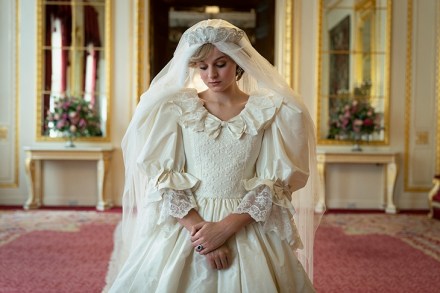
Never mind the regal and political tussles depicted in The Crown; the real action comes with the closing credits. This is the kind of list of job titles of which many feature films can only dream. In addition to the seven art directors of various ranks, there is an art department co-ordinator, art department assistant, five set decorators, two set decoration runners and a set decoration prop driver. Not to mention a drapes master, drapes master assistant, one florist and two home economists. You don’t get the stand-ins for Buckingham Palace, Balmoral and all the other stately piles of multiple turrets and crenelations looking as good as they do without armies of behind-camera personnel.