Netflix

Horrifying but gripping: Netflix’s The Puppet Master: Hunting the Ultimate Conman reviewed

From our UK edition

It’s 1993 and you’re studying at a top agricultural college with a bright future ahead of you, perhaps in farming or land management, when a chance conversation with a barman all but ruins your life. The barman tells you that he is an agent working for MI5, spying on an IRA cell in college, one of whose members happens to be your flatmate. You might be sceptical but the agent is very persuasive; and besides, someone from your college has indeed just been arrested for supplying bomb-making equipment to the IRA. When the agent warns you that you and your flatmates are in serious danger and must go on the run, you’re inclined to take him seriously.


The joie de vivre of Emily in Paris

The hit series Emily in Paris is being eviscerated by the media. Despite labeling it “Netflix’s most-hated show,” “a catastrophe of culture,” and “inedible tripe,” high-minded critics sure are spending a lot of time and website space talking about it. I am all about scrutinizing art (if we can call Emily “art”) to extract something meaningful. But in the following analysis, I will argue why we should absolutely stop analyzing Emily in Paris. First of all, I don’t understand why critics are disappointed not to find the answer to some weighty Descartian theory in a show whose descriptor reads: “After landing her dream job in Paris, Chicago marketing exec Emily Cooper embraces her adventurous new life while juggling work, friends and romance.

The unexpected brilliance of Don’t Look Up

From our UK edition

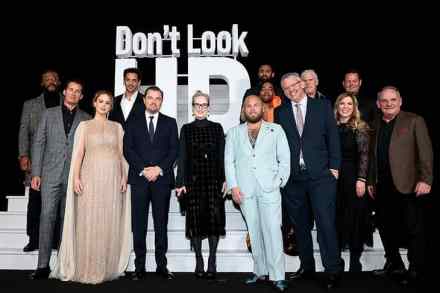
I wasn’t looking forward to seeing Don’t Look Up, the new satirical film on Netflix. It’s about a couple of American scientists who discover a giant ‘planet-killing’ comet that’s going to collide with Earth in just over six months. They try to warn the world about this existential threat but no one takes them seriously, from the President of the United States on down. Some people half- listen, but then get distracted by gossip or greed or lust, and when they do engage they come up with excuses, like pointing out the science is only 99.78 per cent certain, not 100 per cent, so why don’t we just ‘sit tight and assess’? Or maybe we can solve the problem with technology?

The invisible hand

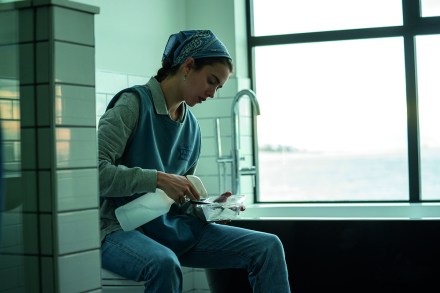
Few of us like cleaning our own homes, so it’s scarcely surprising that the cleaner, or maid, occupies a particular place in our imagination. To those who resent the imposition of domestic hygiene as an intrusion on privacy, cleaners can be sinister and even vengeful presences — as famously depicted in Jean Genet’s play The Maids. For those who feel guilt over the structural inequalities of capitalism, Kathryn Stockett’s The Help added an extra dose of racism and feminism. But to those who see only the relief of having their dirt lifted by someone else, the cleaner is a bringer of joy who deserves everything from a Dior dress (Paul Gallico’s Mrs 'Arris Goes to Paris) to a rich husband (the J.Lo vehicle Maid in Manhattan).

maid

Most-read 2021: The Netflix generation has lost its grip on history

From our UK edition

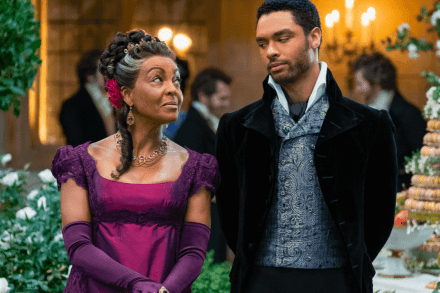
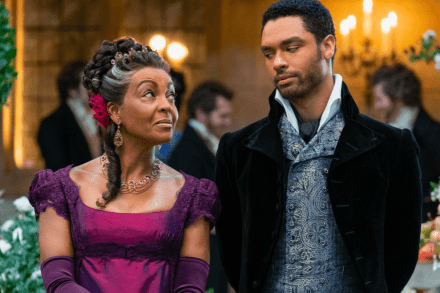
We're closing the year by republishing our ten most popular articles in 2021. Here's number four: Zoe Strimpel writing in February about how popular portrayals of the past are being changed to fit the present.  The first thing you notice about Bridgerton, Netflix’s big winter blockbuster set in Regency England, is how bad it is: an expensive assemblage of clichés that smacks of the American’s-eye view of Britain’s aristocratic past. The dialogue is execrable, the ladies’ pouts infuriating. But bad things can be good, especially when it comes to sexy period romps. Bridgerton is no different. The story follows the elder children of the Bridgerton family as they look for love in a utopian sprawl of courtly landscape and sociality.

If you watch one thing this Christmas, make it The Witcher

From our UK edition

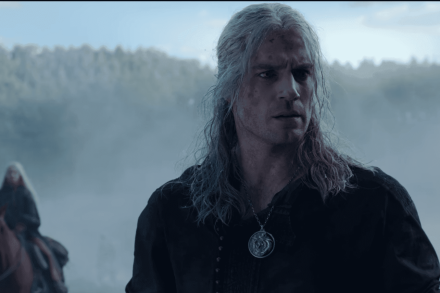
If you only watch one thing on TV this Christmas, make it The Witcher (Netflix). It’s by turns funny, exciting, scary, moving, dark, exhilarating; the special effects and battle sequences and fantastical walled cities are convincing; the casting and acting are pleasing; the storylines are a perfect balance between the intimate and the epic. I’m completely hooked. But what makes it so vastly superior to, say, the other big sword and sorcery series currently on TV, Amazon’s The Wheel of Time ? What it boils down to, I think, is congruence. The Witcher (being based mainly on a popular video game) knows what its preposterousnesses are and inhabits them like well-fitting armour. It knows its audience and wants to delight them.

Jimmy Carr’s anti-vaxxer joke isn’t funny

From our UK edition

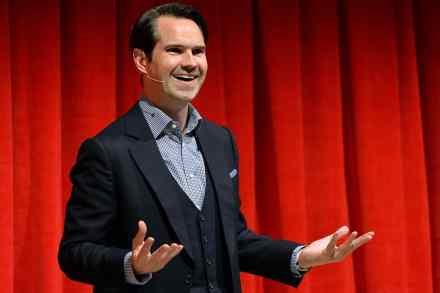
Jimmy Carr was once the smug face of shock comedy. As a stand-up comedian, and a host of various comedy shows, he used to joke with his trademark poker face about looks, disabilities and sexual violence. The Welsh, the Scots and obese women and children were also targets. When controversy inevitably came, Carr stood his ground. He caused uproar in 2009 by joking: 'Say what you like about those servicemen amputees from Iraq and Afghanistan, but we're going to have a f**king good Paralympic team in 2012.' Carr said sorry for that gag, but he insisted: 'My intention was only to make people laugh.' Does Carr still hold true to that view? His new special on Netflix suggests his comedy has changed.

Eddie Izzard is so bad I’m hoping he gets dismembered: Sky’s The Lost Symbol reviewed

From our UK edition

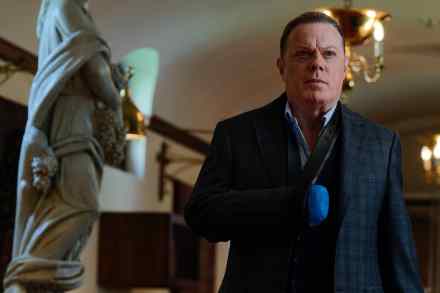
If it weren’t for this job I sometimes wonder whether I’d even bother watching TV at all. This mood strikes me particularly in those weeks when I find myself casting round for anything new and vaguely interesting to watch and I end up in front of something as epically dire as Sky’s new Dan Brown adaptation The Lost Symbol. Brown’s hero Robert Langdon, whom we first met on screen in the The Da Vinci Code, is like Indiana Jones with a charisma bypass. Remember that wonderful scene in the first Indie movie where hunky Harrison Ford is giving a lecture to some besotted female archeology students, and one girl closes her eyes to reveal that she has written ‘Love’ on one eyelid and ‘You’ on another?

Netflix’s Chappelle of hate

The difference between what I call accuracy and right-side norms within newsrooms is simple. Accuracy norms require journalists to get to the truth. Right-side norms require journalists to prove they’re on the “right” side of controversies. If this includes obscuring or spinning certain facts, so be it. For reasons ranging from politicization to the gutting of smaller and traditional outlets, most American journalism now adheres to right-side norms. Consider the Dave Chappelle controversy. If you don’t yet have an opinion about the jokes Chappelle makes about transgender people in his Netflix special, The Closer, watch it to get them in full context. There’s been enough bloviating about the jokes themselves.

Netflix

Profound and original and unashamedly religious: Midnight Mass reviewed

From our UK edition

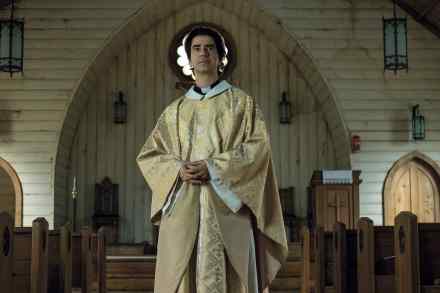
I was turned on to Midnight Mass by Ricky Gervais who raved about it in one of his social media chats: ‘I absolutely loved it, and it got better and better. It’s like all the themes like love and death, regret, second chances, but it’s about good and evil in a biblical sense.’ Yes. Midnight Mass is very unusual in that (so far, at least; I’m only two and a bit episodes in) it seems to take Christianity at its own estimation. God is real, miracles do happen, even (or especially) the most miserable sinners can find redemption through repentance. Watching it is quite unsettling because you keep expecting the rug to be pulled from under your feet and, say, the hero priest Father Paul Hill (Hamish Linklater) suddenly to be revealed as a secret agent of Satan.

Grimy, echt and gripping: Netflix’s The Forgotten Battle reviewed

From our UK edition

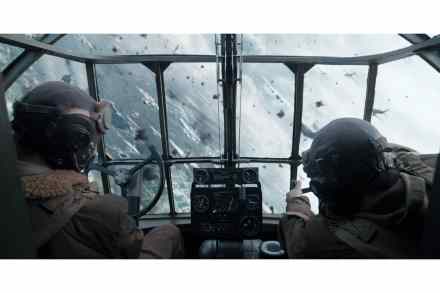
The Forgotten Battle is a Dutch feature film commemorating the desperate and relatively little-known Allied assault on the Scheldt estuary in October and November 1944. When I went to the battlefield decades later with veterans of 47 RM Commando, they told me it was worse than D-Day because the Germans knew they were coming and had prepared stronger defences. Nearly 13,000 Allied soldiers were killed or wounded (about the same as the German casualties), half of them Canadians. It has been a long time since I watched a half-decent second world war movie, mostly because they hardly bother making them any more.

Exquisite to look at, strangely tense and wholly riveting: Netflix’s Passing reviewed

From our UK edition

Passing is Rebecca Hall’s adaptation of the Nella Larsen novella (1929) about two biracial women, one of whom chooses to pass for white, and one who does not, and the effect they have on each other, and it’s superbly done. It’s tightly made, exquisite to look at, strangely tense, wholly riveting and it’s also, let’s be honest, just the right length for a film (90 minutes). Hall — who wrote the screenplay and directs, and is otherwise an actress — is the daughter of theatre director Peter Hall and opera singer Maria Ewing and you could say she has skin in the game. When she was growing up, she has said, she would sometimes look at her mother and wonder: are you a black woman?

The PR campaign at the heart of the war on Netflix

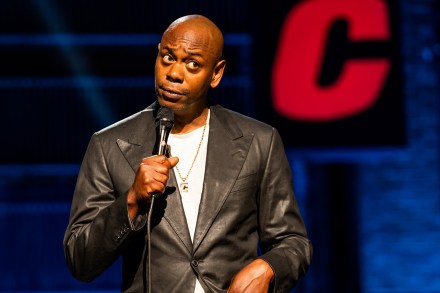
What remains unsaid about The Closer? In the past two weeks, countless thinkpieces have tackled the controversy around Dave Chappelle’s new special by trying to determine where its content falls on the line between funny and offensive, provocative and hateful, punching up versus punching down. Some analysis has been thoughtful; some has been shallow and reactionary. But virtually all of it centers on the question of whether Netflix should have removed or censored the special for being “harmful” to vulnerable people. That notion is one that Netflix executive Ted Sarandos summarily rejected in a statement sent to employees, writing that “while some employees disagree, we have a strong belief that content on screen doesn’t directly translate to real-world harm.

chappelle netflix

My advice to Dave Chappelle

From our UK edition

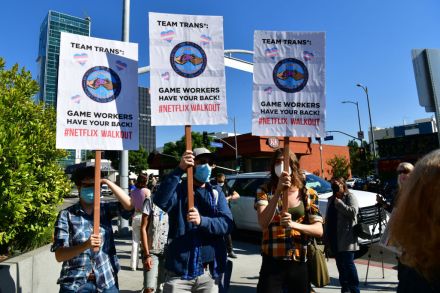
I’m accustomed to a sense of urgency in relation to Netflix offerings because the streaming service often buys short-term rights that abruptly run out. But this time, I rushed to see Dave Chappelle’s new stand-up special The Closer lest Netflix’s own disgruntled employees succeed in getting the performance taken down. Strictly speaking, the affronted staff aren’t demanding the show’s withdrawal, but it’s hard to see what else the proposed employee walkout on Wednesday was designed to accomplish. After all, in the olden days if you didn’t like something on television you just didn’t watch it, but in our enlightened times you make damned sure no one else can watch it either.

Dave Chappelle’s last special is no masterpiece

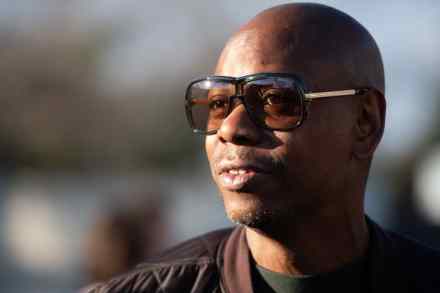
Dave Chappelle is a member of a dying breed — a remnant of an age that has been drifting into history. That’s right. Dave Chappelle is a comedian who does not have a podcast. I do not begrudge comedians their podcasts. (After all, I am a writer with a Substack.) As a comedian who has not blessed us with his every thought and memory, though, Chappelle has maintained his mystique. His specials are events, and his last special, The Closer, is doubly so. Critics and reporters have been focusing on its allegedly offensive jokes at the expense of trans people. I would like to shove these subjects to one side for a moment and ask the most vital questions. Is it funny? Yes. Is it very funny? No. Chappelle is a tremendous performer.

dave chappelle

Lurking beneath the gore are moments of wit and sensitivity: Squid Game reviewed

From our UK edition

Should we be worried that Squid Game is the most popular show in Netflix’s history? If it’s a case of art imitating life, then the prognosis for our civilisation is not good: most of us will die, horribly, sooner rather than later, but for the very few who survive there will be untold riches to enjoy in the company of the cruel and capricious controlling super-elite. Squid Game is a Korean update of the Japanese cult classic Battle Royale (2000) which spawned — or revived; let’s not forget Rollerball (1975) — the genre known as ‘death games’. These films take place in a dystopian future where ordinary, desperate folk compete in a series of gladiatorial to-the-death contests for the amusement of the ruling oligarchy.

Dave Chappelle isn’t ‘transphobic’

From our UK edition

Transphobia is defined as the fear or hatred of trans people. But all too often, it is applied much more widely than that. Disagree with a trans person, and you could well be labelled as transphobic; look at us a 'bit funny' and we may report you for hate crime. Poke fun at us, and heaven help you. Comedian Dave Chappelle pulls no punches when it comes to the transgender community. In The Closer – his latest Netflix special – he is direct and uncompromising. But – and this is important – he plays the ball rather than the man. His target is not us but the ideology that has sprung up around us: a pseudo-religious doctrine that demands everyone believe that a man can become a woman just because he says so.

If it were any better, it would actually be a terrible pity: Diana – The Musical reviewed

From our UK edition

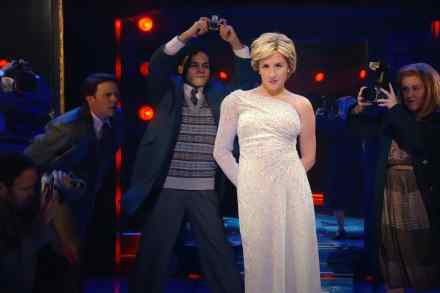
This week, an excellent film (Moving On) and a film that isn’t at all, but is entirely worth it as it’s one of the super bad ones that don’t come along too often. It’s the kind that, if it were any better, it would actually be a terrible pity. (See also: Cats.) It’s Diana: The Musical and it’s two hours of ‘whaaaaaat?’ and pinching yourself that this is really happening. (After two hours I was black and blue, with the pinching.) I don’t know what the best lyric is but ‘Harry, my ginger-haired son, you’ll always be second to none’ has to be up there. (Also: ‘It’s the Thrilla in Manila but with Diana and Camilla’ has to be in the game. The top spot is highly contested.

In blockbuster Britain, the BBC is being left behind

From our UK edition

There’s a great revival under way in the British TV and film industry, but it’s not the BBC that’s behind it. Netflix is normally secretive about its figures but this week published a list of its most popular shows and top of the pile is Bridgerton, which imagines Regency London as a racially mixed society. Although funded with US money, it is shot in Yorkshire with a British cast, using British technical know-how, and, thanks to Netflix’s global audience of more than 200 million, this British show has now become the most-watched series in the history of television. Not so long ago, it was argued that subscription television would never work in Britain because we had all the broadcasting we could wish for.

The BBC is being left behind in blockbuster Britain

From our UK edition

There’s a great revival under way in the British TV and film industry, but it’s not the BBC that’s behind it. Netflix is normally secretive about its figures but this week published a list of its most popular shows and top of the pile is Bridgerton, which imagines Regency London as a racially mixed society. Although funded with US money, it is shot in Yorkshire with a British cast, using British technical know-how, and, thanks to Netflix’s global audience of more than 200 million, this British show has now become the most-watched series in the history of television. Not so long ago, it was argued that subscription television would never work in Britain because we had all the broadcasting we could wish for.