Nato

Enlarging Nato will ostracise Russia (1997)

From our UK edition

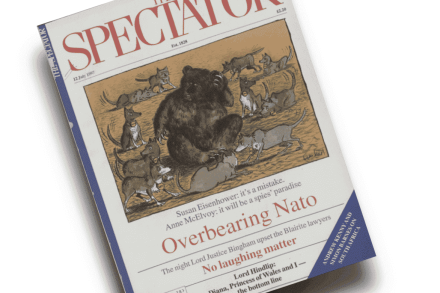
It's 25 years this month since Poland, the Czech Republic and Hungary were invited to join Nato. The Spectator’s cover story that week was this essay by Susanne Eisenhower, president of the Eisenhower Group and granddaughter of President Eisenhower. Explore The Spectator’s archive here. Washington, DC When historians, decades from now,  consider the 20th century they will probably be struck by how the major conflicts of the century were ultimately resolved. At the century's end, Germany, the country that wreaked more destruction on the world than any other power, is economically prosperous, unified and firmly locked within Nato — all due to the magnanimity of its victors.

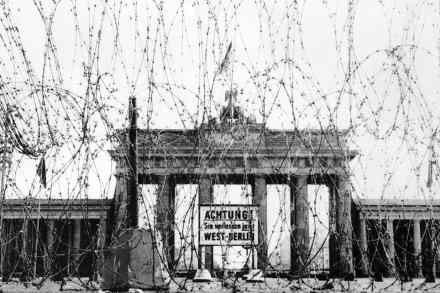
East Germans still find it hard to see Russia as the enemy

From our UK edition

Not all of Germany is against Vladimir Putin. Sahra Wagenknecht, a Left party MP, recently defended him, saying he is not ‘the mad Russian nationalist’ of caricature and sending weapons to Ukraine was a ‘US-driven policy’ which played a role in provoking his invasion. Her views are quite common in East Germany and not only among the left. The far-right party Alternative for Germany, which has most of its support in the East, opposes sanctions and providing weapons. A recent opinion poll asked whether Berlin should ‘be tough on Russia’: half of West Germans agree, but just a third of East Germans do. Some 58 per cent of East Germans want Berlin to take an approach that doesn’t ‘provoke Russia’. Only 40 per cent of West Germans agree.

Nato is no longer ‘brain dead’

From our UK edition

Finland and Sweden will be formally invited to join Nato today. Them joining the alliance will bolster Nato's presence in the Baltic and make it easier to defend Latvia, Lithuania and Estonia. The alliance now has a clear, strategic purpose again Turkey had objected to the two countries joining, regarding them as too soft on Kurdish separatists, whom President Recep Tayyip Erdogan sees as 'terrorists' threatening his country. But having received some concessions on that front, Erdogan has dropped his objections. There’s also speculation that the US will sell F-16 fighter aircraft to Turkey in exchange for its cooperation on this matter.

Defending Ukraine should be a European project

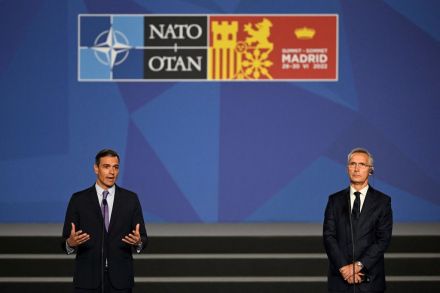
NATO gatherings at the head-of-state level are ordinarily placid, even boring affairs. But this week’s three-day NATO summit in Madrid will be quite different. For the first time in twenty-three years, the alliance is meeting as a war churns on European soil. Russian President Vladimir Putin’s invasion of Ukraine has been an electric shock to the continent’s defense establishment, at least if their rhetoric is any indication. European officials have finally come around to noticing that Europe isn’t an exceptional zone of peace and tranquility, but a region no more immune to armed conflict than any other. NATO, which was straying out of theater in a desperate attempt to stay relevant, is now back to performing the defensive mission it was meant to do.

What happens to US fighters captured in Ukraine?

Alex Drueke and Andy Huynh are two former American military members now in Russian custody, captured by the Russians in Ukraine, where they were fighting for the Ukrainian government. What is going to happen to them? The most likely thing is that both men will eventually be traded to the US in return for captured Russians. Prisoners are very valuable and rarely wasted in executions unless those carry much more value than the prisoners held by the other side. The deal may be public or secret, and the US can expect to pay a premium. Israel usually releases ten or more Palestinian prisoners in exchange for one of its captured troops.

The age of American unexceptionalism

Our administration would have us believe that Joe Biden is the leader of the free world. But he isn’t — and our relative inaction on Ukraine should firmly put to rest the idea of “American exceptionalism.” While Ukrainians were heartened by British prime minister Boris Johnson’s April trip to Kyiv, our commander-in-chief has adopted a different strategy for this active war zone: send in the women. Security concerns are ostensibly to blame for Biden being MIA, but sending in three of the country’s most important ladies — Speaker of the House Nancy Pelosi to Kyiv, First Lady Jill Biden and Vice President Kamala Harris to neighboring countries in Eastern Europe — seems an odd way to demonstrate that the administration is worried about security.

unexceptionalism

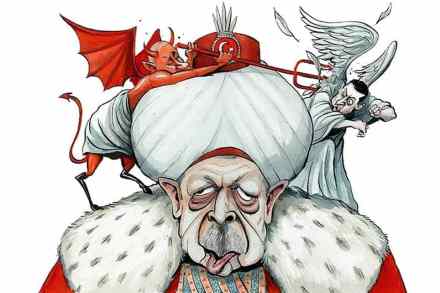
Cold Turkey: why is Erdogan resisting Nato’s expansion?

From our UK edition

Driving a hard bargain is the Turkish President Recep Tayyip Erdogan’s chief survival skill – one that has kept him in power for nearly as long as his Russian counterpart Vladimir Putin. And the basic principles of bargaining are twofold: never give something away for nothing, and make your threats to walk away convincing. No surprise, then, that Erdogan’s buzz-killing announcement last week that Turkey would oppose Swedish and Finnish membership of Nato was made in characteristically blunt terms. Speaking of a planned visit of Nordic diplomats to Ankara, Erdogan asked: ‘Are they coming to convince us? Excuse me, but they should not tire themselves.

Italy’s hostility to Nato is building

From our UK edition

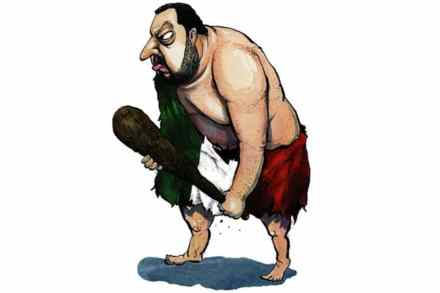
Ravenna, Italy The war in Ukraine has caused an unholy convergence of the left and right in Italy. While there is nothing formal so far about this alliance of enemies, it nevertheless threatens to destroy the unity of Nato. The most high-profile participant is -Matteo Salvini, leader of the Lega – the party with the second-highest number of MPs in Italy’s parliament – which is invariably defined as ‘far right’. Salvini, who has been one of Vladimir Putin’s strongest supporters outside Russia, condemned the invasion of Ukraine and has now come out as a pacifist. He opposes Finland and Sweden joining Nato, or sending more arms to Ukraine, on the grounds that both would make peace less likely.

‘America or chaos’ is a false choice

There is an age-old dogma in the US foreign policy establishment: when America pulls back, chaos ensues. Like an anti-inflammatory that keeps arthritis under control, Washington’s presence in this or that region keeps enemies cowed, partners reassured, and the barbarians at the gates. Of course, just because an argument is popular doesn’t mean it’s accurate. There are several problems with the “America must be everywhere, at all times” line of thinking, the most poignant of which is that it turns the US military into an agency of global rent-a-cops.

The problem with Macron’s vision for Europe

From our UK edition

The Ukraine crisis has transformed international affairs, forcing countries the world over to rethink their alliances and interests. New patterns are forming that will probably stay in place for many years – and one outcome is that global deals are being seen as more effective than regional ones. Sweden and Finland look set to join Nato, and Britain has agreed a defence deal with Japan. In theory, EU countries are required to come to the help of any member that is attacked, but Sweden and Finland feel that only Nato membership (which offers a place under America’s nuclear umbrella) can afford them true protection. As they wait for the applications to go through, they have signed a defence deal with Britain which promises them interim protection.

Why the new Anglo-Swedish pact matters

From our UK edition

Boris Johnson has travelled to Stockholm to sign a mutual defence pact with Sweden to tide the country over until it enters Nato. He'll then travel to Finland to agree similar terms. This is quite significant for a few reasons. To the Prime Minister, the 'global Britain' post-Brexit strategy means signing global new trade and defence relationships: with European and global partners. In other words, showing that Brexit Britain has not turned in on itself but is keen to make new and global alliances - stepping up as an ally at times when even America is reluctant. This is one of those times. In theory, the European Union has a mutual defence clause (Article 42.

Putin’s Victory Day speech shows he’s not backing down

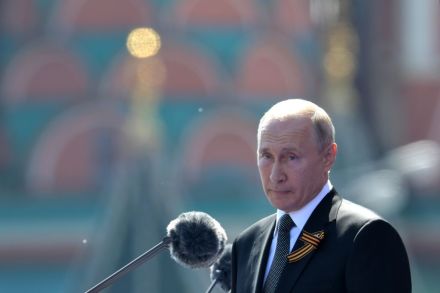
“Victory Day” is one of the most solemn events on the Russian calendar. Every year on May 9, the country gets together to celebrate the defeat of Nazi Germany in what Russians call “the Great Patriotic War,” in which as many as 26 million Soviet troops and civilians perished. It’s a time for reflection, for an appreciation of history, and, yes, for pomp and circumstance, with Russian troops decorated in dazzling uniforms marching in unison throughout Moscow's Red Square. This year’s Victory Day celebrations, however, had much of the world on edge. In next-door Ukraine, Russian forces were taking a beating, with smaller but nimbler and more determined Ukrainian units continuing to mount stiff resistance against a Russian military offensive in the Donbas.

Is NATO about to get even bigger?

The last time NATO inducted a new member was in 2019. The alliance agreed to accept North Macedonia’s request for membership. The small Balkan country was an odd choice to become the alliance’s thirtieth member state. At roughly 7,500 troops, North Macedonia’s military was smaller than the Los Angeles Police Department. Its entire population was smaller than Brooklyn's and its economy was one fifth the size of North Dakota’s. Three years later, NATO is set to become even bigger. Finland and Sweden, two Nordic nations with a decades-long policy of military neutrality between the West and Russia, will very likely submit their own membership bids as early as next month. Before Russia’s invasion of Ukraine, neither power was especially interested in becoming full-fledged members.

Russia becomes a lost cause

After an embarrassing two-month start to its war in Ukraine marked by pictures of abandoned armored personnel carriers, destroyed tanks and stalled armored columns outside Ukraine’s major cities, the Russian army is re-tooling and re-arming itself for a more manageable fight in the east. I use the word “manageable” not because the battle in the Donbas will be easy for Russian forces, but because the objective of expanding Russian control over the entirety of Donetsk and Luhansk is more realistic than overthrowing the Ukrainian government and occupying the entire country. Capturing, let alone holding, Kyiv, Kharkiv and Chernihiv would have entailed a massive number of personnel and a long-term commitment Russia doesn't have the resources to sustain.

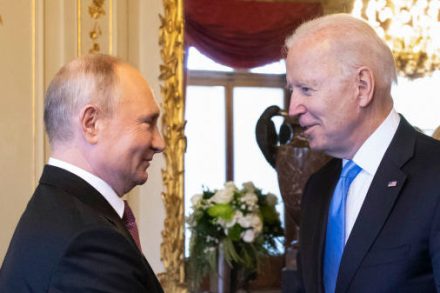
U.S. President Joe Biden and Russian President Vladimir Putin (Getty Images)

Why Putin won’t save NATO

Vladimir Putin’s invasion of Ukraine is the best thing to happen to NATO since 1989. No amount of cajoling by American presidents could get the Germans to increase their defense spending to 2 percent of GDP, as the alliance asks. The Russian president found a way to persuade them. Putin has also persuaded Finns and Swedes that joining NATO is a good idea. Not for the first time, a war is having the opposite of the effect its instigator intended. Putin may yet get what he demanded from Ukraine and the West right before his invasion. NATO membership may be on the table for everyone else but not for Ukraine. Russia wants its possession of Crimea to be acknowledged by Kyiv, and that too is within Putin’s reach.

Putin
Cold War

Springtime for Cold War nostalgics

My favorite spy movie cliché of all time is the secret agent stuck in the 1980s. The threats have gone asymmetrical, terrorists slip across borders, but our hero longs for the simple days when the world was divided between good Westerners and bad Russians. “You’re a fossil!” sneer his girlboss department administrator, his vegan drone pilot, his tech whiz who has just hunted down a non-state actor by crosschecking the latest SIGINT with a Yelp! review of an Iraqi yoga studio. Cut to him muttering under his breath à la Judi Dench in Casino Royale: “Christ, I miss the Cold War.” Now, suddenly, those who miss the Cold War are having a moment.

The age-old story of strongmen

From our UK edition

The only good news, after the massacres in Ukraine, is that so many ugly behemoth super-yachts have been seized and will not be polluting the seas this summer. There is no more horrible sight than an oligarch’s super-yacht on the horizon, and that is before it disgorges its passengers, which is a horror show in itself. Arab boats, with their hookers on board, are even worse. The other good news is that Elon Musk has become the largest shareholder in Twitter, and in a Trojan War replication has challenged Putin to a duel. Oh, what a wonderful world this would be if those who started wars would duke it out with their opponents, rather than sending youngsters to do the fighting for them. But don’t hold your breath.

Is this the birth of a Nordic Nato?

From our UK edition

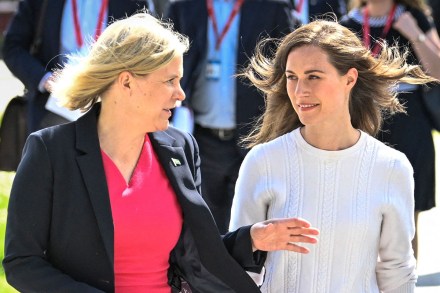
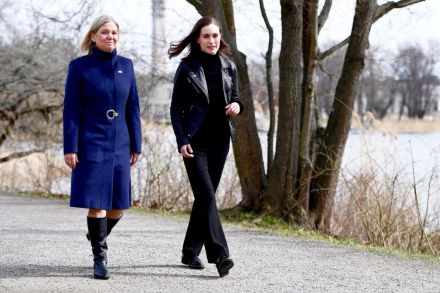
In the past six weeks, Finland and Sweden’s security policies have changed more than they have over the past six decades. In much of what they do, the two countries come as a couple and were militarily neutral during the Cold War – but their defence cooperation has only deepened since Russia’s invasion of Crimea in 2014. Now, the two are about to break with their long history of non-alignment. Their applications to join Nato are likely to come in the next two months. At a press conference in Stockholm this week, the prime ministers of the two countries – Sanna Marin and Magdalena Andersson – came close to admitting they want their countries to join the western military alliance. That declaration cannot be understated.

The Kremlin’s clown prince

The beginning of the year has not gone as well as it could have for Vladimir Zhirinovsky. Mostly because he is now dead, but also because Zhirinovsky, a Russian politician of the “managed” (pro-Kremlin) opposition, predicted and vigorously supported Russia’s invasion of Ukraine. If Zhirinovsky were able to follow the campaign from his hospital bed, it could not have met his expectations. The imperial Russia of his imagination ought to have come into glorious existence, but its armed forces instead suffered reversal and humiliation. Zhirinovsky was the long-time leader of the Russian Liberal Democratic Party — a grouping that, as many wags have separately concluded, was under his leadership neither liberal nor democratic nor, in some lights, a party.

Don’t blame the West for its Ukraine hesitance

As Ukrainian President Volodymyr Zelensky addressed the UN Security Council today with all the anguish you would expect from a wartime commander-in-chief, he could nonetheless be relatively pleased about several things. Sure, Zelensky and his advisers are constantly making the point that Ukraine needs bigger and better weapons to resist Russia’s invasion, but the West has been quite responsive to Kyiv’s requests. The Biden administration’s latest weapons shipment, announced last week, adds to the $1.6 billion in military aid the US has sent to the Ukrainian military since the war broke out on February 24.