National theatre

Family planning

Beginning starts at the end. A Crouch End party has just finished and the sitting room is a waste tip of punctured beer cans, tortured napkins and crushed nibbles. Wine bottles lie scattered across the carpet like fallen ninepins. Hostess Laura invites her last guest, Danny, for a final glass of Chardonnay. Twitchy conversation ensues. Then she tells him point-blank that she’s fallen in love with him, even though they’ve only just met. He rejects her weird come-ons (‘Kiss me, you lemon’) with evasive hyperactivity. He dashes about the room filling a bin-liner with defunct wine bottles and pulverised cheesy Wotsits. She forces him to sit next to her on the sofa, where he squirms and flips like a beached haddock. What’s wrong with him?

The bad sex award

Simon Stephens gives his plays misleading titles. Nuclear War, Pornography and Punk Rock contained little trace of their advertised ingredients. Heisenberg: The Uncertainty Principle includes no information about the German physicist or his theories. This is a sentimental romcom starring Anne-Marie Duff as a giggling airhead who stalks a grunting Cockney shopkeeper played by Kenneth Cranham. He’s 75 years old and though she’s in her mid-forties she has the skittish desperation of a gold-digging pensioner trying to act the nubile bimbo. Both characters are bored loners adrift in London. And because they’re solidly working class (she’s a receptionist, he’s a butcher), they excite our curiosity as lesser beings far removed from our own social milieu.

Sir Peter Hall (1930–2017) on Harold Pinter, actors and making love

Sir Peter Hall has died at the age of 86. He spoke to The Spectator in 2009: Even at 78 and from a distance, Sir Peter Hall has the look of an alpha male. There he is about 100 or so feet away, advancing towards me across the polished boards of his rehearsal room; head forward, bear-like, with the lonely charisma of a boxing champ. As he passes, the younger members of the Peter Hall Company fall back smiling, deferring. He’s king here, a Lear (act one). He pauses to pat a gamine young beauty on the arm, stroke his beard, pull his plump lips into a roguish grin — then moves on to the table where his lunch and I are waiting. One small sandwich, one large pile of lettuce.

Made in Port Talbot

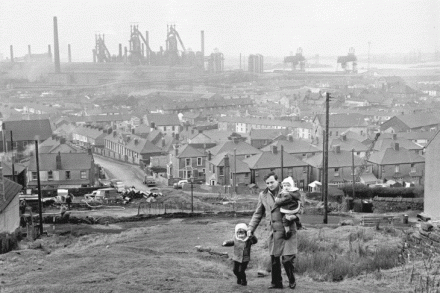
Port Talbot, on the coast of South Wales, is literally overlooked. Most experience the town while flying over it on the M4, held aloft by concrete stilts planted in terraced streets. From that four-lane gantry, the only landmarks are the dockyard cranes and belching steelworks. Over Easter in 2011, National Theatre Wales staged a piece of street theatre that was crafted as a civic resurrection. The Passion of Port Talbot featured Michael Sheen as a Messiah-like teacher who harkens to oral memories. ‘I remember!’ he hollered on the third day, while attached to a crucifix on a traffic island by Aberavon beach, before reeling off a litany of local names: of villages, streets, sweet shops, pubs, clubs, mountains.

Animal or vegetable?

Against by Christopher Shinn sets out to unlock the secrets of America’s spiritual malaise. Two main settings represent the wealthy and the dispossessed. At a university campus, an inquisitive Jesus-freak named Luke interrogates people about their experiences of violence. At an online retailer, oppressed wage slaves toil for hours and mate fleetingly during their tea breaks. Shinn’s characters also fall into two categories. The rich are eloquent, idealistic and disingenuous. The poor are earthy, impulsive and honest. The play is built around a series of formalised conversations, recorded interviews, writing tutorials, a Q&A session at a town hall, a stilted reunion between two old school-friends, and so on.

Starting block

Conor McPherson’s new play is set in dust-bowl Minnesota in 1934. We’re in a fly-blown boarding house owned by skint, kindly Nick who has designs on a sexy widow with a big inheritance coming. Good opening. Roll the story. But there’s more. Nick’s useless son is a depressed novelist entangled with a beautiful governess betrothed to a rich man she doesn’t love. An even better opening. Roll the story. But wait. Nick has a black maid called Marianne whom he rescued as a baby and raised as one of the family. An interesting complication. Roll the story. No wait. Marianne claims to be pregnant but declines to reveal whether the father is a rapist or an honourable suitor. And local gossips whisper that her baby bump is fictional. Fascinating.

The good Palestinian

Shubbak, meaning ‘window’ in Arabic, is a biennial festival taking place in various venues across London. The brochure reads like an A to Z of human misery. All the tired phrases from the Middle East’s history lurch up and poke the onlooker in the eye: ‘revolution’, ‘dystopia’, ‘cries of pain’, ‘ruins’, ‘waking nightmare’. The agony is leavened with slivers of earnest pretention. Corbeaux is a ballet designed for Marrakesh railway station by dancers who ‘take possession of public spaces’. Ten women with hankies over their hairdos move in ‘geometric alchemical arrangements’ making ‘piercing sounds and extraordinary cries’.

Party piece

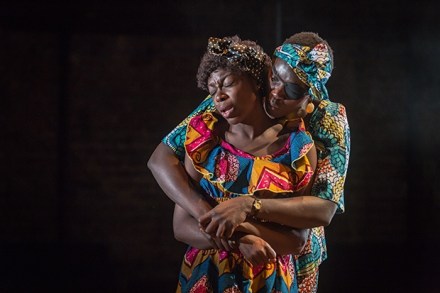
The National Theatre could hardly resist Barber Shop Chronicles. The play shines a light on a disregarded ethnic community, black urban males, who like to hang around in barber salons seeking friendship, laughs and tittle-tattle. Setting the play in a single venue would just be a sitcom, like Desmond’s, so the show establishes a series of shops stretching from London to the capitals of various sub-Saharan nations. This makes it a global epic. In theory, at least. In fact, it’s still a sitcom with some melodramatic bits on the end. The disjoined structure is tiresome at first as the action keeps legging it from Britain to Nigeria and Ghana and back again. Inevitably, the intellectual level is pretty undemanding, somewhere between music-hall and panto.

Sado-erotic review

The Olivier describes Salomé by Yaël Farber as a ‘new’ play. Not quite. It premièred in Washington a couple of years ago. And I bet Farber was thrilled at the chance to direct this revival at the National’s biggest and best equipped stage. She approaches the Olivier’s effects department like a pyromaniac in a firework factory. She wants everything to go off at once. And it does. Goatherds yodel. Bells bong. Flutes warble. Birds parp. A revolving conveyor belt twirls spare actors around the stage in dizzy circles. Chord surges swell and fade on the soundtrack. Kneeling shepherdesses sift mounds of soap powder into mahogany salad bowls.

Law in action

It’s like Raging Bull. The great Scorsese movie asks if a professional boxer can exclude violence from his family life. Nina Raine’s new play Consent puts the same question to criminal barristers. We meet four lawyers engaged in cases of varying unpleasantness who like to share a drink after a long day in court. They gossip about the more horrific behaviour of their clients with frivolous and mocking detachment. But when their personal relationships start to falter under the strains of infidelity, they’re unable to relinquish their professional expertise, and their homes become legalistic battlefields. This sounds like a small discovery but Raine turns it into a grand canvas.

Royal prerogative

No one should complain that My Country; a work in progress is a grim night out. It’s rare for a good play to be written by royal command. The co-authors are the Queen’s personal minstrel, Carol Ann Duffy, and the director of her Royal National Theatre, Rufus Norris. These inspiring artistes have sent their vassals beyond the security of London to annotate ‘the words of people across the UK’ in the hope of understanding a humanitarian disaster: Brexit. The show makes its prejudices clear by dedicating the script to a Remain voter, Jo Cox, who was murdered by a Leave supporter. And it promotes the view, common among Remainers, that Brexit is a crisis caused by thick proles.

Changing of the Bard

Hamlet was probably written sometime between 1599 and 1602. The Almeida’s new version opens with a couple of security guards watching surveillance footage taken in a corridor. Well, of course it does. Nothing says ‘late medieval Denmark’ like closed-circuit television. Hamlet (Andrew Scott) appears. His black shirt and matching trousers suggest a snooker pro at the Crucible or a steward on a Virgin train. Scott is known as a ‘character actor’ (code for ‘baddie’) rather than a leading man.

All that jazz | 2 March 2017

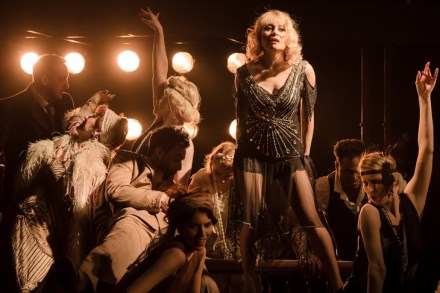
It’s every impresario’s dream. Buy a little off-West End venue to try out stuff for fun. Andrew Lloyd Webber has snaffled up the St James Theatre (rebranded The Other Palace), which he intends to run as a warm-up track for new musicals. First off the blocks The Wild Party, a New York import set in the 1920s. We meet a couple of vaudeville veterans, Queenie and Burrs, whose romance has hit the rocks. To rekindle the flame they invite everyone they know around for a party. Hang on. A party? Booze, drugs, flirtation, seduction: the recipe for destroying a romance, not salvaging it. But never mind. The guests have started to arrive, direct from the Scott and Zelda Tribute Society. Everyone is talented, sophisticated and glamorously tragic.

The obsession with diversity in theatre risks spoiling Shakespeare

Twelfth Night launched at the National Theatre this week, with Malvolio turned into Malvolia. ‘We’ve definitely upped the gender-bendedness of the play,’ says Phoebe Fox, who is acting Olivia. Otiose, one might think, since the original is gender-bent to perfection. But Shakespeare did not have to wrestle with the strict controls now demanded in the subsidised theatre. In the same feature in which Phoebe Fox speaks, Ben Power, the deputy director of the National, tells the Sunday Times, ‘There are agendas we are aware of now, and we have targets in terms of gender and ethnicity, because we want to be as diverse as possible, speaking to our audiences, reflecting the nation to them.

The Spectator’s Notes | 16 February 2017

How does Vladimir Putin think about the world? It becomes dangerously important to know. I still have not seen a revealing speech by or discussion with him. I have found out a bit more, however, about the two-hour private interview conducted with him by several young Etonians last summer. One reason they got into the room, it seems, is that Mr Putin wanted to know about Eton and why it produced 19 prime ministers. The boys explained that one of the school’s great advantages was its societies — Political, Literary, Cheese etc. — largely organised by them, not by masters. They said these brought them into contact with a wide range of visiting speakers, broadening their minds.

Hedda Garbler

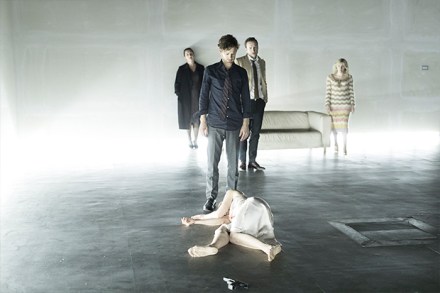
Hedda Gabler is one of the most influential plays ever written. It not merely illuminated an injustice, the enslavement of women within marriage, it fomented the revolutionary achievements of feminism. It deserves to be done as Ibsen intended. This updated version from Ivo van Hove locates Hedda in one of those posh urban dream homes that resemble an art gallery. Stage left, buckets filled with flowers. Centre, an abandoned plinky-plonk piano. At the rear, a lamp the size of a traffic bollard. Scruffy off-white masterpieces deck the walls. Everything looks chic and scaled-up. Tesman is a penniless American academic married to tetchy Hedda who pads about barefoot, in her nightie, grousing. Effortful gestures abound.

Deplorable entertainment

Buried Child is a typical Sam Shepard play. The main character, Dodge, is a brain-damaged alcoholic cripple stuck in a Midwest shack with a half-witted xenophobic wife shrieking at him from the coal cellar. The wife makes an early speech about her son who ‘married a Catholic whore’ and got stabbed to death by her on his honeymoon. This sets the tone for the play. Every character is a shrill, chippy barbarian and every speech is an exercise in tragicomic one-upmanship. The audience for Shepard’s work consists of social voyeurs who want to gawp at the underclass from a safe distance. The play purports to be a mystery but the family secret is revealed in the title. Even so, Shepard proceeds as if there were a puzzle to solve. He keeps offering us ‘clues’.

Sweet and sour | 27 October 2016

Great subject, terminal illness. Popular dramas like Love Story, Terms of Endearment and My Night With Reg handle the issue with tact and artistry by presenting us with a single victim and a narrative focus that reveals as much about the survivors as about the patient. Crucially, the disease is omitted from the title for fear of discouraging the punters from mentioning the work in conversation. A Pacifist’s Guide to the War on Cancer violates all these strictures. Half a dozen characters seated in a hospital ward shout at us about their failing health. These disjointed gobbets of testimony are interspersed with repetitive zombie dances and noisy songs with lyrics like ‘fuck cancer’. Snatches of insulting dialogue reinforce the mood of chippy sourness.

First aid

In the 1980s, supermarkets stocked a fruit juice named ‘Um Bongo’ with the strapline ‘They drink it in the Congo!’. This is the starting point for Adam Brace’s examination of Britain’s relationship with the Congolese (whose word ‘mbongo’ means money). A group of do-gooding Londoners host a festival to celebrate the Congo’s culture and history but they rapidly become mired in controversies about age-old injustices and white-to-black ratios on steering committees. The Congolese party includes a few rogue terrorists whose death threats the British publicists find rather glamorous and titillating. The characters rarely reach beyond the obvious. The Londoners are bloodless yuppie go-getters.

Losing the plot | 4 August 2016

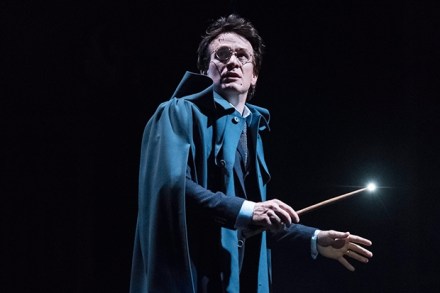
Consider it commercially. So powerful is the pull of the Potter franchise that the characters could simply re-enact the plot of ‘Incy-Wincy Spider’ and the fans would swoon with joy. The stage show has been written by a two-man committee, Jack Thorne and John Tiffany, with the help of billionaire equality campaigner J.K. Rowling. Harry is now 37 and working as a Whitehall clodhopper at the Ministry of Magic. He’s troubled by his stompy bed-wetter of a son, Albus, whose tantrums cause the middle-aged miracle-worker to suffer agonies of weepy self-doubt. Together they visit Hogwarts and the multifarious plotlines start to punch each other in the face.