National theatre

Two hours of bickering from a couple of doughnut-shaped crybabies: Middle, at the Dorfman Theatre, reviewed

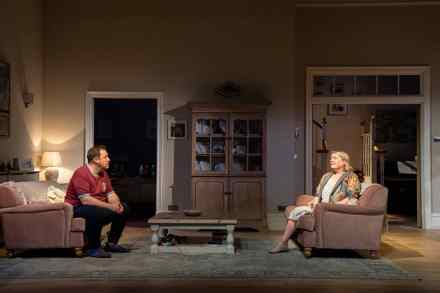
‘I fink I doan luv yew any maw.’ A marital bust-up drama at the National Theatre opens with a whining Cockney, Maggie, telling her City whizzkid husband Gary that their relationship is over. Gary and Maggie are aspriring underclass types who’ve achieved bourgeois prosperity: John Lewis kitchen, vintage wine rack and a ceramics collection. They have an eight-year-old daughter at a private school where she learns ballet steps and the piano instead of watching road-rage videos on YouTube like a council-house kid. She’s called Annabelle, by the way, and one wonders if Gary and Maggie style themselves ‘Garfield and Margaret’ at the school gate.
A tangle of nonsense from the sloppy Caryl Churchill: A Number, at the Old Vic, reviewed

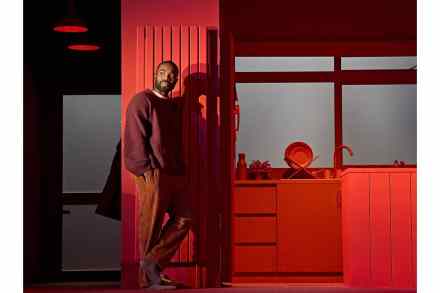
A Number, by Caryl Churchill, is a sci-fi drama of impenetrable complexity. It’s set in a future society where cloning has become possible for those on modest incomes. A Cockney father reveals to his grown-up son that he’s a replica of his older brother who died, aged four, in a car crash that also killed his mum. The son reacts with anger and bafflement. But Dad soothes him with happy news. The boy’s DNA was stolen by a gang of scientists who created 20 more copycat zombies, and these replicas are now scattered across the globe. Dad plans to cash in by suing the boffins for £5 million. No sooner has Dad finished this yarn than he admits it’s untrue. The mother didn’t die in a car crash and the timeline he gave was incorrect.

One of the best nights of my life: Hampstead Theatre’s Peggy For You reviewed

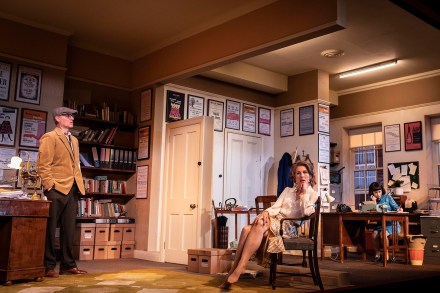
Hampstead Theatre has revived a play about Peggy Ramsay, the legendary West End agent who shaped the careers of Joe Orton, Robert Bolt, David Hare and others. We first meet her on the phone to a dramatist whose new script is good but, warns Peggy, it must not be produced because it will damage his career. She hates ‘fine writing’ and she knows how easily a scribbler can be corrupted by praise, awards and cash. Peggy is one of those rare creatures whom everyone wants to please and whose faults are considered charming oddities. Some might find her maddeningly fey but this show, directed by Richard Wilson, is part of the fan club. She has clients scattered across Yorkshire and she assumes that they must be next-door neighbours.

The National has become the graveyard of talent: Manor, at the Lyttelton, reviewed

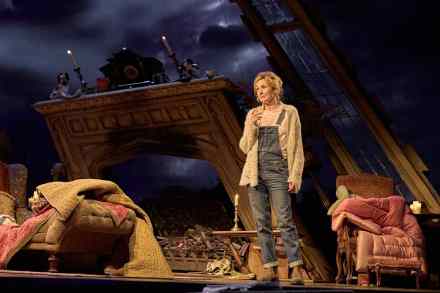
Somewhere in the wilds of England a stately home is collapsing. Rising floodwaters threaten the foundations. Storms break over the leaking roofs. Inside, an argument rages between a snooty moron, Lady Diana, and her drunken Marxist husband who used to be rock star. This is the chaotic opening of Moira Buffini’s country-house drama Manor. The angry husband picks up a hunting rifle and blasts ornaments to smithereens. Then he chases his wife to the top of a staircase where she hits him with a candlestick. Once the fight ends, more commotion erupts as various groups of evacuees rush in through the front doors. Two women arrive from south London. They’re soaking. A daft local priest shows up, followed by a white supremacist with a broken ankle.

Tsunami of piffle: Rockets and Blue Lights at the Dorfman Theatre reviewed

Deep breath. Here goes. Winsome Pinnock’s new play about Turner opens with one of the most confusing and illogical scenes you’re ever likely to see. A teacher on a school trip is showing her pupils a Turner painting displayed in a gallery housed inside a ship donated by the producers of a film starring a famous actress, Lou, who happens to be on board wearing a sumptuous outfit for an awards ceremony, which she plans to avoid for fear that a coveted prize will be handed to a rival. Lou invites the school teacher to an after party that is scheduled to start when the awards ceremony ends. She then gets distracted by the sight of movement on the surface of the Turner canvas. The painted figures, frets Lou, appear to be shifting and jerking.

Captures the rapturous gaiety of the original: Globe’s Twelfth Night reviewed

The new Lily Allen vehicle opens in a spruced-up terrace in the East End. Allen plays a self-satisfied yuppie, Jenny, whose cynical husband has invited two ghastly friends over for a bitchy booze-up. At first sight this looks like a Hampstead comedy from the 1970s but it’s a horror story, and it has a huge black hole at its core. A classic horror yarn should be driven by a single, powerful premise. In Ira Levin’s Deathtrap, a failing playwright has to bump off a talented rival to restore his fortunes. In Psycho, a bland motel is terrorised by a deranged and violent loner. Even Shakespeare dipped into the horror genre. In Hamlet, a vacillating prince is ordered to commit murder by his father’s ghost.

Homeric levels of misery: Paradise, at the Olivier Theatre, reviewed

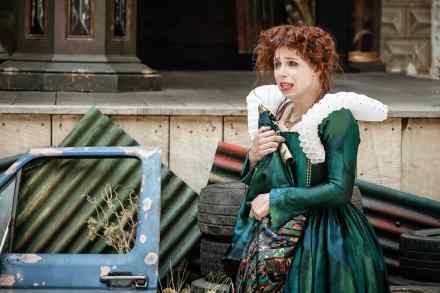
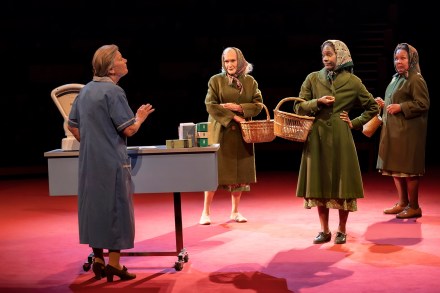
The National Theatre has given Sophocles’s Philoctetes a makeover and a new title, Paradise. This must be ironic because the location is hell on earth. The action starts in a dirt circle sprawling with smashed military gear where a group of plump female vagrants are waking up in a clutch of filthy old tents. They’re living on a Caribbean island which also houses a prison for migrants. In a nearby cave dwells an exiled Homeric archer, Philoctetes, who survives by eating squirrels which he kills with his handmade bow. A committed anti-vegan, Philoctetes shuns the plentiful rice, garlic and mangos that grow naturally in the tropics. Enter two British soldiers in contemporary battle fatigues, who want to track Philoctetes down. The Brits are called Odysseus and Neoptolemus.

Enjoyable in spite of the National’s best efforts: Under Milk Wood reviewed

Before the National Theatre produced Dylan Thomas’s Under Milk Wood they had to make a decision. How could they stuff this dazzling, rapturous comic tone-poem with misery and pain? The policy at the NT is that ticket holders must endure a play rather than enjoy it. They had four options. Racism, homophobia, misogyny and mental illness are the sources of woe most favoured by modern theatre-makers. The NT duly ticked box four, mental breakdown, and hired a writer, Siân Owen, to supply the necessary dollops of torment by penning a one-act melodrama as a preamble to the script itself. The setting is an old folks’ home which looks like a branch of Wetherspoons or an activity centre for pensioners.

Theatre’s final taboo: fun

How will the theatre look after lockdown? A clue emerges in a statement made by Guy Jones, the literary associate of the Orange Tree in Richmond. ‘The victims of this year are many. Homelessness is on the rise, loneliness is deadly, the monster of racism lurks in every-day interactions… and many of the inequalities we live with are written into the systems in which we are asked to participate.’ ‘The victims’. That’s his starting point. It might seem odd that a theatre should prioritise the injured and the aggrieved, as if the stage were a tribunal or a public court where justice is dispensed. But that’s how theatres see themselves. Lockdown and the rise of BLM in 2020 have created a host of new causes to be fought over by snarling dramatists.

Racists will love it: National Theatre’s Death of England – Delroy reviewed

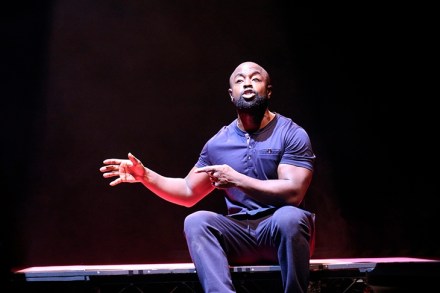
Death of England: Delroy is a companion piece to Death of England, which ran in February at the NT and examined the white working classes. Here the focus is on a successful black Briton, Delroy, who votes Tory and feels at home in multicultural society. The charismatic Michael Balogun plays him as a complex, shrewd and humane figure. He likes to mock white people who judge others according to superficialities like accent and pronunciation. And he recalls his horrified excitement when a white girl at school calmly placed her finger inside his boxer shorts. Delroy has plenty of white pals including his girlfriend, Carly, who is expecting their child. The only antisocial voice in his life belongs to his mother, a Jamaican bigot, who objects to Carly’s ethnicity.

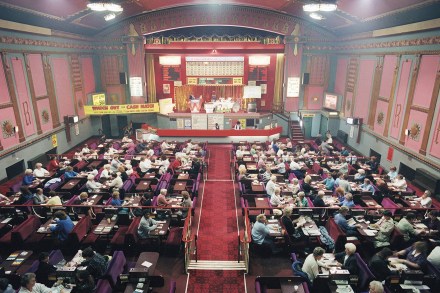
Defund theatres – and give the money to gardeners and bingo halls

For nearly six months our subsidised playhouses, notably the National Theatre, have been dark. What have we missed? Not much. Some would say nothing at all. And this has come as a surprise to those of us who were led to believe that the subsidised theatre is critical to ‘the national conversation’. It turns out that the nation can happily debate political and social issues without the help of playwrights or actors. Perhaps it’s time to re-examine our state-funded theatres and the reasons we support them. The National Theatre was set up in 1963, soon after the establishment of the Royal Shakespeare Company in 1961, and both received funding from the Arts Council, which was founded in 1946.

The Madness of George III is much easier to like than King Lear

The longest interval in theatre history continues. Last week the National Theatre livestreamed a 2018 version of The Madness of George III produced by Nottingham Playhouse with Mark Gatiss in the title role. The script, written by Alan Bennett as a response to King Lear, is much easier to like than the original. An engaging family comedy, with a sad bit in the middle, it benefits from a wonderfully happy ending. The good king is cured, the bad doctors are vanquished, order is restored. A real crowd-pleaser. Bennett’s research gives it the feeling of a documentary drama as he examines the difficulties faced by monarchs who wielded real political power. Family feuds spilled over into public affairs, and if the king happened to run an empire the consequences could be global.

What are the new rules on race and performance?

What are the new rules on race and performance? In the world of TV, everyone is busy apologising, self-censoring and denouncing their previous work. Ant and Dec have deleted routines in which they imitated Japanese girls and people of colour. The comedian Leigh Francis has expressed contrition for satirising Craig David in Bo' Selecta! (which was nominated for a Best Comedy Bafta in 2004). Matt Lucas and David Walliams have withdrawn sketches featuring dark-skinned characters. A new order is being created. A new hierarchy of privileges and prohibitions based on ethnicity is taking root. We are strengthening the vice we sought to eliminate. The new rule appears to forbid actors from playing characters whose racial origins they don’t share. Or does it?

As a lyricist, Ian Dury had few equals in the 20th century

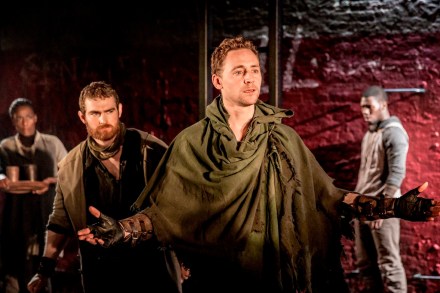
The National Theatre’s programme of livestreamed shows continues with the Donmar’s 2014 production of Coriolanus starring Tom Hiddleston. The play is not a favourite. The story concerns a victorious Roman general who accepts the role of consul but when his political career falters he takes revenge by befriending his defeated enemy, Aufidius, and marching on his own city. There’s too much bitterness and aggression here, and no romantic sentiment at all. The only significant male/female relationship is between the great conqueror and his preening, pushy mother, Volumnia, who boasts about her son’s triumphs as if they were scouting badges or gold stars won for laying out the nature table. Coriolanus is an unsatisfactory tragic hero.

Privatisation is the best option for the South Bank Centre

I must have written about this subject 100 times in 30 years and I’m still having to restate the bloody obvious. London’s South Bank Centre, which has just gone bleating to the government for more money, is the biggest subsidy guzzler in the country and the despair of the rest of British arts. The South Bank receives £19 million a year from the Arts Council, on top of the many millions that go to each of the so-called ‘resident ensembles’ that perform within it. What it does with the money is anyone’s guess because, as far as the eye can see and the nostrils can smell, the South Bank is now a fast-food mall with an occasional classical concert buried within it. How did it get so bad?

The National Theatre’s live-streaming policy is bizarre

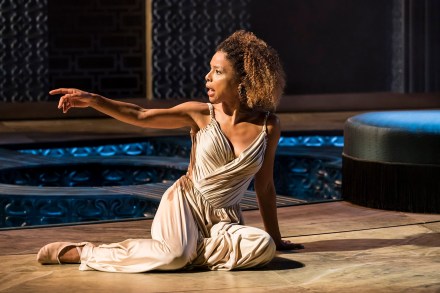
The National’s bizarre livestreaming service continues. On 7 May, for one week only, it released a modern-dress version of Antony and Cleopatra set in a series of strategy rooms, conference centres and five-star hotel suites. The lovestruck Roman was played by a louche, gruff, brooding Ralph Fiennes. Why is this man so watchable? He lacks the least mark of distinction. Face, height, physique and vocal ability are all in the middling range. In real life he could easily have assumed the role of the research assistant’s deputy. Perhaps it’s the Reggie Perrin ordinariness that makes his presence bewitching. Shakespeare was on unusually patchy form when he assembled this huge, rambling history play.

Worth watching for the comments thread alone: NT’s Twelfth Night livestream reviewed

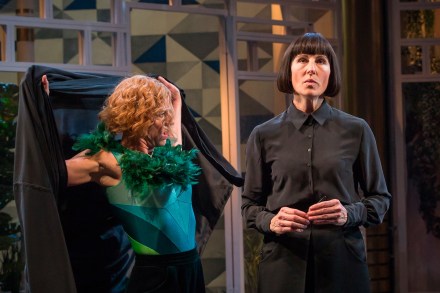
‘Enjoy world-class theatre online for free,’ announces the National Theatre. Every Thursday at 7 p.m. a play from the archive is livestreamed. I watched Twelfth Night, from 2017, starring Tamsin Greig as a female Malvolio. What a handsome, absorbing and brilliantly staged production this is. Greig’s comically petulant Malvolia won the plaudits, rightly, while the underrated Tim McMullan turned Sir Toby into a wry, wobbly, loveable drunkard, like a rock star enjoying a month on the lash. Having seen the original, I preferred the online experience, not least because of the noisy comments thread beside the screen. ‘How do you get Russian subtitles?’ ‘When’s the interval?’ ‘Why a female Malvolio?’ ‘Watching from Brussels.

The best theatre of the 21st century

Not looking great, is it? Until we all get jabbed, theatres may have to stay closed. And even the optimists say a reliable vaccine is unlikely to arrive before Christmas. As the darkness persists, here’s a round-up of my leading experiences over nearly two decades as a reviewer. There’s been a surge of output. More theatres have opened, especially on the London fringe, and several have created annexes for experimental work. Musicals have proliferated. The rise of the box-set has been excellent for the West End. Global hits such as Game of Thrones have created a host of British stars with enough clout to sell out a three-month run in London. Shakespeare hasn’t fared so well.

The script’s a dud: Antipodes at the Dorfman Theatre reviewed

The Antipodes, by the acclaimed dramatist Annie Baker, is set in a Hollywood writers’ room. Seven hired scribblers are brainstorming a new animated feature under the direction of a mysterious, bearded multimillionaire, Sandy, who seems thoroughly bored with the movie-making process. The script is in its early stages and Sandy decrees that the central character must be a monster. That’s all. The writers can fill in the details. He asks them to indulge in a free-association experiment by describing their first sexual encounter or the scariest moment in their lives. Long speeches follow. Very long, some of them. Sandy loses interest in the project, not surprisingly, and starts to absent himself from the room. The writers toil on, chatting and wittering.

A 90-minute slog up to a dazzling peak: ‘Master Harold’… and the boys reviewed

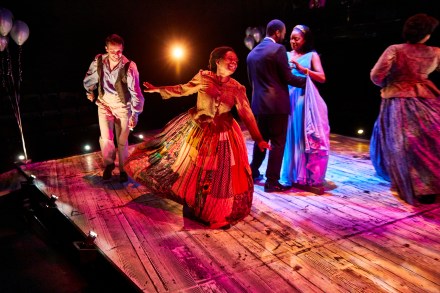
Athol Fugard likes to dump his characters in settings with no dramatic thrust or tension. A prison yard is a favourite. He specialises in bored, talkative characters who squirt the time away swapping memories and indulging in bursts of creative play-acting. It’s dull to watch but good fun to perform. Thesps love to step out of character and road-test a range of fictional personalities. ‘Master Harold’… and the boys is classic Fugard. We’re in an empty restaurant in South Africa in 1950. Lunch service has ended. Two waiters twiddle away the afternoon discussing sex, ballroom dancing and beating women (as if this were a standard feature of male behaviour). Enter the boss’s school-age son, Hally, whom both waiters know well.