Napoleon

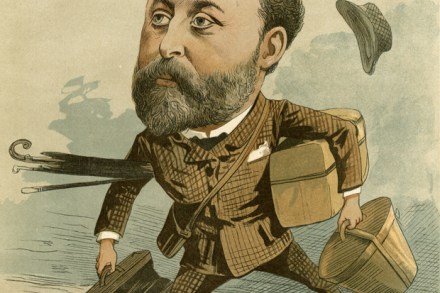
The Paris of Napoleon III was one big brothel – which is why the future Edward VII loved it

Stephen Clarke lives in Paris and writes book with titles such as 1,000 Years of Annoying the French. Dirty Bertie is a book in the same line — a comic history which manages to combine his brand of jaunty, bawdy humour (not mine, I confess) with being genuinely informative about French history. Clarke claims that there is a gap in the biography of King Edward VII. Biographers have not said nearly enough about Bertie’s jaunts to Paris. He is absolutely right about this. To Bertie’s British biographers Paris is a collection of clichés about grandes horizontales and a few well-worn anecdotes. There’s a story about the courtesan La Barucci, for

Meeting George Osborne at Waterloo

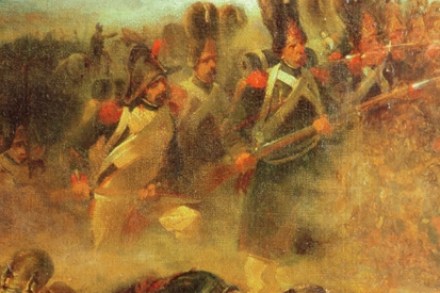
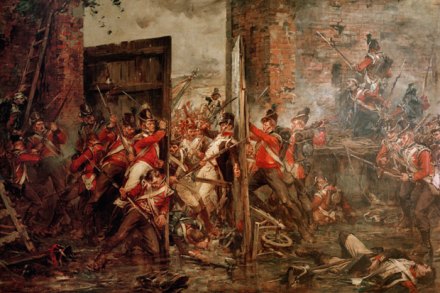
The defence of Hougoumont is one of the great British feats of arms. If the farmhouse had fallen to Bonaparte’s forces during the battle of Waterloo, Napoleon’s 100 days would have become a French 100 years. But history has not been kind to Hougoumont; it fell into disuse as a farm at the end of the last century and has become increasingly dilapidated. Now, however, Hougoumont has an unlikely champion: the Chancellor of the Exchequer. George Osborne first visited the site two years ago and was shocked by what he found. Souvenir hunters were simply removing bricks from the building. Osborne is a bit of a battlefield buff — he

When Aachen was the centre of Europe – and Charlemagne ruled the known world

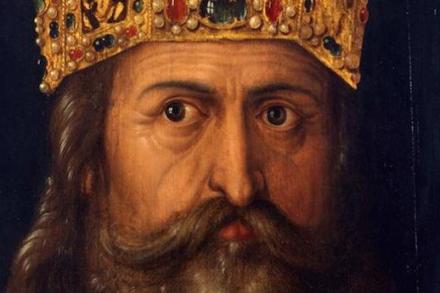
A UNESCO World Heritage Site since 1978, Aachen (Aix-la-Chapelle) will this summer become the focus of European attention. From June to September, the Aachen Palatinate, Europe’s best surviving Carolingian palace complex, plays host to three inter-related exhibitions commemorating the 1200th anniversary of the death of Charlemagne. The exhibition entitled Charlemagne. Power. Art. Treasures. occupies three separate parts of the former palace complex: the town hall, the Centre Charlemagne (a new visitor centre on the site of the original inner palace courtyard) and the Cathedral Treasury. Charlemagne, king of the Franks from 768-814, was crowned Holy Roman Emperor by the Pope in 800 and hailed the ‘father of Europe’ by a

France’s cultural excess is immoral (but I still love it)

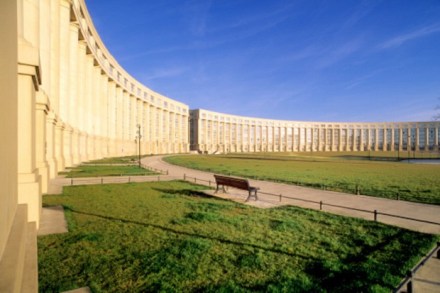
For a committed, if unsuccessful, capitalist, I enjoy French culture an embarrassing amount – every last state-funded drop of it. Give me five-act operas with cast lists the size of a small Chinese city, give me obscenely expensive works of public art, give me inhumane concrete estates, give me unintelligible modernist music and I’ll be drooling with pleasure all night. In fact, I’m seeing a five-act French opera with a cast list the size of a small Chinese city tonight in Bordeaux. That’s the kind of disgusting thing I like to do. In my defence, I am aware that what I am doing is immoral and what is being created should be

Secrets of the Kremlin

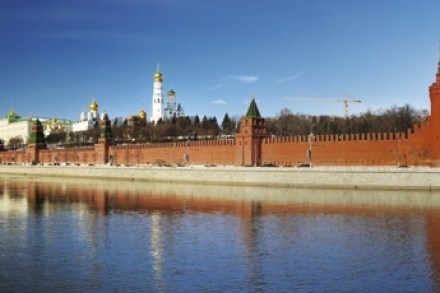
A building bearing testimony to the power of eternal Russia; a timeless symbol of the Russian state; a monument to Russian sovereignty. To the modern eye, the Kremlin fortress seems as if it had always been there, as if it had never changed and never will. All of which is utter nonsense, as Catherine Merridale’s fascinating history reveals: the story of this famous compound is not one of continuity, but of construction, destruction and reconstruction. Every reincarnation of the Russian state over the centuries — and there have been many — has been accompanied by a corresponding reincarnation of the Kremlin. Its history is thus a metaphorical history of Russia,

Obama & Napoleon

Historical analogies are always fun! Health Care reform was going to be, as Senator Jim DeMint argued, “Obama’s Waterloo”. Now that it haspassed conservatives are having to rethink that. The eternally optimistic Bill Kristol winds the clock back a bit and argues that, actually, HCR is Obama’s Borodino*: Last night’s victory was the culmination of Obama’s health care effort, which has been his version of  Napoleon’s Russia campaign. He won a short-term victory, but one that will turn out to mark an inflection point on the road to defeat, and the beginning of the end of the Democratic party’s dominance** over American politics. Last night was Obama’s Borodino. Obama’s Waterloo

A starring role for the Tsar

In reviewing Robert Harvey’s The War of Wars: The Epic Struggle Between Britain and France, 1793-1815 in these pages three years ago, I asked the question, ‘Who, in the end, defeated Napoleon Bonaparte?’; or rather, I repeated the question that Harvey himself posed at the end of his comprehensive account of the revolutionary and Napoleonic wars. In reviewing Robert Harvey’s The War of Wars: The Epic Struggle Between Britain and France, 1793-1815 in these pages three years ago, I asked the question, ‘Who, in the end, defeated Napoleon Bonaparte?’; or rather, I repeated the question that Harvey himself posed at the end of his comprehensive account of the revolutionary and