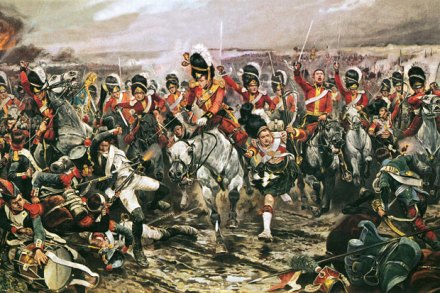
Napoleon

Throned on her hundred isles

From our UK edition

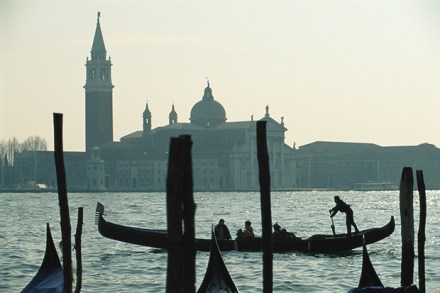
Approximately 500 new books on Venice are published every year and this is not the first literary anthology devoted to the city. But Marie-Jose Gransard lectures in Venice about Venice to Venetians, and conducts her students on guided tours of the city. Her selection draws on sources going back over 800 years and across six languages. So the text, based on very wide reading, is crowded with unfamiliar observations and includes the impressions of artists, musicians and diplomats as well as writers. This is not a guide book for the first-time visitor, but for anyone who knows Venice, and cannot keep away, it provides a delightful change. We are given Ruskin, Byron, Goethe, Henry James, Thomas Mann and Hemingway.
A people horrible to behold

From our UK edition

The much-lamented journalist and bon viveur Sam White, late of the rue du Bac, The Spectator and the Evening Standard, who lived in Paris for over 40 years, once wrote an affectionate portrait of his adopted home that opened with the defiant words, ‘Yes: I like it here.’ As a short review of the city it was perfect. Longer accounts that say less are published every year and must run by now into thousands of volumes. A glance at the map shows why Paris — ‘most sublime of cities’, as Luc Sante terms it — continues to attract such devotion.

Autocracy tempered by strangulation

From our UK edition

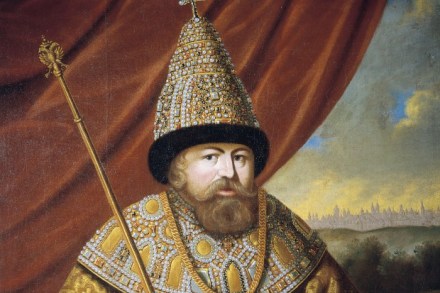
‘It was hard to be a tsar,’ Simon Sebag Montefiore writes in his opening sentence, and what follows fully bears this out. In his thought-provoking introduction, he stresses the unique nature of Russian autocracy and its perverse contradictions; the tsar was absolute ruler, yet he was bound by a tangle of restrictions. His subjects were prepared to accept his tyranny and any cruelty its exercise required, but claimed the right to punish him if he failed to provide strong leadership. The system was never meant to give one person tyrannical powers over everyone else. Nor was it intended to work for the greatest good of the greatest number.

Charlemagne’s legacy

From our UK edition

Last month in the Financial Times, Tony Barber closed a gloomy summary of the European Union’s future with this comparison: Like the Holy Roman Empire which lasted for 1,000 years before Napoleon put it out of its misery in 1806, the EU may not disintegrate but slip into a glacial decline, its political and bureaucratic elites continuing faithfully to observe the rites of a confederacy bereft of power and relevance. This vivid comparison has much to commend it. Both institutions defy definition. As Voltaire sneered in 1756, ‘it’s not holy, not Roman and not an empire’.

Moving statues

From our UK edition

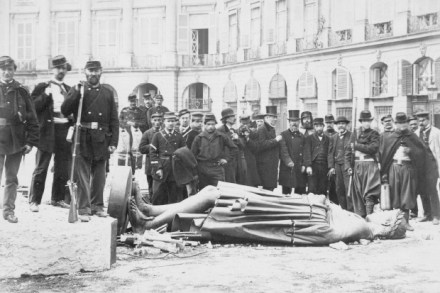
One of the stranger disputes of the past few weeks has concerned a Victorian figure that has occupied a niche in the centre of Oxford for more than a century without, for the most part, attracting any attention at all. Now, of course, the Rhodes Must Fall campaign is demanding that the sculpture — its subject having been posthumously found guilty of racism and imperialism — should be taken down from the façade of Oriel College. The controversy is a reminder of the fact, sometimes forgotten by the British, that public statues are intensely political. This was clear — until quite recently, at least — when one drove into the Syrian city of Hama. There, dominating a roundabout, was a large bronze representation of the late President Hafez al-Assad.

Coming up for air | 7 January 2016

From our UK edition

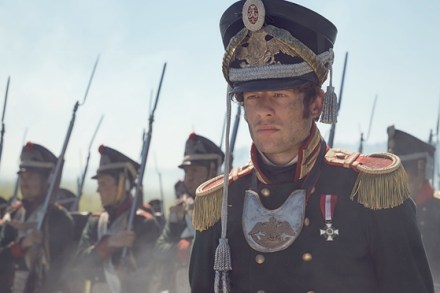
Gosh what a breath of fresh air was Andrew Davies’s War & Peace adaptation (BBC1, Sundays) after all the stale rubbish that was on over Christmas. There were times when the yuletide TV tedium got so bad that I considered preparing us all a Jonestown-style punchbowl. That way, we would never have had to endure Walliams and Friend nor the special time-travel edition of what everyone is now rightly calling Shitlock. Sherlock has a terminal case of Doctor Who disease. That is, it has become so knowing, so self-referential, so — ugh! — meta that it no longer feels under any obligation to put in the hard yards needed to surprise and delight anyone who isn’t already a committed fanboi.

War & Peace is actually just an upmarket Downton Abbey

From our UK edition

Gosh what a breath of fresh air was Andrew Davies’s War & Peace adaptation (BBC1, Sundays) after all the stale rubbish that was on over Christmas. There were times when the yuletide TV tedium got so bad that I considered preparing us all a Jonestown-style punchbowl. That way, we would never have had to endure Walliams and Friend nor the special time-travel edition of what everyone is now rightly calling Shitlock. Sherlock has a terminal case of Doctor Who disease. That is, it has become so knowing, so self-referential, so — ugh! — meta that it no longer feels under any obligation to put in the hard yards needed to surprise and delight anyone who isn’t already a committed fanboi.

A tale of cloaks and daggers

From our UK edition

You don’t need to know the opera Tosca to understand and enjoy this book about Puccini’s most notorious villain, Vitellio Scarpia, portrayed on stage as a ‘sadistic agent of reaction’, a cut-throat murderer who enjoys drinking his victims’ blood from their skulls and, as one of my opera-loving Kensington pals puts it, ‘not a nice bloke at all!’ In fact you may not even recognise him in these pages. Here Scarpia appears as an all-round human being, kind-hearted, handsome, likeable, occasionally lonely, even destitute, who also just happens to be a brilliant swordsman and man of action. Brought up in Sicily, his first act of daring is to rescue a girl who has been captured by Barbary pirates, even if it means stabbing her lover in the stomach.

One événement after another

From our UK edition

The great conundrum of French history is the French Revolution, or rather, the sequence of revolutions, coups and insurrections during which the nation was repeatedly destroyed and recreated. How is it that a heap of cobblestones, furniture and overturned vehicles — handcarts in 1848, 2CVs in 1968 — erected at particular points on the Left Bank of Paris can bring down a régime whose domain extends from the North Sea to the Mediterranean? As Baudelaire observed when Napoleon’s nephew conducted a coup d’état in 1851 and installed himself as supreme leader, it seemed that ‘absolutely anybody, simply by seizing control of the telegraph and the national printing works, can govern a great nation’.

Awfully arrayed

From our UK edition

John Keegan, perhaps the greatest British military historian of recent years, felt that the most important book (because of its vast scope) that remained unwritten was a history of the Austrian army. Richard Bassett has now successfully filled the gap, and few could be better qualified to do so. During many years as the Times’s correspondent in Vienna, Rome and Warsaw, he made friends with most of the leading local experts, as his acknowledgements testify.

Ed Vaizey offers the BBC a survival tip

From our UK edition

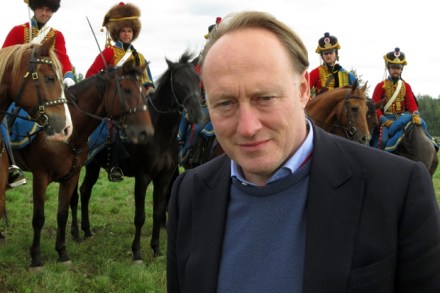
Given that John Whittingdale once described the licence fee as 'worse than the poll tax', the BBC were reported to be less than thrilled when David Cameron appointed the Tory MP as Culture Secretary ahead of the corporation's charter renewal next year. However, should the BBC be concerned about the impending decision, culture minister Ed Vaizey has at least offered an early pointer about the type of programmes the corporation ought to be commissioning. Vaizey took to Twitter to praise his old chum Andrew Roberts on his Napoleon documentary for the BBC. He says that it is 'just the kind of programme' the BBC 'should be making': https://twitter.

Facing their Waterloo

From our UK edition

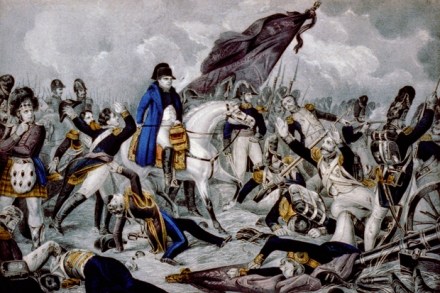
Three weeks ago, a journalist from Le Figaro asked France’s Ministry of Foreign Affairs who would be attending the 200th anniversary ceremony at Waterloo. ‘When is it?’ was the reply. Two centuries on, the French are still in denial about Waterloo. To understand why, you have to bear in mind a quotation by the 19th-century historian Jules Michelet, who declared that: ‘The war of wars, the combats of combats, is England against France; all the rest are mere episodes.’ The defeat at Waterloo was the humiliation of humiliations, almost impossible to countenance. French chauvinists still refuse to accept that Napoleon really lost. (Napoleon himself had declared: ‘History is a series of lies on which we all agree.

Pet rescue

From our UK edition

I adore Andrew Roberts. We go back a long way. Once, on a boating expedition gone wrong in the south of France, we had a bonding moment almost Brokeback Mountain-esque in its bromantic intensity. Roberts had hired an expensive speedboat for the day (as Andrew Roberts would) and we’d left very little time to get it back to harbour and avoid being stung for a massive surcharge. Problem was, the seas had got very rough and our anchor was stuck fast. We manoeuvred the boat this way and that to no avail. There was nothing for it. Someone would have to dive down to free it. It wasn’t easy. The water was cold and dark, visibility near-zero, and the anchor was way below comfortable free-diving distance. Various, increasingly desperate efforts were made by our party.

Designer fatigue

From our UK edition

Different concepts of luxury may be inferred from a comparison of the wedding feast of Charles Bovary and Emma Rouault with the habits of their contemporary the Duke of Wellington. At the Bovary wedding were served four sirloins, six chicken fricassées, stewed veal, three legs of mutton, four chitterlings (with sorrel), brandy, wine, foaming sweet cider, yellow custards, tarts and sweets with an architectural cake comprising angelica, oranges, nuts, jam and chocolate. The austere Duke’s ‘conception of duty’, David Piper wrote, ‘did not provoke popularity at all times’. His daily routine was tea with bread and butter in the morning, no lunch and an unvaryingly simple dinner of a joint with a pudding and iced water.

The Armour at Langham Hotel reviewed: three new playlets that never get going

From our UK edition

One of last year’s unexpected treasures was a novelty show by Defibrillator that took three neglected Tennessee Williams plays, all set in hotel rooms, and staged them in suites at a five-star dosshouse in central London. The Langham Hotel, an antique hulk of marble and glass overlooking Broadcasting House, is justly proud of its raffish literary history. Arthur Conan Doyle once met Oscar Wilde there for a chinwag and a cup of tea and by the time the bill arrived they’d conceived a fictional detective named Holmes. The Langham’s management is keen for Defibrillator to repeat last year’s success but how? Search the archive for more plays set in hotels? Dramatise a short story with a hotel location? Commission some brand-new inn-based drama?

From prince to pauper: a dramatic overview of Britain on 18 June 1815

From our UK edition

Of all the big battalions of books marking the bicentenary of the battle of Waterloo that have come my way, this has to be the best. David Crane has used the bloody campaign as a telescope, bringing into sharp focus not just the carnage along the Brussels road, but the state of Britain itself: a country on the cusp of vast, irreversible change. He achieves this within the compass of a single summer’s day — Sunday, 18 June 1815 — devoting a chapter to each hour and cutting cinematically between the three armies slaughtering each other in Belgium and the citizens at home. Some anxiously await news of triumph or disaster; others are utterly oblivious of what the cannonade rolling across the Channel, clearly heard by Kentish churchgoers, portends.

Radio 4’s War and Peace: almost as good as the book

From our UK edition

To have listened to Radio 4’s marathon ten-hour adaptation of Tolstoy’s War and Peace as it was being broadcast on New Year’s Day must have been both wonderful and a bit weird. Like soaking in an ever-replenishing warm bath, indulgent, luxuriant, all-absorbing. Yet at the same time I imagine it was quite hard by the end to step back into your own world after being so taken over by the fictional cares of the Rostov, Bolkonsky and Bezukhov families. Needless to say, I caught barely one episode on that day (how many, I wonder, did listen all the way through?). Fortunately, there’s a chance to catch up in the old-fashioned way, week by week, on Saturday nights (or to download and listen whenever you choose). This, though, is a different kind of listening experience.

Spectator letters: Richard Ingrams defends Joan Littlewood, and the truth about Napoleon’s poisonous wallpaper

From our UK edition

The state of Italy... Sir: Ambassador Terracciano’s letter (Letters, 1 November) about Nicholas Farrell’s article (‘The dying man of Europe’, 25 October) seems to me to be ill-researched and not thought through. Nicholas Farrell is spot on. The Ambassador is not. In another forum the Ambassador, on being asked what Italian nationals contribute to Britain, claimed that: ‘There is no area in which they don’t excel. Not only finance and management but also culture and the scientific and medical world, from professorship at Oxford to the chorus director of the Royal Opera, from the Science Festival at Cambridge to the director of the Tate Gallery in Liverpool.’ Has he ever stopped to think why this talent is in England, and not in Italy?

Andrew Roberts’s diary: Just who’s the despot here – Napoleon or Paxman?

From our UK edition

To the British embassy in Paris for a colloquium on ‘Napoleon and Wellington in War and Peace’ organised by our ambassador, Sir Peter Ricketts, to mark the bicentenary of the purchase of the embassy from Pauline Borghese, Napoleon’s sister. (According to the historian of the house, Tim Knox, Pauline would warm her feet on the naked backs of her ladies-in-waiting, and be carried to her bath by a huge Egyptian slave.) William Hague opened our proceedings, boldly pointing out the other anniversarial elephant in the room: it was Trafalgar Day.

Four ways to win Waterloo

From our UK edition

The Kaiser’s war deprived Britain of her centenary celebrations of the victory at Waterloo. It also set the propagandists something of a challenge, for the Kaiser himself had sent an aide-de-camp to the British embassy the day after the declaration of war deploring ‘the action of Great Britain in joining with other nations against her old allies at Waterloo’. A hundred years and all that had passed therein evidently counted for nothing to the imperial mind, though the emperor appeared to have forgotten that Belgian troops had also stood with the allies at Waterloo.