Napoleon

Napoleon’s birthplace feels more Italian than French

From our UK edition

Napoleon’s birthplace, Casa Buona-parte, in Ajaccio, Corsica’s capital, is pretty grand. It has high ceilings, generous, silk-lined rooms and a gallery that could double as a mini-ballroom. The house fits Napoleon’s upper-middle-class roots, as the son of a lawyer and Corsica’s representative to the court of Louis XVI. But the odd thing is, the home town of the world’s most famous Frenchman doesn’t feel very French. Corsica is only 14 miles from Sardinia — and 110 miles from the Côte d’Azur. It only became independent from Genoa in the late 18th century and the place names are still a mixture of Italian and the Corsican dialect.
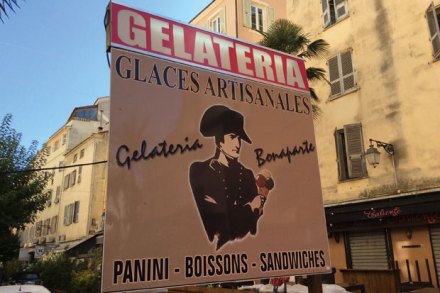
Don’t worry Brooks Newmark: paisley was sexy once…

From our UK edition

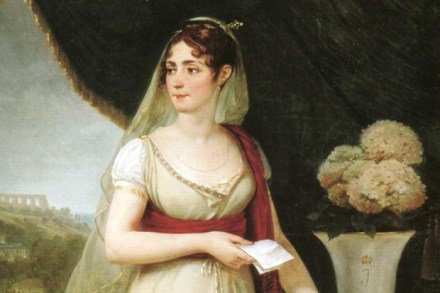
Paisley power Paisley pyjamas were in the news. While associated with the town in Renfrewshire, whose mills produced the patterns from 1805, what we know as paisley was first popularised in France thanks to its part in the courtship between the power couple of the day: Napoleon and Josephine. — While stationed in Egypt in 1798 he sent her a shipment of Kashmiri shawls which did not immediately grab her eye. She described the design as 'ugly and expensive but light and warm. I have serious doubts that this fashion will last.' — But she later changed her mind and was painted wearing one of the shawls, leading to mass popularisation. Who sexts?

The ‘Buckingham Bonaparte’ is cornered

From our UK edition

With the interventions of former Speaker Betty Boothroyd, ex-ministers -- including Jack Straw, Malcolm Rifkind and Margaret Beckett -- and the Clerk of the Australian Senate, Rosemary Laing, it is becoming increasingly hard for John Bercow to spin the fight over his choice for the replacement Commons clerk as a row with his 'usual suspect' critics. Yesterday's Times leader could not have been any clearer: 'Mr Bercow has done some good things as Speaker, and some of these would not have happened without his prickly personality. He has not minded irritating the executive by allowing more time to debate topical controversies. Yet he should beware of thinking that annoying everyone means he must be doing everything right.

The Spectator at war: A lesson from history

From our UK edition

A letter to the editor from the 8 August 1914 Spectator, from Evelyn Baring, 1st Earl of Cromer: ‘Sir, - A septuagenarian may perhaps profitably remind his countrymen of events which happened some fifty years ago, and of which the present generation may possibly be unmindful. In 1866 Napoleon III. allowed himself to be lulled into security by Prussian assurances, and stood aside whilst Austria was crushed at Sadowa. He paid dearly for his neglect four years later at Sedan.

How Napoleon won at Waterloo

From our UK edition

In a one-horse town called Hestrud, on the Franco-Belgian border, there’s a monument which encapsulates Europe’s enduring fascination with Napoleon. The story carved upon this plinth is more like poetry than reportage. As Napoleon passed through here, on his way to Waterloo, he struck up a conversation with a bold little boy called Cyprien Joseph Charlet. ‘You think victory will always follow you, but it always disappears,’ this audacious lad told him, apparently. ‘If I were you, I’d stay at home. Tomorrow your star will surely dim.’ Well, that’s the story, anyway. Fact or fiction, or a bit of both? In a way, it hardly matters.

An old soldier sees through the smoke of Waterloo

From our UK edition

There is a very nice story of a dinner for Waterloo veterans at which Alexandre Dumas — ‘Dum-ass,’ as the Antarctic explorer Taff Evans would have him — was for some reason present. I can’t remember now the exact wording of the exchange between them, but Dumas had clearly spent so much of the evening sounding off about the battle as if he knew what he was talking about that a French general at the far end of the table could finally take no more. ‘But my dear Dumas,’ he protested, ‘it wasn’t at all like that! And remember, we were there!’ ‘Precisely, mon général,’ came back the reply. ‘You were there, so how could you possibly know?’ Gordon Corrigan is more than a chip off the old Dumas block.

The Paris of Napoleon III was one big brothel – which is why the future Edward VII loved it

From our UK edition

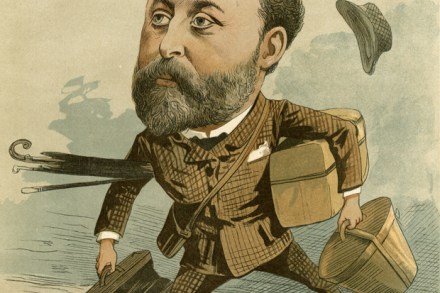
Stephen Clarke lives in Paris and writes book with titles such as 1,000 Years of Annoying the French. Dirty Bertie is a book in the same line — a comic history which manages to combine his brand of jaunty, bawdy humour (not mine, I confess) with being genuinely informative about French history. Clarke claims that there is a gap in the biography of King Edward VII. Biographers have not said nearly enough about Bertie’s jaunts to Paris. He is absolutely right about this. To Bertie’s British biographers Paris is a collection of clichés about grandes horizontales and a few well-worn anecdotes.

Meeting George Osborne at Waterloo

From our UK edition

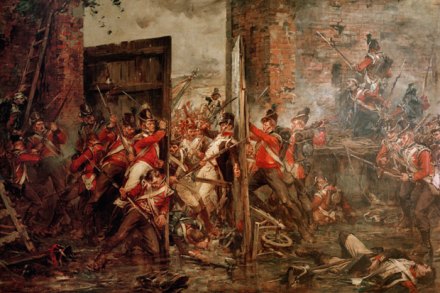
The defence of Hougoumont is one of the great British feats of arms. If the farmhouse had fallen to Bonaparte’s forces during the battle of Waterloo, Napoleon’s 100 days would have become a French 100 years. But history has not been kind to Hougoumont; it fell into disuse as a farm at the end of the last century and has become increasingly dilapidated. Now, however, Hougoumont has an unlikely champion: the Chancellor of the Exchequer. George Osborne first visited the site two years ago and was shocked by what he found. Souvenir hunters were simply removing bricks from the building. Osborne is a bit of a battlefield buff — he tries to visit a US Civil War site every time he goes to Washington for an International Monetary Fund meeting.

When Aachen was the centre of Europe – and Charlemagne ruled the known world

From our UK edition

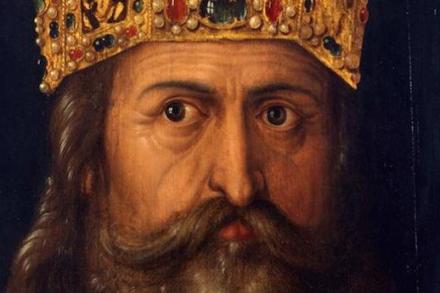
A UNESCO World Heritage Site since 1978, Aachen (Aix-la-Chapelle) will this summer become the focus of European attention. From June to September, the Aachen Palatinate, Europe’s best surviving Carolingian palace complex, plays host to three inter-related exhibitions commemorating the 1200th anniversary of the death of Charlemagne. The exhibition entitled Charlemagne. Power. Art. Treasures. occupies three separate parts of the former palace complex: the town hall, the Centre Charlemagne (a new visitor centre on the site of the original inner palace courtyard) and the Cathedral Treasury. Charlemagne, king of the Franks from 768-814, was crowned Holy Roman Emperor by the Pope in 800 and hailed the ‘father of Europe’ by a poet of his own day.

France’s cultural excess is immoral (but I still love it)

From our UK edition

For a committed, if unsuccessful, capitalist, I enjoy French culture an embarrassing amount - every last state-funded drop of it. Give me five-act operas with cast lists the size of a small Chinese city, give me obscenely expensive works of public art, give me inhumane concrete estates, give me unintelligible modernist music and I’ll be drooling with pleasure all night. In fact, I'm seeing a five-act French opera with a cast list the size of a small Chinese city tonight in Bordeaux. That’s the kind of disgusting thing I like to do. In my defence, I am aware that what I am doing is immoral and what is being created should be consigned to hell.

Secrets of the Kremlin

From our UK edition

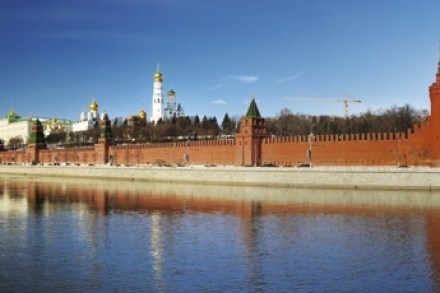
A building bearing testimony to the power of eternal Russia; a timeless symbol of the Russian state; a monument to Russian sovereignty. To the modern eye, the Kremlin fortress seems as if it had always been there, as if it had never changed and never will. All of which is utter nonsense, as Catherine Merridale’s fascinating history reveals: the story of this famous compound is not one of continuity, but of construction, destruction and reconstruction. Every reincarnation of the Russian state over the centuries — and there have been many — has been accompanied by a corresponding reincarnation of the Kremlin. Its history is thus a metaphorical history of Russia, as Merridale understands very well.

Obama & Napoleon

From our UK edition

Historical analogies are always fun! Health Care reform was going to be, as Senator Jim DeMint argued, "Obama's Waterloo". Now that it haspassed conservatives are having to rethink that. The eternally optimistic Bill Kristol winds the clock back a bit and argues that, actually, HCR is Obama's Borodino*: Last night’s victory was the culmination of Obama’s health care effort, which has been his version of  Napoleon’s Russia campaign. He won a short-term victory, but one that will turn out to mark an inflection point on the road to defeat, and the beginning of the end of the Democratic party’s dominance** over American politics. Last night was Obama’s Borodino. Obama’s Waterloo will be November 6, 2012. Well, maybe!

A starring role for the Tsar

From our UK edition

In reviewing Robert Harvey’s The War of Wars: The Epic Struggle Between Britain and France, 1793-1815 in these pages three years ago, I asked the question, ‘Who, in the end, defeated Napoleon Bonaparte?’; or rather, I repeated the question that Harvey himself posed at the end of his comprehensive account of the revolutionary and Napoleonic wars. In reviewing Robert Harvey’s The War of Wars: The Epic Struggle Between Britain and France, 1793-1815 in these pages three years ago, I asked the question, ‘Who, in the end, defeated Napoleon Bonaparte?’; or rather, I repeated the question that Harvey himself posed at the end of his comprehensive account of the revolutionary and Napoleonic wars.