Music

The lost boys

From our UK edition

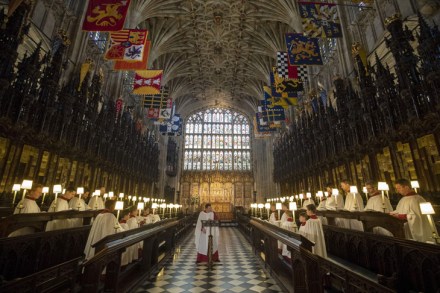
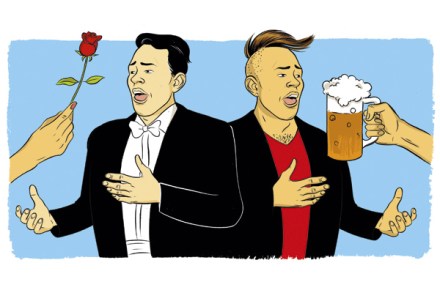
One by one, cathedrals have succumbed to the inevitable. In blazes of publicity, with front-page photographs of girls in cassocks in the cloisters, most deans and chapters have signalled their drive for equality of opportunity by inaugurating a girls’ choir to run alongside the boys’ one. So now, at the vast majority of our cathedrals, instead of boys singing up to eight services per week, the two top lines take turns, in varying ratios, with girls aged from eight to 18. The scheme has been working for 27 years, since Salisbury started the trend in 1991, and let me say from the outset: some of the girls’ top lines are extremely good and the boys’ top lines have adapted pretty well to the enforced job share.

Lessons in refrigeration

From our UK edition

There is no such thing as a moderately good performance of Madama Butterfly, or, to be more precise, it’s not possible to be slightly or rather moved by a performance. As with some of Shakespeare’s plays, and most of Wagner’s music-dramas, one is either shaken and overcome, or refrigerated and indifferent. So it’s sad to report that Glyndebourne’s first ever Butterfly, toured in 2016 but now settling on home ground, is a stolid, undistinguished affair, with some decent moments and much that seems routine and a fair amount that is worse than that. Is it a good idea to update an opera that is set in Nagasaki to the 1950s, when the city was still reeling from the effects of the second atom bomb?

Wells of silence

From our UK edition

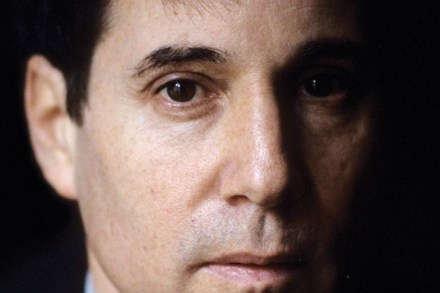
Someone has gone to a lot of trouble choosing the jacket cover of Robert Hilburn’s authorised biography of Paul Simon (reproduced right). It is both flattering and enigmatic, which is entirely appropriate, given its contents. Half of Simon’s features are lost in a shadow cast across his face — again, entirely appropriate, as Simon wrestled with Hilburn for more than two years, determined to ensure his true self remain partly or wholly in the shadows. One can’t help wondering why thesinger-songwriter even agreed to sit for what the jacket copy assures us was 100 hours of interviews; or, indeed, what happened to the other 99.

Mourning glory | 17 May 2018

From our UK edition

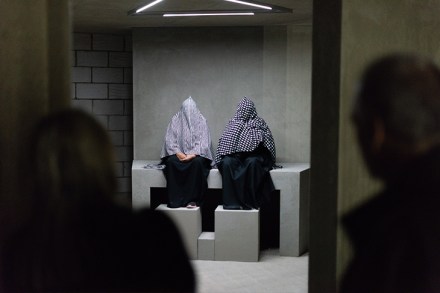
They enter two by two. Grannies, mainly. Headscarved, mainly. Some locking arms. A bit glum. Like rejects from Noah’s ark. Passing through two vertical beams of light, they appear then disappear, shuffling into the darkness. From concrete caves, they begin to wail for the dead. We’re witnessing Artangel’s latest extraordinary commission, ‘An Occupation of Loss’, by Taryn Simon. The piece draws together professional mourners from all corners of the earth — China, Armenia, Ghana, Ecuador — and deposits them under a block of flats in Islington High Street. The Azerbaijanis wallop their thighs as they wail. The Venezuelans sob behind full face veils, the fabric vibrating in sympathy. Some pace in circles, nervously fingering bits of cloth.

Natural selection | 17 May 2018

From our UK edition

‘All fish in flood and fowl of flight/ Be mirthful now and make melody’ writes the poet William Dunbar in the verses that Sir Charles Hubert Parry set to music as Ode on the Nativity. In David Matthews’s new Ninth Symphony, one particular fowl does exactly that. The symphony’s central movement begins on strings: an idyll of grey skies and shivering leaves. Matthews gradually introduces blocks of woodwind and brass, including a heavily stylised burst of birdsong.

Love me, or go to hell

From our UK edition

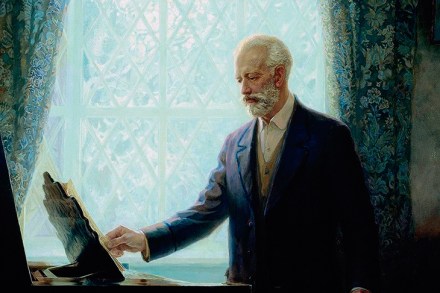
This is a wonderful and moving book of correspondence and biographical documents promising one Tchaikovsky in its subtitle and introduction, but actually delivering another — and thank the musical gods for that. Nothing here is horrid or even secret; the Russian edition was published in 2009 and has been used by English-speaking authorities since. And yet it claims to ‘unlock’ scandal: Pyotr Ilyich Tchaikovsky often swore in his letters (shock!), had many homosexual encounters, including one-night stands (covered in previous biographies) and felt at home in the upper echelons of the 19th-century Russian autocracy.

By ’eck, petal, it’s gorgeous

From our UK edition

The opening of Mark Simpson’s new Cello Concerto is pure Hollywood. A fanfare in the low brass, an upwards rush and suddenly the screen floods with lush orchestral sound — as confident in its onward sweep as Star Wars or ‘Tara’s Theme’. Waiting, poised, in the middle of it all was the soloist Leonard Elschenbroich, for whom Simpson has said that he wanted to write a concerto that celebrated the cello’s ‘expressive and lyrical force’. He has, too. From the instant Elschenbroich entered, it felt right. The cello soared over a chiming marimba, like in Walton’s Cello Concerto. It lingered over its farewells, like in Elgar’s.

Bringing in the trash

From our UK edition

Imagine the National inviting RuPaul to play Hamlet. Or Tate giving Beryl Cook a retrospective. The London Sinfonietta offered a similar cocktail of mischief and insanity in devoting the opening concert of its return to the Queen Elizabeth Hall, after a three-year refurbishment, to the nihilistic drag act David Hoyle. It had me grinning from ear to ear. Mostly from watching the other critics squirm. The woman next to me, an off-duty member of the Sinfonietta, was spitting words into her hand: ‘Patronising bollocks’. It was one of those nights. Half the audience stony-faced and tensed with anger. The other half creased double and whooping.

The nonconformist

From our UK edition

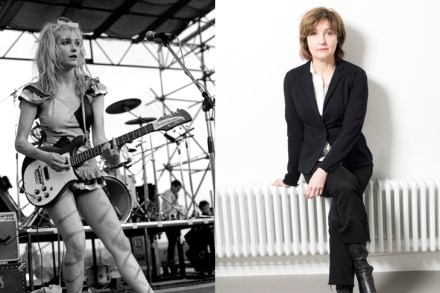
Viv Albertine, by her own admission, hurls stuff at misbehaving audiences. Specifically, when the rage descends, any nearby full cup or glass is likely to be decanted over the object of her ire. She’s remembering an incident a few years back, at a gig she played in York, when she felt compelled to introduce some persistent talkers to the contents of their pint glasses. ‘There’s such a fine balance there, because you don’t want to sound like a schoolmarm. Johnny Rotten used to walk offstage if there was spitting. The Slits [the groundbreaking punk band for whom Albertine was the guitarist] couldn’t do that because we would have looked like Violet Elizabeth Bott: “We’re not going to play until you thtop thpitting”.

Composers should be incensed that their music is taking a back seat to their race or gender

From our UK edition

The slow but certain conquest of all public life by those promulgating the politics of identity has achieved a new victory in the realm of classical music. Cloaked in claims of benevolence and good intent, it arrives as a divisive force, screaming equality but in reality delivering nothing of the sort. Much of our public discourse is focused on identity politics. Our news cycle is replete with tales of gender pay-gaps, unmet inclusivity quotas and the great struggle for the elusive goal that is equality, so perhaps it should come as no surprise that we now find these issues played out in the classical music industry. The dark heart of all this is to be found in the (sadly) niche area of contemporary classical music.

Kid’s play

From our UK edition

It’s been a good couple of weeks for cuddly toys in opera. A big floppy Eeyore is the only comfort for 11-year-old Coraline at the darkest moment of Mark-Anthony Turnage and Rory Mullarkey’s new opera. The teenage Composer in Antony McDonald’s production of Ariadne auf Naxos has a Beanie Baby panda as a sort of mascot: a tiny, limp emotional defence against a world that’s about to spin deliriously off kilter. Hansel and Gretel don’t have any toys, but the brattish siblings of Stephen Medcalf’s staging at the Royal Northern College of Music can at least cling to each other as the night closes in. Interestingly, the opera that came across as the most harmless was the only one that wasn’t created for children. Ariadne auf Naxos, then.

The last radical

From our UK edition

A spectre haunted the first weekend of the City of Birmingham Symphony Orchestra’s Debussy Festival: the spectre of Richard Wagner. Debussy’s relationship with Wagner began with infatuation, and ended (as so often) in open rebellion. The young decadent who declared Parsifal ‘one of the loveliest monuments of sound ever raised to the serene glory of music’ later ranted that ‘30 million Boches cannot destroy French thought’ even while, tormented by cancer, he laboured to complete three late sonatas of near-infinite subtlety and grace. But there’s always the sense, as Debussy put it as early as 1890, that ‘I don’t see what can be done beyond Tristan’.

The making of the Moody Blues

From our UK edition

Rarely has one irate punter so affected a band’s trajectory. Without the anger of the man who went to see the Moody Blues at the Fiesta Club in Stockton in 1966, the band would never have reinvented themselves, never have transformed into psychedelic pioneers, and next month they would not be travelling to America to be inducted into the Rock and Roll Hall of Fame, the honour bestowed annually upon those the US music business deems the most significant artists of all. The Moody Blues had been a moderately successful group — everyone who has ever listened to an oldies radio station knows their version of ‘Go Now’, a No. 1 single in 1964 — but by 1966 they were on the skids.

Bat squeaks and red herrings

From our UK edition

Blue Gadoo is one of those cats whose face looks like it’s been bashed flat with a wok. He lives in New York, apparently, and his bulging eyes goggle out from Gerald Barry’s programme note for his new Organ Concerto. Check him out: the Guardian published the full note a day before the performance, which is only right because a Gerald Barry world première really ought to be national news. ‘I saw a photograph of him with a book called Sex and the Sacred in Wagner’s Tristan und Isolde,’ explains Barry. ‘By his expression I knew he was mourning the loss of atonality.’ There’s heaps more like that.

Nils Frahm: All Melody

From our UK edition

Grade: A Here we are in that twilit zone where post-techno and post-ambient meets modern classical, a terrain that has its fair share of tuneless charlatans and chancers. Frahm is not one of those. There are of course the repetitive synthesiser arpeggios familiar to anyone who has had the misfortune to sit in some achingly hip Dalston café: slightly too many for my liking on ‘#2’, which Frahm may consider the centrepiece of this album. But the German is obsessively attuned to nuance. Beneath those Glass-like riffs there is plenty going on: descant melodies, counterpoints burbling up out of the ether.

Music for my own pleasure

From our UK edition

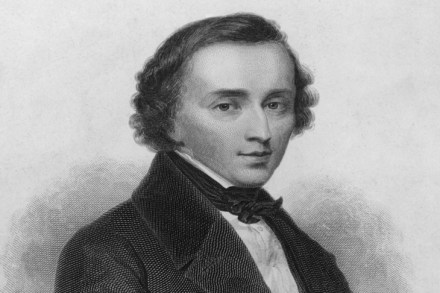
At the end of his study of Debussy, Stephen Walsh makes the startling, but probably accurate, claim that musical revolutionaries tend to be popular. We generally think of radicals as being primarily like Schoenberg, Charles Ives and Pierre Boulez, whose works, after decades, still mainly appeal to a small group of sophisticates. But if one takes the larger view, there is no doubt that most composers who transformed the art of music were almost always immediately popular. Monteverdi, Beethoven, Chopin and Wagner commanded substantial audiences, with often beguiling surfaces and revolutionary substance. Schumann said that Chopin’s music was ‘a cannon buried in flowers’. The same might be said of Debussy, who could not have broken more decisively with the past.

No sense of direction

From our UK edition

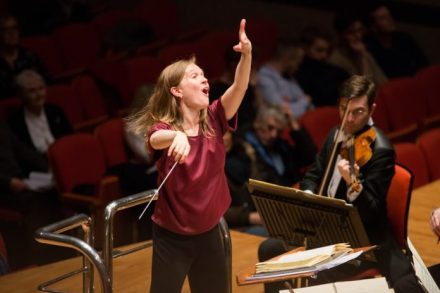
The new production of Bizet’s Carmen at the Royal Opera has received mixed reviews. It shouldn’t have done. They should have been unmitigatedly hostile, indignant, outraged — except that all those reactions would almost certainly have delighted the director, Barrie Kosky. What might please him less is the accusation of tedium, of making what often seems an unsinkable work into a colossal bore. This Carmen lasts for three-and-a-half hours and feels as long as that after the first 20 minutes. The whole and only set is a stage-wide flight of 16 steep stairs, up and down which the cast has to run at frightening speeds. As Jakub Hrusa, the conductor, dashed into the opening bars, hectic rather than brilliant, one wondered what might be added on-stage.

Get Carter | 1 February 2018

From our UK edition

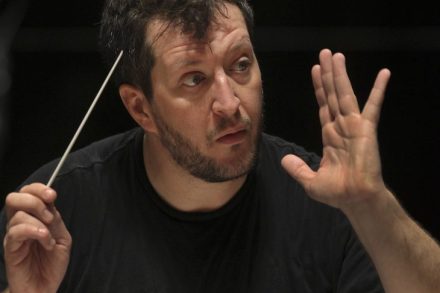
Das Rheingold at the Royal Festival Hall was, all told, a disappointment, but it might not have been had there been one or two more rehearsals, and a replacement of one of the singers. Vladimir Jurowski plans to perform the whole Ring cycle in due course with the LPO, but he needs to remember that memories are still very fresh indeed of Opera North’s transcendently wonderful performance at the same venue in 2016. That showed, among other things, that you can semi-stage the Ring cycle with some imaginative lighting, a minimum of meaningful movement and no props.

Half-heard truths

From our UK edition

If you’ve ever had a text or email thread spiral wildly and unexpectedly out of control or clocked a couple having a blank-faced argument in Tesco or a mother remonstrating with her toddler even though you couldn’t hear the words exchanged, then you understand the importance of the human voice. Command of tone, timbre, pitch — the how, not the what, of communication — is at once the most natural and instinctive of skills, common to every infant and its parent, and the most fetishised, finessed and, of course, monetised. A whole industry, and a lucrative one at that, exists to transform the human voice from tool to product, from nature to nurture, from prose to poetry.

Hitting the high notes

From our UK edition

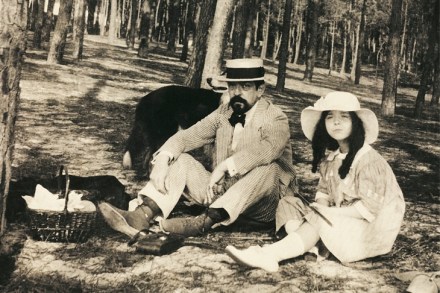
Claude Debussy died on 25 March 1918 to the sound of explosions. Four days earlier, the Kaiser’s army had deployed its long-range Paris Gun, and as Debussy’s cancer entered its final hours, artillery shells were bursting in the streets around his home in Avenue du Bois-de-Boulogne. This quiet modernist — who’d transformed music into an art of almost limitless expressive subtlety — died amid the thunder of mechanised war. The funeral was poorly attended, and as the cortège halted, curious shopkeepers glanced at the wreaths: ‘It seems he was a musician.’ The classical music world is morbidly addicted to anniversaries of major composers.