Mourning

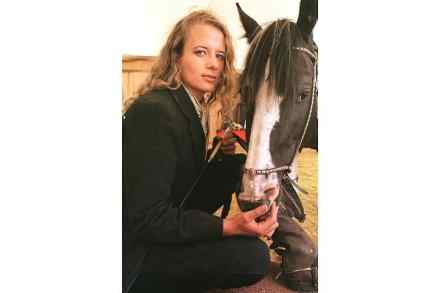
Mourning becomes Siri Hustvedt

At 6.58 p.m. on 30 April 2024, Siri Hustvedt’s husband of 43 years, the novelist Paul Auster, died of cancer in the library of their Brooklyn home. He was surrounded by family, including his adored daughter Sophie, who three months earlier had given birth to his first grandson, Miles. Hustvedt and Auster met at a poetry reading in 1981 and married later that year. It was she who proposed to him. Auster, aged 34, was not yet famous and Hustvedt, aged 26, was still a graduate student. By the 1990s, when she too became a novelist, they were New York literary royalty. In the 1970s, Auster had been married to the translator and short story writer Lydia Davis, with whom he had a son called Daniel. If Sophie was a summer’s day, Daniel was darkness.
Bittersweet memories: Ti Amo, by Hanne Ørstavik, reviewed

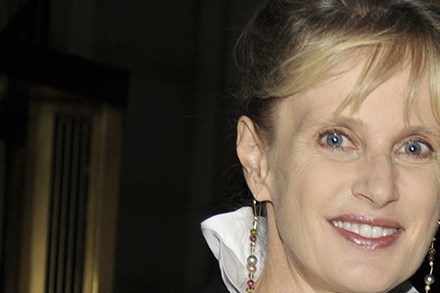
This is a deceptively slim novel. Its 96 pages contain multitudes: two lives, past and present, seamlessly interwoven. The narrator, a Norwegian novelist, and her Italian husband live in Milan. ‘Ti amo,’ they frequently tell each other. Easier to say ‘I love you’, than for him to say he’s dying, and her to say she doesn’t know what she’ll do without him. When did it all start, she wonders. ‘When did you actually become ill?

A lost brother: My Mind to Me a Kingdom Is, by Paul Stanbridge, reviewed

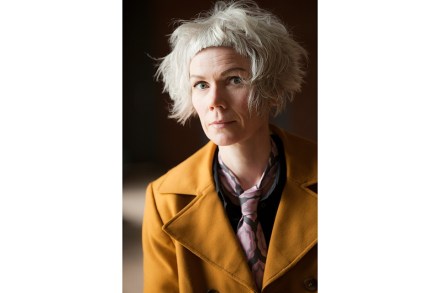
Grief leads us down some strange roads. Few, though, can be as peculiar as those charted by Paul Stanbridge in his auto-fictional My Mind to Me a Kingdom Is. This singular and striking book follows a narrator (the extent to which this figure overlaps with Stanbridge is kept teasingly obscure) mourning the suicide of his brother, an isolated, eccentric mathematician. Yet, while it contains passages of raw tribute, it is a self-consciously tricksy narrative. Stanbridge circles around his brother’s death via some of history’s more overgrown byways, such as ‘Clever Hans’, the mathematical horse, locked-in syndrome and Jean-Jacques Rousseau’s enthusiastic onanism. There’s a suggestion of Olga Tokarczuk’s novel Flights to this omnivorous freewheeling.

Sister, where are you? – Clover Stroud mourns her beloved sibling

‘CERTIFICATE IS NOT EVIDENCE OF IDENTITY,’ the freshly issued death certificate read. In the craziness and shock of grief for her beloved sister Nell Gifford, who died at 4.20 p.m. on 8 December 2019, aged 46 (‘Cause of death: metastatic breast cancer’), Clover Stroud found herself clinging to those capitalised words. ‘Yes, the certificate was wrong… My sister was not the deceased and the very certificate I was holding was telling me that.’ She started searching for her everywhere. ‘Whereareyouwherareyouwhere-areyouwhereareyou’ she asks for one whole page of this book in an enlarged typeface denoting the din in her head. She feels as if she’s setting out into the evil depths of a forest, but what will she find?

Mourning sickness: our conspiracy of silence over grief

No one can say that, over the course of the past year, we have not had the opportunity as a country to practise the grim arts of grief and mourning. We all know the figures — 127,000 Covid deaths and counting — but I wonder if, in the face of this onslaught, we have lost sight of the vital fact that behind each loss there will be a group of family members and close friends of the deceased setting out on the long, slow trudge down the boggy path of grief. How are we dealing with this suffering? When my father died extremely suddenly six years ago, there was one thing for which I was even more unprepared than the abrupt absence of the most cheerful person I had ever had the pleasure to know.

The art of mourning well

Malindi, Kenya I’ve learned that mourning must be tackled ever so gently. As a younger man, when friends were killed in Africa’s wars I’d become angry and drink. When Dad died I cut adrift in Yemen for a time. Following Mum’s death a month ago, I decided to stay quietly at her home on the beach. The Kaskazi monsoon whirls through the house and white horses roar on the reef. Soon after dusk the memories appear more vivid than in daylight and these parade through my fitful sleeps until dawn, when I can at last get up and trek along the foreshore among ghost crabs and sandpipers. Each morning I box with my coach Amani, before starting work. I run the Laikipia farm by telephone and spend my days on Zoom calls to England.

From blue to pink: Looking for Eliza, by Leaf Arbuthnot, reviewed

On the way back from my daily dawn march in the park, I often pass my neighbour, a distinguished gentleman in his late eighties, taking the air on his doorstep. I stand behind the area railings and shout: ‘How are you?’ And he shouts back: ‘Bored!’ At least not lonely. His sixtysomething son is with him. But how solitary these lockdown weeks have been for the widow and the widower, the singleton and the bachelor. Leaf Arbuthnot, a freelance journalist, could not have picked an apter time to publish her first novel Looking for Eliza, a redemptive story about grief, isolation and why everybody needs good neighbours. Its 75-year-old heroine Ada is a poet of the Wendy Cope school.